
How a 170-year-old invention still sews your clothes
46sReveals the hidden genius behind a common object, sparking curiosity and appreciation for everyday technology.
▶ Play Clip"The title promises genius and delivers a clear, concise explanation of the core mechanism—solid content, though brief."
This video explains the ingenious mechanics behind sewing machines, focusing on the lock stitch and the rotating hook mechanism patented by Allen B. Wilson in 1851. It demonstrates how the needle and hook work together to form a secure stitch, a design that became the basis for modern sewing machines.
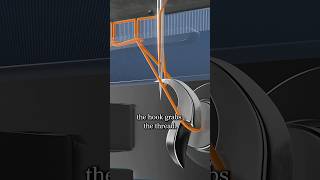
The rotating hook spins around, releasing the first loop and grabbing the second loop, allowing the thread to pass entirely around the bobbin.
Wilson's 1851 patent, featuring the bobbin inside a rotating hook, was used on over 80 models of sewing machines for 80 years and is the basis for most modern machines.
The needle pulls the top thread down, creates a bulge, and the rotating hook grabs it to pull more thread around the bobbin, forming a lock stitch.
The video highlights how a simple yet clever mechanical design—the rotating hook—revolutionized sewing, enabling the reliable lock stitch that underpins modern sewing technology.
What is the basis for how most modern sewing machines work?
The bobbin inside a rotating hook, patented by Wilson in 1851.
00:18
How many models of sewing machines used Wilson's rotating hook design?
Over 80 models for 80 years.
00:18
What type of stitch is formed by the rotating hook mechanism?
A lock stitch.
01:01
Wilson's Patent Legacy
Shows a single patent that dominated the industry for decades, highlighting the impact of a clever design.
00:18Mechanism Explained
Provides a clear, visual explanation of a complex mechanical process, making it accessible to non-experts.
00:34[00:02] thread. The rotating hook spins around, the first loop is released, and then the hook grabs the second loop. The looper was held by pieces of metal tightly enough of a gap for the thread to pass through all the way around. That same
[00:18] shape was used on over 80 models of sewing machines for 80 years. The second patent that Wilson received in 1851 is the basis for how most modern sewing machines work. The bobbin is inside a rotating hook. So, let's see
[00:34] how that works. The needle comes down pulling that top thread. And really low and then it pops back up a little bit creating this little bulge right here. And when the rotating hook comes around
[00:49] it is grabbed by that rotating hook pulling even more thread so that this thread can pass entirely around the bobbin. And then
[01:01] needle pops back up. We pull in the excess and we've formed another lock stitch like so.
⚡ Saved you 0h 01m reading this? Transcribe any YouTube video for free — no signup needed.