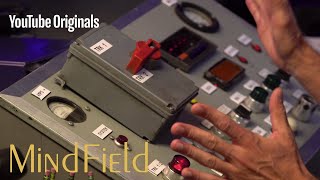

The Trolley Problem Explained
58sClassic ethical dilemma applied to self-driving cars sparks immediate debate and curiosity.
▶ Play Clip"Title accurately describes the content — a real recreation of the trolley problem with ethical safeguards. Some padding, but delivers on the core promise."
In this episode of Mind Field, Michael Stevens recreates the famous trolley problem as a real-life ethical experiment. Participants are placed in a simulated train-switching station and forced to decide whether to divert a train to save five workers at the cost of one. The results reveal a stark contrast between hypothetical moral reasoning and actual human behavior under pressure.
At 70 mph, closing your eyes for one second means traveling 103 feet — highlighting the danger of distracted driving and the value of self-driving cars.
Philosopher Philippa Foot created the trolley problem in 1967 to explore moral dilemmas: pull a lever to sacrifice one to save five, or do nothing and let five die.
The team built a realistic switching station with a real freight train and actors, convincing participants that their actions had life-or-death consequences.
Professor Aaron Blaisdell discusses the ethical risks: participants might freeze or feel guilt, but the societal benefits of understanding instinct vs. reflection could justify the study.
The ethics board required screening for PTSD, anxiety, and suicidal tendencies, plus a thorough debriefing to minimize psychological harm.
Participants are told they are giving feedback on a high-speed railway control center to disguise the true nature of the experiment.
Elsa freezes initially, then pulls the lever to divert the train, saving five workers but sacrificing one. She feels intense pressure and responsibility.
Out of the first six participants, only one (Elsa) pulled the lever. The others did nothing, assuming the train would stop or that someone else would act.
Cory also pulls the lever, but with more deliberation. He rehearses the action and later explains he considered the families impacted — choosing to sacrifice one to save five.
Participants learned about their own inner strength or hesitation. The debriefing helped them see the value of the study, and all left without lasting harm.
The real-life trolley problem shows that most people freeze in a crisis, contradicting survey results where the majority say they would pull the lever. Understanding the gap between moral reasoning and instinct is crucial for designing ethical AI and training humans for emergencies.
How far does a car travel at 70 mph if the driver closes their eyes for one second?
About 103 feet.
00:12
Who created the trolley problem and in what year?
British philosopher Philippa Foot in 1967.
01:37
What was the key difference between survey responses and actual behavior in the real-life trolley problem?
Most survey respondents say they would pull the lever, but in reality, most participants froze and did nothing.
24:33
Name one ethical safeguard used in the experiment to protect participants.
Screening for PTSD, anxiety, and suicidal tendencies; or thorough debriefing and on-site counseling.
10:06
What did Professor Blaisdell predict about participants' behavior under pressure?
He predicted many would freeze in the moment, as instinct often shuts down action in traumatic situations.
04:12
Instinct vs. Reflection
Highlights the core tension between moral reasoning and real-time action, which is the central insight of the experiment.
04:12Most Participants Froze
Reveals a stark contradiction between hypothetical and actual behavior, challenging assumptions about human morality.
24:33Participants Valued the Experience
Despite intense stress, subjects appreciated learning about themselves, showing that risky studies can be ethically conducted.
31:07[00:12] You know, if I had been driving, your eyes close for about one second, 70 miles per hour times 5,280 divided by 60 divided by 60,
[00:28] you will travel about 103 feet with your eyes closed. This is a self-driving car. to keep me and other people safe.
[00:43] Impressive. But let me ask you a question. between hitting two people right in front of it and hit one person on a sidewalk?
[00:58] [tires screech, car crashes] asking people what they think they would do, in that actual traumatic experience.
[01:14] Would it even be ethical to put people in that sort of position? [theme music playing]
[01:37] In 1967, British philosopher Philippa Foot created a precursor to our self-driving car conundrum. is known as "the trolley problem."
[01:49] Directly ahead of the train, Now, imagine that you are too far away there's a lever that can divert the train onto another track.
[02:07] But here's the catch. Now you're faced with a dilemma. or you can pull the lever and save their lives,
[02:24] but be directly responsible for one person's death. When surveyed, most people say that they'd pull the lever It's for the greater good.
[02:38] how we'd actually act if the scenario really happened with real emotions and real lives at stake. compared to who we want to be, but a comparison
[02:55] could only be made by doing what has never been done before: making the trolley problem real.
[03:13] in a realistic railroad switching station The trains and the people on the tracks but the subjects would think it was all real.
[03:29] that switches the tracks, They'd be totally convinced that they have to choose But wait, there's a greater-good dilemma
[03:45] By forcing people to truly believe serious psychological damage to them? Yes, it might be beneficial to all of us to see what happens,
[04:00] but would those benefits be worth potential trauma to a few? I needed to make sure it would be ethical.
[04:12] Professor Aaron Blaisdell. and what previous studies have found? Sure, it's one life versus five. The math works out.
[04:27] of a switch, watching a train barreling towards people, I bet a lot of them would freeze in that moment.
[04:39] I think that shuts down a lot of action. What potential harms could come to someone in that position? but there is a small potential for harm
[04:52] in the sense of somebody being guilt-ridden "I'm the person who would push that button Or they might think, "I'm the person who would freeze
[05:08] and that could be traumatic. on human subjects for real? Would you want to see the trolley problem
[05:22] You know, I would. -If I were tell you we're going to run this... -Okay. with that responsibility on your shoulders?
[05:36] For me to be involved in that, it would have to be on the shoulders of many people, [Michael] Dr. Blaisdell's reliance
[05:49] Most universities have ethics review boards When is it okay to risk psychological harm [Narrator] It is May 1962.
[06:04] [Michael] Ethics review boards were developed as a result in the middle of the last century. whenever they get punished for making a mistake.
[06:19] [man grunts] tested how far subjects would go they were physically hurting someone.
[06:32] [man screams] of the shock victim were fake, but the trauma [man] You have no right to hold me here! Let me out!
[06:47] Many questioned Milgram's methodology, but unlike a research school, Mind Field doesn't answer That said, I wanted to get the thoughts
[07:00] so I tracked one down and proposed my idea Do you think I could reach a point where you would I hate to be the bearer of bad tidings, Michael.
[07:16] I'm not ready to say no quite yet. and I actually think the ways to make it pass who might have posttraumatic stress disorder,
[07:30] that could make them more vulnerable to a type of event like this with the addition of something I actually think that under those circumstances,
[07:42] a compelling case as to the social good of this study? It's not just basic theoretical research. This has direct implications for mass transit,
[07:56] It's a risk-benefit, Right, and so my hope is that the good this experiment does is in revealing the difference between instinct
[08:12] and philosophical reflection, in learning the difference so that we can train people -[David] Yeah. -[Natasha] That's interesting.
[08:26] I came into this meeting expecting a lot of resistance, like, excited to take their concerns,
[08:39] which I thought was the purpose here, more fascinating, and penetrate deeper and have more applications in society.
[08:57] to turn one of the most notorious hypothetical ethical dilemmas into a reality. [train horn blowing]
[09:10] and hired a freight train. So the "Mind Field" production team Then we dressed six actors like railroad workers.
[09:26] we took steps to make sure they were safe. We will not have the train moving [Michael] We filmed our actors on the tracks,
[09:39] a train coming toward them. Then in editing, we employed visual effects We then combined the shots together.
[09:51] for our subjects, who would believe and transmitted from remote cameras. who would be willing to guide me through the process
[10:06] in order to minimize psychological harm. The worst would probably be posttraumatic stress disorder, They'll keep thinking about it over and over,
[10:21] and so to limit risk, you'd want to screen out people and then afterwards, do the debrief. How are they feeling at this moment?
[10:33] You can start to ease them into the reality Would you be willing to help us conduct this experiment? yes, I mean, I think I would.
[10:47] and valuable experiment, because people can have very uncomfortable lessons that they then start to learn from. to do such a thing, I would be honored.
[11:08] for high-speed railway. [Michael] To disguise the true nature of our experiment, for a fake focus group to offer feedback
[11:23] Today I'm just going to ask you to fill out a couple forms in our group and for TSA security purposes.
[11:36] look to uncover signs of depression, anxiety, unsuitable to participate in this experiment. Thank you.
[11:50] we reviewed the potential subjects' responses. This particular person, I was concerned about this. Some high suicidal thinking, high acting out.
[12:02] where you want to try to prevent and there's a large group of them, So I would be more comfortable with these people,
[12:18] in difficult situations might make them [Michael] Finally, after consulting two psychologists it was time to put our plan into action.
[12:46] the trolley problem in real life, Our subjects will sign in at this booth It's going to be a hot day for them.
[13:00] for the actual test to begin, the chance to sit inside Inside, they'll meet a kindly train-switch operator, of the California Railroad Authority.
[13:15] Real fake. to convince our subjects that everything here is real, including these monitors showing supposedly live shots
[13:30] all around the California area. [horn blows] they'll learn how the operator switches the tracks
[13:42] from one track to another. on these screens from a different hidden control room. will leave the subject alone in the switching station.
[13:57] And at that point, a crisis will occur. A train will be barreling down the tracks, five on one, one worker on his phone on the other.
[14:15] who has any kind of control or authority. They'll feel like what they do has real-world consequences. or will one?
[14:30] [horn blows] so it's time for me to get ready.
[14:42] -Good. -My hypothesis when they hear that first warning, The other option would be, of course, the freeze action,
[14:56] In that case, we want to know their thought process. All right, well, here we go.
[15:08] [Michael] Our first subject is Elsa. Hi, I'm Elsa, nice to meet you. [Michael] Everyone she meets is an actor,
[15:21] so she has no idea that she's being watched. Thank you. they're about to see is proprietary.
[15:34] so they couldn't call for help during the imminent crisis. What we're doing here is, the California Railroad Authority, And so we want the public to come in and give us
[15:50] some feedback on how comfortable they are, the decor, you know. -[cell phone chirps] -Um, oh, shoot. -That's okay. -So it's just gonna be, like, another 15, maybe 20 minutes.
[16:04] Um... you know what? I've got an idea. she has to wait for 20 minutes. for her to wait inside the switching station.
[16:19] This is a remote train-switching station, and it's nice and cool and air-conditioned in there, it would be totally great for you to come in...
[16:32] -Okay, cool. -...and see what they do in there. -How are you, Elsa? -I'm good, how are you? So what brings you out this way?
[16:48] Focus group. Okay. So what we got here is a remote switching station. What's happening is there's a lot of construction going on.
[17:05] new ribbon rail right here on these. who actually spent 20 years working on railroads. [Greg] He offers something called face validity
[17:20] "Ah, this guy's real." right here on these two tracks right now. Now, the other thing about this--
[17:33] This is probably a work unit that's coming. -Uh-huh. -We're gonna divert it to track two. Ah, very good.
[17:47] Just go ahead and throw it yourself. Yeah, go ahead. Good. All right, it's gonna make the transition to track number two.
[18:02] Well, I tell you what. You're now a switchman. Okay, well, now that the trailing car go ahead and switch it back to track one.
[18:15] I was like, oh, my gosh, I have to turn it. The good thing is we've got it back on line one, will go through on track one.
[18:29] switch one to the left, switch two to the right. It was time to force her to make a very difficult decision. -Oh, I gotta take this. -Oh, yeah, sure, no problem.
[18:45] Someone has to be here at all times. -Okay, no problem. Okay. -Be back in a sec.
[18:58] a little worried, like, "What?" to acclimate to her surroundings, and then, we started the playback of our staged footage.
[19:13] [female voice] Attention, object on track. Attention, object on track. Attention, object on track.
[19:30] [Greg] She's looking in her purse to find... Attention, object on track.
[19:42] [Michael] I think the warning does a lot. Attention, object on track.
[19:55] [train horn blows] Here's the "train approaching" warning. [Greg] I don't think at this-- oh, there she goes.
[20:08] There's a train approaching. I wanted to let him know that there's a train approaching. [Michael] But the switch operator won't be coming back.
[20:23] [female voice] Attention, train approaching. -Attention, train approaching. -[Greg] I can't believe this.
[20:36] Attention, object on track. Attention, object on track. Attention, object on track.
[20:53] End of test. Everyone is safe. the participants to think that anyone actually got hurt. before the train would have actually hit anyone.
[21:09] -This was all an experiment. -Okay. Yeah, sure. Did I do something wrong? [chuckles] Um... just scared.
[21:24] -Yes. -So no one was in any danger. on how people behave when decisions need to be made. I felt the pressure. I'm like, "Oh, my gosh,
[21:40] I had to make a very quick and sound decision, like, Their lives were in my hands. [Michael] What was motivating your decision to switch?
[21:55] I didn't know if I was making the right decision. I mean, a life is a life, right? at least one person was capable of taking
[22:10] deliberate action to sacrifice one in order to save five. But we wanted to see if Elsa's reaction was typical. Would you be interested in high-speed transportation?
[22:23] Shoot, sorry. I just got a text. I'm so sorry. Oh, it's so much nicer in here than it is out there. -What? -Do you know when the next train's coming?
[22:38] [female voice] Attention, train approaching. in how to switch the tracks. Go ahead. How does that feel?
[22:53] -[cell phone rings] -One second. Let me check this. Hang on one sec. Ah. -Hello? -[laughing]
[23:06] He's actually tapping into the power of being in that position. [Michael] Here comes the test. Attention, train approaching.
[23:21] -Attention, train approaching. -Just watch his eyebrows. Eyes are going back and forth. Train approaching.
[23:34] Train approaching. Paralysis in the face of danger is such a common reaction.
[23:46] Attention, train approaching. [Michael] Even with the train seconds away, I'll go try and find him. Okay.
[24:01] This is self-soothing there, yeah. -She's not moving. -Oh, my gosh, wow. Train approaching. Attention, object on track.
[24:19] End of test. Everyone is safe. [Michael] Not one of these participants pulled the lever. Oh, my gosh! How you guys doing?
[24:33] Everything that just happened was an experiment. This was an experiment. What were you feeling when you were watching that?
[24:46] the train coming, like, "Oh, my God!" Tell me what was going through your mind when you heard I thought about switching it,
[24:59] I kind of suspended my responsibility. "Oh, I better not touch it you know, because I don't know out of those five guys, someone would've looked back.
[25:16] of the train was already planning to stop. [Michael] "The train probably had sensors." "I didn't want to touch the equipment."
[25:29] when an individual assumes that others -Both tracks had people on them. -Right! Do I switch it, do I not switch it?
[25:44] It was quite-- quite the test, I would say. had switched the tracks, and five others had not.
[25:57] -Here, have a seat. -Much obliged, thank you. with the entire nation if we wanted it to.
[26:10] track two through there. -Yeah, -But they're all live feeds. -[cell phone rings] -Yeah. Let me see what this is.
[26:26] -Okay, I'll be right back. -Okay, got it. [Greg] He's remaining engaged.
[26:39] Oh, no. Uh, yeah. I think he's gonna go out.
[26:53] Um, there's a train coming? Um... Uh, yeah.
[27:06] Attention, train approaching. Okay, so this needs to go to...
[27:18] [Greg] Okay, he's rehearsing what to do. -Attention, train approaching. -Oh. Track two. I know. They should see this.
[27:33] Object on track. Attention, train approaching. -Attention, object on track. -[train horn blows] -End of test. -Okay, good.
[27:48] Everyone is safe. There was just a-- almost an accident seemingly.
[28:03] -No one was in danger. -For sure. This is a psychology experiment looking at how people behave... So tell me how you were feeling.
[28:18] -Mainly a bunch of terror. -[Greg] Terror. And responsibility, because I was at the helm. And just horrified about making a decision
[28:30] between, like, five people compared to one. It was very scary, to say the least. as the train's coming down the track?
[28:43] It was mainly to warn them. What's coming up? What's coming up right now? Right.
[28:56] Either like six families or one family? It was, like... up to me, it felt like. Yeah.
[29:08] It was interesting to me that you had such presence of mind. The one that everyone, if you ask them in a survey, Yes, so that was impressive, Cory, it really was.
[29:25] You know, I think it would be good to have you meet -some of the people who participated so you can see. -Awesome. -and meet the actors. -Awesome.
[29:41] the debrief was in this situation. reinforced that this was not a reality.
[29:54] -Mm-hmm. -I went into this thinking However, what we've really seen -Right. -Everyone had some explanation for their behavior.
[30:11] Yes, each one person told themselves a story and their analysis of the surroundings but it's also based on their own background and experience.
[30:24] realizing something was wrong and they weren't prepared. He evaluated everything, but at some point just said, Other people were ready to say, "You know what?
[30:40] I'm sure it's being taken care of by others." -someone like Elsa said... -[switch clicks] They still had some of those same thoughts,
[30:53] that if they did not do something, Neither of them really wanted to do something. 'cause they had to save lives.
[31:07] I think it was definitely worth it. learned something about human behavior. Elsa learned what inner strength she had,
[31:20] Every single one of our participants felt like And they feel the value of what just happened. Wow.
[31:38] and all of them are doing well. by prescreening vulnerable individuals, debriefing the participants, and providing on-site counseling
[31:50] that we could explore this facet of human psychology ethically. between what people think they would do with a difficult moral dilemma.
[32:05] most of our participants did nothing, Should people feel bad for being unable to act?
[32:17] Freezing in the face of a threat is a behavior but we are the only animals that can study how we act,
[32:30] and program machines to do only that. we have to affect the mind,
[32:42] Understanding who we are by taking ourselves that risk must always be balanced And as always, thanks for watching.
[33:02] You're going to be a lab rat in a maze. It's quite pioneering work, really.
[33:14] - Ready? - Ready. an ancients psychedelic drug-- ayahuasca. Don't worry, this is a self-driving car.
[33:30] Okay, and then to the left. I didn't realize that you were a real person. I am going to be taking a lie-detection test.
[33:45] You know, Chinese water torture isn't even Chinese. This is a big first for us. Welcome to Mind Field.
[34:00] [theme music playing]

⚡ Saved you 0h 34m reading this? Transcribe any YouTube video for free — no signup needed.