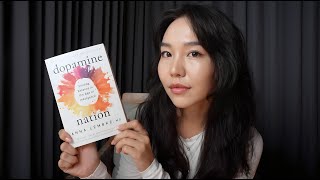

The Secret Behind My Productive Days
60sPersonal transformation story with a clear before/after contrast that resonates with viewers struggling with productivity.
▶ Play Clip"The title promises a life-changing book, and the video delivers a solid explanation of dopamine's role with personal anecdotes, though it's somewhat repetitive."
The video discusses how understanding and managing dopamine can transform one's life, based on the speaker's personal experiences and insights from Dr. Anna Lembke's book 'Dopamine Nation'. The speaker shares how avoiding pleasure and embracing difficult tasks can lead to greater motivation, happiness, and success.
The speaker realized that avoiding pleasure and embracing difficulty led to more productive and successful days, which changed his life, helping him earn $10,000 per month and feel happier.
During a 10-day Vipassana meditation retreat in Korea, with no stimulation, the speaker experienced boredom but also a surge of ideas and appreciation for simple things, highlighting the benefits of dopamine detox.
After the detox, the speaker became more sensitive to pleasure, finding joy in simple tasks and feeling more motivated to work on difficult projects.
Successful people have large reserves of dopamine because they don't waste it on pleasure, allowing them to tackle complex projects that require high motivation.
The speaker introduces Dr. Anna Lembke, a Stanford psychiatrist, and her book 'Dopamine Nation', which forms the basis of the video's knowledge.
Dopamine is responsible for pleasure, motivation, and desire. Low dopamine leads to lack of motivation, as shown by the rat experiment where rats with depleted dopamine starved even with food available.
Consuming content or engaging in pleasurable activities depletes dopamine, leading to lower energy and making ordinary tasks feel unbearably difficult.
Pleasure and pain are processed in the same brain region and strive for balance. Constant pleasure leads to a swing towards pain, causing a need for more stimulation and discomfort when stopping.
Doing painful things intentionally leads to more pleasure later, as the brain corrects the balance. This understanding changed the speaker's approach to difficult tasks.
Dopamine can be increased through initial reactions (like drugs) or corrective reactions (like completing hard tasks). Corrective dopamine is more long-lasting and effective.
To get ahead, avoid wasting dopamine on pleasures, embrace difficulties, and use apps to block distracting social media. The speaker recommends living a life with minimal indulgence.
The video concludes that by understanding and managing dopamine, one can increase motivation and happiness, and achieve success. The speaker encourages viewers to read 'Dopamine Nation' and apply these principles to their lives.
What is dopamine responsible for?
Dopamine is responsible for feelings of pleasure, motivation, and the desire to do something.
07:16
What happens when dopamine is depleted?
When dopamine is depleted, motivation drops, and even simple tasks become difficult, as shown by rats that starved with food available.
07:30
What is the relationship between pleasure and pain in the brain?
Pleasure and pain are processed in the same part of the brain and strive for balance like a seesaw.
10:27
What are the two ways to increase dopamine?
Initial reaction (like drugs) and corrective reaction (like completing hard tasks). Corrective dopamine is more long-lasting.
13:26
What is the 'secret of successful people' according to the video?
Successful people have large reserves of dopamine because they don't waste it on pleasure, allowing them to tackle complex projects.
05:28
The Secret of Successful People
This insight reframes success as a function of dopamine management, offering a practical explanation for procrastination and achievement.
05:28Pleasure and Pain Balance
Understanding that pleasure and pain are processed together and seek balance explains why indulgence leads to a crash and why difficulty leads to reward.
10:27Corrective Dopamine
Distinguishing between initial and corrective dopamine provides a scientifically grounded reason to embrace hard work.
13:26Rat Experiment
The rat experiment vividly illustrates the critical role of dopamine in motivation, making the concept memorable.
07:30[00:02] help you get ahead of 99% of the population. Once I realized this thing, it just changed my life forever. I started to take more action. I have achieved many of my goals. I now earn $10,000 every
[00:18] month. And most importantly, I feel happy. I used to work for hire, I would wake up, and my hand would automatically reach for the phone. After that, I scrolled through the motions of barely getting ready for work, and I lived a meaningless life. And
[00:34] all my tasks, my whole life, you know, seemed like such a really, really difficult task. Everything was done through force. But of course I had a dream. I wanted to start a YouTube channel, I wanted to travel a lot, live in different countries,
[00:48] be financially independent. But in fact, I simply didn’t have the strength to implement all of this . I always promised myself that after work I would come back, write after work I would come back, write some content, and write a script. But I
[01:03] came home and had no strength for anything . I scrolled, I drank alcohol. From time to time, on weekends, I would publish some content irregularly, taking a small step towards my dream. But, you know, among all this
[01:18] , among all this, there were very rarely days when creating content or some tasks came easy to me. I'll bam, I'll write a script, and then I'll record a video for YouTube. And I began to notice how all of these
[01:34] I began to notice how all of these successful days had a common denominator. And on all these days, when I succeeded in something, on this day and the day before , I did not indulge in pleasure. Those were such boring, somewhat
[01:51] difficult days where I didn't scroll, again , yes, didn't indulge in any pleasures, didn't eat any delicious food, didn't watch Netflix. And I noticed this even more strongly when I went to Vipassana for the second time. It was in
[02:04] Korea. And if you've been to Vipasana, the if you've been to Vipasana, the classic Gonk Vipasana, then you know that they take away phones, books, notebooks, that is, you're not
[02:18] allowed to do anything. You meditate there for 10 hours a day, and don’t read, don’t write, everything that you can’t even look into the eyes of other people . Because it stimulates your brain. That is, everything that stimulates your brain, everything that gives it
[02:33] some kind of dopamine, serotonin, that is, all of this, all of these actions are prohibited. That is, this, all of these actions are prohibited. That is, you essentially sleep and then during the day, for a you essentially sleep and then during the day, for a total of 10 hours, you meditate.
[02:47] That is, you get so bored there . I have never been as bored as I was during vipassana. That is, on the eighth day I was already going crazy there. eighth day I was already going crazy there. But, you know, what was interesting was that
[03:01] But, you know, what was interesting was that these days so many ideas started coming into my head , so many plans, ideas, and I need to record this video, I need to get this project started. That is, I wanted to take a piece of paper and just start
[03:14] wanted to take a piece of paper and just start writing everything down. And I remember, on, uh, the eighth or ninth day, I looked at my fingers and was just my fingers and was just so surprised. Well, I got so into it
[03:29] that, damn, these are the fingers on our hands. This is what I look like. I was looking at some flowers there. That is, all this is in a sober state. is, all this is in a sober state. Your brain is able to see all this
[03:44] when there is minimal stimulation. That is, you begin to notice some, ah, simple things, and even simple things become very interesting to you, very engaging. When I left the VIP on the eleventh day, they give you
[04:00] phone numbers, I was just in shock. I opened my phone and saw these. I was shocked by the richness of the colors, just how, uh, the design is just so rich. And Instagram just blew my mind. I just realized on a deep level
[04:16] that all social networks are designed in such a way as to suck us in, to thanks to this detox, detox, I greatly increased my
[04:31] sensitivity to pleasure, my sensitivity to everything in general. That is, what used to bring me pleasure no longer brought me pleasure after this cleansing, so to speak, but literally everything brought me pleasure. difficult
[04:45] tasks that I had to record a video there , to record a video, it’s very, you have to organize everything, sit down, write it down, it’s a very difficult task, and for write it down, it’s a very difficult task, and for which you need a lot of willpower, a
[04:59] lot of dopamine. And after vipassana it was very easy for me to do such things, because working is still more interesting than doing nothing, just meditating, right? That is, I was interested in
[05:12] doing everything, and I did it with pleasure. And then, ah, this realization came to me that changed my life forever. I understood and discovered the secret of successful people, the secret of duers, the secret of people who do not
[05:28] procrastinate and achieve great success. These people simply have great success. These people simply have very large reserves of dopamine in their brains. And all because they don’t spend this dopamine on pleasure.
[05:44] They accumulate it, it flows, flows, flows, accumulates, accumulates. And it's understandable, yes, why they can complete such complex projects, because complex projects require large reserves of dopamine, otherwise you simply, well, won't be able to cope. And those who
[05:57] indulge in pleasure consume a lot of content, food, watch porn, yes, they are less successful. And that's a fact, because they just don't have it, they've
[06:09] used up all their dopamine reserves, and they don't have any and complete some more complex tasks. After Vipason, I delved deeper into
[06:23] this topic and began studying dopamine and how it works. And, ah, I found simply the best researcher, speaker, American
[06:35] psychiatrist Anna Lemke. She wrote this All Times, is called Dopamin
[06:47] Nation. Anna Lemki. Here. Oh, and in general this video and all my knowledge will be based on her discoveries. She's a psychiatrist at Stanford. Let's
[06:59] go deeper. Basically, dopamine is a chemical in the brain that is responsible for feelings of pleasure, motivation, which is the most important thing, and the desire to do something. That is, if dopamine is normal, sufficient, then you have a lot of
[07:16] normal, sufficient, then you have a lot of motivation, you have a desire to conquer, to go, to complete projects, to post content, to start something new. When you have little dope and you have used it up, you do n’t want to do anything. there was a very,
[07:30] ah, there is a famous stage with rats, when famous stage with rats, when their dopamine was stimulated, they ran around chasing food, but when they depleted the dopamine, the rats simply
[07:45] died of hunger, and they had no motivation to even feed themselves when the food was right in front of them. Because, well, there was no dopamine. And it just goes to
[07:58] show how important, how important this chemical is in our brain. Because, well, rats just, even when there's no dopamine, they didn't even care. They're just like, "Okay, I'm going to die, well, there's no dopamine, I'm going to
[08:12] die. I won't even go get food, I won't feed myself. And I have no hope for a good life." Here. This is how important dopamine is, right? Let's move on to some thoughts from Anna's book that are, ah
[08:24] , very important to understand. to achieve success in general, because I think that yes, you can be advised different things, but when you understand at a deep level how your brain works, you already intentionally
[08:40] do or do not do certain things. That's exactly what happened to me when I started to understand how dopamine works, and it really changed my life. Anna writes: "The thing is, when you
[08:52] Anna writes: "The thing is, when you consume content, or do things from the category that brings you great pleasure, you spend your dopamine, deplete its supply, which leads to a
[09:06] deplete its supply, which leads to a drop in energy, and ordinary work tasks now become unbearably difficult." Yes ? That is, uh, to go wash your hands.
[09:18] I've had days like this where I'm such a truly addictive such a truly addictive personality, yes, I'm very, uh, if I like something, I can just fall into it and,
[09:33] uh, become dependent on it. That means I will develop an addiction to it. Here. I have an addictive personality. And I had days when I scrolled, I had days when I scrolled, just lay there so deep in this
[09:48] just lay there so deep in this dopamine pit that it was hard for me to go to the toilet. There were days when I just didn’t want to, well, it was hard, it was hard for me to just get up. That's how
[10:01] hard for me to just get up. That's how bad it was usually, not to mention work, yes, just washing your hands there was unbearably difficult. To complete large projects, we're not talking about washing your hands and
[10:15] going to the toilet, but recording a course there, or, say, recording a video. This requires huge reserves of dopamine. It is very important to understand this. As Anna writes,
[10:27] pleasure and pain are processed in the same part of the brain. Cool, huh? Pleasure and pain are processed in the same part of the brain, and they always strive for balance like a scale, like a seesaw or a scale, with pleasure on one side and
[10:41] pain on the other. That is, if you constantly do something pleasant, something that gives you pleasure, that boosts your dopamine, pleasure, that boosts your dopamine, then your brain will try to
[10:54] correct and balance these swings towards pain. That's why when you indulge in pleasure, you want something even more
[11:06] stimulating. That is, there are people who watch regular porn, and then it does n’t get to them anymore, they’re already sensitive, they’re already dissensitized, or, correct me, they need something even more
[11:20] stimulating. So they watch some other crazy stuff, right? That is, uh, you become sensitive to it. And as soon as you stop doing this, you experience severe pain. That's when there, ah, I had days when I was just
[11:37] looking there, scrolling, just doing something, and sometimes the Internet turns off or something else happens there. And this feeling, when
[11:49] , well, like, nothing happens, and you just, it’s so painful and unpleasant for you to be in this silence after this stimulating action, yes, and this
[12:04] clearly shows how our brain, uh, balances this swing towards pain. And the more pleasure you experience, the more pain you will experience afterwards. Your body will try to bring the
[12:20] dopamine surge back into balance. That's why it's so painful for us to return to work after an hour of scrolling, or after we've done something cool, but we do
[12:32] n't feel like working anymore because we had a blast and now our brain is like a scale, boom. Because pleasure and pain are processed. in the same part of the brain and vice versa.
[12:44] But there's good news here. And this is what I always try to remind myself of when I do something painful, something unpleasant. The more painful things unpleasant. The more painful things you do intentionally, yes, in the moment, the
[12:58] more pleasure and pleasant emotions you will feel later. And this understanding changed everything. I had a picture on my phone for a long time called, um , do hard things. Now I get pleasure from doing
[13:12] painful things, because I know that my brain will then correct it for pleasure. It turns out there are two ways to increase dopamine. This is both an initial reaction and a corrective one. Let me explain now. When you
[13:26] do something that is intentionally painful, physically or emotionally, and you press on the painful side in order to set in motion the compensatory balance of our body towards pleasure. So, we
[13:41] get dopamine not as an initial reaction, that is, when we scroll reaction, that is, when we scroll or take some pills, like MDMA, these pills that just give a crazy surge of serotonin and
[13:56] dopamine. That's the initial reaction, right? And when we do something reaction, right? And when we do something hard, like training in the gym, yes, it’s hard, we get dopamine as a
[14:10] corrective reaction, and it’s more and it’s a more effective way to increase dopamine levels. And as research shows, dopamine that is not primary, yes, which immediately stimulates, but rather corrective, is
[14:25] more long-lasting. For example, we experience a high after completing a super-hard workout or some big project. We are completing something big
[14:37] , and we feel this thrill, pleasure, satisfaction. This is the corrective dopamine. Therefore, to get ahead of 99% of the population, you simply need to increase, not just increase, but simply not waste your
[14:52] dopamine reserves. In fact, nowadays no one wants to intentionally hurt themselves. Yes, everyone runs away from difficulties, everyone runs away from, uh, what is unpleasant to do. And especially in our time, yes, when pleasure is just right in front of
[15:08] you do not indulge in these pleasures that are available to everyone. It's so easy. I took the phone, that's all, and you do the opposite. Don't indulge in pleasure. Look at difficulties as, well, with
[15:24] joy, yeah, what the heck, that's great, now I'll work hard, then I'll enjoy it, my brain will give me this dopamine after I complete difficult tasks. If you don't do things like the rest of the population, yes, we all do, we are all afraid of difficulties, we all don't
[15:40] want to suffer, but if you deliberately go into suffering, now we are not talking directly about the type of need to suffer, but when you do
[15:52] difficult tasks, when you go towards difficulties, when you work deliberately, that difficulties, when you work deliberately, that is, you cause yourself pain, and this is what will distinguish you from the rest of the population, because I guarantee that few people
[16:07] do this. Few people do this, especially in our time, when pleasure is simply everywhere, when I need to complete some big project, record a video for YouTube, record, uh, video lessons for my course, where there is a
[16:21] video lessons for my course, where there is a lot of work to be done, I deliberately stock up on dopamine. And in general, when I was preparing for this video, I realized that I generally need to live a life where I don’t indulge in pleasure at all.
[16:35] That is, very rarely. I have this app on my phone simply blocks all applications for several hours . That is, when I go to
[16:49] . That is, when I go to YouTube, he writes to me: “Grow with passion, not with YouTube, the purpose of our lives is to be happy.” Or there, of our lives is to be happy.” Or there, if I go to Instagram, it writes:
[17:01] "Unmask reality". What did he write there? Unmask reality but hide Instagram and Unmask reality but hide Instagram and some quotes. Overall, it's a great app. I think that in general, if your work
[17:13] does not involve social media, you don’t need to have it at all. I'm currently taking a Porilsa course with someone, and he has a fairly large Instagram account, and he says: "I don't post my own posts." Well, that is, I have a
[17:29] person who posts my posts. I do n't even use Instagram, I don't scroll, I don't even read the comments, but he was the one who set up the course. Can you imagine? That is, all people who work with social networks understand how brainwashed this is.
[17:45] understand how brainwashed this is. and in general, mm limits his time on these platforms, because these platforms simply drain your dopamine reserves if it is not educational content. This is why I love YouTube. That's
[17:58] why I love long-form content that's educational, thoughtful, where you're, uh, learning something, not just wasting your dopamine reserves. Before this app, I thought, "Well, I have self-control, I control myself, I won't
[18:11] log in." But my hand automatically reaches out. I don’t even notice that I’ve already been on Instagram for 3 hours. Here. And when I installed this app, I log in and I’m like, “Oh, I couldn’t log in.” And that's all. And my screenshot dropped sharply.
[18:29] Therefore, you shouldn’t trust yourself, you shouldn’t trust that you can control yourself. Before you know it, you'll have spent half your life on Instagram. Therefore, I highly recommend downloading this
[18:44] app or some similar apps. I am so envious of the older generation. Sometimes old people just sit and look at the clouds. They have fun,
[18:56] they enjoy it. Now I force myself to just do nothing sometimes, just sit and look at the wall. Or when I go somewhere to eat, I don’t watch anything, I don’t watch podcasts, I generally
[19:13] put my phone away, I don’t listen to music. I try not to listen to music, because music also gives a lot of dopamine, a surge of dopamine. And just sit, eat, dopamine. And just sit, eat, be in the moment, look at the wall,
[19:28] look at the sky. I think this is what makes at the sky. I think this is what makes I hope you enjoyed this video. Write your thoughts in the comments. I
[19:43] highly recommend reading this book, Dopamin Nation, by American psychiatrist Anna Lemka from Sanford University . She also has, if you speak
[19:55] English, although now you can watch videos in Russian through the Yandex browser . Ah, she has a lot of podcasts. She had a podcast with Andrei Huberman, with Dairiova, the CEO, with Richrol. She walked in, I listened to all these podcasts, and I
[20:11] said: “I don’t watch YouTube, I don’t watch podcasts, but I watch educational ones.” And there she talks a lot about how dopamine works, and how it directly affects the quality of our lives. That's all, guys. That's
[20:27] all. It's been a long time since there was a conversational video like this. Please write in the comments what new things you learned. Perhaps you could share your story. I'll be very glad
[20:40] to read it. Okay, see you in the next video. Be video. Be happy. Bye bye. U

⚡ Saved you 0h 20m reading this? Transcribe any YouTube video for free — no signup needed.