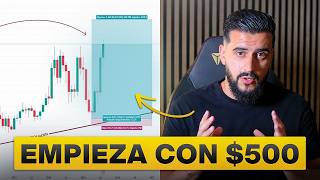

How I'd Trade With Only $500
45sThe promise of a realistic strategy for small accounts appeals to the vast majority of aspiring traders who lack capital.
▶ Play Clip"Delivers on the promise of a strategy for small capital, but includes promotional content and a lengthy intro."
The video presents a comprehensive guide for traders with limited capital, emphasizing the importance of mindset, risk management, and a specific liquidity-based trading strategy. The creator shares personal experience and advice on scaling small accounts without losing money, targeting serious traders who want to grow their capital gradually.
The creator explains that the video is for traders with limited capital ($100-$1000) who want to scale it without losing money. He emphasizes that this is for serious traders, not those looking to get rich quick.
The short-term goal should not be to withdraw money but to execute the strategy perfectly and risk according to the plan. The long-term goal is to scale capital, but the focus must be on process over outcome.
Quitting your job adds pressure and can negatively affect trading. The creator advises against short-term thoughts of leaving employment, as it increases stress and can lead to poor decisions.
More exposure to the market often leads to more losses. The creator limits trading to specific sessions (London and New York) and emphasizes quality over quantity.
Avoid thinking about what you'll buy with profits. Keep the capital in the account to allow it to grow and compound. Withdrawing money hinders scaling.
Risk 1-2% of your account per trade. This balance allows for scaling without excessive risk. Risking too little slows growth, while risking too much can lead to ruin.
For low capital, funded accounts are recommended. They cost less (e.g., $70-80 for a $10k account) and provide rules that help discipline. The creator mentions a 15% discount with code 'belique' at Orion.
Always aim for a risk-reward ratio of at least 1:2. This allows you to be profitable even with a losing streak. Never risk more than you can gain.
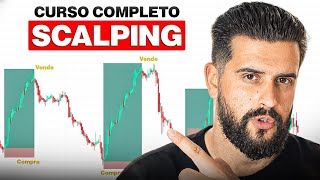
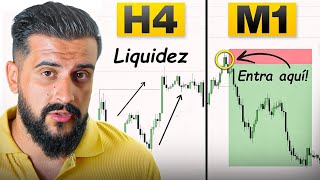
The creator's strategy focuses on liquidity. He waits for price to eliminate a high or low on the 1-hour or 4-hour chart, then looks for sells above highs and buys below lows, with confirmations on lower timeframes.
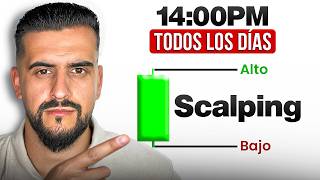
Trade during London (9-11 AM) or New York (2-4:30 PM) sessions, wait for liquidation of a high/low on higher timeframes, and enter on an imbalance on lower timeframes with a risk-reward of at least 1:2.
The video provides a practical framework for traders with small capital, emphasizing mindset, risk management, and a specific liquidity-based strategy. By focusing on process and using funded accounts, traders can scale their capital without excessive risk.
What is the recommended risk percentage per trade?
1-2% of your total account balance.
12:35
What is the minimum risk-reward ratio recommended?
At least 1:2.
17:40
What are the two trading sessions mentioned?
London session (9-11 AM) and New York session (2-4:30 PM).
22:59
What is the cost of a $10,000 funded account exam?
Around $70-80.
14:16
What is the strategy based on?
Liquidity, waiting for price to eliminate highs or lows on higher timeframes.
19:19
Mindset over Money
Emphasizes that focusing on process rather than profits is crucial for long-term success.
02:11Don't Quit Your Job
Challenges the common desire to quit, explaining how it adds pressure and harms trading.
05:07Less is More
Highlights that overtrading leads to losses, contrary to the belief that more time equals more money.
07:25Risk 1-2%
Provides a concrete, actionable rule for risk management that balances growth and safety.
12:35Liquidity Strategy
Reveals a specific, profitable strategy based on liquidity, which is the core of the video.
19:19[00:01] exactly how I would operate if I only had $500 to start trading, because right now you see me withdrawing tens of thousands of dollars from funding accounts. But this has not always been the case. I was in your situation. I
[00:16] had a normal, ordinary job. In my case, I was a security guard and of course I didn't have that much capital to invest in trading. Today I'm going to give you the mindset, the foundations, and a trading strategy so you can
[00:31] grow and scale the capital you currently have, whether it's $100, $200, $ currently have, whether it's $100, $200, $ 300, $500, or $1,000. It doesn't matter, the capital, I'm going to show you how to scale it without losing your money. So if
[00:45] you're tired of burning through funding accounts or your own savings, stay until the end of the video. Let me also tell you that this video is mainly focused on people who, hey, take trading seriously and want to
[00:58] give it their all 100% to improve their situation or have some extra money at the situation or have some extra money at the end of the month, but don't have more capital to invest in trading. Therefore, this video is aimed at those
[01:12] people who are going to take it seriously, who want to go for it, who have the right mindset to achieve it, but do not have as much capital to but do not have as much capital to invest and their capital is a little less and they
[01:26] cannot invest more. But despite not having much capital to invest in trading from the beginning, they are going to take it very seriously. This isn't someone who treats this like a casino, like a game, who wants to get rich quick
[01:41] , but someone who wants to gradually increase their capital and take gradually increase their capital and take those $100 to 200, to 300, to 400 or those $1000 to 2000, to 3000 and multiply it little
[01:56] by little, but above all, someone who is grounded, who has the right mindset, who has conviction and who wants to achieve it, but from the right perspective and knows that they have to do things right. We are going to discuss a very
[02:11] important topic, which is mindset. We need to be clear about this concept and what it encompasses, because it's a very important part of trading, especially when you need to scale your capital without making
[02:33] thinking, "Okay, but I get into trading to make money and withdraw some at the end of the month." Yes, obviously that's the
[02:45] long-term goal, but it doesn't have to be your main short- or medium- term goal. Because? Basically because you won't be learning how to build that
[02:58] capital. The first thing you have to understand is that with $500, with $200, with $100 you're not going to have a salary at the end of the month, nor are you going to become a millionaire or anything like that. Therefore, the first thing you need to know is that you
[03:14] have to scale that capital, and to scale it you need time, a good strategy, and a good mindset. Therefore, your short and medium term mindset should not
[03:26] be. The $50 I'm going to withdraw this month I'm going to use to buy X or quit my job or whatever else you can imagine. Not at all, your goal should be to
[03:38] do things as well as possible, risk what your trading plan tells you to and execute the strategy perfectly, but above all perfectly, but above all based on percentages. Keep in mind
[03:53] that you will have to add percentage after percentage to all the capital you have. In fact, the risk you're going to take per trade will have an exact percentage that you have to use as a stop loss to make a
[04:07] profit on that trade. Therefore, you need to focus more on having a clear strategy, clear risk management , a clear mindset, and not so much on
[04:20] thinking, "This month I'm going to withdraw $50," " This month I'm going to withdraw $70," "This month I'm not going to lose money," no. First you have to focus on doing things right and the money, the ultimate goal, the long-term goal will come little by little, but don't
[04:38] focus solely on that because otherwise you won't take anything into account and you'll be guided more by the feelings of that moment. Whether you're losing one day or winning the next, you'll get motivated and start
[04:52] doing things wrong. Therefore, in the short and medium term you need to be short and medium term you need to be clear that your only focus should be on doing things correctly. Secondly, and very importantly, don't think about
[05:07] quitting your job. This is a very common thought that most people have when they start trading and begin to earn a little money. Hey, tomorrow I'm going to quit my job, next month I'm retiring, next week I'm going to
[05:21] buy a car, I'm never going to have a boss again, I'm going to quit my job that I don't want. No, I know that this is obviously what most people seek in their lives: to be their own boss, to have their own business, to
[05:34] have their own investments, to live doing what they love. But this is something that requires a lot of time, patience, and discipline. And you also have to discipline. And you also have to understand that if your goal is to
[05:47] dedicate yourself to trading, you're very likely not going to achieve it. Because? not going to achieve it. Because? because you're going to have a lot of added pressure. Moreover, if things go
[06:00] really well for you in the future and you can quit your job, I would actually tell you to think about it and with trading, why would I think about quitting my job?" It's very simple, because if your only capital, your only money that comes in month to month,
[06:16] that in many cases will put extra pressure on you. And I'm telling you this because obviously I've gone through that whole process and I've been dedicating my time solely to trading for years now. My job is solely
[06:30] trading, and I know what it's like to have more pressure than usual because obviously if you do Therefore, what I would tell you is not to have any short-term thoughts of
[06:42] leaving your job, the desire to leave your job, or the need to leave your job. In fact, I would tell you to think about whether you really want to leave your job in the future, because this will only add pressure to your work, your
[06:56] trading, and your way of making money. Therefore, focus on doing things right, executing your strategy, and continuing with your personal life, your family, your vocation, your work, and having trading as your goal, your
[07:11] personal achievement that you want to attain and dedicate yourself to in the future. But don't put any more pressure on yourself because trading is very high-pressure. You don't need to add any more because you're going to explode. Another very important thing: trading more won't
[07:25] give you more money. In fact, most of the time, the more exposure you have to the market, the more often you trade, and the more often you operate, the more likely you are to lose money. Because? Because we,
[07:41] human beings, are very used to wanting to make the most of our time. Since we were little, we've been told, "Hey, if you work 8 told, "Hey, if you work 8 hours you're going to get paid $50, $0." Because?
[07:53] Because your Bora has a cost. We are used to charging 7 an hour, 6 an hour, €6 an hour, €5 an hour, €10 an hour or pesos or whatever, depending on your country's currency. And we know that our hour of life, our hour of
[08:08] our hour of life, our hour of work is 7 € 6 8 whatever. So, we're used to the idea that, hey, if I'm dedicating time to trading, if I'm looking at the charts, then I need to have a reward, I
[08:22] need to get paid. The reality is that trading doesn't work that way. use your trading strategy, your trading plan, and everything else correctly, will pay you off. But if you do things wrong, or if there are no trades that day
[08:35] But if you do things wrong, or if there are no trades that day then you won't earn anything. Or if you have a bad day, you'll lose money. Just imagine going to work and your boss telling you no,
[08:48] that today instead of getting paid, you're going to pay him. Some people that's trading. Trading doesn't always opportunities, you won't always get paid, and you do n't always have to make money.
[09:01] n't always have to make money. Therefore, the more hours you expose yourself, the more likely you are to want to make your time profitable, the more likely you are to take more risks than you should, and the more likely you are to lose money. Therefore,
[09:14] you have to keep in mind that you won't always make money no matter how many times you trade. I actually only do 2 hours in the morning, London session, and 2 and a half hours in the afternoon in the New York session, and
[09:29] the afternoon in the New York session, and believe me, that's more than enough. Fourth most important thing, don't materialize the money. Don't aim to reach an exact amount. In other words, don't say, "No, well, I'm going to take these
[09:46] $500 or these $200 to $1,000 because I want to buy this piece of clothing, or down payment on an apartment, or I want to buy X, or I want to go on vacation." Don't materialize the money. Keep in mind that whatever you're going to invest in
[09:59] trading, don't count on it. Why? Because what you're interested in is not taking anything out of that account, of those $00 you 've put in, for example. You're not Because as that account grows, you'll be able to risk more, you'll have a
[10:13] bigger cushion, and you'll be able to earn more. Percentage-wise, As that capital grows , you'll be able to earn more
[10:26] money. Therefore, don't touch the capital you have in that account that you've decided to invest. In fact, I would say that if you have more capital or More savings, I would tell you to gradually increase that capital,
[10:40] adding new money so that the account slowly grows and the profits gradually generate more
[10:52] money. Therefore, don't think about the money you've set aside to invest, and definitely don't spend it like, " to invest, and definitely don't spend it like, " I'm going to withdraw $500 from this trading account because I'm going to buy clothes
[11:04] or go on a trip with my partner." No, leave that money alone and use it to scale a necessary vehicle for gradually increasing that capital, because if you keep withdrawing the money, the profits from that account will most
[11:18] likely never scale or will take a very long time to do so. And I 'll also tell you something else: scaling your trading account will improve you as a person. Why? Well, basically because for you to scale capital from
[11:33] $200 to $300 or from $500 to $1000, this will mean that you, as a person, will... Improving. Your habits will improve, your knowledge of trading will improve, your self-awareness, your understanding of your feelings will improve, and everything in
[11:50] obviously, someone managing $500 doesn't have the same knowledge or self- control as someone managing someone managing $1,000, $2,000, $3,000, or $10,000.
[12:06] Therefore, scaling your trading account and making money from trading will improve your life in every way, because little by little you'll learn , you'll listen to other people, you'll learn about other
[12:20] risk, other ways of managing your emotions, and all of that will emotions, and all of that will improve every area of your life. Now let's look at the three technical foundations of the strategy, something also
[12:35] very important for managing everything correctly. First, have controlled risk in your account. In this case, I always your account. In this case, I always recommend going from 1% to 2% per trade
[12:51] of your total account balance. So, if you imagine you have a capital of $ So, if you imagine you have a capital of $ 0,000, you could risk 1% or 2% course, depending on what you're willing to lose, but risk between
[13:06] willing to lose, but risk between 1% and 2% of your account balance on a single trade. That is, if you want to place a sell or buy trade, you would only risk between 1% and 2%.
[13:20] Of course, 1% is the most conservative and 2% is the most aggressive. You could also choose 1% or 5%, which is the middle ground, so to speak? Half, but you would never exceed that risk, nor would you lower it
[13:36] will take you too long to scale your capital. If you risk scale your capital. If you risk 0.5%, 0.20%, or 20% per trade, or if you risk 3%, 4%, or 5% per trade, the first is that the risk is very low
[13:51] and it will take you a very long time to scale, and the second is that you have an extremely high risk. Therefore, So, stay in the middle, neither too much nor too little.
[14:03] Something in between, why? To be able to scale your account, but without too much scale your account, but without too much risk. Risking too little is just as bad as risking too much. You have to keep that in mind. Second,
[14:16] very important point: if you have such low capital to invest in trading, I would recommend that you start with funded accounts. If you don't know what they are, I'll give you a very brief explanation. They are funding companies that
[14:31] basically lend you their capital, so to speak, and you take 80% of those profits. But obviously,
[14:43] first you have to invest some of your capital to take the exams they require to be able to trade with that capital. That is, if you want to trade with $10,000, for
[14:57] example, this exam might cost you. I recommend the two-phase exam; that is, you have to pass two exams to be able to trade with that money that will generate profits, with that funded account they give you. You have to invest
[15:10] they give you. You have to invest Around 80 or 70 for a 10,000 account. And if you pass the first and second phases, they'll give you that and second phases, they'll give you that capital, those $10,000. And from those $10,000,
[15:23] you can withdraw 80% of the profits you make. Obviously, it's somewhat complicated to pass those first and second phases, those two tests they require, but for me, it has much less risk. Why? Because
[15:38] basically, accessing those tests, accessing those accounts, costs 70 or 80 for a 10,000 account. However, to trade with a 10,000 account with a personal broker, you have to deposit $10,000 or €10,000, and obviously, not everyone
[15:53] has that kind of capital to invest and risk losing, because trading with capital, you can have a bad day, you can have a moment of impulsiveness and lose all your savings and all your money. However, if you enter through
[16:06] companies of Funding, well, accessing that capital will cost you 80, 70, 90, join, depending on whether there's a discount, but obviously it will be
[16:18] much, much cheaper. And in fact, I really like funding companies for beginners because they set rules for passing the tests they require, test one and test two; you have to follow certain
[16:32] rules. You can't let your account balance drop by more than 10%, you have to achieve a certain profit, you can't risk more than a certain amount per day. In other words, you have rules, you have guidelines that you can't break because otherwise you can't
[16:47] access the capital they give you if you pass those tests. However, a personal broker, with your own account, with your own money, there are no rules. If you're having a bad day, you've argued with your wife, you've been fired from your job, you've had
[17:01] some problem, the work environment is bad and you lose your temper, well There are no rules. If you burn all your money, you burn it, period. And nobody's watching, there are no rules to cancel you or anything, and all your capital is at stake. However,
[17:15] with funding accounts, what's at stake is 50, 60, 40, 80, depending on the exams or the account you want to access. Therefore, I much prefer funding accounts, which, by the way,
[17:28] offer a 15% discount with the code Bike at Orion's funding company. You'll find it in the description below any account you want. Click "
[17:40] buy," and when it asks for the discount code, enter "belique," and you'll get the discount code, enter "belique," and you'll get the 15% discount. And the third, and no less important, thing is to have a good risk-reward ratio. What does this mean?
[17:52] Well, basically, if you're going to risk 50 on a trade, have a minimum profit target of $100. This would be a risk-reward ratio of one to This would be a risk-reward ratio of one to two, and this is very, very important. I would never
[18:07] Risking more than you stand to gain, or going for a one-to-one risk-reward ratio, is, in my opinion, too short-sighted and detrimental. If you hit a losing streak, it will be extremely difficult to
[18:21] break even or make a profit. This is because if you've had a losing streak and your risk-reward ratio is one to one—meaning you're potentially going to gain the same amount you risk— you have to win more trades
[18:34] than you lose. Otherwise, you wo n't be profitable and you'll never money. However, if you aim for a one- to-two or one-to-three risk-reward ratio, you can afford to lose three times in a row, or two times in a
[18:48] row, and when you have a winning trade, you recover everything and might even make a profit. Therefore, it's crucial to always aim for a risk- reward ratio higher than one to two, and never for a negative risk-reward ratio—that is,
[19:03] risking more than you can potentially gain or risking the same amount as you're potentially going to gain. I would always advise you to look for a risk-reward ratio that aligns with your risk potential. A profit greater than 1 to 2 or 1 to 3. This is very important. And
[19:19] now, of course, it's very important to have a profitable trading strategy very simple and quick way because there are YouTube channel. This is the trading strategy with which I've withdrawn more than $380,000
[19:33] in payouts from funded accounts. I'll show you several withdrawals here, dozens of withdrawals, so you can see that this strategy is extremely profitable. And if you want to see how I explain it in more detail,
[19:48] there's a free lesson in the description below where I'll explain everything in more about this strategy, the lesson is completely
[20:00] overview so you understand what I personally do. Basically, my strategy is based solely on liquidity. What is liquidity? Well, money in the market is, where banking institutions need to go
[20:16] to get all the money from people and from other banks. Where is it Where does all that liquidity come from? Well, it's in every past high and low. Obviously, if that high and low are in the current 4-hour chart, whether daily or
[20:32] weekly, there's significantly more money pending. Therefore, the trade is much more likely to go our way. What am I waiting for? Basically, for the price to eliminate a high or low on the
[20:44] a high or low on the one-hour or four-hour timeframe, and then I'll look for sells above highs and buys above lows. This is the exact opposite of what most people do, and most people lose
[20:57] money when they trade. So, what I do is look for sells above highs and buys below lows. As you can see, on the one-hour chart, we have this pending high, a past high, and the same on the
[21:09] four-hour chart. Therefore, what I'm going to do is wait for the price to clear that point and give me some very precise confirmations. I 'll give you a brief overview here to help you understand. And if
[21:23] overview here to help you understand. And if you want more details, you can find them below. mentioned. What do I do? Well, I look for these kinds of liquidations, where the price surpasses those highs and lows at the opening of the London Stock Exchange
[21:36] AM Spanish time, or at the opening of the New York Stock Exchange, from 2:00 PM to 4:30 PM. As you can see, here we are at we are within the New York Stock Exchange session. Therefore, the price has
[21:51] eliminated a high, liquidated that area, and absorbed all that liquidity. York session, and what am I looking for? Well, I go to the 2-minute timeframe, and what I look for is a gap, an imbalance in the price. What does that mean? Well,
[22:05] basically, that in a sequence of three candlesticks, the first and third candlesticks don't of three candlesticks—first candlestick, second candlestick, and third candlestick—there is a price imbalance, and normally the price tends to move to balance it.
[22:19] market. Therefore, since we are above the highs within the New York session and on a lower timeframe, the price has created an imbalance. Here, I place my sell order and look for that
[22:31] risk-reward ratio I mentioned earlier—a risk-reward greater than 1 to 2. So, we place our trade here at this we place our trade here at this imbalance, 1 to 2, and simply
[22:44] watch as the price melts. There you have it. It could have even given you much more. Notice how it reached a wide range and without much hesitation, all the way to 1 to 2, liquidating all the positions below. So
[22:59] , in summary, London Stock Exchange opening , New York Stock Exchange opening, 9 to 11 or 2 to 4:30 PM, liquidating a minimum high on the 1-hour and 4- hour timeframes, and
[23:11] creating an imbalance on the lower timeframes. Anyway, below you have a free lesson if you want to learn more about the strategy. That's all for this video. I hope you more about my strategy, check out my entire YouTube channel, the
[23:25] free class, and my Instagram @vildealgo, where I post daily trades I catch live. So, if you want to learn more about me and my strategy—the one that has earned me over $380,000
[23:37] in payouts with funding companies— follow me, and I'll see you in the next follow me, and I'll see you in the next video.
⚡ Saved you 0h 23m reading this? Transcribe any YouTube video for free — no signup needed.