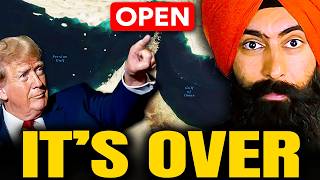

Trump Ends War: What Most Miss
40sControversial claim with immediate market impact grabs attention.
▶ Play Clip"The title accurately reflects the core event (Trump ending the war), but significantly underpromises the broader economic analysis within."
The transcript analyzes the market rally immediately following President Trump's announcement of the end of the conflict with Iran. It warns that the true economic impact of the prior oil price spike is historically delayed, and ties the conflict into the broader U.S.-China economic rivalry and its effect on the Federal Reserve's interest rate decisions.
President Trump announced the war with Iran is over. Investors responded positively, with stock markets rallying and oil prices falling.
10 out of the last 11 U.S. recessions since WWII were preceded by an oil price spike.
The real economic downturn typically starts months or a year after the oil crisis ends, not while prices are high.
The conflict with Iran was part of a broader economic war with China, involving tariffs, control of oil supplies, and rare earth supply chains.
Oil price spikes led to a new 3-year high in inflation, shifting consensus from expecting interest rate cuts in 2026 to preparing for possible rate hikes by the new Fed chair Kevin Worsh.
The war caused mortgage rates to rise instead of fall, straining the housing market. There is now hope that lower oil prices will lead to lower rates and stimulate the market.
What was the immediate market reaction to President Trump's announcement that the war with Iran is over?
The end of the Iran conflict, leading to a stock market rally and falling oil prices.
How many of the last 11 U.S. recessions were preceded by an oil price spike?
10 out of the last 11 recessions.
03:48
When does the real economic pain from an oil price shock typically occur?
Months or a year after the oil crisis ends.
04:24
Oil spikes precede recessions
Provides a powerful historical rule of thumb indicating that the end of the crisis does not mean the end of economic danger.
03:48Delayed economic pain
Challenges the common assumption that falling oil prices immediately lead to a strong economy, revealing a critical lag.
04:24Government prefers inflation over deflation
Explains the government's hidden incentive for inflation, connecting it to the $39 trillion national debt and explaining monetary policy preferences.
09:58[00:00] President Trump just announced that the
[00:02] war with Iran is over and investors are
[00:05] loving it. The stock market is rallying.
[00:07] Oil prices are falling and investors are
[00:10] hoping that the economy will be able to
[00:11] boom again. But there's more to the
[00:14] story that you want to pay attention to.
[00:16] In the past, when we've seen oil price
[00:18] shocks, the real pain to the economy
[00:20] doesn't happen while oil prices are
[00:22] high. They generally happen after the
[00:24] oil crisis ends. Not to mention the fact
[00:27] that this conflict in the Middle East
[00:29] also had an impact on China, the Federal
[00:32] Reserve Bank, and interest rates. So, in
[00:34] this video, I'm going to break down what
[00:35] might be coming now that we have the
[00:37] announcement that the war is officially
[00:40] over. So, let me break this all down. By
[00:41] the way, this is why again, today on
[00:44] June 16th, I have a live free and
[00:46] virtual investor workshop at 12:00 p.m.
[00:48] Eastern time, noon, where I'm going to
[00:50] be going over how you can find
[00:52] investment opportunities today, where
[00:54] the investment opportunities are. It's a
[00:56] free workshop. It's live. I'm going to
[00:57] be going over a lot of opportunities and
[00:59] research that a firm has been doing. So,
[01:01] if you haven't signed up yet, there's a
[01:02] limited number of people that can
[01:03] actually join me live. It's free at
[01:06] 12:00 p.m. Eastern time on June 16th.
[01:08] So, if you haven't registered, I look
[01:10] forward to seeing you there. The link is
[01:11] down in the description below.
[01:13] [clears throat] So, let me break down a
[01:14] few things that you want to understand.
[01:16] Starting with China. The reason why the
[01:19] conflict in the Middle East also
[01:20] impacted China is because the United
[01:22] States and China have been battling not
[01:25] militarily but economically. China's
[01:28] economy has been growing faster than the
[01:30] United States's economy. And there's
[01:32] been a lot of talk about the United
[01:33] States dollar losing its value, losing
[01:35] its trust while China has been working
[01:37] to buy more gold and strengthen their
[01:39] currency. Now, a lot of people will tell
[01:41] you that it's impossible to think that
[01:42] the Chinese yuan could ever replace the
[01:44] United States dollar. But just
[01:46] understand that China has made it very
[01:48] clear that they want to replace the
[01:50] United States as the world's superpower.
[01:53] Well, the reason why the United States
[01:55] and China are butdding heads
[01:57] economically, is because reports will
[02:00] show you that if China's economy keeps
[02:02] growing at the rate that it is, which is
[02:04] faster than the United States, we're
[02:06] approximately 10 years away from China
[02:08] surpassing the United States economy.
[02:11] Well, in response to that, the United
[02:14] States economy is trying to fight China.
[02:16] But they're not fighting them with tanks
[02:18] and missiles directly with China.
[02:19] Instead, the United States put tariffs
[02:21] on China as a way to not only bring
[02:24] business back to the United States, but
[02:25] also hurt China. The United States then
[02:27] attacked Venezuela and took out the
[02:30] president of Venezuela while also then
[02:33] getting in control of Venezuelan oil,
[02:35] which was previously going to China.
[02:37] Then the United States attacked Iran
[02:38] which again was selling oil to China at
[02:41] a discount and that also made it more
[02:44] difficult for China to continue
[02:45] operating their economy because China
[02:47] was relying on this cheap oil to
[02:48] continue producing the products for
[02:50] cheap. And then we have all these other
[02:53] economic things happening like the
[02:54] United States trying to build their own
[02:56] rare earth supply chain meaning trying
[02:58] to mine and produce our own metals
[03:01] without relying on China as a way to
[03:04] become more independent away from China.
[03:07] So part of this conflict had a lot to do
[03:10] with China and now the question is
[03:12] what's going to come next and is this
[03:14] enough with China? But let's go a little
[03:16] bit deeper as to what this means for the
[03:19] United States economy. Because a lot of
[03:21] people are now hoping that if this
[03:24] conflict ends, oil prices will fall
[03:26] drastically. We've already seen a huge
[03:28] drop in oil prices since President Trump
[03:30] made the announcement that the war with
[03:32] Iran is over. If oil prices fall,
[03:36] doesn't that mean that the economy is
[03:37] going to boom and inflation is going to
[03:39] get better? And there's a couple things
[03:41] that you want to understand about this.
[03:42] Let me start by taking a look at history
[03:44] because while history doesn't exactly
[03:45] repeat itself, it does rhyme. If we take
[03:48] a look at the last 11 recessions in the
[03:51] United States since World War II, 10 of
[03:55] them were preceded by an oil price
[03:59] spike. Meaning most of the recessions
[04:01] that we have seen in the United States
[04:03] over the last 100 or so years
[04:06] started with oil prices spiking. Now,
[04:09] the oil prices going up might not have
[04:11] been the cause of the recession, but
[04:13] it's something that we've seen happen
[04:14] before a lot of recessions. And the
[04:16] other part to that is that when oil
[04:19] prices spiked, that's not when the
[04:21] market crash or recession happened. The
[04:24] downturn started months or a year after
[04:27] the fact. Let me give you an example.
[04:29] Let's go back to 1973.
[04:32] In 1973, we had just faced an inflation
[04:35] problem because the dollar was taken off
[04:37] of the gold standard in 1971, just a
[04:40] couple years prior. That led to a lot of
[04:42] money printing and inflation. And then
[04:44] 1973, the United States got involved
[04:46] with a war in the United
[04:49] and then in 1973, the United States got
[04:51] involved with a war in the Middle East
[04:52] called the Yam Kapoor war, which caused
[04:55] oil prices to spike. Well, in response,
[04:57] OPEC in the United States had an oil
[04:59] embargo which hit in October of 1973.
[05:02] And everybody said the oil crisis is
[05:05] over in October 1973. But then the
[05:09] recession and the stock market hit in
[05:12] 1974. It didn't start for another 6
[05:15] months, that downturn. Let's fast
[05:17] forward to 1979.
[05:20] That was when the Iran revolution was
[05:22] happening. There was an oil shock which
[05:24] then led to a recession in the United
[05:26] States about one year later which lasted
[05:29] a couple of years. Let's go now to the
[05:32] year 1990 with the Gulf War. Oil prices
[05:35] spiked which then later months later led
[05:38] to a downturn in the economy. And then
[05:41] if we take a look at the 2008 crash, an
[05:45] oil shock happened before we saw the
[05:48] real downturn with the economy. Again,
[05:51] there was a lot of things that led to
[05:52] the 2008 great financial crisis, but an
[05:55] oil shock also happened leading up to
[05:57] the 2008 crash. Why does this all
[06:00] matter? Because the pain that we've seen
[06:04] with oil prices over the last number of
[06:05] months is going to be felt in our
[06:07] economy for some time into the future.
[06:10] And there is a chance that our economy
[06:12] can absorb it and no pain will come.
[06:14] There's also a chance that we will see
[06:16] some more economic pain as a result of
[06:18] the higher oil prices that we have seen
[06:20] over the last few months. What will
[06:22] happen? Only hindsight is 2020. But I
[06:25] want you to understand what we've seen
[06:27] happen in the past. The other reason why
[06:29] this is important for you to understand
[06:31] has to do with the Federal Reserve Bank
[06:33] and the housing market because the
[06:35] Federal Reserve Bank is the entity in
[06:37] charge of deciding interest rates.
[06:40] And President Trump just appointed a new
[06:42] chairman at the Federal Reserve Bank, a
[06:44] guy by the name of Kevin Worsh. Why does
[06:46] this matter? Because since President
[06:48] Trump entered the White House in 2025,
[06:50] he has been demanding lower interest
[06:53] rates. Well, for the Fed to cut interest
[06:56] rates generally
[06:58] they want to see some sort of pain in
[07:01] the economy. Well, inflation is not a
[07:03] problem. The reason why is lower
[07:05] interest rates help to stimulate the
[07:07] economy. So if you have pain in the
[07:08] economy, the lower interest rates can
[07:10] stimulate the economy. And the reason
[07:13] why the Fed doesn't want to see
[07:14] inflation when they want to cut interest
[07:16] rates is because the cutting of interest
[07:19] rates can make the inflation problem
[07:20] worse. So leading up to the year 2026,
[07:24] everybody had pretty much expected that
[07:27] we were going to see drastic interest
[07:29] rate cuts in 2026 because we were going
[07:31] to see a new chairman of the Federal
[07:33] Reserve Bank appointed by President
[07:34] Trump. And President Trump has been
[07:36] demanding lower interest rates. But then
[07:38] things changed after the United States
[07:40] attacked Iran because oil prices shot
[07:42] up. These higher oil prices led to
[07:44] higher gas prices, higher diesel prices,
[07:46] higher grocery costs, and higher prices
[07:48] of a lot of things. Inflation hit a new
[07:51] high that we haven't seen in about 3
[07:53] years.
[07:54] So now the talks were I don't think
[07:58] we're going to see lower interest rates
[08:00] in 2026. In fact, the Fed will probably
[08:03] have to raise interest rates in 2026
[08:06] because of how bad inflation is getting
[08:08] and how quickly it is getting bad. That
[08:10] had been pretty much the consensus with
[08:13] investors and Wall Street up until now
[08:17] because we don't know how long the
[08:18] conflict in the Middle East is going to
[08:20] last. We don't know how long oil prices
[08:22] are going to stay high. And as a result,
[08:24] well, we don't think that we're going to
[08:26] see lower interest rates anytime soon.
[08:28] In fact, we should be preparing for
[08:29] higher interest rates. Well, now we have
[08:33] this conflict in the Middle East ending.
[08:35] At least that's what we hear. We have
[08:37] oil prices falling and now the talk is
[08:41] what is this going to mean for inflation
[08:42] and inflation rates. And this is a
[08:45] concept that you want to understand the
[08:46] difference of because inflation is the
[08:48] price growth of things. Inflation rate
[08:51] is how fast the price growth is rising.
[08:54] Over the last few months, we have seen
[08:56] the prices of things rise relatively
[08:58] quickly. Now, the question is, what's
[09:00] going to come next? Is the inflation
[09:02] rate going to fall? President Trump says
[09:05] that it's going to fall like a rock, but
[09:07] it's not going to go negative. At least
[09:09] that's not what the government wants.
[09:11] That's not what the Federal Reserve Bank
[09:12] wants. That's not what Wall Street
[09:14] wants. They don't want negative
[09:15] inflation. They want lower inflation
[09:18] rates, which means the prices of things
[09:20] are still rising, just not as fast as
[09:22] they were before.
[09:24] So, if that's the case, if the prices of
[09:26] things continue to rise, just not as
[09:28] fast as they were before, that means
[09:29] that the prices of things shot up over
[09:30] the last few months, and then they're
[09:32] going to continue rising, just not as
[09:33] fast as they were before. That's one
[09:36] option. Option number two is there's a
[09:40] delayed impact of the lower oil prices
[09:44] into our economy, which means inflation
[09:46] rate stays higher for longer. What's
[09:49] ultimately going to happen? Well,
[09:50] hopefully oil prices will bring down the
[09:53] inflation rate causing the inflation
[09:55] rate to cool down. But generally, the
[09:58] government doesn't want to see a
[09:59] negative inflation rate because if the
[10:01] inflation rate is negative, that means
[10:04] we're seeing deflation. And the reason
[10:06] why that matters so much for the
[10:07] government is because remember the
[10:09] government has about $39 trillion of
[10:12] national debt.
[10:14] Deflation means that each dollar is more
[10:18] valuable, which means that $39 trillion
[10:21] of national debt is more valuable. It's
[10:23] more expensive to pay off. Inflation
[10:26] means that the value of each dollar is
[10:28] losing value, which means that the value
[10:31] of the 39 trillions of dollars of debt
[10:34] is becoming smaller and smaller because
[10:36] we're paying that money back with
[10:38] cheaper dollars. Think of it this way.
[10:41] Imagine 30 years ago you bought a house
[10:44] for $100,000.
[10:46] Today the house is worth a million, but
[10:49] 30 years ago you bought the house with a
[10:51] 30-year fixed rate mortgage at 20% down.
[10:55] That means you only financed $80,000.
[10:58] Well, the $80,000 that you financed 30
[11:00] years ago is a lot more valuable than
[11:02] $80,000 today because well, you're not
[11:05] going to buy a $100,000 house today in
[11:07] 2026.
[11:09] So because of inflation, your debt
[11:12] became a lot less expensive. And this is
[11:16] why the government does not want to see
[11:17] deflation. They want to see inflation.
[11:20] And so you want to understand what those
[11:22] two things mean. Inflation versus
[11:23] inflation rate because we're not going
[11:26] to or likely not going to see any
[11:28] negative inflation, but the government
[11:30] wants to see a lower inflation rate.
[11:32] Because when you have a high inflation
[11:34] rate, well then people get upset because
[11:37] the cost of living is growing faster
[11:39] than people's incomes. And when things
[11:41] are growing faster than people's
[11:42] incomes, they become poorer. And when
[11:44] it's a very noticeable effect, meaning
[11:47] it's happening quickly, people get more
[11:49] upset. Now, it's not a surprise that the
[11:53] cost of living is growing faster than
[11:55] incomes because that's been happening
[11:56] for decades. But generally, it happens
[11:59] at a slower rate and people don't notice
[12:01] it. And that's what the Federal Reserve
[12:03] Bank wants because when the inflation
[12:06] rate is not significantly higher than
[12:08] your incomes, people don't really ask a
[12:10] lot of questions. Hate it or love it,
[12:12] that's how the system works, which is
[12:14] why you want to be an investor so you
[12:15] can capitalize in the things that are
[12:17] happening in our economy. Again, that's
[12:18] why I have my workshop. The link is free
[12:20] down in the description to go over how
[12:22] you can find investment opportunities
[12:23] right now. But this also brings me to
[12:25] the housing market. And I'm going to do
[12:26] a deeper dive video on this housing
[12:28] market soon because I think it's
[12:29] important to understand. [snorts]
[12:31] But the housing market has gone through
[12:33] a lot of transitions, not just since the
[12:35] pandemic, but also in 2026 because a lot
[12:38] of people were hoping for and begging
[12:39] for lower mortgage rates in 2026. That's
[12:42] kind of what people have been promised
[12:44] that 2026 is the year mortgage rates are
[12:46] going to fall drastically.
[12:48] Well, ever since the conflict in the
[12:50] Middle East started, mortgage rates did
[12:51] not fall. They went up. And the reason
[12:53] why they went up is because of the
[12:55] higher concerns in the economy that led
[12:57] to higher mortgage rates. And the reason
[13:00] why I don't want to get into the
[13:01] technicals right now, it just has to do
[13:03] with the 10-year Treasury that as there
[13:06] was more concerns economically in the
[13:09] United States, United States Treasury
[13:11] yields went up, which then led to higher
[13:13] mortgage rates. So just in simple terms,
[13:17] more economic concern because of the war
[13:19] led to mortgage rates going up. So
[13:21] everybody here in 2026 said, "Okay, I'm
[13:23] going to be able to finally refinance.
[13:25] I'm going to finally buy a house as
[13:26] mortgage rates fall." But the opposite
[13:28] happened. Mortgage rates have been going
[13:30] up significantly, which has been putting
[13:32] a lot of strain on the housing market
[13:34] again. Well, now that oil prices are
[13:38] falling, people are hoping that this is
[13:41] going to lead to lower treasury rates,
[13:42] which is going to lead to lower mortgage
[13:45] rates, which will help stimulate the
[13:47] housing market again. And you want to
[13:50] understand how that ties into what the
[13:52] Federal Reserve Bank is doing. Because
[13:53] if the Federal Reserve Bank also has the
[13:56] ability to cut interest rates, that can
[13:58] also help drive lower mortgage rates in
[14:01] the housing market. Again, we don't know
[14:04] what's going to happen just yet, but
[14:06] this is what people in the real estate
[14:07] industry are hoping for. that because
[14:10] this conflict is over that we're going
[14:12] to finally see some relief in the
[14:13] mortgage market, which means mortgage
[14:15] bankers will be able to make more money,
[14:16] realtors will be able to make more
[14:17] money, title companies will be able to
[14:19] make more money, sellers will start
[14:21] selling their houses again, people that
[14:22] are owning their houses will start
[14:24] refinancing again, and buyers will want
[14:26] to start buying houses again. That's the
[14:29] hope that a lot of people have because
[14:30] real estate is really the backbone
[14:33] industry for the United States. And when
[14:35] the real estate industry slows down, the
[14:38] United States economy takes a hit. So
[14:41] hopefully we will not get dragged back
[14:42] into the war because that's going to
[14:44] create more volatility in the market
[14:45] again. We've seen this happen again and
[14:47] again. But that's what people are hoping
[14:49] does not happen. But the things you want
[14:52] to pay attention to is what is this
[14:54] going to mean for the long-term health
[14:56] of our economy at least over the next
[14:58] couple of years. What does this mean for
[15:00] the stock market over the next couple of
[15:01] years? What is this going to mean for
[15:04] China? What is it going to mean for the
[15:06] Federal Reserve Bank and interest rates?
[15:07] And what is it going to mean for the
[15:09] housing market? Hopefully, this video
[15:11] helped clarify a lot of things that are
[15:13] happening in the economy right now,
[15:14] especially due to the conflict in the
[15:16] Middle East. If you got value out of
[15:18] this video, the best thank you was a
[15:20] referral. So, if you could please share
[15:21] this video with a friend, family member,
[15:23] colleague, or fellow investor. That way,
[15:24] we can continue to spread this type of
[15:26] financial education. Thank you.
[15:27] President Trump is now unleashing the
[15:29] biggest AI push the world has ever seen.
[15:32] >> America is the country that started the
[15:35] AI race. And as president of the United
[15:38] States, I'm here today to declare that
[15:41] America [music] is going to win it. In
[15:44] plain English, that means hundreds of
[15:46] billions of your tax dollars are

⚡ Saved you 0h 15m reading this? Transcribe any YouTube video for free — no signup needed.