
AI Summary
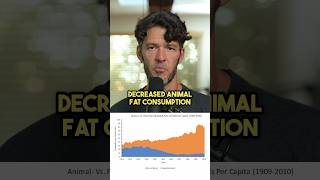
The video challenges the common belief that saturated fats and red meat are the primary drivers of cardiometabolic diseases and obesity. It presents statistical evidence showing a significant decline in animal fat consumption since the early 1900s, while vegetable oil consumption has surged by over 300%, aligning with recommendations from the American Heart Association.
Chapters
Traditional medicine often blames red meat, butter, and saturated fats for the rise in cardiometabolic diseases and obesity, but statistics do not support this view.
Since the early 1900s, consumption of animal fats (butter, beef fat, saturated fats from red meat) has significantly decreased.
People now consume over 300% more plant-based fats, including margarine, corn oil, soybean oil, canola oil, and cottonseed oil—exactly the fats recommended by the American Heart Association.
Despite following AHA recommendations, obesity, type 2 diabetes, and dementia rates continue to rise, questioning the validity of these dietary guidelines.
Red meat consumption has dropped by about 44% compared to past years, while poultry consumption has increased, further contradicting the narrative that red meat is the culprit.
The video argues that the shift from animal fats to vegetable oils, despite being endorsed by health authorities, correlates with worsening metabolic health, suggesting a need to reconsider dietary guidelines.
Study Flashcards (4)
What has happened to animal fat consumption since the early 1900s?
easy
Click to reveal answer
What has happened to animal fat consumption since the early 1900s?
It has significantly decreased.
00:14
By what percentage has vegetable oil consumption increased?
easy
Click to reveal answer
By what percentage has vegetable oil consumption increased?
Over 300%.
00:28
Which fats does the American Heart Association recommend?
medium
Click to reveal answer
Which fats does the American Heart Association recommend?
Margarine, corn oil, soybean oil, canola oil, and cottonseed oil.
00:28
What has happened to red meat consumption compared to past years?
medium
Click to reveal answer
What has happened to red meat consumption compared to past years?
It has dropped by about 44%.
00:56
💡 Key Takeaways
Vegetable Oil Surge
Highlights the stark contrast between dietary recommendations and actual consumption trends.
00:28Paradox of Rising Disease
Challenges the effectiveness of current dietary guidelines by pointing out the simultaneous rise in disease.
00:42Full Transcript
[00:01] по поводу потребления насыщенных жиров и красного мяса. Многие специалисты в области традиционной медицины, а врачей считают, что причиной повсеместного распространения кардиометаболических заболеваний и ожирения в наши дни является чрезмерное потребление красного мяса, сливочного
[00:14] масла и насыщенных жиров. Однако статистика не подтверждает это изображение, мы увидим значительное снижение потребления животных жиров, начиная с начала 1900-х годов. Большинство людей потребляют гораздо меньше сливочного масла, гораздо меньше говяжьего жира, гораздо
[00:28] меньше насыщенных жиров из красного мяса, и мы насыщенных жиров из красного мяса, и мы потребляем более чем на 300% больше жиров растительного происхождения, а именно маргарина, кукурузного масла, соевого масла, рапсового масла и хлопкового масла. Таким образом, люди
[00:42] потребляют именно те жиры, которые одобряет и рекомендует Американская кардиологическая ассоциация. Но почему мы наблюдаем рост ожирения, диабета 2 типа и деменции, потребляют гораздо меньше красного мяса, чем в прошлые годы, примерно на 44% меньше, чем
[00:56] years past yet poultry consumption chicken turkey and things like that