Things That Got Better
45sPositive and relatable content about improvements in everyday life sparks nostalgia and gratitude, appealing to a broad audience.
▶ Play Clip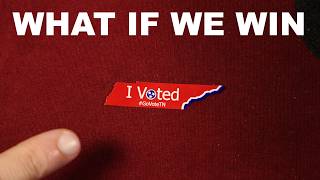
"The title sets up a serious question and the video delivers a thoughtful, on-topic discussion—though it's padded with a long intro and digressions."
The video features a conversation between host Adam and political philosopher Vlad Vexler about the state of democracy and the future after voting out demagogues. They discuss positive societal changes, the breakdown of the post-war order, and offer a practical checklist for civic engagement.
Examples include safer cars and airplanes, lack of cigarette smoke in public places, and much better restaurant food.
Advances in agricultural technology, freezing, packaging, and most importantly, globalization of information, people, and supply chains.
The host explains how specialization and trade make everyone richer, using a cooking analogy.
The post-World War II order enabled globalization and prosperity, but it is now breaking down, leading to a new geopolitical era.
The host argues that the rich are too rich and that most people should demand a bigger share of wealth, but we can't promise to make each other richer soon.
Instead of wealth, we should promise more power and control over our destinies, and pursue democratic renewal.
Vlad explains that we are going through a period of grief about letting go of the past, but we can still make a big difference to how the present goes.
Key forces include economic inequality, untethering of social bonds, limited control over the internet, and modern alienation.
The feeling of powerlessness leads to magical thinking and a desire to give up on politics, making people vulnerable to demagogues.
Politicians should lean into values like solidarity and the public good, rather than fragmented micro-justifications.
Adam's checklist: demand big change, vote, help others vote, get involved in local politics, support independent journalism, and take action.
Adam and Vlad discuss three historical views on progress and warn that inaction leads toward 'electoral monarchy with a twist of might-is-right'.
Promise Power, Not Wealth
Shifts the political discourse from material promises to empowerment as a more realistic and meaningful goal in an era of deglobalization.
08:18The Grief Period
Vlad frames the current political moment as a necessary psychological phase that must be passed through to achieve effective civic engagement.
11:48Values Over Micro-Justifications
Argues that effective political communication must appeal to shared values rather than fragmented, technical arguments.
23:03Action for Action's Sake
Identifies performative action as a hallmark of fascist ideology, warning against empty political theater.
27:14Local Engagement as Antidote
Highlights that local political engagement and dinner table conversations are practical steps to build trust and counter despair.
32:19[00:00] social media app the other day and somebody said, "Hey, some things in the world are really getting worse right now. What are some things that have gotten better over the course of your lifetime?"
[00:15] And people came up with all kinds of really good examples of things that have gotten better over the course of their lifetimes. Airplanes and cars — so much safer than they were a generation ago,
[00:28] at least for the people inside the cars. Speaking of inside, everywhere used to smell like cigarettes all the time. You went to a restaurant, you came home smelling like an ashtray. Speaking
[00:42] of restaurants, wow — restaurant food is so much better than it was when I was a child. And I mean, in aggregate. There's still lots of garbage food out there. And I'm not saying that the
[00:56] very best restaurants of today are any better than the very best restaurants of 40 years ago, though I do think that that is probably true. It's just that prepared foods, in general, in the developed world, are miles ahead of where they were when I got on the earth ride in 1982.
[01:13] And why is food generally so much better? Advances in agricultural and food production technology certainly play a role. Think about apples. Unless you got a perfect apple right off a tree,
[01:29] most US apples just weren't that good until the honey crisp revolution of the late 1990s. Freezing technology, way better now. The whole cold chain, in fact. Packaging advancements. I
[01:44] could go on and on in this thing that I've written, but I'll try to get to the point. I think the number one reason that food is better now is globalization — globalization of
[01:56] information, significantly though not exclusively via the internet. You used to have to know a guy to know how New York pizza places made their dough. Now you just go on a message board or
[02:09] watch a video. Globalization of people — more movement, more immigration and travel between farther flung places in the world, people bringing and sharing their very different food,
[02:22] allowing for ideas to cross-pollinate. And of course, there's the globalization of production and supply chains. If you ever need a really simple way to explain how trade adds to
[02:37] the total supply of wealth in the world, just say this to somebody. Say, "Look, imagine you and I, imagine that we both had to cook all our own meals from scratch every single day. I'm cooking three
[02:52] squares a day, you're cooking three squares a day. That's six meals the two of us have to make from scratch every single day. Now imagine I knocked on your door and I said, 'Hey, how about I
[03:04] cook for both of us today, and then you cook for both of us tomorrow, and while you're cooking, I'll do something else productive. I'll mow both our lawns. I'll go to work and I'll make money to
[03:18] buy groceries for the both of us, whatever.'" That's how trading between individuals makes everyone richer, or at least it can. Now imagine that happening on the scale of
[03:30] nations. Most of humanity was so, so desperately poor, on the verge of starvation all the time, until modern maritime trade. For many reasons, significantly though not at all exclusively
[03:51] having to do with US elections, for many reasons, the post World War II geopolitical and security order that has enabled globalization is breaking down, or at least that order is
[04:04] changing more rapidly than it has since, say, the Soviet Union collapse during my childhood. I remember watching cartoons one morning in August of 1991 when my father shouted from upstairs,
[04:19] "You're watching cartoons while the world is changing!" And I was like, "I'm nine! All I know about Gorbachev is that he has pizza sauce on his head! What's a coup?" Anyway, since that day,
[04:33] I have lived my life in "the long summer," the Pax Americana, which was terrible for some people, probably a net good for most people, and absolutely fantastic for me, which
[04:51] is probably one reason I believe it was a net good for most people, though that isn't the only reason I believe it was a net good for most people. But it doesn't matter anyway because it's over now. We're entering a new geopolitical era, and like all people who have ever lived through big change,
[05:10] we have no idea what's coming next. Change is not always bad. Maybe things need to change. In fact, I'm pretty sure that things need to change a lot. But even if we presume it's positive change,
[05:29] the first steps on any journey of self-improvement are always painful. A lot of things are going to get worse before they get better, if they get better, though I do believe they will get better — it's just a question of when and how and for whom.
[05:48] I talked on this channel a couple of weeks ago about how beef is getting more expensive in the US and there's really no particular reason to expect it'll get much cheaper no matter who wins the US midterm election on November 3rd — that's this coming Tuesday. I already
[06:06] voted. I voted early down at the old Knox County Courthouse, which has a couple of cannons in front of it. There were artillery barrages in and around Knoxville, Tennessee, like 160 years ago,
[06:19] which is not that long ago in terms of the things we're talking about. There was no shelling that I noticed when I went to go vote, so I suppose that puts some things into perspective.
[06:31] Sometimes you need cannon. But you definitely want to vote right up until such time as you need cannon. War is not the worst thing that can happen to you any more than death is the worst thing that
[06:45] can happen to you. It is not the worst thing that can happen to you, though certainly war is one of the worst things that can happen. The food gets a lot worse in war. So if you're in the US,
[07:00] I really do hope that you will join me in voting. And if we succeed in voting for change, whatever change means to you, there's a lot of legitimate debate to be had there, but if by
[07:16] voting we are able to change the national course at least a little, I hope that you will join me in maintaining some realistic expectations. The systems that have given us our current
[07:32] level of security and material prosperity are groaning under stress. And if you're poor, you certainly don't need me to tell you that. The rich are too rich. I'm too rich. That is my
[07:47] opinion. And I think that most people should expect and indeed demand a bigger share of the material wealth that their labor generates. But I don't think that we can or should promise
[08:01] to make each other a lot richer anytime soon. Deglobalization and lots of other big things are likely to make a lot of us poorer, at least for a while and at least in some ways. Rather than
[08:18] wealth, what we can promise to each other maybe is more power. We have to make ourselves feel like we have more meaningful control over our individual and collective destinies, hopefully by actually
[08:36] taking more control over our destinies. The wildly irresponsible demagoguery of President Trump, and many other politicians in the US and elsewhere — that stuff works, it is appealing to people, not
[08:56] just because some of them hate their neighbors, but also because they feel out of control. "Yeah, this lying politician wants to be a king. Yeah, these billionaires want to be an
[09:09] oligarchy. But there's a chance they may be on my side. So my best play, maybe my only play, is to gamble. Gamble on sports with my phone, gamble on letting these neo-monarchists take
[09:29] more power, and then at least something might get done." Yeah, buddy, a lot will get done, but most of it won't be for you. And increasingly, the choices will just get crazy, because everyone,
[09:49] you or me, everyone gets crazy when they have levels of political or economic power that make them really unaccountable to their community. What we need to be promising each other right now,
[10:04] I think, is not cheaper ground beef. We need to be promising and delivering a project of democratic renewal — small D, democratic. We need to make the mechanisms of government
[10:18] and capital more responsive to the will of more people. If we don't do that, if I don't do that,
[10:30] the people with the pitchforks know where the big houses are, and I'm in one of them. So what do we do in the next year or two to reinvigorate democracy so that people don't
[10:48] give up on the idea of self-rule? What can we, the people, watching and making this particular YouTube video, do in the next couple years? Let's ask the smartest person I know on such matters,
[11:05] the political and moral philosopher Vlad Vexler, child of the Soviet Union, citizen of the UK, which is having its own democratic crisis. How are things over there, Vlad? Vlad: They are similar across the West because
[11:21] we are being hit by waves that are of a global nature. And that's bad news because it means you can't opt out of them. But it's also good news because some of the solutions to them are going
[11:35] to be overlapping and they're going to be things that we can learn from one another because we're Solutions such as? Vlad:
[11:48] This is painful as a question because, not most humans, but some humans, in particular our type of humans, humans who have experienced the kind of recent past that we have experienced,
[12:04] tend to be hung up on the idea that even if things get worse a little bit, they're going to get overall better in the long run. And what's happened is that we have consciously questioned
[12:20] that idea. We have said, well, look, Francis Fukuyama wrote this very famous essay in 1989, which became a book in 1992 talking about the at least potential global convergence on a sort
[12:38] of democratic capitalist civilization. And consciously we have begun to question that. But I think in our subconscious, or unconscious, we're still attached to this idea
[12:52] that things must get better in the long run. And this creates a problem for us because it means that when we see certain trends that are on a trajectory of irreversible decline,
[13:09] we tend to not cope with that and not be able to accept that. Whereas in fact, there's a hell of a lot we could do about it, right? Things could get worse by 30%, to pull out a number out of
[13:22] thin air, if we do nothing. They could get worse by 10% if we try to do something about it. And every percentage point makes a difference because it's individual lives that are involved. This is the basic practical reality of politics and why I don't believe in incrementalism at the
[13:41] level of policy, but I believe in incrementalism at the level of understanding that making things a little bit better actually transforms, or stops transforming in the negative, individual lives. So
[13:54] there is quite a lot we can do. What I doubt, in fact, what I'm certain we can't do is completely blow our way out of our current historical moment and return to some of the things that a lot of us
[14:09] might feel are kind of a version of normal. You might say that sort of lasted between 1989 and 2014. That, I think, is a past that's gone, but I think that we are still going,
[14:22] and some of us haven't even begun to go, through a period of grief about letting that go. And I have quite a bit of optimism that we're going to have more efficacious and less hopeless
[14:35] citizens once we've gone through that period of grief, realizing that we can't have the past, but we can make a hell of a big difference to how the present goes. Because when I talk about
[14:48] certain irreversible trajectories, I don't mean that something like the collapse of a democracy is irreversible. All that's irreversible is that there are certain social forces out there that are making the sustenance of a democracy, let's say, three times harder.
[15:04] those particular forces, the big ones? Vlad: I think that the first thing we do is create a box where we're even open to thinking about these
[15:17] things at all, because there's a part of us that says, "Well, no, there aren't any such forces. This is just about what people want and what they vote for. And if we change enough people's minds, But I think that the patterns of extraordinary economic inequality
[15:34] and exclusion that you talked about in your incredibly beautiful piece are a big part of it. I think the untethering of social bonds is a very big part of it — the fact that in progressively
[15:48] fewer and fewer ways, we actually share a society, feel like we share a society with our fellow citizens. We've also got very limited control. We're trying to sort of do guerrilla warfare
[16:01] against the algorithms, you and I together, but we've got very little control about the state of the internet. We have got certain patterns of alienation that are just to do with being
[16:14] in the modern world. There is something about modernity that means, for instance, that nobody can fully feel at home, no matter where they are. So there are certain things that are more civilizationally impactful here that stretch not just decades, but a century or two.
[16:32] And we are spectacularly individualistic and spectacularly consumerist in the way we think of what a good life is. And it's very, very hard to shift that. And the point is, this is just a
[16:47] box into which everybody watching should put their own analysis because these are just clues to how you fill that box up. And so the point is, you can't create citizens who behave constructively,
[17:02] who feel good about themselves, unless you change some of this social physics. The more we change this social physics, to use a terribly scientistic term, the more there'll be room
[17:16] for citizens to change their internal states. And one of these is the one that you talked about a lot, which is this unbelievable, overwhelming feeling of not having any control, this feeling
[17:29] that you can't touch politics, the feeling that maybe some other people can touch it, but there's nothing you can do that'll get you to even get closer to being able to touch it. And that's an
[17:41] absolutely terrifying feeling because it's like sitting in a car, turning the steering wheel and there being no response. And that invites us straight away into a kind of magical thinking.
[17:54] the car who has got a sort of magical solution to this problem because we can't, at the level of the sort of machinations of cause and effect available to us, we can't enact any such solution." And so
[18:07] what's really dangerous is the control issue you mentioned, but then the way it seeps into essentially the desire to give up on making sense of politics at all. "If I can't turn the wheel and
[18:22] make the wheels turn, then maybe none of this makes any sense and I'm just going to sit here, Yeah. To put those things into a couple of specific examples that I see in the kind of
[18:37] things that I talk about on my channel — so, we feel out of control of our bodies, not just people who are chronically ill, such as yourself, Vald — everyone kind of living in a physical world that
[18:49] is not the one for which our particular bodies were evolved over thousands of years. And so we're losing control of our diets and how they affect our bodies and how we feel. And those are really,
[19:01] really enormous system-level things affecting us. But if somebody comes along and says, "Hey, if we just take out a few of these little mysterious additives with funny names, which may
[19:14] indeed actually be bad for you, but probably are not the big thing that is bad for you, but if we take them out, then you're going to feel a whole lot better." Some people really do believe that.
[19:27] I think a lot more people, especially people who might be watching me, if they believe it at all, it's just because they want to, because they don't know what else to do. Or that your healthcare is
[19:43] getting completely unaffordable. We are in a particularly bad situation with healthcare in the United States where, among other things, something like a third of every healthcare dollar goes to private insurers, which is maybe not where we want it to go. But at the same time,
[20:01] healthcare is getting more expensive everywhere, for big-picture demographic and economic reasons. It's not getting cheaper anywhere. No one is going to be able to make it cheaper. We can maybe stop it from getting way more expensive than it otherwise would. But this is
[20:19] a situation of how fast are we digging ourselves into the hole versus getting ourselves out of the hole, at least for the foreseeable future. And so when somebody comes along and says, "Well,
[20:31] we just need to get the private insurers out of the system, that will fix everything," I happen to think that that would fix a lot of things, but it wouldn't fix everything. And then some, in my
[20:45] view, much more irresponsible, much more magically thinking thinkers come along and say, "No, what'll really make healthcare affordable is if we get rid of all of the undeserving others." Fraud is real,
[20:58] but it's not the big thing. The big thing is big things that no one has a solution for. If they did have a solution, they'd be pursuing it. They don't. So instead, all they know how to do is to
[21:11] tell you something that you want to hear in order to fuel their particular political entrepreneurial Yeah. And it's very difficult to talk about what you can and what you can't control as
[21:32] a politician addressing a citizenry. But I think one thing we can do better is learn how to speak to the whole country. Now, there are certain things that are going to stop us from doing
[21:47] that quite as well as we would like. And the fact that we're in these bubbles of distinct fact and mental worlds as a consequence of social media, that's going to be a really tough obstacle.
[22:00] But we can lean into values that bring citizens together, like solidarity or the public good, when we make the case for certain actions. Because one of the things that's been very disappointing
[22:17] in what I call technocratic centrist politics is that it's somewhat given away to making very particularist arguments for very particular issues. And it's a kind of justification that's
[22:32] only going to make sense to select groups. And what you end up with is presenting the population with 777 different micro-justifications for different things. And to most citizens,
[22:49] that just looks like a bag with random shit in it. You can relate to maybe some of it, but most of it is not dressed up for you to be able to understand at the level of,
[23:03] "Why is this an important thing to do?" or, "Why is it an important thing to stop doing?" So if I were, for instance, and you mentioned my chronic illness, if I were to advocate for my political
[23:15] cause as a patient with a chronic illness that's not getting sufficient research, I would lean into values like solidarity, a certain kind of safety net for all citizens, values like,
[23:28] for goodness' sake, even economic productivity. So much productivity is lost for people like me being sick. I'm making the case on the basis of things that other citizens already want to happen,
[23:41] already want to have more of in their society. Adam: And not just appeal to people's sense of shame. Because as we've maybe seen, not all of our citizens have the same sense of shame that we do. If you make me feel ashamed, it really, really,
[23:59] really works, right? But if you say to somebody else, "Hey, you need to care about me because — have you no shame, sir?" He might not. Vlad: And different arguments also work with different groups, but you've got to keep circling back to
[24:17] what captures the largest groups in society rather than be like this. So what is still missing from most not-irresponsible political actors in the West is even an experimental version of
[24:39] a language that adequately tries to address the whole country. It's one of the things the Democrats in the United States, capital D, still haven't learned as a party.
[24:55] Adam: Some of them are learning it, I think. who are learning took on more central positions in the party. But I think you're absolutely right.
[25:09] There are a lot of people who are breaking ground in the way politics gets spoken about. And you've seen this with Zohran Mamdani, and one of the things that he is so good at doing is giving
[25:26] the perception of competent governance, which is a difficult thing to do in our context. But the way he speaks about what he does, funnily enough, allows him to do more of what he does,
[25:40] because he makes a lot of people feel that whether they agree with his policies or not, that he's actually in the business of being efficacious enough to get something over the
[25:54] line. That's very, very important. And it's not a one-off. There's a few demonstrations like this, but they're still few and far between. But there are demonstrations of the fact that
[26:07] the collapse of trust is not something that is just sort of ubiquitously irreversible. You can make inroads into it. You can do all kinds of partial reversals. You can bring people back
[26:20] on board. And you can't do that, however, if you are defensive, if you refuse to be bold, and if your politics is about averting the worst things that can happen and taking a kind of a
[26:37] precautionary, defensive stance. So there's still too much of that going on with politics all over the west. And it's understandable. We can empathize with that, because you've got Trumps sort of mushrooming all over the place and that's very intimidating. But funnily enough,
[26:53] you perpetuate this kind of mushrooming by taking a defensive position like this and responding to what happens rather than leading, both with your actions and with your words. politicians performing action for action's sake, the performance of action as an end unto itself,
[27:14] not necessarily as one that is actually coherently connected to some kind of real cause and effect, but just, "I'm doing something big, and that is an end unto itself," is one of the core historical
[27:27] features of fascism, is it not? We can't just do action for action's sake. If a bunch of Democrats and other Trump opponents are elected in the next couple of weeks here in the United States,
[27:41] and they find themselves controlling Congress but not the presidency, and they make a great show of action to counter the President that is not meaningful — surely that can't be enough. And
[27:55] indeed, that could be part of the problem. Part of the problem is that people know it's a show, Yeah, you're completely right. And you're right in two ways. First of all, action that
[28:09] is self-justifying is a very important facet of that space of fascist ideology. And I don't think that we are primarily floating about in fascist politics when we talk about Trump or the AFD in
[28:26] Germany or Le Pen in France, but we're talking about politics that has a strong fascisized And it is certainly true that, the thought that if you take a certain action emphatically
[28:41] enough and with enough virility, that it becomes self-justifying, and that what you say about it becomes true as well. And that's a terrible place where we don't want to go. Another place, because I think you're doubly right in what you said, where we don't want to go is toward fabricating
[28:59] optimism. Now, under certain conditions that are more peaceable and stable than ours, that can sometimes be a good thing to do. Obama in 2008 thought that that was a good thing to do, and
[29:13] much of his message of change and hope was about fabrication, which he thought was constructive to And maybe he would have been right had he been president 15 years earlier, but...
[29:28] Vlad: He would have been right had he been president earlier, but we also need a bigger conversation by Obama and by Bill Clinton about how their
[29:42] politics is connected with the rise of Trumpism. They don't need to come out and say, "Oh my God, I got every single thing wrong and it's my fault," but they need to begin making that connection. For me, Obama, with all of his, again, recently resurfaced brilliance, is not offering people
[30:00] to think along with them about that enough. But back to your really important challenge to me, what I am saying is that it's 10:15 in the morning, you've just accomplished something
[30:14] important, you can turn on your smartphone and you can tell citizens, "Hey, this is what we've done. By the way, this is what the rest of the day looks like, and we're going to do our best getting these
[30:26] other things done that we want to move on today." So it's very much about bringing people along and showing them, and not just telling them, about the efficacy that is genuinely there.
[30:40] And you're absolutely right. If we're not doing that, if we are faking this, and we've in fact achieved nothing at 10:15 in the morning, that would be really, really worrying. It would be, at least, that kind of inappropriate fabrication of optimism. And at worst, it would be a kind of
[30:58] defensive co-option into the fascistized dance of the very people we are politically most rightly concerned about. So I agree. Adam: Really quick checklist — things that my people and I should be doing in the next couple of years.
[31:17] Demand big change. Don't just be satisfied with people saying that they're going to let things go Vote. Help other people to vote. Pick one or two important political issues that you can
[31:34] get passionate about, on which you can try to keep your political representatives accountable by writing to them, by calling them and so on. If you have the capacity, get involved
[31:46] in local politics. Even if it's something as banal as talking about speed limits in your town or talking about how many benches are going to go up in the park. You're touching politics, and not only touching politics, you're also engaging with your neighbors who may not share
[32:05] your ideology, might not share your ideas about the kind of people they want to see in power, but you can still cooperate with them around local issues, thereby building up trust all around.
[32:19] Also, don't underestimate, to make a gastronomic point, the importance of dinner table conversations, the importance of inviting people into your home with whom you can on everything politically, but you can bond on other things, and also realize that it's not the
[32:38] end of the world if you disagree politically, that you share a society, you could have constructive conversations. Maybe one more thing I'd throw in — support independent journalism. And also, just psychologically, realize that the best antidote to overwhelming despair
[32:56] is actually taking a little bit of action. Adam: Vlad. These are things that were really hard for me to absorb and accept from you. I didn't believe
[33:10] them at first, and then you persuaded me. OK? So one would be, stop expecting to live in a society
[33:22] where everyone shares your morals. There is some basic level of moral compatibility that you have to accept and enforce. And if you leave that basic threshold, then, well, the result is literally
[33:36] war, and sometimes war is necessary. But then you have to have an honest conversation with yourself keep them from killing you. So give up on the idea that everyone is going to share your morals.
[33:51] Accept that politics exists downstream from morality — indeed, that politics exists in large measure to help people with different concepts of morality coexist, possibly even cooperate,
[34:04] but at the very least coexist and not kill each other. And that doesn't mean give up on your moral outlook. Go hard, man. Stand for what you believe in. But you can't just say, "I'm not
[34:17] going to work with all of these other people who don't look at things the way that I do on a moral level," because I don't get to decide who I share my world with — unless I want to kill them. So
[34:29] that's one. It took a long time of you telling me something like that, Vlad, for me to accept it. Another related one, and it's very hard to hold up nine fingers. Hey, let's do this. There we go,
[34:41] hey. So, a related one is what you touched on earlier, Vlad, which is to advocate for your interests, and the particular interests of your community, primarily in terms of collective
[34:54] interest. The reason why you should join me in advocating for the rights of my sexual or gender minority is not because you care about me — it's because it guarantees your right to live your own damn life as you see fit. Those are terms in which I have discussed the rights of trans people in my
[35:12] own work many times, and I've had trans folks, some quite close to me in my life, say, "No, it's not just enough [to talk] about freedom. It's about actively guaranteeing people's rights and wellbeing. You can't just say, 'Hey, live and let live, man.' We need to actually do things to try
[35:30] to advance the rights of this community." And I agree 10-freaking-million percent. I just don't think we need to — I think it's counterproductive to talk like that most of So what you say is, you reclaim, especially in US political discourse, you reclaim freedom, liberty,
[35:47] right? That is the social message that wins today. It's, "Mind ya business," right? "Focus on your own damn self. Fix your own life before you stick your nose into somebody else's." That is a message
[36:00] that appeals to lots of really, really different kinds of people in this country with very different concepts of sexual and gender morality, to say nothing of other kinds of morality. little things very quickly. Adam:
[36:14] One of the reasons I talk about this point that you've emphasized now, about how you've got to appeal for your claims and your rights on the basis of values like solidarity, is that
[36:26] I'm so worried about the reversal of rights for minority groups. I'm very concerned about rights being rolled back over the next five to 10 years. And that's partly why I'm so obsessed with telling
[36:40] the story that we need to change the discourse about how we advocate for minority groups. And just the second thing I want to say is that it is one of the most democratic emotions to
[36:52] feel that you're in favor of something, and that somebody else can be in favor of the same thing, In fact, they can be in favor of the same thing for reasons you don't even like that much,
[37:09] or you even find a little bit offensive. But the question is, can you get onto the same train, and travel in the direction of the same destination, even though the purposes of
[37:22] your trip are different? And that is possible, and that is what a lot of constructive conflict resolution in a democracy actually looks like. And that's a healthy thing to feel. And actually.
[37:34] you're going to get fewer people jumping onto the train and in the direction you want if you insist that they have to jump on for the reasons that are yours, or not jump on at all. Vlad, by going back to where we started. You were talking about Francis Fukuyama and his argument
[37:54] that the entire world is converging on this particularly US vision of liberal democracy and lightly regulated market economics — as being "the way," the final form into which we are
[38:14] metamorphosizing. And that was probably never true, and maybe never should have even been true. But I do want to assert that there is a good reason, Vlad, to believe, or to expect, that
[38:30] overall things should get better over time and not worse — not on the ground level, but in terms of the arc of history, to use an overused phrase because I can't think of anything better — that it
[38:45] ought to bend toward justice. We should expect that over the long term things will get better, for one very, very important and I think obvious reason, which is the linear nature of time.
[38:58] We have the privilege of the past. We have the benefit of accumulated knowledge, of knowing what happens when you give too much power to one person, that they always end up going nuts,
[39:13] and that's why kings are always mad, right? We know that, because we have the magic of writing. And even if we didn't have the magic of writing, we have other modes of communicating information across generations, of sending messages in bottles to our future selves, to learn from our past
[39:30] mistakes. Shouldn't the benefit of the past be enough to make it at least plausible that things will get better over time? Vlad:
[39:42] I think, in the history of the West, there are probably three answers to this. One answer is the progressive answer that we could associate with the early Fukuyama. And that would roughly tell you that yes, there can be four steps back, but eventually there are going
[39:58] to be five steps forward. So there's a kind of teleological substance to history. In the end, it'll curve in the positive direction. The second view is also positive, but positive in the end.
[40:17] And that's the view of somebody like Marx or Hagel or Engels. And that view says, Look, in our world, no, we're screwed. We're going to have conflict. We're going to have, just, calamities — left, right and center. But eventually something should click, and the new world that we can
[40:34] barely understand right now will come about. And in that world, some of the conflicts and challenges that are insuperable for us here, today — actually, we will be able to transcend. There'll be a start of a kind of a new humanity, when it comes to how political life is lived.
[40:51] The third view, more associated with perhaps Thucydides or Machiavelli or Nietzsche, would be to say there is going to be progress in the technical fields, there's going to be progress in science, but there is no possibility for accumulative progress in ethics and politics.
[41:10] There's no reason to think that, ethically and politically, the world 300 years from now will be better than the world 300 years before now. These three sorts of streams of thought are very
[41:26] internally complex. There's a lot to pick from in each, but I think that's roughly what we've got. And I don't want to over-prejudice which side you should take in these three. I do take one side,
[41:39] clearly. What I will say, though, is that at the moment, the big risk for us is that, unless we get our act together, the default politics for the next couple of decades that we're
[41:54] looking at is a kind of electoral monarchy with a big twist of might-is-right and fascistization. If we do really, really, really, really, really badly, and we don't do any of the things that we
[42:08] tried to begin talking about, then that's where, for now, the drift of history is taking us. It's taking us toward political systems that have elections, but where the democratic process and
[42:22] the democratic culture is rather emaciated. And the ideology there is an ideology that gives us the following picture: Elections are really important,
[42:34] but they're not important because institutions are important. In fact, elections are important because they can confirm and reconfirm the magical bond a leader has with the people...
[42:46] of this institutional fluff that needs to be washed away. And the most extreme version of this kind of politics that we can see today is, possibly, Russia. But we have seen milder versions
[43:00] of it in countries like Hungary. And one of the things Hungary has given us, only very recently, is actually an example of a reversal of democratic decline, which shows that even if there are all of
[43:14] these social forces that are making things harder, they are never going to determine whether you lose or keep your democracy, and they're never going to determine whether you can actually improve
[43:26] So that is open-ended. It just means that achieving that is harder than it was a
[43:38] couple of decades ago. But whatever view of the three you take, my proposal is that we've got to be concerned that, if we do nothing, the natural drift is towards this kind of sort of
[43:53] emaciated electoral monarchy with a big twist of might-is-right, and that's something we really Thank you, Vlad. Vlad: Thank you so, so much for having me.
The hook starts with a relatable social media prompt, creating an immediate connection and curiosity about positive changes, which contrasts with the later serious political discussion, making viewers want to see where it leads.
Start with a relatable scenario or question, then reveal a deeper, more serious underlying theme to capture attention and create a contrast.
AI-generated clip ideas for Shorts based on the transcript
Positive and relatable content about improvements in everyday life sparks nostalgia and gratitude, appealing to a broad audience.
▶ Play ClipA simple, powerful analogy explaining the benefits of trade is highly educational and shareable, especially in times of economic debate.
▶ Play ClipProvocative claim that the post-WWII order is breaking down and we're entering an unknown era taps into current anxieties about the future.
▶ Play ClipDirect political call-to-action and criticism of populist leaders is controversial and engaging for politically interested viewers.
▶ Play ClipChallenges conventional promises of wealth, suggesting power as a better alternative, which is a thought-provoking take on political messaging.
▶ Play ClipSnapshot 2026-11-17
Every observation TubeSum recorded, plotted as measured.
Based on 19 observations · last observed Nov 17, 2026 · solid lines connect consecutive measurements (≤2 days apart); dashed lines span days TubeSum did not measure. · vertical axis from zero
Exact daily observations; gaps mean no observation was taken that day.
| Date | Views | Avg views / hour | Channel median |
|---|---|---|---|
| 2026-11-17 | 208,227 | 467.9 | 168,616 |
| 2026-11-16 | 208,070 | 477.2 | 168,616 |
| 2026-11-15 | 207,508 | 511.1 | 168,616 |
| 2026-11-14 | 206,999 | 540.5 | 168,616 |
| 2026-11-13 | 206,103 | 587.2 | 168,616 |
| 2026-11-12 | 205,701 | 614.0 | 168,616 |
| 2026-11-10 | 203,597 | 709.4 | 168,616 |
| 2026-11-09 | 201,789 | 764.4 | 168,616 |
| 2026-11-08 | 199,041 | 836.3 | 168,616 |
| 2026-11-07 | 195,228 | 908.0 | 168,616 |
| 2026-11-06 | 190,682 | 1,003.6 | 168,616 |
| 2026-11-05 | 184,670 | 1,112.5 | 168,616 |
| 2026-11-04 | 174,483 | 1,220.2 | 168,616 |
| 2026-11-03 | 160,058 | 1,524.4 | 168,616 |
| 2026-11-02 | 154,137 | 1,622.5 | 168,616 |
| 2026-11-01 | 139,946 | 1,999.2 | 168,616 |
| 2026-10-31 | 127,516 | 2,713.1 | 168,616 |
| 2026-10-30 | 101,204 | 4,400.2 | 168,698 |
| 2026-10-29 | 8,363 | 8,363.0 | — |
Audience reaction — separate from the performance metrics above.