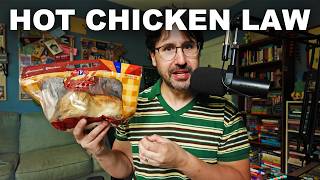

Congress & the Hot Rotisserie Chicken Act
51sAbsurd bill name combined with serious political context grabs attention and sparks curiosity.
▶ Play Clip"The title is mostly accurate: the video is indeed about the Hot Rotisserie Chicken Act of 2026, but it's also a deep dive into the history and politics of SNAP, not just a simple explanation of the bill."
Adam Ragusea examines the 'Hot Rotisserie Chicken Act of 2026,' a U.S. congressional bill that would allow SNAP (food stamp) recipients to buy hot rotisserie chicken with their benefits. He uses this seemingly trivial policy to explore the history and complexity of federal food assistance, from the stigma of paper food stamps to the efficiency of modern EBT cards and the ongoing debate over what constitutes an eligible food purchase.
The Supplemental Nutrition Assistance Program (SNAP), formerly known as food stamps, is the primary way the U.S. gives food assistance to poor people. It moved from paper coupons to an EBT card system in the early 2000s, with a typical monthly benefit of about $200 per person.
The SNAP model is efficient because it uses existing grocery store supply chains instead of creating a new government-run food distribution system. Poor people get money to shop at regular stores.
Since the first federal food stamp program during the Depression, there have been rules about what benefits can buy. The 1964 Act banned alcohol and imported foods. Since the 1970s, a rule has banned hot, ready-to-eat food, aiming to prevent using benefits for restaurant meals.
The ban on hot, ready-to-eat food is meant to distinguish groceries from restaurant food. The line is drawn by temperature. Exceptions exist for seniors, the sick, and homeless people via federal vendors, and workarounds (like microwaving cold items) are common.
Defining 'prepared food' is difficult. A hot rotisserie chicken is a prepared food that is often cheaper and more convenient than cooking from scratch, especially for low-income people working multiple jobs or living in food deserts. The law forces awkward workarounds like chilling chickens to sell them with SNAP.
This single-page bill, sponsored by Senator John Fetterman, would add 'hot rotisserie chicken' to the list of eligible foods. It only covers that one item, not all hot foods. Adam argues it's a token, election-year stunt (
The bill is criticized for mainly benefiting suburban poor people who can afford Costco memberships and car access. A more meaningful version would be the broader 'Hot Foods Act' (by Rep. Grace Meng), which is not passing, while Fetterman's chicken-only bill likely will.
While debating this narrow chicken issue, Congress is simultaneously cutting SNAP funding. The number of SNAP recipients dropped by 8% in late 2025. The Agriculture Secretary attributes this to fraud crackdowns, but evidence is thin and likely due to increased bureaucracy that discourages eligible people.
The conservative approach (tight restrictions, fraud focus) creates more bureaucracy and costs. The liberal approach (looser rules) is more efficient but may give benefits to some ineligible people. Adam suggests this may be an acceptable cost of doing business, comparing it to setting a speed limit knowing people will go a few miles over.
The efficiency argument for looser rules is one reason some experts support Universal Basic Income (UBI) for everyone, eliminating the need for bureaucracy to determine who 'deserves' benefits. The idea is to minimize administrative waste, even if some people get money they don't 'need'.
The Hot Rotisserie Chicken Act of 2026 is a narrow, token piece of legislation that highlights the absurdities and inefficiencies of the current SNAP system. The debate over whether poor people can buy a hot chicken with their benefits distracts from the larger issue of ongoing cuts to the program, revealing a fundamental tension between efficiency and control in social welfare.
Helix Sleep (Sponsor)
link
Foundation for Government Accountability Report
link
Hot Foods Act (Rep. Grace Meng)
link
Hot Rotisserie Chicken Act of 2026
link
John Fetterman
person
Brooke Rollins
person
Grace Meng
person
SNAP (Supplemental Nutrition Assistance Program)
tool
EBT (Electronic Benefit Transfer) Card
tool
USDA Commodity Foods Program
tool
Costco
service
What does SNAP stand for?
Supplemental Nutrition Assistance Program.
0:51
What system replaced paper food stamps in the early 2000s?
EBT (Electronic Benefit Transfer) cards.
2:02
What is the typical monthly SNAP benefit per person?
About $200 per person.
2:13
Why is SNAP administered by the USDA instead of HHS?
Because food benefits in the U.S. have always doubled as farm subsidies, originating as a way to distribute agricultural surplus.
4:46
What phrase refers to the government-provided processed cheese block that originated from farm subsidies?
Government cheese.
6:01
What was the main restriction on food stamp purchases established in the 1970s?
You cannot use food stamps to buy hot, ready-to-eat food.
7:39
What is the main purpose of the Hot Rotisserie Chicken Act of 2026?
To add 'hot rotisserie chicken' to the definition of eligible food products that can be bought with SNAP benefits.
14:55
Who is the most famous sponsor of the Hot Rotisserie Chicken Act?
Senator John Fetterman of Pennsylvania.
15:30
According to Adam, what is a fundamental criticism of the Hot Rotisserie Chicken Act?
It primarily benefits suburban poor people who have access to Costco, rather than inner-city or remote rural populations, and is a token election-year stunt.
18:17
What is the 'Hot Foods Act' and how does it differ from the Chicken Act?
The Hot Foods Act (by Rep. Grace Meng) would allow SNAP recipients to buy almost any kind of hot food, not just rotisserie chicken. It is not likely to pass, unlike the chicken act.
18:41
What percentage drop in SNAP recipients occurred over the second half of 2025?
8 percent (about 3 million people).
19:31
What is the central paradox of the conservative approach to social welfare programs, according to Adam?
Tightening restrictions and adding red tape to prevent fraud creates more bureaucracy and costs, potentially discouraging eligible people from applying, making the system less efficient.
23:21
What is the efficiency argument for Universal Basic Income (UBI)?
If you give money to everyone, you don't have to waste any money on bureaucracy deciding who gets the money.
25:17
Efficiency of SNAP Model
Clearly explains the core efficiency advantage of SNAP: using existing private supply chains (grocery stores) instead of building a government-run one.
3:42Origin of 'Government Cheese'
Provides a concrete, historical example of how food assistance functions as a farm subsidy (price support for dairy farmers).
6:01The Fraud vs. Efficiency Trade-off
Presents the central policy dilemma: loosening restrictions to reduce bureaucracy inevitably allows some undeserving people to get benefits, a trade-off that must be explicitly accepted.
20:56UBI as a Solution to Bureaucracy
Connects the inefficiency of means-testing to the argument for Universal Basic Income, a powerful and controversial policy idea.
25:04[00:00] Yes, in the midst of all of this, the
[00:06] considering a piece of legislation
[00:14] I was part of a Hot Rotisserie
[00:18] This started off a standalone bill and now
[00:23] year's Farm Bill, which means it's probably
[00:29] though I do think the whole thing is
[00:33] for sure, but it is little more than a
[00:40] There is a lot of important stuff we can
[00:45] works by going deep on this silly bill
[00:51] The biggest but not the only way we give food
[00:57] the Supplemental Nutrition Assistance
[01:03] still call it food stamps, because back
[01:08] physical paper coupons you could use to buy
[01:13] and they came in like 1 dollar
[01:18] You would take those to a store
[01:21] which was a lot of them but not all
[01:26] except it was money you could only spend
[01:31] back in more food stamps, or if it was less than a
[01:37] If it sounds like a hassle for everyone
[01:42] basically had to be ready to accept two totally
[01:47] and ... it was really visually obvious to
[01:53] that you were using food stamps,
[01:57] to pay with food stamps which made
[02:02] Everything got a lot better in the early 2000s
[02:07] cards. Electronic Benefit Transfer. You use them
[02:13] fills is up every month for you. The typical
[02:20] Even if you are opposed to government social
[02:25] efficiency of the SNAP system. Just as you have
[02:32] sponsor of this video. Helix makes premium
[02:38] your body and shipped to your door,
[02:43] Memory foam, springs, firm, soft, medium like
[02:52] out on the west coast for a thing the other
[02:57] Helix mattress. When I'm away my body aches for
[03:05] model is right for you and your partner. Also
[03:12] You make it less firm by unzipping these flaps
[03:20] might want a particular firmness. Invest in a
[03:26] Hit my link or my QR code to save 27% site-wide
[03:34] 27% off site wide at HelixSleep.com/ragusea,
[03:42] Anyway, even if you are philosophically
[03:47] you have to marvel at the efficiency
[03:52] If you want to hand out food directly to the
[03:59] supply chain. We already have a nationwide
[04:05] and so it's much more efficient to just give
[04:12] But a complication arises when one considers
[04:20] Grocery stores sell magazines and flower
[04:26] they dangle right at grabbing distance for
[04:31] and depending on the state, some
[04:36] These are things that you might not want people
[04:42] for reasons that are legitimate if debatable.
[04:46] So, since the very first federal food stamp
[04:53] there have been rules about what you
[04:58] That very first national program in 1939
[05:06] surplus — that is, crops that U.S. farmers
[05:12] the open market. This is why SNAP is, to this
[05:19] Agriculture instead of, like, the Department
[05:26] in the U.S. double as farm subsidies — always
[05:34] There's this thing that still exists called
[05:39] out as a way for the government to
[05:44] to stabilize the price for farmers. Use
[05:50] And the USDA would process and package
[05:56] as a kind of supplement for people on food
[06:01] "government cheese." Colloquially it refers
[06:08] But etymologically speaking,
[06:12] a big block of processed cheese made by the
[06:18] Many years ago I made a YouTube video about
[06:24] is this unholy, big, bulk dessert where you
[06:31] graham crackers and blueberry pie filling.
[06:36] who is Hopi, he grew up on reservation.
[06:42] of commodity food products and he told me
[06:48] would make to use up the big commodity blocks
[06:56] Obesity and metabolic syndrome disproportionately
[07:02] sometimes point to the commodity foods
[07:08] it's a farm subsidy as much
[07:12] and sometimes it makes more sense as a farm
[07:18] The Food Stamp Act of 1964 said you could
[07:24] consumption except alcohol and "imported foods."
[07:33] protectionism for farmers, effectively an
[07:39] And since the 1970s, the law has, in one way or
[07:46] stamps to buy hot, ready-to-eat food. The
[07:54] not for eating out. Not for restaurant food.
[08:02] probably made a bit more sense in the 20th
[08:08] and prepared foods were generally, relatively
[08:14] food industry is much more scaled up
[08:20] It's still probably cheaper to cook
[08:25] but we live in the real world, where a lot of
[08:31] a lot of generational cooking habits
[08:36] often working multiple jobs outside the
[08:42] More than half of households with children
[08:48] Yes, some SNAP recipients are unemployed, but
[08:55] of the recipients who are unemployed
[09:00] seniors and other people you wouldn't
[09:06] Of the working people on SNAP, a lot of them are
[09:14] the city bus because they can't afford a car, or
[09:20] and they live in a food dessert where it's
[09:25] etc etc, and you can imagine that a person living
[09:34] to rely on at least some cheap prepared foods
[09:44] But it was, perhaps, a different
[09:49] didn't want people using government
[09:53] which were considered a little more
[10:00] Forget for a second whether you agree
[10:04] as a practical matter, where would you
[10:11] groceries? Are cornflakes a prepared food?
[10:22] cereal is a grocery, right? Why? How about a
[10:33] The common denominator is that they're not
[10:41] food is usually served hot, to be consumed
[10:46] as soon as you get home. Are there exceptions to
[10:54] simplest way to draw a bright, legal line between
[11:04] And so if we look at the food stamp language from
[11:13] "Food" that can be bought with your SNAP card
[11:21] home consumption except alcoholic beverages,
[11:31] for immediate consumption other than
[11:38] What clauses are we pursuing there? A whole bunch
[11:46] and homeless people. There are carveouts that
[11:53] buy hot meals from federally authorized vendors.
[12:00] subsidized nursing homes. Again, a lot of these
[12:08] sector entities that also, incidentally,
[12:15] And even if you aren't covered by an exemption,
[12:18] there are all kinds of workarounds for
[12:25] in poor neighborhoods often have a microwave on
[12:31] slice of pizza with your SNAP card and then you
[12:37] And then there are the chickens.
[12:43] is a very popular item in the United
[12:49] widely-available source of ready-to-eat
[12:54] Grocery stores often sell these birds a loss,
[12:58] what they call a "loss leader" in business.
[13:04] easy-to-use rotisserie cases. They fill the store
[13:12] The customer buys the chicken, which is very
[13:18] was about to expire anyway, and so this is
[13:24] The customer buys the chicken, and they're
[13:30] dinner. They're gonna buy drinks and sides
[13:36] and retail is just like gambling,
[13:43] Grocery stores that serve lots of
[13:47] some of their chickens down so they can
[13:53] they'll even have a microwave right there
[13:57] Sure seems like a silly, pointless hoop to
[14:04] I would argue, that if you want to draw a line
[14:11] creating some kind of gray zone that people will
[14:18] ineffective. It just means people are gonna bend
[14:27] If you want to have speed limits, you have
[14:34] over the speed limit with impunity. You just
[14:40] That doesn't mean we have to accept where
[14:45] the line between eligible and ineligible foods.
[14:55] This single-page bill simply inserts the
[15:03] definition of eligible food products that
[15:10] Hot rotisserie chicken is the ONLY
[15:15] other hot foods are still off limits to your
[15:23] The bill is sponsored by a bipartisan
[15:30] the most famous of whom is Senator
[15:34] of Pennsylvania. I've watched Pennsylvania
[15:41] been on my radar since he was the Mayor of
[15:50] We cannot know if his stroke
[15:55] we do know that strokes sometimes
[16:01] Fetterman is thus quoted in his own
[16:07] delicious) affordability play is Costco’s
[16:13] of my family’s favorites and
[16:19] That's a little weird, right? A U.S. Senator
[16:28] true that the 5-dollar Costco chicken is sui
[16:36] cheaper chicken on the national level.
[16:43] And Costco is as close to a benevolent
[16:49] corporate community. They pay their
[16:55] to some corporate coercion from the
[16:58] every other big company folded like
[17:04] So why do I think the Hot Rotisserie
[17:14] it only serves a certain kind of poor person.
[17:24] of poor person. That's just where the Costcos
[17:32] the kind of place you can take the city bus
[17:38] back home on the bus. I mean, I'm sure there
[17:44] Plus Costco is a discount club, which means
[17:51] Once this bill passes, most of the
[17:56] be bought with SNAP benefits are
[18:01] which, again, often do not serve the inner
[18:09] kinda seems like a bill for John Fetterman's
[18:17] And it feels like a bit of an
[18:22] here I am talking about the Rotisserie
[18:28] Act" is fun to say, and it'll
[18:35] The less token, more meaningful version of
[18:41] lets you buy almost any kind of hot food with
[18:49] called the Hot Foods Act from Democratic
[18:56] not become law this year. Fetterman's
[19:04] And I think that is revealing about
[19:11] how seriously they take their jobs,
[19:16] Because while they're throwing the hot
[19:22] they are simultaneously cutting funding
[19:31] getting SNAP benefits. According to USDA data,
[19:38] dropped by about three million, 8 percent
[19:45] President Trump's agriculture secretary,
[19:53] this decline as an accomplishment. She
[20:01] She does not have evidence to support this
[20:08] it publicly. Rollins went on Fox the other day and
[20:17] 14-thousand SNAP recipients also own luxury cars,
[20:27] Her source for this remarkable
[20:33] data performed by the Foundation for
[20:38] conservative group. If you go to this actual
[20:44] their data or explain their methodology very
[20:51] where you can go back and trace every single
[20:56] One thing about the data they're working
[21:01] no names attached to any of these data
[21:06] going on with any of these people,
[21:12] Indeed, the authors of this analysis
[21:17] that some of these people on SNAP benefits who
[21:25] not the perpetrators. They may be identity
[21:31] security number to buy a car to hide the
[21:37] We do not know if these SNAP recipients are the
[21:45] All we know for sure is that the USDA
[21:52] benefits. They've put extra hoops into
[21:59] some fraudsters who did not really
[22:05] has just discouraged some eligible people from
[22:12] It's probably both, because that's how
[22:18] Brooke Rollins doesn't like the
[22:23] benefits when they don't really need
[22:31] But the problem is, the way you crack down on
[22:39] someone like Brooke Rollins don't like,
[22:47] forms to fill out. More hoops. And a bigger
[22:56] And when you make it really complicated to apply
[23:01] industry of shady middlemen who help people
[23:07] ends up becoming at least a little predatory, and
[23:13] system that were intended to buy poor people food,
[23:21] This is the central paradox of the
[23:27] welfare programs. The alternative approach is
[23:35] it for people to get the benefits, the easier you
[23:42] You need less bureaucracy, less red tape.
[23:50] to the benefits instead of going to the
[23:57] The flip side of that more permissive,
[24:04] up giving benefits to some people
[24:11] Maybe that's the price you're willing
[24:18] least you're paying for food and not
[24:26] miles-per-hour of speeding that you have
[24:32] And maybe that is a naive, rosy
[24:38] a person who is not an expert in social welfare
[24:47] experts, and a lot of them endorse a more
[24:56] Sometimes the more efficient way to fill the
[25:04] This is one of many arguments
[25:08] benefits with a Universal Basic Income.
[25:17] not just those who can prove they're poor
[25:22] to everyone, you don't have to waste
[25:29] Again, I don't know if that math
[25:35] I'm just "teaching the controversy,"
[25:42] at the grocery store and in the


⚡ Saved you 0h 25m reading this? Transcribe any YouTube video for free — no signup needed.