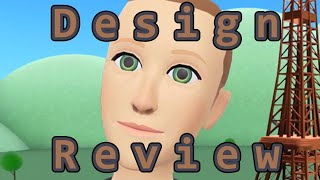
Mark Zuckerberg is a Broke VTuber
32sThe video ruthlessly mocks Mark Zuckerberg's low-budget VTuber model, combining celebrity clout with VTuber drama to spark outrage and laughs.
▶ Play Clip"Title is accurate but the video pivots halfway to a broader VR analysis, mixing solid insights with heavy sarcasm."
The video starts as a sarcastic review of Mark Zuckerberg's VTuber avatar design, criticizing its blandness, then pivots to a broader analysis of why Horizon Worlds avatars look inferior to typical VTuber avatars. The creator explains technology adoption phases (experimental, early adopter, commodity/niche) and argues that Meta's strategy to commodify VR with simple avatars may be premature.
The video pretends to review Mark Zuckerberg's VTuber model, noting it looks low-budget but arguing personality matters more than an elaborate design.
A good avatar design should either complement (like Ollie's high-energy look) or contrast (like Tally's gothic look) with the creator's personality to make it stand out.
The avatar uses neutral grays and browns, blends into the uncanny valley; the stylization helps but a more toony look with black outlines would be better.
The modeler added skin textures, imperfections, and subsurface scattering, making the skin realistic, but the design itself remains uninspired.
Technology moves from experimental to early adopter to either commodity or niche; most VTuber avatars are early-adopter creations, while Horizon Worlds aims for commodity simplicity.
Microwaves went from experimental (1940s-50s) to early adopter (1950s-60s) to mass commodity by the 1970s, illustrating how tech becomes mainstream.
Facebook traded HTML's flexibility for simple, inflexible profiles to make it easy for everyone to have a presence online; Meta is trying the same with VR.
The creator doubts Horizon Worlds' approach because VR isn't mature enough yet, and limiting avatar creativity may not solve a real problem.
The video argues that while Meta's goal to lower VR's barrier of entry is clear, treating VR as a commodity technology may be premature. The creator believes VR still needs more creative freedom and maturity before it can succeed as a mainstream platform.
According to the video, what are the two possible routes after the early adopter phase in technology adoption?
Commodity usage (broad usage by the population) or niche usage (only a few people ever use it).
03:55
What example does the video give of a technology that became a commodity in the 1970s?
Microwave ovens.
04:53
What example does the video give of a technology that remains niche despite being old?
The lathe.
05:07
According to the video, what is a key expectation about users of commodity technology?
They are not as knowledgeable about it and less willing to invest time, effort, and money into making it work.
05:24
How does the video characterize Facebook's strategy for commodifying having a presence on the internet?
It traded the near infinite flexibility of HTML for the simple, inflexible Facebook profile.
05:51
What does the video say about the uncanny valley in relation to Zuckerberg's avatar design?
The stylization reduces the uncanny valley feeling, but it could be more toony to avoid it further.
01:38
What tech adoption phase does the video place the use of microwave heating in the 1950s-60s?
The early adopter phase, when microwaves were expensive and large.
04:25
Design should reinforce or contrast content
Provides a clear, reusable principle for evaluating avatar and character design.
00:34Two routes after early adoption: commodity or niche
Explains a key framework for understanding technology adoption beyond the standard curve.
03:55Apple's commodity strategy
Uses a concrete historical example to show how early adopter products become mainstream.
05:36Facebook's profile simplification as commodification
Connects Facebook's strategy to Meta's VR ambitions, showing a recurring business pattern.
05:51Meta's avatar strategy: low barrier + cosmetics
Reveals the business logic behind limiting creative freedom in Horizon Worlds: sell cosmetics.
06:03[00:02] review for the up and coming vtuber Mark Zuckerberg look I try to avoid being overly critical of the designs of independent YouTubers unlike corporate YouTubers they can't afford skilled character designers and it is clear that
[00:19] Mark Zuckerberg doesn't have much money to spend on his model you know that is fine investing in an over-the-top model with all the bells and whistles isn't going to make you a successful YouTuber what is more important is that you have
[00:34] an engaging personality to back it up or in my case talk about really interesting subjects and hope that I seem interesting by the transitive property I believe that a good YouTuber design should either reinforce a person's
[00:49] content by complementing it or by contrasting against it so with one look at crazy Ollie you know she is high energy and she's over the top this tells you everything you need to know about an ollie stream on the other hand tally has
[01:05] a cool elegant gothic look that contrasts with her very adorkable nature the thing is that contrast makes her nature stand out even more however Mark's design nothing stands out about it it seems to be the most default
[01:22] character I've ever seen in a universe of possibilities this is what he picked his design uses a lot of Grays and Browns these neutral colors typically don't stand out there are some people who've made great things with these
[01:38] colors but this isn't one of them I do like the fact that Mr Zuckerberg has leaned into a design that is more stylized it is starting to Edge Into The Uncanny Valley so the stylization is doing a lot of work to reduce that
[01:55] feeling of this cruel horror you might feel though this might be just a taste thing I think it could be slightly more toony to avoid The Uncanny Valley more toony to avoid The Uncanny Valley more perhaps by having a black outline okay
[02:08] here is Mark Zuckerberg's updated design it Remains the most boring YouTuber designs I've ever seen however I have to confess that I'm not familiar with this content perhaps that's the gimmick being incredibly unengaging I suppose there is
[02:26] a niche for everything I have to say while the character design is uninspired the modeler is working their ass off to make this look good the top has a really nice texture to it they've also added a few surface imperfections and tiny
[02:43] little blemishes to the skin nothing that stands out but when you look at it makes the skin look more realistic avoiding the unnatural smoothest that makes you see something as being artificial also it looks like we've got
[02:57] a little bit of subsurface scattering or the model maker has faked it by using colors to give that feel very good work there it is a Pity but so much effort being put into a design that is in so incredibly mid in my opinion okay let's
[03:13] drop this premise Mark Zuckerberg is not a full-time virtual content creator how about we genuinely talk about the avatars in Horizon world and why they
[03:25] look so bad compared to the avatars used by YouTubers and almost every other person chatting in the 3D I think the best way to work out what is happening is to consider the arc that technology genuinely goes through Tech starts in an
[03:42] genuinely goes through Tech starts in an experimental phase created and used by the researchers who are developing the thing then it moves into the early adopter phase where people who are genuinely interested in the next big
[03:55] thing pick up the tech after the early adopter phase there are two possible adopter phase there are two possible routes commodity usage broad usage by the population or Niche usage only a few people ever
[04:10] use that technology I'll give an example During the period of mid 1940s to 50s people were experimenting with radar discovered that microwaves could heat things this is the experimental phase use of microwave heating was limited
[04:25] research and restoring hamsters from cryosleep in the 1950s through 1960s microwaves at that time period were very expensive quite large and needed a water
[04:39] cooling system like an overclocked gaming rig so their use was limited to some high-end applications and people who were using the technology for the novelty of it then by the 1970s the
[04:53] technology had improved to a point where it's small and cheap enough mainstream adoption into almost every household however that isn't the path for every however that isn't the path for every technology we have had lathe of one
[05:07] thought or another for almost as long as we've had civilization however not everybody has a lie it remains a niche item used by people who enjoy spinning things to high RPMs the thing about commodity technology is that you expect
[05:24] your technology to be used by people who are not as knowledgeable about it and less willing to invest time effort and money into making it work understanding
[05:36] this is how Apple got big with microcomputer graphical computers MP3 microcomputer graphical computers MP3 players smartphones watches and tablets it rode the wave of turning an early adopter product into a commodity product
[05:51] this was also Facebook's strategy commodifying having a presence on the internet it did this by trading the near infinite flexibility of HTML with the
[06:03] simple inflexible Facebook profile I think this is what matter is trying to do with VR lower the barrier of Entry not having the freedom to create a really great looking model is kind of the point if
[06:19] you can't have a Super Creative Design that everybody is on the same level with a simple character design also you might actually end up being able to sell Advanced Cosmetics for money some things that you can't do with a free-form
[06:36] system that allows you to upload meshes I don't think this approach is going to work though I can't see the problem Horizon worlds is trying to solve and I don't think VR is a mature enough Tech to become a commodity product what do I
[06:52] know I'm just an opinionated YouTuber Mark Zuckerberg is a rich person I am sure is done enough market and technological research to make a good decision about how he is spending his money rich people don't spend vast sums
[07:08] money rich people don't spend vast sums of money on very stupid ideas are all doomed before everything implodes please
[07:20] before everything implodes please subscribe to my channel
⚡ Saved you 0h 07m reading this? Transcribe any YouTube video for free — no signup needed.