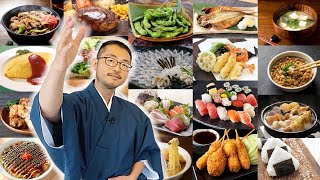

What Makes Japanese Food Washoku?
45sUNESCO recognition and the four unique aspects of washoku spark curiosity and cultural appreciation.
▶ Play Clip"The title accurately promises an explanation of Japanese food and its evolution, which the video delivers comprehensively."
This video explores the essence of Japanese food, or washoku, which was recognized by UNESCO as an intangible cultural heritage in 2013. The creator breaks down the four key aspects that define washoku, categorizes Japanese dishes by historical periods, and examines why Japanese cuisine is often considered healthy.
Washoku, acknowledged by UNESCO in 2013, is defined by four aspects: respect for variety and fresh ingredients, nutritional balance, expression of nature and seasons, and close ties with seasonal celebrations.
Japanese cuisine emphasizes using fresh, seasonal ingredients and minimizing waste, influenced by Buddhist philosophy that sees plants and animals as lives. This leads to simple preparations that highlight natural flavors.
The concept of ichiju sansai (one soup, three dishes) ensures a balanced meal with rice, soup, a main dish, and two vegetable side dishes, providing a variety of nutrients.
Cooking is considered an art form in Japan, with dishes presented to reflect nature and the season. Japan has 24 micro-seasons, and ingredients are chosen for peak flavor and nutrition.
Many Japanese festivals have special dishes, like osechi for New Year, reinforcing the cultural importance of food in celebrations.
The creator categorizes Japanese food into three historical periods: traditional (before 1868), semi-modern (1868-1945), and modern (post-WWII), each with distinct influences and dishes.
Developed during the sakoku (isolation) period, this includes dishes like sushi, tempura, udon, soba, and yakitori. It lacks four-legged animal meat due to Buddhist restrictions.
Subcategories include shojin ryori (vegan Buddhist cuisine) and kaiseki (high-end multi-course meals). Kaiseki can cost $50-$500 per person.
After Japan opened to the West, meat-eating became common, leading to dishes like sukiyaki and shabu-shabu. Yoshoku (Western-style Japanese food) includes tonkatsu, omurice, and curry rice.
Post-WWII, US imports of wheat and milk led to flour-based dishes like okonomiyaki and takoyaki. Chinese influence brought ramen and gyoza.
Factors include low fat use (relying on umami), rice over wheat, fish over meat, fermented foods, tea over sugary drinks, and balanced meals taught in schools.
Japanese cooking uses umami from dashi (seaweed and fish broth) instead of fat to create savory flavors, reducing overall fat intake.
Rice is a staple, often eaten with simple, low-fat sides, whereas wheat products like bread and pasta are typically paired with fatty sauces.
Fish fat has a lower melting point and is unsaturated, reducing risks of cholesterol and cardiovascular diseases compared to animal fats. Fish also contains DHA and taurine beneficial for brain and heart health.
Japanese seasonings like soy sauce, miso, and sake are fermented, providing probiotics that aid digestion and enhance flavor without added fat.
Japanese households typically drink tea (green tea, roasted barley tea) with meals, avoiding sugary sodas and juices, reducing sugar intake.
School subjects like kateka teach cooking and nutrition, emphasizing the importance of a variety of ingredients in every meal.
Japanese food is not just a collection of dishes but a cultural heritage defined by respect for ingredients, balance, seasonality, and tradition. Its health benefits stem from low fat, fermented foods, fish, and balanced meals, though modern influences have diversified the cuisine.
What does 'washoku' mean and when was it recognized by UNESCO?
Washoku means Japanese food and was recognized as an intangible cultural heritage in 2013.
01:14
What are the four aspects of washoku according to the Japanese government?
Respect for variety and fresh ingredients, nutritional balance, expression of nature and seasons, and close tie with seasonal celebrations.
01:28
What is 'ichiju sansai'?
It means 'one soup and three dishes', a traditional Japanese meal structure with rice, soup, a main dish, and two side dishes.
04:06
What was the 'sakoku' policy?
It was Japan's isolation policy restricting imports and exports except with China, Portugal, and Holland through Nagasaki, lasting until 1868.
07:26
Name two subcategories of traditional Japanese food.
Shojin ryori (vegan Buddhist cuisine) and kaiseki (high-end course meal).
09:15
What is 'yoshoku'?
Western-style Japanese food invented after Japan opened to the West, including dishes like tonkatsu, omurice, and curry rice.
10:46
Why is fish considered healthier than meat in Japanese cuisine?
Fish fat has a lower melting point (10-20°C) and is unsaturated, reducing risks of high cholesterol and cardiovascular diseases, while animal fats are saturated and can clot blood.
14:58
What are common fermented seasonings in Japanese cooking?
Soy sauce, miso, and sake are all made through fermentation.
16:27
What is the typical drink with a Japanese meal and why?
Tea (green tea, roasted barley tea) is typical because it contains no sugar or caffeine and doesn't kill the flavor of the food.
16:51
What subject in Japanese schools teaches cooking and nutrition?
Kateka (household subject) teaches cooking, nutrition, and the importance of varied ingredients.
17:40
UNESCO Recognition of Washoku
Establishes the cultural significance of Japanese cuisine beyond just food.
01:14Ichiju Sansai Concept
Illustrates the traditional balanced meal structure that promotes nutritional variety.
03:17Historical Categorization of Japanese Food
Provides a clear framework to understand how Japanese cuisine evolved through different eras.
06:55Health Benefits of Fish Over Meat
Offers a scientific explanation for the health advantages of fish consumption, challenging common dietary norms.
14:58Nutrition Education in Schools
Highlights how cultural practices and education contribute to Japan's low obesity rates and high life expectancy.
17:24[00:01] welcome to taiga's kitchen today i'm
[00:03] going to explain you about different
[00:04] aspects of japanese food so in the last
[00:06] video of japanese geography i got a lot
[00:08] of good feedbacks so i decided to go
[00:10] further and make more of these videos
[00:11] and since this is a cooking channel i
[00:13] thought it was fair to make a video on
[00:15] japanese food because there are so many
[00:16] dishes and so many aspects and so many
[00:18] different types of japanese food and
[00:20] nowadays almost everybody knows sushi as
[00:22] a japanese food or like miso soup and
[00:24] perhaps ramen noodle or gyoza or onigiri
[00:28] or some sort but there are a lot more
[00:30] than that and also because in this
[00:31] channel i've been cooking a lot of
[00:32] chinese influence dishes korean style
[00:34] dishes and also a lot of western style
[00:36] dishes i even made japanese style pasta
[00:39] so you might be a bit confused what
[00:40] really is japanese food or like what
[00:42] really entitles japanese food and so in
[00:44] this video i'll be talking about three
[00:45] main topics first i'm going to talk
[00:47] about japanese food in general but also
[00:49] what makes a dish japanese food and
[00:51] secondly i'll be talking about different
[00:52] categories of japanese food primarily in
[00:54] accordance with the history of japan
[00:56] answered why is japanese food considered
[00:58] healthy or is it really healthy so i
[01:00] hope this video helps you to understand
[01:02] japanese food and maybe get more
[01:03] appreciation for the japanese food so
[01:06] without further ado
[01:07] let's get started
[01:09] [Music]
[01:14] so the first topic is what entitles a
[01:16] dish as a japanese food japanese food or
[01:18] in japanese washoku which is literally
[01:20] translated as japanese food was
[01:22] acknowledged by unesco in 2013 as an
[01:25] intangible cultural heritage of humanity
[01:28] and as the japanese government was
[01:29] applying for this they picked four
[01:30] aspects that makes up washoku one is a
[01:33] respect for variety and fresh
[01:35] ingredients
[01:36] two the nutritional balance three
[01:38] expression of the nature and the four
[01:39] seasons and four close tie with the
[01:41] seasonal celebrations so first aspect
[01:43] with respect to the variety of fresh
[01:45] ingredients so as you may have already
[01:47] saw in the last video of japanese
[01:48] geography japan holds a variety of
[01:51] geographical features as well as
[01:52] different climates this allows the
[01:54] country japan even though the soil is
[01:56] not as rich as many other countries in
[01:58] the world to hold a variety of different
[02:00] ingredients we also have a lot of
[02:01] mountains fields and also ocean so we
[02:04] are able to gather different ingredients
[02:06] from different parts of japan and
[02:08] because of the harsh geographical
[02:10] features we have a big respect towards
[02:11] nature and that's big respect for the
[02:14] food that we are able to receive from
[02:16] the nature and therefore within washoku
[02:18] or japanese food it's very very
[02:19] important that we do justice for the
[02:21] ingredients and this is also connected
[02:23] with the buddhist philosophy and seeing
[02:25] not only the animals but also plants as
[02:28] lives and therefore we try to bring out
[02:30] as much of the ingredients as possible
[02:32] and we also try to throw away as little
[02:34] ingredients as possible
[02:36] and therefore in comparative like french
[02:38] or chinese cuisine where they use a lot
[02:39] of spices or sauces japanese food try to
[02:42] keep it simple this is really to enjoy
[02:44] the fine flavor of each specific
[02:46] ingredients and within the japanese
[02:48] culture and japanese cuisine eating or
[02:50] cooking is considered one of the most
[02:52] important aspect of life because we see
[02:54] eating as an exchange of lives we are
[02:57] receiving a lives from the nature so
[02:59] that we can live further in order to
[03:00] make the world a little bit better place
[03:03] and that's also why we
[03:04] hold our hands like this and say
[03:06] itadakimasu in the beginning and also
[03:09] gotso samadeshta at the end as a small
[03:11] prayer to saying thank you for all the
[03:13] lives and all the work that is put into
[03:15] for the food so the second aspect of
[03:17] washoku
[03:18] is the nutrition balance now with a
[03:20] scientifical advancement we know that
[03:22] our body needs different nutrients
[03:24] vitamins proteins fats and carbohydrates
[03:26] and whatnot and for a longest time
[03:28] people didn't know that consciously
[03:30] about the nutrients but probably through
[03:32] the experience people kind of knew that
[03:34] eating different types of food helps you
[03:36] stay healthy and also because in japan
[03:38] there are a lot of different ingredients
[03:40] it was very important in japanese
[03:42] cuisine that you have a variety of
[03:43] ingredients so in japanese cuisine you
[03:45] try to have inside one meal some from
[03:47] the mountains something from the sea
[03:49] some leaves some root vegetable fruit
[03:51] vegetable and of course always rice
[03:53] maybe some kind of pickles and so even
[03:55] without the science difficult
[03:57] backgrounds japanese people somehow knew
[03:59] that it's very important for your body
[04:01] to stay healthy that you pick up
[04:02] different nutrients and thus for the
[04:04] different ingredients and in japanese
[04:06] cuisine there's a phrase called ichiju
[04:08] sansai meaning one soup and three dishes
[04:11] so if you go to restaurant in japan and
[04:13] when you order a meal you always have a
[04:15] rice and then to that you almost always
[04:17] have some kind of soup and then the main
[04:19] dish and to that at least two kind of
[04:21] side dishes mostly vegetable side dishes
[04:23] so in washoku it is very important to
[04:25] have variety of ingredients and does
[04:27] several dishes on one meal so the third
[04:30] aspect is expression of nature and the
[04:32] four seasons so in japanese culture
[04:34] cooking was considered as art form and
[04:36] chef was considered as an artist where
[04:38] in many cultures shepherd consider as
[04:40] merely a servant so in washoku it is
[04:43] very important that the dishes are
[04:44] presented with aesthetic not just any
[04:46] pretty beautiful way but instead it
[04:48] should be a representative of the nature
[04:50] and also the season as you may have saw
[04:52] in the video of japanese geography japan
[04:54] has four distinct seasons and each of
[04:56] these seasons are divided into six small
[04:58] seasons and so through one year you have
[05:00] 24 seasons actually in japan and
[05:02] therefore when you go to more of the
[05:04] high-end restaurants which i'll explain
[05:06] later you have a really beautiful
[05:07] presentation of the nature of the season
[05:09] of that time and that's also another
[05:10] reason why we have different kind of
[05:12] plates in western restaurants the plates
[05:14] are usually quite simple just white and
[05:16] round but in japan we have different
[05:18] shapes different form and also often
[05:20] with different material you have
[05:22] porcelain you have glass you may use
[05:24] some wood or bamboo or sometimes even
[05:26] just some kind of leaf as a plate and we
[05:29] also do a lot of foraging like i show in
[05:31] the video of horsetail on the firm we
[05:33] also have a lot of ingredients that is
[05:35] only available in certain seasons and so
[05:37] if you go to japanese supermarket
[05:39] there's always a section where they sell
[05:41] some season of food yes of course with
[05:43] technology you can grow pretty much
[05:44] everything throughout the whole year but
[05:46] the japanese people prefer more seasonal
[05:48] ingredients because ingredients that is
[05:50] in the season tastes the best and also
[05:52] has the most nutrients and so a lot of
[05:54] japanese people are keen on what
[05:56] vegetable and more fish are in season so
[05:58] the fourth and the last aspect of
[06:00] washoku is the strong connection with
[06:02] seasonal festivals in japanese culture
[06:04] pretty much every month we have some
[06:06] kind of seasonal festival and most of
[06:07] those festivals would have some special
[06:09] dish that we pretty much only eat in
[06:11] that festival starting with the new
[06:13] years which is one of the most important
[06:14] festival in japan i made a vlog on that
[06:16] so you should check that out there i'm
[06:18] showing different cultural things that
[06:20] we do in the new year and also as a
[06:22] preparation for the new year and the
[06:23] special dish of osechidori which over 99
[06:26] of japanese people eat as we come in in
[06:28] the new years and most of these dishes
[06:30] are only served in the new year's and in
[06:32] march we have girls day in may we have
[06:35] boys day in july we have so-called
[06:37] tanabata in september we have otsukimi
[06:39] this is also connected with the third
[06:40] aspect but washoku is also very
[06:42] important for the seasonal celebrations
[06:45] so these four aspects are the reason why
[06:47] japanese food is special and why
[06:49] japanese food is considered as a
[06:51] intangible heritage of humanity and not
[06:53] just collection of dishes
[06:55] now let's go into the second topic which
[06:57] is a different category of japanese food
[06:59] so three categories are the traditional
[07:01] japanese food semi-modern japanese food
[07:03] and the modern japanese food so this is
[07:05] a categorization that i made up
[07:07] according to the history of japan but i
[07:08] think this just really represents how
[07:10] japanese food was developed and also
[07:12] evolved throughout i think it helps you
[07:14] to understand the japanese food more so
[07:16] the first category of traditional
[07:18] japanese food includes all the food
[07:20] before the year 1868 when the japanese
[07:22] government opened the country to outside
[07:24] world so until that point japan was
[07:26] under a policy of so-called sakoku which
[07:28] means locking in the country restricting
[07:30] all the imports and exports with the
[07:32] outside world except for china portugal
[07:34] and holland and only in one port in
[07:36] nagasaki which is all the way south west
[07:38] of japan during this time of sakoku
[07:40] japan were able to appreciate over 250
[07:42] years of peace where there were no wars
[07:45] no conflicts which is known as pax
[07:47] tokugawana because during that time the
[07:49] government was called tokugawa bakufu
[07:52] and during this time with very little
[07:53] contact with outside world happened very
[07:55] similar to the galapagos effect where a
[07:57] lot of japanese culture boomed so a lot
[07:59] of japanese culture you may know were
[08:01] actually developed in this period of
[08:02] pakistan so like kimono kabuki no
[08:05] theater sumo ukiyoe sado or tea ceremony
[08:09] ikebana or flower arrangement and also a
[08:12] lot of japanese dishes were invented for
[08:14] example the sushi that you know in the
[08:15] form like nigirizushi or makizushi was
[08:17] invented during this period in edo or
[08:19] tokyo because it was very close to the
[08:21] sea and was where the government was was
[08:23] the capital of japan at the time was a
[08:24] lot of wealth were also there so people
[08:26] were able to get the fresh fish and also
[08:28] another category tempura it was actually
[08:30] originally came from portugal the name
[08:32] tempura comes from temperature it means
[08:34] like to mix or to cook until that point
[08:35] japanese people didn't know about deep
[08:37] frying but the people saw the portuguese
[08:38] people we took that culture and invented
[08:41] tempura out of that also key aspect of
[08:43] this traditional food is the lack of
[08:45] animal meat except for chicken because
[08:47] the buddhist tradition prohibited people
[08:48] to eat four-legged animals and so until
[08:51] that point uh japanese people didn't eat
[08:52] any pork and beef and so if it has pork
[08:55] or beef then it's not traditional
[08:56] japanese food so all the food that are
[08:58] included in this category are like udon
[09:00] or soba noodles natto a lot of pickles
[09:03] sushi and tempura of course yakitori
[09:05] because chicken was two-legged animal so
[09:07] it was okay to eat that una don and a
[09:09] lot of the fish dishes and also within
[09:11] this traditional japanese food there are
[09:13] also some subcategories one is called
[09:15] shojin yori which was actually invented
[09:17] by the buddhist monks buddhist monks
[09:18] were following the strict rules of
[09:20] buddhism so they were not allowed to eat
[09:22] animals or fish and so shojin yodi is a
[09:24] strict vegan diet and so if you're vegan
[09:26] then you should go try to find some
[09:28] troji restaurants if you go to japan
[09:30] because finding vegan dishes in japan is
[09:33] quite difficult and the second
[09:34] subcategory is called kaisekiriori so
[09:37] kaisekiyo is a high-end course meal and
[09:39] so it starts with an appetizer and they
[09:41] have first dish second dish third dish
[09:43] they usually have like five to ten
[09:44] dishes they usually cost about fifty
[09:46] dollars or fifty euro for lunch and for
[09:48] dinner it's usually above 100 to to go
[09:51] up to like 500
[09:52] or euro per person so it is very pricey
[09:54] but if you happen to go to japan i think
[09:56] you should definitely try this because
[09:58] the experience is definitely worth it
[10:00] and then another topic category is
[10:01] wagashi which later means japanese snack
[10:04] or japanese sweets these are like
[10:05] daifuku mochi dango oshiruko senbei or
[10:08] rice crackers manju and a variety of
[10:11] so-called neriki which is primarily made
[10:13] with uncle but representing different
[10:15] aspects of nature or like fruits and
[10:18] it's quite very beautiful and these are
[10:20] usually served on the side of a tea
[10:21] ceremony now let's go into the second
[10:23] category of semi-modern japanese suit so
[10:25] these are the dishes that were invented
[10:27] after the opening of country to before
[10:29] the end of the world war ii so after
[10:31] opening the country all the western
[10:33] culture came in the main thing that
[10:35] influenced japanese food was the habit
[10:36] of eating meat so the dish of sukiyaki
[10:39] or shabu-shabu was invented this time
[10:41] and also a lot of nabe or hot pot dishes
[10:43] and within this semi-traditional
[10:44] japanese food there's a subcategory of
[10:46] so called yoshoku which means western
[10:48] style japanese food so these are
[10:50] invented by the chefs who are working at
[10:51] the western style restaurants so those
[10:53] includes like tonkatsu from cutlet
[10:55] koroque or the original name is crockett
[10:57] omoraisu so combining rice in the omelet
[11:00] a japanese style hamburg or like the
[11:02] curry rice so even though curry is
[11:05] originally from india because at that
[11:06] time curry were introduced to japan
[11:08] through the british people so we kind of
[11:10] consider curry as a more western food
[11:12] and therefore is in the category of
[11:14] western japanese food and the last
[11:16] category is the modern japanese food and
[11:18] this is all the food that were invented
[11:20] after the world war ii as world war ii
[11:22] happened and we were in war with primary
[11:24] against america china and britain so a
[11:26] lot of the outside ingredients were
[11:28] banned but after we lost the war at the
[11:30] year 1945 the united states came in and
[11:33] occupied japan for actually seven years
[11:35] and during that time japan was very very
[11:37] poor and america at that time helped us
[11:40] redevelop our country the united states
[11:42] brought us a lot of wheat and also milk
[11:44] products half of that was trying to help
[11:46] us about half of that is probably so
[11:48] that america has more export and through
[11:50] this importer wheat flour we invented a
[11:52] subcategory of this
[11:54] which means powder or flour products so
[11:57] this includes okonomiyaki takoyaki
[11:59] yakisoba which is all primarily made
[12:01] from flour and there's also another
[12:03] subcategory called chuca which means
[12:05] chinese food because before the war we
[12:07] occupy quite a large part of china and
[12:10] as we lost the war a lot of people came
[12:12] back from there and brought the culture
[12:14] from there and that's why we have ramen
[12:15] noodle and gyoza as a japanese food even
[12:18] though they were originally from china
[12:19] this culture of chinese food evolved in
[12:21] japan further and came out to ramen
[12:24] noodle so hopefully this categorization
[12:26] of japanese food helps you understand
[12:27] different aspects the different
[12:28] historical backgrounds of japanese food
[12:30] and maybe next time you cook japanese
[12:32] food or when you go to japanese
[12:33] restaurant you can kind of think of from
[12:35] which era or which category these dishes
[12:37] are from and then you may be able to
[12:39] have a little trivial conversation with
[12:40] your friends
[12:41] and now let's go to the last topic of
[12:43] why japanese food is healthy or is it
[12:45] really healthy so compared to many
[12:47] western countries and especially the us
[12:49] the obesity rate in japan is very very
[12:52] low so you may have seen like a street
[12:53] of japan in like video and some tv or
[12:55] something most people you see are very
[12:57] slim and japan still holds the high life
[13:00] expectancy of 84 years old here i'm
[13:02] going to talk about different aspects
[13:03] and different arguments of why japanese
[13:05] food is healthy and i'll let you be the
[13:07] judge of it the first aspect is very
[13:09] little or no fat in japanese food so
[13:11] there are actually three ways to make
[13:13] something savory one is using fat oil
[13:15] two is using sugar and the third is use
[13:17] of umami in japanese food we try to
[13:19] avoid the first one so think of some
[13:21] dish that you really crave for maybe
[13:22] that is hamburger or like fries or
[13:24] potato chips pizza or like donuts and
[13:27] you realize a lot of them contain a lot
[13:29] of fat and they are very delicious and
[13:31] savory and it's not to say that you
[13:32] shouldn't eat any of those but in
[13:34] traditional japanese food except for
[13:36] tempura we use barely any fat and
[13:38] instead we are conscious about umami
[13:40] which was acknowledged recently as a
[13:42] fifth flavor we incorporate this umami
[13:45] aspect in our cooking to do that in
[13:47] japanese cooking we use a lot of dashi
[13:49] which is a combination of seaweed and
[13:50] fish broth if you want to know more in
[13:52] detail of mommy or dashi please go watch
[13:54] this i'm explaining in detail of what is
[13:56] really umami and how these are
[13:58] incorporated in japanese food so the
[13:59] second aspect is rice over wheat so in
[14:02] japan a lot of people eat rice pretty
[14:04] much every day there are also even a lot
[14:05] of people who eats rice pretty much
[14:07] every meal i love rice and i eat more
[14:09] rice than wheat products there are some
[14:11] studies that shows that rice is easier
[14:13] to be digested but also raise the blood
[14:15] sugar not as much in compared to wheat
[14:18] products and i don't think rice or wheat
[14:20] is not necessarily the rice and wheat
[14:22] themselves but rather what you eat them
[14:24] with so the wheat product like bread or
[14:27] pasta you almost always have some fat
[14:30] content in them and you will also never
[14:32] ever eat wheat product as it is without
[14:34] any sauce or additive to it but rice
[14:37] like a really good rice you could really
[14:39] eat it without any added without any
[14:41] topping to it and a lot of the side dish
[14:43] for the rice they don't necessarily have
[14:45] to be that fatty a lot of them are quite
[14:47] very simple like pickles natto like miso
[14:50] soup none of them have fat in them think
[14:52] of eating bread or pasta just with
[14:54] pickles or like some vegetable somehow
[14:56] it doesn't work and the third aspect is
[14:58] fish over meat a lot of people may know
[15:00] that fish is more healthy than meat and
[15:02] the main reason why is because of the
[15:03] melting temperature of the meat fat and
[15:05] the fish fat b-fat has the melting point
[15:07] above 40 degrees pork fat between 30 and
[15:10] 40 and chicken fat between 30 and 35 so
[15:13] that means b-fat is always as a solid
[15:15] form in your body and therefore this can
[15:17] be cause of your blood system to be
[15:20] clotted whereas the melting point of the
[15:21] fish fat is between 10 to 20 degrees and
[15:24] also the animal fat is high in saturated
[15:26] fatty acid high consumption of the
[15:28] saturated fatty acid raise the risk of
[15:30] high cholesterol and cardiovascular
[15:32] diseases and the fish acid is
[15:34] unsaturated fat and therefore fish fat
[15:37] do not have any of these risks and also
[15:39] a lot of fish is also high in dha blue
[15:42] black fish like sardines mackerel
[15:44] herring and tuna are also very high in
[15:46] this and this dha is said to help to
[15:49] make your brain more active and the
[15:50] seafood is also high in taurine and epa
[15:53] which actually decrease the cholesterol
[15:54] in your bloodstream so eating fish is
[15:56] actually much more healthy than meat
[15:58] but this information will never go into
[16:00] the mainstream media especially in the
[16:02] western cultures because those media are
[16:04] usually funded by the meat industries
[16:06] and they don't want people to know that
[16:08] the fish is healthier than meat which
[16:10] will decrease the consumption of meat so
[16:12] fourth aspect is a fermented food so
[16:14] japanese food contain a lot of the
[16:16] fermented food of course that doesn't
[16:17] mean that other countries don't have
[16:19] fermented food like a lot of cheese or
[16:21] pickle or also fermented food but
[16:23] japanese cuisine contain a lot more of
[16:25] those fermented ingredients especially
[16:27] if you look at the seasoning so soy
[16:28] sauce miso meating sake pretty much all
[16:32] the japanese seasonings are made through
[16:34] fermentation nowadays these fermented
[16:36] foods are considered healthy because
[16:37] they contain a lot of probiotics small
[16:39] microorganisms to keep your digestive
[16:41] system healthy and to help you digest as
[16:43] well and also this process of
[16:45] fermentation helps the ingredients
[16:47] enrich the flavor and also this helps
[16:49] also use less fat in your food and the
[16:51] fifth aspect is drinking tea over soda
[16:54] and juice so in japanese household we
[16:56] would pretty much always have some kind
[16:58] of tea in the fridge nowadays it may be
[17:00] a bit changing most families will never
[17:03] drink soda or juice during a meal
[17:05] there's sometimes green tea or roasted
[17:06] green tea but often is a roasted barley
[17:08] tea this contains no sugar no caffeine
[17:11] this also doesn't kill the flavor of the
[17:13] food and as we know from many studies
[17:15] that a lot of sugar intake is unhealthy
[17:18] so in japan it's quite uncommon to drink
[17:20] juice or soda with your meal and instead
[17:22] we pretty much drink a lot of tea and
[17:24] the last aspect is a balanced meal when
[17:27] you see a japanese meal you would see
[17:28] that you don't have just like one or two
[17:30] dish but instead you have a main dish
[17:32] rice and soup and then to that you have
[17:35] at least like two or three more
[17:36] vegetable side dishes and i don't know
[17:38] how it is in other countries but in
[17:40] japan every school would have a subject
[17:42] called kateka which means household
[17:44] subject inside koteca we learned to sew
[17:47] or like use the sewing machine we
[17:49] learned how to clean the house or like
[17:50] how to clean a toilet sometimes how we
[17:53] manage the money but a lot of times
[17:54] spent for learning about cooking and
[17:56] also for this each school to have like a
[17:58] cooking room and then we learn different
[18:00] basic japanese dishes and to that we
[18:02] also learn the nutritional values of
[18:03] different ingredients how it is
[18:05] important to take in different variation
[18:07] of ingredients and this idea kind of
[18:09] comes back to the first aspect of
[18:11] washoku there's also another reason why
[18:13] japanese food is considered healthy
[18:17] so this is the end of this video hope
[18:18] you enjoyed it i hope this kind of
[18:20] helped you understand the japanese food
[18:22] different aspects of japanese food and
[18:24] historical background to that and also
[18:26] help you to appreciate japanese food a
[18:27] little bit more if you enjoyed this
[18:29] video i'd love it if you could hit the
[18:31] like button for me so that this video
[18:32] can be spread out to more people and if
[18:34] you have any feedbacks or if you have
[18:36] any questions or any requests for this
[18:37] kind of information video please feel
[18:39] free to write anything in the comments
[18:40] below and in the next presidential video
[18:43] i'm thinking of seasonal festivals in
[18:45] japan and food connecting to that so
[18:47] please subscribe so that when that comes
[18:49] out it gets notified to you and also i
[18:51] really appreciate it if you could share
[18:52] my channel and my videos with your
[18:54] friends and families otherwise i look
[18:56] forward to you in the next video
[18:58] bye
⚡ Saved you 0h 19m reading this? Transcribe any YouTube video for free — no signup needed.