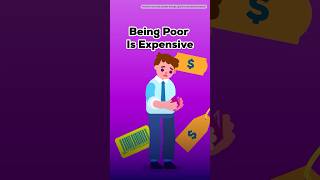

How One Bad Month Traps You in Poverty
30sThis segment vividly explains the snowball effect of financial setbacks, resonating with anyone who has faced unexpected expenses.
▶ Play Clip"The title is accurate and thought-provoking, but the video is a brief overview rather than a deep dive, so it slightly oversells the depth of analysis."
The video explains how poverty is not merely a lack of money but a self-reinforcing cycle where financial instability leads to costly setbacks, high-interest debt, and chronic stress, making it harder to escape. It contrasts the experience in wealthy countries with the even more brutal effects in the poorest regions, where lack of basic infrastructure amplifies vulnerability.
Living paycheck to paycheck means one setback can snowball quickly. Late charges and overdraft fees push people further behind when bills arrive before salary.
Short-term loans seem like a fix but carry high interest rates, making the next month harder and requiring repayment of far more than borrowed.
Constant stress drains mental energy, making long-term planning harder and locking individuals into the cycle of poverty.
In the poorest regions, lack of running water forces reliance on informal vendors who charge more per liter. Without refrigeration, safe food storage is difficult, especially when harvests fail and prices surge.
Without public health care or unemployment support, a single accident or bad harvest can erase everything a person has.
Poverty is not just about having less; it's a downward spiral. Breaking the cycle requires intervention such as universal health care, housing security, and access to affordable credit.
Poverty is a self-reinforcing cycle, not a static condition. Effective solutions must address the structural factors that trap people, including healthcare, housing, and affordable credit.
What are two immediate financial consequences of living paycheck to paycheck?
Late charges and overdraft fees.
00:02
Why do short-term loans often make financial situations worse?
They carry high interest rates, making the next month harder and requiring repayment of far more than borrowed.
00:16
How does constant stress affect people in poverty?
It drains mental energy, making long-term planning harder and locking them into the cycle of poverty.
00:30
What are two challenges faced by people without running water or refrigeration in poor regions?
They rely on informal vendors who charge more per liter, and safe food storage is difficult when harvests fail and prices surge.
00:42
What single event can erase everything a person has in the poorest regions?
One accident or bad harvest.
00:54
What interventions are suggested to break the cycle of poverty?
Universal health care, housing security, and access to affordable credit.
01:10
The Snowball Effect of Setbacks
Illustrates how a single financial shock can cascade into a larger crisis for those with no buffer.
00:02Stress as a Poverty Trap
Highlights the psychological mechanism that reinforces poverty, beyond just financial constraints.
00:30Vulnerability Without Safety Nets
Shows how lack of public support makes poverty catastrophic in developing regions.
00:54Structural Solutions Needed
Points to systemic interventions rather than individual effort as the key to breaking the cycle.
01:10[00:02] trap works. When you live paycheck to paycheck, one setback can snowball fast. When bills arrive before your salary, late charges and overdraft fees push you further behind. A short-term loan may seem like a fix, but high interest rates
[00:16] make the next month harder and you repay far more than you borrowed. Selling your commute raises the risk of losing your job. And forget about getting sick. Each disruption leaves you weaker and the
[00:30] constant stress drains mental energy, making long-term planning harder and locking you into the cycle of poverty. As tough as this is in wealthy countries, the effects in the poorest parts of the world are brutal. Without
[00:42] running water, many rely on informal vendors who charge way more per liter. Without refrigeration, safe food storage is difficult, especially when harvests fail and prices surge. And without public health care or unemployment
[00:54] support, one accident or bad harvest can erase everything you have. No matter the country, poverty isn't just about having less. It's a downward spiral. Breaking intervention from universal health care and housing security to access to
[01:10] and housing security to access to affordable credit.



⚡ Saved you 0h 01m reading this? Transcribe any YouTube video for free — no signup needed.