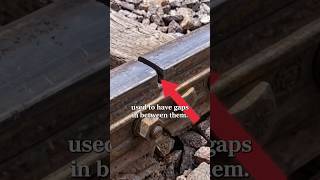

The Real Reason Trains No Longer Go Clickety-Clack
43sNostalgia meets science—viewers love learning why a familiar sound disappeared, and the explanation is surprising.
▶ Play Clip"The title promises an explanation of a familiar phenomenon, and the video delivers a clear, concise answer without fluff."
This video explains why modern trains no longer produce the classic 'clickety-clack' sound, attributing it to the shift from gapped tracks to continuously welded rails. It details how jagged ballast rocks are used to manage thermal expansion and prevent track buckling.
Train tracks used to have gaps to allow for thermal expansion and contraction, which caused the rhythmic 'tuck-tuck' sound as wheels crossed them.
Modern tracks are welded into seamless rails, eliminating the clickety-clack but creating a new problem: expanding rails have nowhere to go, risking violent buckling.
Tracks are attached to sleepers and embedded in jagged rocks that interlock, creating friction that holds the rail straight under thermal pressure.
If ballast rocks were smooth and round, train vibrations would cause them to slide, leading to rapid track buckling.
The video concludes that the jagged ballast rocks are essential for maintaining track stability by counteracting thermal expansion, a clever engineering solution that also eliminated the iconic train sound.
Why did old train tracks have gaps?
To allow for thermal expansion and contraction of the rails.
00:02
What sound did wheels make when crossing track gaps?
A rhythmic 'tuck-tuck-tuck' sound.
00:02
What replaced gapped tracks in modern railways?
Continuously welded seamless rails.
00:15
What problem arises from welded rails?
Expanding rails have nowhere to go, causing internal pressure that can lead to violent buckling.
00:15
How do jagged ballast rocks prevent track buckling?
They interlock, creating friction that holds the sleepers and rails firmly in place under thermal expansion.
00:29
What would happen if ballast rocks were smooth and round?
Vibrations from passing trains would make them slide, causing the track to buckle quickly.
00:54
Jagged Rocks as Friction Solution
Explains a clever engineering solution that uses physical interlocking to manage thermal expansion.
00:29Why Smooth Rocks Fail
Highlights the importance of material shape in structural stability, a key principle in civil engineering.
00:54[00:02] train tracks used to have gaps in tracks expand and contract with temperature. And wheels hitting those gaps made that the tuck the tuck the tuck sound. But those gaps also slowed
[00:15] the trains down. So, today's tracks are welded into one seamless rail. No more clickety-clack. But now with expanding hot rail has nowhere to go. And if left alone, the internal pressure would build until finally the rails would violently
[00:29] buckle into the zigzag. And that is where those jagged [music] rocks come in. The tracks are attached to these sleepers and then embedded in those [music] rocks. And their jaggedness makes them physically interlock, which
[00:41] creates a huge amount of friction. So, when the steel rails expand and [music] push on the sleepers, the jagged rocks lock together and hold everything firmly in place. That keeps the rail straight even under huge internal pressure. But
[00:54] if the rocks were smooth and round, then vibrations from passing trains would make them slide around and the [music] track could quickly buckle. Subscribe track could quickly buckle. Subscribe for more.
⚡ Saved you 0h 01m reading this? Transcribe any YouTube video for free — no signup needed.