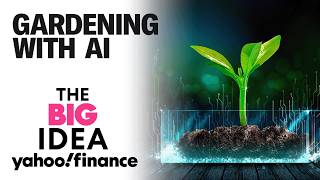

This $13B Hobby Is a Mental Health Hack
41sThe surprising $13 billion market size combined with the mental health angle makes viewers want to learn more.
▶ Play Clip"Delivers on the burnout–gardening promise, with a generous side of practical founder advice."
In this interview, Gardenuity CEO Donna Lydiard discusses how gardening serves as an antidote to modern burnout, combining hands-in-the-dirt wellness with a $13 billion global market. She shares practical lessons on building an experience-driven business, including logistics for shipping live plants, the role of AI in personalizing gardening, and founder advice on persistence, hiring, and partnerships.
Burnout and anxiety are real in a fast-paced world; while AI changes productivity, people are still searching for presence, and gardening delivers that presence.
In-home hobby-based gardening is a $13 billion global market, showing that a beautiful, soulful hobby can be monetized.
Gardenuity focuses on the entire experience — how customers feel when opening the box, putting hands in soil, and later harvesting herbs for a pizza or cocktail.
The mission covers mental health, nutritional well-being, and planetary wellness; gardening invites people to slow down, be present, and put down their phones.
A patented algorithm matches the right plants to the right people based on predictive weather — e.g., no tomato shipped to Wisconsin in January even if it's a taco toppings garden.
Gardenuity drop-kicked boxes and threw them off the roof to test packaging, and uses cold or heat packs to keep plants healthy during shipping.
Work-life balance is actually minute-by-minute choices; you are never fully in balance, you just make a choice and live with it.
Don't wait until every condition is perfect. Push 'go' and keep faith, or the moment passes you by.
The average age of people starting companies is now 45, and women find their confidence again at 55.
Hear no over and over? Keep going, find the right partner, and be brave enough to walk away from the wrong investor — 'I got the ickies.'
Biggest mistakes are people; if a hire isn't a fit, you can tell in the first four weeks. Some worked themselves out, some I had to work out.
Garden Nerdy Match uses zip code, predictive weather, and fruiting time to match plants with the right soil and nutrients; Grow Pro tracks weather by zip code and sends text alerts to protect plants.
65% of Gardenuity's business is with corporate wellness teams; it's the first gardening company covered by insurance, with Cigna as the first insurer to join.
A new functional cookie brand co-founded by Ashley Fields, designed for focus, energy, and sleep.
Gardening offers a tangible path back to presence and mental well-being, and it's also a growing business opportunity. The key takeaway: build a mission around how people feel, use technology to scale that experience, and never stop pushing through the no's.
What is the global market size for in-home hobby-based gardening?
$13 billion globally.
00:42
What does Gardenuity's patented algorithm do?
It matches the right plants to the right people based on predictive weather.
05:22
What is the average age of people starting companies today?
45 years old.
10:18
What does 'hire slow, fire fast' mean according to Donna Lydiard?
If a hire isn't the right fit, you can tell in the first four weeks; biggest mistakes are people.
15:30
What is the coffee cup interview trick?
If a candidate leaves their coffee cup on the table, they get a B; if they open the dishwasher and put the glass in, they get an A.
16:44
What does the AI tool Garden Nerdy Match do?
It uses zip code, predictive weather, and fruiting time to match plants with the nutrients they need, including the right soil.
18:58
What is Grow Pro?
A system that tracks weather for you by zip code and sends text messages to protect specific plants from incoming weather.
20:23
What percentage of Gardenuity's business is with corporate wellness partners?
65%.
20:50
Which company was the first to offer gardening as an insured wellness benefit?
Cigna was the first insurer to join; Gardenuity is the first gardening company covered by insurance.
21:05
What is the 'Inspire to Grow' collection?
A collection of gardens launched with Bonnie Plants and Scotts Miracle-Gro that fits any lifestyle — from high-rise balconies to wheelchairs.
14:37
Presence is the new productivity
Captures the core thesis that in an AI-driven world, people crave presence — and gardening provides it.
00:16Predictive weather as a shipping strategy
Demonstrates a clever data-driven logistics solution for shipping live plants.
05:22Balance is a myth
A refreshingly honest take on work-life balance: it's about minute-by-minute choices, not perfection.
07:31Walk away from the wrong money
A crucial founder principle: rejecting investors who don't align with the mission is as important as finding the right ones.
12:19AI as a gardening companion
Shows how AI can personalize an offline, wellness-based activity rather than replace it.
18:58Gardening becomes an insured wellness benefit
A milestone that positions gardening as a legitimate health intervention covered by insurance.
20:50[00:01] whether they're at work or at home, burnout's real, anxiety's real. We move at a fast pace, and while I embrace that and love it, and I think about AI [music] is clearly changing productivity, I think people are still
[00:16] searching for presence, [music] and I think that's what gardening does.
[00:28] to the big idea at Yahoo Finance. As a co-founder of Hello Alice, it has always been my goal to give entrepreneurs the tools they need to succeed. So, let's All right, y'all. Today's big idea question is, how do you cultivate better
[00:42] mental health? Our industry today is my favorite, in-home gardening. Y'all, I'm so excited today to talk gardening. I love having my hands in the dirt, but in-home hobby-based gardening is $13 billion
[00:56] globally. So, if you want to think about how to monetize a beautiful, soulful hobby, this is it. Today, we get to talk to Donna Lydiard out of Texas, my home state. She is the CEO of Garden Nuity, and you really want to think about how
[01:10] do you create a strong business out of somebody's passion? How do you do the logistics? How do you do the love around it? And also, she is keeping her hands in the dirt, but also utilizing AI. So, let's talk to Donna.
[01:24] Donna, welcome to the big idea. We're so excited to have you. conversation. >> Well, and guess what? My garden is rocking and rolling, thanks to you. So,
[01:37] I've always been a floral person. You know, I love my roses, but thanks to you, I now have a planter box with instructions, and more so, a calmer soul, thanks to you. I love that. How did How did you even come up with this
[01:53] whole notion that you were going to ship what I would say goodness and calming around the country in gardening. >> Well, I wish I could say it's because I was a master gardener um and that is not the the case. Uh we
[02:08] really look at it as an experience and I love that you said it was calming while you did it. We really look at it as beyond the product. It's the experience. It's how you feel when you do it. But the feeling shouldn't end right when you
[02:21] get it planted. You should have that great feeling when you harvest herbs and put it on a pizza or in a cocktail. Uh and I think we really looked at where Uh and I think we really looked at where consumers were and where wellness was
[02:36] and how could we bring the two together? >> Yeah, I mean cuz your history you were at Neiman's and inspired by, you know, a totally different type of retail, right? >> Yes, Neiman's and Barneys um and Borders Books
[02:50] uh and so yeah, I can but every single one of those I think had experiential one of those I think had experiential layers and I look at Stanley Marcus and and all honesty I think he really created
[03:04] the idea of a consumer experience. I'm not sure he gets credit for it, but he created Fortnite. He created He first built how he wanted consumers to feel when they walked in the store. And I think that's how we have looked at
[03:19] our product development. How are consumers going to feel when they open the box? When they put their hands in the soil, those kind of things. >> Um so when I love my rose garden and when I'm out
[03:31] there people either know, especially my children, I'm either calm or I'm pissed >> [laughter] >> to calm down or or it's cuz I'm happy. Tell me just in terms of wellness, I mean you really treat this as a full
[03:44] experience. So I mean what does it do to people? Their their soul, their calming and children, too, to to think about gardening. I mean, I remember when Michelle Obama really brought back the trend of gardening and that was more
[03:57] about healthy food choices, but but you're looking at the entire experience. you're looking at the entire experience. >> We are we're looking at um whole human and holistic health. So, our mission really plays into mental health,
[04:09] nutritional well-being, and of course the wellness of the planet. And I think that uh it invites you to slow down. You know, when you are out there gardening with your roses or with your uh
[04:22] herb garden, it invites you to kind of be present. You're not holding a phone. You're actually engaged. So, when we look at wellness, we know there's a well-being. And wellness is what we do. Wellness is
[04:38] how we feel. And I think we are playing into both of those and consumers today, you know, whether they're at work or at home, burnout's real, anxiety's real. We move at a fast pace and while I embrace that and love it and I think about AI is
[04:54] clearly changing productivity, I think people are still searching for presence and I think that's what gardening does. >> So, you know, you think beautiful garden company, but as an entrepreneur, I think holy crap, how are you shipping live
[05:09] objects around the country? I mean, I can't imagine the Talk talk to me about you you actually have a like a logistics supply company. I mean, that's got to be tough. How did you How did you figure that out?
[05:22] >> You know what? We really It comes in different phases. So, we first looked at right plants to the right people based on predictive weather? Um and so, we have a a patented algorithm that really looks at matching
[05:36] those. So, if you're in Wisconsin and it's January, I'm not shipping you a tomato. Even if you want a taco toppings garden, it wouldn't thrive. Um Um, and then from the live plant logistics, we are very fortunate. We work with some
[05:49] are very fortunate. We work with some incredible growers. And we've tested and tested and tested. So, the idea when you open it, that starts the experience. And so, the plants not only have to be healthy and happy, but they have to be
[06:04] overwhelmed, dirt's not going everywhere. So, we looked at all of that, and we went through a lot of trial and error. We drop-kicked boxes before we introduced new packaging. We throw them off the roof. I mean, we try
[06:18] everything to make sure that when the end consumer gets it, it feels good. And living plants, you know, plants weren't bred to travel by FedEx or UPS. So, we really look at what is best for them. And if we're, you know, moving
[06:33] products from a place where it's pretty hot, from a farm that's hot to where it's a little bit cooler, we'll put cold packs in. You know, we've put ice packs in, heat packs. We really look at the health and well-being of the plants.
[06:45] >> That's That's incredible. I um I I want to talk about you as as a founder and entrepreneur. You You're an incredible mom. You have a Olympic athlete in your family, which is amazing. Um, and you're kind of in the
[07:01] sandwich generation, which is so interesting. How How is it being being inspired by your kids and running this company? I mean, it's it's it's a lot. >> You know what? For years, because I was always a working mom, uh, people ask me
[07:17] to talk at their conventions or whatever about balance. >> I think if you >> We could talk all day long about the BS >> on a tangent. It's minute-by-minute choices, and you're never fully in
[07:31] balance. Um, you just have to make a choice and live with it. And I'm going to work late tonight and not help Madison with algebra. And okay, so she didn't get an A. Okay, I'm living with that choice I made.
[07:43] It is You know what? It's really bringing together two of the greatest things ever. I mean, and there's so much so many common denominators between being leader,
[07:56] uh entrepreneur, and being a mom. I mean, so many things you don't know and you have to figure out on the fly. I am the mom of a of two girls, one who is in the VC world, and the other one is the Olympic athlete. She's won several
[08:11] gold medals in Special Olympics, and it has been uh a different journey to traverse, uh and one that I have learned to really uh and one that I have learned to really rely on a sports a support system, um
[08:24] and I I can't be afraid to ask for help when I don't know how to do something, and I've learned that I am her voice. She may be my teacher because she teaches resilience and perseverance, but I am her voice because she's really
[08:38] non-ambulatory, non-verbal. And as her voice, she has things to share, and so I share them. >> Well, and I I love how much we learn from our children. Um what what has, in terms of your
[08:52] business, you taking from from either of your children into the business that you learned from motherhood that you're like, "You know what? This might work in >> Yeah, um don't be afraid to just start something
[09:05] >> Yeah, I remember when I was teaching Madison both to ride a bike and to drive, um you she was scared. And you just have to go. And I think in business, especially as an entrepreneur, the one advice I
[09:21] give people thinking about starting a company is just go. Don't wait till everything's perfect. You got to just go. You know, I remember saying to "You don't have a brand new bike. It might not be perfect. It's a a rainy
[09:35] we're going to learn to do it, so let's just go. You can't wait until every condition is perfect or the moment passes you by. So, I've learned um sometimes you just have to push go uh and keep faith.
[09:51] were knocking on doors when folks didn't and you ended up talking to the head of the Container Store, right? Was I mean, tell me about that story cuz you People weren't listening at first. >> Well, it's not about the deck, it's
[10:04] about the story for me. Um and when people when I would, you know, present the idea you know, as an older founder, they were not shy about saying, "Wow, >> Wait, are we older founders? What?" >> I'm an old founder.
[10:18] what we are, right? >> We're wiser founders, that's right. I >> by the way, the average age right now of folks starting their companies, uh the average is 45. Side note, that just came out. It's so exciting.
[10:32] >> And I do love that women find their confidence again at age 55. >> So, let's use it, right? >> Yeah, absolutely. >> We had a lot of no's and we had a lot of people everything from, "Are you not
[10:45] just tired by now in your career?" And I'm thinking to myself, "What do I need more makeup?" And I learned really quickly to just let if they say something stupid, to let the silence fill the
[10:57] >> And then I come back with what I want to say. When I met with Garrett Boone, who was one of the original founders of Container Store um his administrative assistant, I reached out, said, "Well, he's not
[11:10] investing right now." And I said, "I get that. That's okay. I just want to meet him because he really is known for creating customer experience in modern-day retail. And he introduced a new category through
[11:24] container gardens or through Container Store. And he came to my office stayed about an hour and said, "I got to be part of this, and he invested, and he has become a dear friend, a confidant, and somebody I absolutely love spending
[11:39] time with. >> So, you know, what what is that I want to take that lesson to folks that are just getting started with a wild idea, right? I mean, I love our small business owners and entrepreneurs because they're
[11:52] going to hear no over and over, but you got to keep going, and then you sought out one of the biggest names in business at the time. I mean, what what, you know, if I'm sitting there and I've heard no 100, 200 times, what do you
[12:06] tell that founder in that moment? >> Keep going. Get back on the horse and try again. If you actually believe in what you're doing, then find the right partner. And I will
[12:19] say you have to be pretty brave to walk away from the wrong partner. We met with Julie and I met with a couple of investors who wanted to come in as lead investors, and it didn't feel right, and when I said to
[12:33] my husband, he goes, "How did it go?" I go, "I got the ickies." And he said, "Enough said." So, you have to be prepared to walk away from the wrong money, and get the right partners who not only
[12:45] will believe in you, but leave believe in the mission. in the mission. And no means no doesn't mean no don't know what's going on in their world. I mean, it took me a lot of time
[12:58] to get Bonnie Plants on. Um, you know, they're one of our a strategic partner and a small investor, and I met them through LinkedIn. They're one of our farm partners, and we love Bonnie Plants, and
[13:11] not doing any kind of small investments right now." And, you know what? I kept right now." And, you know what? I kept pushing, pushing, they invested, and one of the coolest experiences in my life, we had a big investor meeting, and the
[13:24] CEO of Bonnie Plants at the time came to the meeting, and somebody asked him, "Well, why did you invest in Garden Innuity?" Cuz they're the nation's biggest plant network company. And he said, "Because we grow gardens
[13:37] >> Ooh. >> I was like, "Can we put that on a shirt? that." >> grow gardens and they are growing gardeners. Brilliant. >> That's about the experience. So, I was
[13:52] It was exciting to have that happen. >> I want to lift up two things you said for our listeners um that are really important. One is no doesn't mean forever, so keep going, keep those relationships, but you also said walk
[14:06] paraphrase. So, I think those are equally as important and you you brought up Bonnie Plants. You all are launching a a big partnership with them and Miracle-Gro. Is that correct? >> We're BR and I'm absolutely thrilled. Um
[14:22] so, when I think about it, we met the leaders at Scotts through Bonnie and they are absolutely understanding the future of gardening is not just about products and it's about guidance and accessibility and
[14:37] guidance and accessibility and introducing new people to the wellness benefits that come from gardening and we have launched Inspire to Grow, an incredible collection of gardens that fit anybody's lifestyle. So, whether
[14:50] you're in a high-rise, wheelchair, have a balcony, wherever you are and it really brings together three of the strongest brands, you know, Bonnie and then Scotts Miracle-Gro from a
[15:03] product standpoint and then our experience. So, together we're really gardening. >> That's so exciting. So, I wanted to talk for a second about mistakes. We we are trying to be very transparent on the
[15:17] show. We call them our dirty unicorns because being an entrepreneur is hard, you know, I'll probably make 10 mistakes before breakfast today. Tell us about one of your dirty unicorns that we can all learn from.
[15:30] >> You know what? I've always believed um hire slow and fire fast. >> If it's not a right fit, you can get really excited because you see this done. You think you found somebody who can jump in and get it done.
[15:47] Uh and I think you can I think you can tell the first 4 weeks >> Mhm. >> Um and so I've made a couple of hires ideal. Uh and some worked themselves out, some
[16:02] Uh and some worked themselves out, some I had to work out. Uh but that is that's hard because when you're starting out it's like, oh, I want the best people, But they need to be smarter than you, they need to have confidence, but they
[16:16] need to fit. And as an entrepreneur, it is not 9:00 to 4:00. It is whenever the job needs to be done. So if we're here at 7:00 in the morning, that's okay. And if we're here at 11:00 at night, that's okay. We need to make
[16:31] sure the job's done. And that doesn't fit with some people. And so my biggest mistakes have been people. >> Mhm. Um >> and I've learned from that. I'm better at it. I mean, I can't When I interview
[16:44] >> Ooh. >> Um >> Can you tell us one? >> I'll share. Yeah, so you offer somebody a cup of water, a cup of coffee, whatever it might be. We interview. If
[16:57] and walk out the door, thank you so much, but leave the coffee or the water on the table, that means they get don't get the whole job done. If they say, cuz we walk by the kitchen on the way out, and they just put it on the
[17:11] counter, that's a B. But if they actually open the dishwasher and put the glass in, that's an A. That means they go all the way through. >> Remind my children that, by the way. Um so, our you know, our company motto at
[17:23] Hello Alice is everyone takes out the trash. It still is after 12 years. Yeah. >> Um that's so interesting and uh Kim Perell, a great entrepreneur out of Perell, a great entrepreneur out of Florida, uh says POP, perfect on paper.
[17:36] Uh because you can see someone's resume and even meet them for I mean, it's so hard when you we're with someone 30 minutes, right? So, I I I I appreciate that advice and the whole, you know, fire fast if it's not working. I it's I
[17:51] Nerdy >> for them, too, right? I mean, if it's happy. >> Yes. Yes. >> not particularly easy, probably, to work
[18:04] I mean, you know, I'm pretty driven and competitive and Julie, my co-founder, is clearly the nice one. That's I will on my deathbed probably not be described as nice. Um but, that's okay. It takes two.
[18:20] >> Which which uh which famous person said nice women never make history, rarely make history? I don't remember, but I'll I'll find it and send it to you. But, yeah, that's I've read that quote a couple of times. So, we we nice
[18:33] Um listen, that the other thing I wanted to understand is you you have such an interesting juxtaposition that you are going to keep people's hands in the dirt
[18:46] in this world of AI, when we're on our phones and so on, yet you are leveraging AI. Uh uh tell it tell me I was so obsessed with with the whole model that you have now, using AI to help all of us garden
[18:58] >> Yeah, you know what? It is starts it's called Garden Nerdy Match and it starts with um with there's a couple of questions, but if you type in your zip code, not only do we look at what the predictive
[19:12] weather is in your area, but we look at how long it's going to take for something to fruit. Because if you plant it, let's say I plant a tomato in August, but it's not going to have enough time
[19:26] before it gets cold to fruit, I will not feel like a successful gardener. So, we look at all different kinds of attributes. Then, we really utilize this platform to match plants to the nutrients they need. So, not all soil is
[19:40] created equal. And I always think about most plants grow in the soil, but the truth is plants grow because of soil. So, you got to get the soil right. And so, we really look at all the different things individual plants need. Tomatoes
[19:54] Succulents need different soil than tropical plants. So, we really look at the overall experience, and we couldn't do it without AI. I think companies who do it without AI. I think companies who ignore the benefits of what AI can do,
[20:08] they're going to miss an opportunity. It is our future, but that actually helps me because gardening is personal, and it invites you to pause and be present, something that AI can't do. Uh AI certainly delivers. So, before the
[20:23] plants. Then, we have something called Grow Pro. So, we track the weather for you by zip code by day. And if weather's coming in that's going to impact specifically one of your plants, you'll get a text message that says, "Hey
[20:36] inside. It's going to be a little cold tonight." And that engages the gardener. It extends the life of the garden, but it more importantly, it lets them know >> So, what is the future of Gardenuity? What's next?
[20:50] >> Oh my gosh. You know, I want to in in on the big picture, I want to see a garden on every patio, balcony, rooftop. And we're lucky cuz we work 65% of our business is working with corporate partners and their wellness
[21:05] teams. So, we're now covered by insurance, so companies can offer their employees. Um we're the first gardening company >> We are. >> That is awesome.
[21:19] >> Yeah, it because the data and the research supports how good gardening is for you, we just said, "Let's do this." And Cigna was the first to join, and we >> That's a great business model for you, too.
[21:33] >> Well, because then they need us. They get to grow with us, and then they come back as a direct consumer. But we are the first gardening company that employees. >> That is brilliant. And you're brilliant.
[21:46] >> Well, thank you. >> Well, I just I just want to thank you for um getting us in the dirt, calming us all down, teaching us um I you know, I And by the way, you're you're in the great state of Texas, my home state,
[22:01] step one. I wore my howdy necklace for you today. >> Um but I'm so excited about your new partnership with Miracle-Gro and and Bonnie Plants, and I just I want us all to keep gardening together. Thank you
[22:15] for coming on the Big Idea and joining us, and I will continue to report back on my herb garden. >> Oh, I'm so glad and how you use it. >> Yes, ma'am. Well, awesome, Donna. You're the best. Thank you again, and come back
[22:29] and see us soon. >> Absolutely. Thank you. give a shout-out to a small business doing amazing work. Today is one of Donna's new favorites, Field's Good, a new functional cookie brand launching
[22:42] right now, co-founded by Ashley Fields, daughter of the famous Mrs. Fields, who cookies are designed for a better-for-you snack with the added benefits of focus, energy, and sleep. Check them out at fieldsgood.co.
[22:59] and keeping our hands in the dirt and thank all of you for joining us. This has been the big idea by Elizabeth Gore. Come say howdy to me on any of my social channels at Elizabeth Gore USA or you can scan the QR code below to see Yahoo
[23:13] Finance's podcast or get them anywhere that you listen to your podcast. I hope grandma always said, hold your head up high and give them hell.
[23:31] as a substitute for professional financial services.



⚡ Saved you 0h 23m reading this? Transcribe any YouTube video for free — no signup needed.