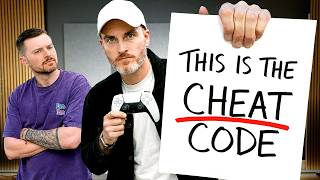

The Reward Loop That Keeps You Hooked
53sExplains a psychological concept using a popular video game analogy that is highly relatable and educational.
▶ Play Clip"The title captures the core metaphor but undersells the practical advice; delivers solid content without overpromising."
The video frames YouTube as a video game that is rigged against beginners, contrasting it with TikTok's random virality. It introduces the concept of the reward loop (action, feedback, reward, repeat) and argues that YouTube's loop is broken for new creators. The speakers present five 'cheat codes' to hack the system and stay motivated, emphasizing actions over views, incremental improvement, shortening feedback loops, making progress visible, and shifting identity.
YouTube’s algorithm gives established creators more feedback, making it hard for beginners to stay motivated. TikTok randomly gives virality to new creators to hook them.
Spending hours on videos with little to no views feels like getting 'punched in the face.' The reward loop (action, feedback, reward, repeat) is broken for newcomers.
Game designers use the reward loop—action, feedback, reward, repeat—to keep players engaged. If the loop is tight, you stay hooked; if broken, you quit.
Stop measuring views and start measuring inputs like publishing, improving hooks, or designing thumbnails. This rewires your brain to get dopamine from consistent effort.
Focus on 1% better each time—better lighting, a stronger opening, or cleaner editing. Each video becomes a 'level' you can beat.
Don't wait for YouTube views. Get feedback from real humans—critique your own videos, join groups, or use coaching. Mr. Beast met with creators daily on Skype.
Track uploads, retention trends, and create a simple spreadsheet with 'What did I love? What did I learn?' Zoom out on analytics to see overall growth.
Instead of 'I'm trying YouTube,' say 'I'm a creator who shows up.' A smoking study showed those saying 'I'm not a smoker' quit more effectively than those saying 'I'm trying to quit.'
By implementing these five cheat codes, creators can hack their own psychology to stay consistent and ultimately succeed on YouTube. The game is rigged, but you can change the rules by focusing on inputs, identity, and feedback.
What are the four components of the reward loop?
Action, feedback, reward, repeat.
04:05
According to the video, why is TikTok's algorithm more motivating for beginners?
It randomly gives out virality to new creators, hacking their brains with the reward of views.
05:15
What is the first cheat code to hack YouTube's game?
Measure actions instead of views – count uploads, improvement in hooks, etc.
05:55
What example of identity shift did the smoking study demonstrate?
People who said 'I'm not a smoker' were dramatically more likely to quit than those who said 'I'm trying to quit.'
19:06
What is the recommended way to make progress visible?
Create a spreadsheet with two columns: 'What did I love?' and 'What did I learn?' for each video.
15:28
Reward loop definition
Explains a core psychological concept that applies to both game design and content creation.
04:05TikTok's random virality strategy
Reveals how TikTok retains creators by offering unpredictable rewards.
05:15Identity shift study on smoking
Provides evidence that self-labeling ('I'm not a smoker') drives behavior change more powerfully than effort-focused framing.
19:06Mr. Beast's feedback loop
Shows a practical example of shortening feedback loops by meeting with other creators daily.
13:32[00:01] YouTube career and help you be more successful. YouTube is a video game, but the video game of YouTube is rigged against beginners. TikTok would almost randomly give out a level of virality to new creators. Why? To hack their brains.
[00:17] algorithms doing to us? There are some very interesting ways to basically hack your own psychology as well as apply this information to get more views, grow your channel, and win the game of YouTube.
[00:31] I'm Nathan Eswine, one of the lead coaches here at Think Media, and I'm founder of Think Media, author of YouTube Secrets. And today's episode is actually brought to you by ytreport.com. And so, if you actually just want to
[00:45] skip the line and get the latest hacks and tips for YouTube growth this year, will, you can find those at ytreport.com. And the link is in the description and show notes below to download the entire
[01:00] show notes below to download the entire report. Again, that's ytreport.com. story behind this [laughter] episode idea? Yeah, so it's kind of the convergence of two things. Number one, I got a Nintendo Switch, too. And number
[01:14] two, our community was posting some of their biggest challenges on the community tab about struggling to stay consistent and essentially struggling to win the game of YouTube, especially if you're starting. And so, I actually
[01:28] you're starting. And so, I actually realized that YouTube is a video game, but the video game of YouTube is rigged against beginners, and I will explain established, basically this, you're getting more of a feedback loop, the
[01:42] game the playing YouTube is a lot more fun when if you're going viral or you're getting checks from YouTube or money's coming in. And you know, you think about actually getting money, you're getting gold coins, you're expanding your
[01:55] village, etc. But the early days of YouTube, it's like the worst game ever. You feel like you're getting punched in the face, no You spend 7 hours editing a video, you only get seven views. Like so, there are some very interesting ways
[02:09] to basically hack your own psychology as well as apply this information to get more views, grow your channel, and win the game of YouTube. So, the quick backstory though was over the holidays, I was shopping around
[02:23] for a gaming system and you know, I'm telling it I'm telling myself that it's >> But I'm also like, which one do I want? You know, now honestly, >> if I was going to go purely the game system for me, I would have got a PS5.
[02:35] But because it was for them as well, I got a Switch too, you know, cuz Mario, everything else. So, I got a Switch too, but one of the things I found out was I almost would stick with no games. Mhm. And I was like, why am I not sticking
[02:47] others? And I started to talk to ChatGPT about it. concept called the reward loop, the dopamine reward loop. And everybody listening to this needs to listen to the end because when you learn how to hack
[03:01] career and help you be more successful. So, we'll break this down in just a second, but ultimately I eventually found a game, it's called Metroid Dread. It's actually a Switch
[03:13] one game and I realized I didn't know at first why I liked the game so much, but then ChatGPT told me why and it said, "Oh, the reward loop of that game is >> Mhm. You start it, you're playing quick. You're you're you're limited in the
[03:26] beginning, but you're getting you're having some fun, but then quickly you you beat an easy boss and then your gun is upgraded. You then progress a power up. You progress a little bit more and even if you get lost in exploration,
[03:40] there's game design that keeps pushing you forward. There's game design so you maybe we could relate if we've ever tried a game or tried something. If we don't get a reward from that thing fast enough, what do we do? We quit. Yes,
[03:53] we're out. So, I realized this game like perfectly hacked my own brain chemistry. And yet, even since that time, I've been like trying to find other games and and
[04:05] loop for me. So, Nathan, as I went deeper into this concept, I realized that game designers have spent millions of dollars figuring out what will keep people engaged. It's actually a scientific concept called the reward
[04:20] loop, which is action, feedback, reward, repeat. Take an action, get some >> Okay. >> So, when the when the loop is tight, you stay hooked, but if it's broken, you quit. So, as we dive into this and we
[04:34] get into how to hack the loop and the creator's cheat cheat code, I then started to study YouTube itself and realized YouTube's loop is broken because creators are out here, they're taking action, getting no feedback.
[04:47] >> a video, why did it only get 11 views? I have no likes, no comments. Or, you put a ton of effort and action into it, but you don't get a lot of feedback. Listeners maybe can relate to that. And so, the rewards
[05:02] would you want to repeat the process? Or, the question is, how long are you quit? Now, what's interesting is they try with shorts and Tik Tok has figured this out as well. Tik Tok would almost
[05:15] randomly give out a level of virality to new creators. Why? Oh, yeah. To to hack their brains. to chase that again. >> Yeah, that's right.
[05:27] man, what are these algorithms doing to us? But, it just ha- we need to self-motivation and things like that. So, again, you spend hours making a video, you hit publish, you got silence. And so, the channels that break through,
[05:41] is the channels that break through are basically the ones who can figure out the discipline to not quit when the reward loop sucks. So, number one is to actually change what you're measuring. We need to stop measuring
[05:55] wins, victories by views, and start measuring them by actions. So, this this is a game-changer. Instead of saying, "Did this video get views?" it's actually like, "Did I publish? Did I improve [clears throat]
[06:10] my hook? Shoot, did I did I actually design the thumbnail that I said I was going to do?" It's like it's inputs, right? Versus outputs, versus the thing better measurement to say, "Did I just execute my plan this week? Did I press
[06:24] record? Did I press upload?" And now, if we can re like flip what we're measuring >> at the end of the week, right? This is the idea, I'm re-wiring my behavior. I'm starting to focus on the dopamine coming from a different scoreboard. Yes, and
[06:39] this is where the phrase count uploads not views at the start is. Because if you're counting views, you're super discouraged by the game, and why >> But if you flip it and really just rewire your thinking, you count uploads.
[06:52] And so, this might be some scripting self-talk. Like, "Today was a good day. >> a video. That's real. And I we all fall into the trap, "Today sucked. My most Even I and I barely get views anyways, and it was the worst of the videos that
[07:07] I don't even think are good." Yeah. So, it's like, no, you want to start by measuring And then when you say measuring actions, you know, this can include uploads, this can include studying, this can include uh the the
[07:20] actions you take towards your goal. Number two is building a small Number two is building a small improvement into every single video. So, actually zooming way in for a second and because
[07:34] overwhelming, but actually dropping right into every upload. A single upload the whole concept that we've I mean preached for so long is 1% better, right? In this video, what is the goal that I'm shooting for? What's the level
[07:49] lighting. Okay, all right. What do I need to work on now? Stronger opening. Okay, I really want to work on a cleaner edit. I want to work on what could I do or say or show to have a higher retention than last time? I'm I'm
[08:02] catching on here. Like really rigging the YouTube experience into level ups, wins, stacking them. Because now every video becomes its own level and it becomes a level that you can beat if we're changing the metrics. Yeah, 100%.
[08:16] And so again, this would also still be measuring the actions you could take. And if you think about game dynamics, you know, when you're a newbie, you hit record on your camera and it might look like garbage. Yes. But if it's good
[08:30] like garbage. Yes. But if it's good enough, listen, you pressed record, your phone audio, phone video, whatever. You published a video. That's a win. Mhm. But if you were to go down, let's say the lighting path and you're trying to
[08:42] the lighting looking right, the video looking right. Early days, that's very difficult. Mhm. So, you're studying, then you then maybe order some lights on "Why does my video not look like other people's?" Yeah. Maybe early days you do
[08:56] figured out the white balance thing. If you haven't figured out white balance on a nicer camera, you're either blue or you're orange, but you're not human. Or the video [laughter] looks terrible. Why does this person So, even as you
[09:08] challenge yourself to do, I'm trying to get that look. I'm trying to get that sound. I use the same mic as Sean and Nathan, but their video sounds a lot crispier. So, what am I trying to solve this week? You're leveling up Yeah. your
[09:22] this week? You're leveling up Yeah. your skills, your progress, your knowledge. And this actually is a very much tied to having, I think, positive self-talk. Agreed. Um and that positive self-talk is kind of like,
[09:34] a lot of external appreciation, but damn, that looks good. Yeah. I finally got there. Took me about 4 weeks, but like the shot's looking good. You know, and and pride in your craft, grace for your journey,
[09:48] time, and what are we looking for? We did not get some external validation. We did not beat some mega boss, go viral, and get some accolades. You might be the only person cheering yourself on, but you're
[10:01] now like, "Shoot, I'm getting dopamine for that." So, number three is shortening your own feedback loop. So, the idea here is not to just be waiting. And actually, maybe there's a step before this is even knowing what to
[10:14] loop do I need as someone who's trying to do YouTube? But don't wait for the is part of that reframing, right? Like man, watch your own video critically. Share it with someone. Share it with people. And actually read every comment
[10:31] as you are growing on YouTube and you can create community tab post. Like poll learning, get faster at improving. The the whole idea here is you don't have to the whole idea here is you don't have to wait to decide how you're going to
[10:44] measure that video that you just did. It can happen in the moment, right? And in thinking through it's not just the video that you posted and then waiting for what comes after it. It's also like even just the preparation going into that
[10:56] video that you're filming. Right? Like man, okay, already that last one that I did that really well. And now I'm going to go here. Sean, actually just real talk, I just I just did this. We were filming some uh some solo stuff and just
[11:08] trying something new. Got like a little iPad we're drawing stuff. It's like But as I was looking back, I was like, "You know what? Sure, I'd love for this video to just do so well, but I I was just like, "I am so actually
[11:21] try something new." I was like, "Way to go, man." Like you know, like you could perspective. Like this just happened this week. And so, it's like that's what? No matter what, like I'm I'm proud for the I'm proud of the attempt." You
[11:34] >> And then we can analyze that. Now, we are blessed to have more views, so we actually will get real feedback. It'll perform or not. People will comment about it or not. But you want to shorten the feedback loop, and this is why the
[11:46] video game of YouTube is rigged against creators. I'm not saying it's a malicious way. When you start, you're not getting feedback. >> Yes. The feedback you are getting is like you're you're not even getting any
[11:58] impressions cuz the the little you get, clearly you're not getting click-through rate or watch time or whatever. But I think the problem is is that most people listening to this are craving someone to like look at their work and give them
[12:11] some feedback. >> Yes. The You said read every comment, not if I'm getting zero comments?" And zero comments is usually a pretty long >> Cuz the math on comments is pretty small. Like MKBHD MKBHD, one of the
[12:25] biggest tech creators, they said his his comments have actually gone down over 30% in the last 7 years. That's a lot. He gets millions of comments. And so 30% is like millions less. Um but obviously he's still getting
[12:37] outrageous amounts. Well, easy for him to get feedback. What if you're just to get feedback. What if you're just starting? And so, you know, obviously it really is that valuable >> Yeah. because you're not alone.
[12:52] And feedback is priceless. If you can shorten the learning curve from people who know what they're talking about, who understand YouTube, that's why you can game >> Yes. to You're fixing all these things
[13:05] things before the YouTube algorithm even has a chance to just shut you down and keep you boxed in. Yes. And so, you could get feedback from somewhere else. about that, we have viralvideo.coach.com.
[13:18] We have a group coaching program. We have a one-on-one coaching program. optional. You could talk with our team about details. And there's it's absolutely free to schedule a call. And if it doesn't work out, no big deal.
[13:32] check that out. But let me encourage listeners, if it's not us, hook up with famous Mr. Beast was famous for the early days meeting with a couple other creators on Skype for a thousand days in a row just talking about videos to look
[13:47] on, why did it die? That's feedback. That's talking about it. You could You You could join different groups. If you don't want to do group coaching, you have this as well, like a circle group. >> Mhm. Um where you could post your
[14:03] that. Get feedback. >> Yes. Because when you can't get it from the actual game itself of YouTube in the early days, you can get it from what's cool, real humans. I think that's the key. Get
[14:17] feedback from real humans. It'll shorten the path to winning the game of YouTube. Number four here is make your progress visible. So, this idea, right, is is I think so underutilized, Sean. This is just like
[14:33] it. Tracking uploads, tracking retention trends, but even more, you know, uh practical than that, screenshotting stuff, saving things. I Sean, for the longest time, I actually had, you know, a couple like
[14:48] pictures or notes like in front of me while I was filming just to remind me of understand, when you're at the beginning, again, the whole point is you don't have the feedback you like there's nothing really happening. But, what are
[15:01] things that you can put in front of you or have nearby or reference even before psychology hack, right? Like >> I could feel like not filming that day, but I could link up with one of my Avengers, I could send a text that I'm
[15:14] you don't, then it's like who have you helped? What have you done? Trying to remind yourself of why this matters. So, that's one way tracking progress, but Um just full disclosure, something I'm starting to do now, like as I'm creating
[15:28] content for the Think Media channel, is actually just making a quick little spreadsheet, nothing crazy, but it's just the video that went out and there's just two questions. What did I love and what did I learn? And it's purely just,
[15:41] "Hey, what did I enjoy What What was there to celebrate about that thing, you would do this again, what would I do differently? How could I improve performance? How could I whatever?" And I think that just having a simple
[15:53] you know, it can can help us make the progress so visible. And I even think you think about this, but when a lot of people get into their analytics, let's say you make it, your past 20 videos or even just a little bit before, and you
[16:06] there's actually stuff there, right, that you can really measure. I think a lot of us zoom in so much on on like a day or a week or one video. And so, a big thing that's helped me with this, which is making progress visible,
[16:20] is anytime I'm going into an analytics session, I always want to zoom back out, seeing in the moment, if you're getting so specific, can look bad or can look and seeing the overall trend, "Oh, actually, here's the date when I'm
[16:35] Oh, and I am further along than I thought." And so, I think it's like making a ritual, doing this more often to see your progress and actually try to evaluate it. Listen, you're exactly right and science says your brain needs
[16:50] is none. See, you'll lose your brain if you "Why is motivation so low? Why did I fall off? Why can't I be consistent on movement. >> The fifth and final part of this
[17:04] creator's cheat code though is learning how to shift your identity before the results arrive. And this is fascinating stuff, you know, we're we're kind of like talking about like, you know, this self-help Jocko good
[17:16] legit. This stuff is real. And there's something that changes in your even in your posture and how you stand by instead of saying, "I'm trying YouTube." to start saying, "I'm a creator who shows up." And this is actually all over
[17:31] the place in Atomic Habits, right? James Clear was all about this. That's That's actually what he was saying about habit change is a it's an identity thing. So, know, I'm I'm trying I'm trying to get in
[17:43] shape." versus "I I am a fit father." Yes. Woah. Like, now it's fun because you get to experiment with like almost like some actually, you know, if you're starting YouTube, how long has
[17:57] it taken you to actually identify as a creator? something to celebrate and here's like a progress thing to do and a dinner to go have and schedule. If you posted a video, you just crossed over. You just
[18:11] crossed over. You are a creator. You created. You put something out there. upload, "I'm a creator now." You know? So, it's it's interesting to think about you know, people who ask about what you do and just your phrasing could be so
[18:25] good. I'm like trying to get my channel going." "How's the YouTube thing going?" "Oh, it's good. Like, I'm uploading videos." Like, just that reframing of how you are. And this is powerful because the reward stops being views and
[18:38] it starts being keeping your word to yourself. And that is a loop, right? That will sustain you all the way through the creator journey. Yeah, I in for this part because some of this stuff gets a little bit weird. We're
[18:52] talking about identity and people want tactics and a title. But let's really drill drill down on this. Shift your identity before the results arrive. it up. Our identity is actually like kind of running the whole show.
[19:06] >> And so, to illustrate, there's actually a famous study of people who were trying to quit smoking. And they asked two groups the same question. So, the one group, they told them the answer to say like ahead of time. And
[19:20] so, one group said, "No, thanks. I'm trying to quit." Ooh, there it is. The second group said, "No, thanks. I'm not a smoker." Wow. And the people who said, "I'm not a smoker." were dramatically more likely to actually quit. Like, the
[19:33] >> Mhm. Because they weren't fighting their own self-image every single day. So, you're fighting "No, thanks. I'm trying to quit." My self-image is quitting is so hard. I'm trying to quit.
[19:47] >> Yeah, I'm a smoker that's trying to quit. And so, then the other group, they're like, "No, thanks. I'm not a smoker." Now, shift your identity before the results arrive. And this will mess with
[19:59] and I want to be whatever. Okay, the other option though is to be intentional Mhm. about the kinds of habits or routines or person you want to be. Like you mentioned, if you have never posted a video, as soon as you post the
[20:13] first video, you went from being just a consumer to being a creator on YouTube. >> That's an action you took Yes. to shift your identity. And so, being intentional instead of saying I'm trying to make this thing work on YouTube, it's an
[20:27] uphill battle, you shift to like I'm a creator who shows up. Mhm. Doesn't say my creator's going viral. No. But I'm a creator who shows up and I keep showing up. And you the final thing you mentioned there, too, was like you want
[20:40] yourself. And there actually is like cognitive dissonance that'll grow when we keep actually missing our own upload [snorts] time. Mhm. Which can sometimes be to our I I mean, I just never follow through. I just never
[20:53] it chicken or egg? Is it identity or action or action or identity? I think just listening to this conversation can help you really think, "Okay, identity is at the core of hacking the video game of YouTube." And
[21:07] so, to make this practical, I think you could plan a few things on paper here. Like, what would the ideal identity be for being the type of person who's consistent on YouTube and that does hard things and that perseveres
[21:21] persevere when you're not getting the views and not getting the results. start something that it And again, if you're at year and you followed everything we've taught and you've literally done every single
[21:37] really gave this thing a shot and I don't even mean you've been posting for continued to improve and you've actually gotten other people's eyes and you've gotten feedback. There could be a time where you're like, I should throw in the
[21:49] towel. Like, it just it's just not working. But, let's start let's finish where we began. We began with the real math that the majority
[22:01] there, their channels are ghost towns. ever publish their 20th video. So, these are five This is the creator cheat codes because if you tap into these five things and start to operate differently,
[22:17] results. The bottom line is we don't want you to give up on the video game enough. The bottom line is we don't want you to throw in the towel because you're does. And we're we we get it. That's right. That's the season that you're in.
[22:31] >> [laughter] >> That's right. of the show. To take it seasons Listen though, but if you stick around to season three Oh, man. And I'm not saying season three is YouTube billionaire, but I'm saying it's it's
[22:43] listeners here, they're like, yeah, no, I have felt like I did get a one out of three months ago. It's still getting views. Oh, there is that video. I got my first affiliate sale. Those become then Now, you're actually playing the game.
[22:56] You're like, shoot, this isn't play money on FarmVille. >> This is only $3, But that's three real USD dollars from an affiliate program. Okay, there's the reward. Hack these and get there and continue doing these to
[23:11] get to the next stage and the next stage and the next stage. And you know, it's not best practice to give to two calls to actions, but I want to because of our whole five stages of YouTube is
[23:25] We actually do have a free quiz people can take. mycreatorquiz.com. know your stage, but here's the power. Um there's resources on the other side of the three-minute quiz. That'll help you for don't be doing
[23:40] in in World of Warcraft, you're not going to go take on a boss who's 100 times stronger than you're ready for you and your crew. Like you're you're up for at the right level. The same is true about YouTube. You're playing the
[23:52] level of YouTube based on where you're at. That quiz will help you do it with mycreatorquiz.com. And then as far as maybe some advanced individuals have made it this far or anybody, we have this report that we
[24:05] YouTube right now. Some of the biggest changes, I think 15 of them and then 12 It's not lightweight, but if you want if you ever subscribe to uh
[24:17] like that physical magazine that helped you beat video games, Game Pro or things like that or you bought the strategy guide for early NES Um yo, it's a hack. This yt report.com will
[24:32] again, I know this was a lot of psychology and a lot of stuff about um and getting started and getting through that slump, but if you want to scale your growth growth cuz YouTube is a video game, you want to win yt
[24:46] report.com. Study it, implement it. That's a free resource for you as well. So, we'll link all of that up in the show notes. Nathan, I'll I'll it to you for the final words. 100% and I actually want to
[24:58] the beginning if only there was a supply drop for YouTube. That was it. There is one? Maybe both. You going to take both. mycreatorquiz.com, YT report, this podcast hopefully was a supply drop. Stay tuned, subscribe, stay close. This
[25:14] Ellswine and I can't wait to connect with you in a future episode.

⚡ Saved you 0h 25m reading this? Transcribe any YouTube video for free — no signup needed.