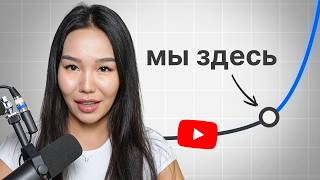

YouTube's Biggest Change Nobody Sees Coming
46sHigh-stakes warning about algorithm shifts and market dominance creates FOMO and curiosity.
▶ Play Clip"Delivers on the promise of five trends with actionable advice, but heavy promotion of his academy and Telegram channel pads the content."
The video analyzes YouTube's Culture and Trends report, highlighting five major shifts that will redefine the platform in 2026. The creator, who runs a 200,000-subscriber channel and the YouTube Academy, explains how these changes—from the declining importance of subscribers to the rise of TV viewing and educational content—demand a strategic pivot for creators. He provides actionable advice on adapting to each trend to thrive in the coming year.
YouTube released its annual Culture and Trends report, which contains game-changing insights for creators. The video promises to break down five key changes and how to adapt to them.
YouTube is the second largest search engine with 2.7 billion monthly active users. People spend over a billion hours daily on the platform, and YouTube has paid out $70 billion to creators in recent years.
Large channels with millions of subscribers often get very few views (e.g., Iman Gadzhi with 6M subs gets ~60k views). YouTube has shifted from a subscription-based model to an interest-based one, where videos are recommended based on viewer interests, not channel subscriptions.
Creators must think about the specific interest or request a viewer has at the moment they're scrolling, and craft videos that hit that interest precisely. YouTube tests videos on interest groups first, and if they perform well, scales them regardless of subscriber count.
Five evergreen niches consistently perform well: money, health, relationships, technology, and travel. Beginners should go into smaller sub-niches to reduce competition, as demonstrated by a student who grew from 700 to 2,200 subscribers by switching from beauty to facial plastic surgery.
YouTube content is simultaneously getting shorter (Shorts) and longer (20-30+ min deep content). Long videos have high retention and are more profitable; shorts should be used as a funnel to drive viewers to long videos.
Successful creators are building companies, not just content. The focus should be on educational content that attracts people with specific problems, and monetizing through digital products like software or online courses, or affiliate partnerships.
Many viewers now watch YouTube on TV, leading to longer viewing sessions (30-60 minutes or even overnight). This creates opportunities for passive content like sleep stories, philosophy, and long-form documentaries, which are easy to produce for faceless channels.
YouTube is becoming an educational platform, with a new courses feature. This signals a shift toward promoting educational, thoughtful content, and creators should focus on making more educational videos to align with the platform's direction.
The creator advises: 1) Focus on viewer problems, not personal preferences. 2) Use shorts to funnel to long videos. 3) Create at least one long, TV-watchable video per month. 4) Think like a founder and monetize attention. 5) Make more educational videos.
YouTube is evolving into an interest-based, long-form, and educational platform. Creators who adapt by focusing on viewer interests, combining short and long formats, and building a business mindset will thrive in 2026, while those who ignore these changes will be left behind.
What is the main shift in YouTube's algorithm according to the video?
YouTube has shifted from a subscription-based model to an interest-based one, recommending videos based on viewer interests rather than channel subscriptions.
04:04
What are the five evergreen niches mentioned?
Money, health, relationships, technology, and travel.
06:23
Why are long videos more profitable than shorts?
Long videos have higher retention rates, and even with fewer views, people spend more time on YouTube, leading to higher CPM and more money.
07:55
What is the recommended strategy for using shorts?
Use shorts as a funnel to drive viewers to long videos by providing a hook and linking to the related long video.
08:34
What does the 'creator to founder' shift entail?
Successful creators build companies and monetize attention through digital products like software or online courses, rather than just collecting views.
09:27
What opportunity does TV viewing present for faceless channels?
TV viewing creates demand for passive content like sleep stories and philosophy, which can be made with just a voice and simple visuals, and can generate views for years.
12:10
What is the 'courses' feature on YouTube?
YouTube launched a courses feature that allows creators to teach and monetize directly within the platform, competing with external educational platforms.
14:13
Interest-based algorithm
This is the core insight that explains all other changes; understanding this is crucial for creators.
04:04Long videos are more profitable
Contradicts the common belief that shorts are the future; highlights the value of deep content.
07:55Creator to founder mindset
Emphasizes the need to build a business, not just content, for long-term success.
09:27TV viewing is a hidden opportunity
Most creators overlook this trend, but it opens up new niches and monetization avenues.
11:44YouTube as a learning hub
Signals a strategic shift by YouTube that will affect content priorities and monetization.
14:13[00:01] biggest report of the year. And whether you run a faceless channel or an expert channel most important video you watch this year. YouTube is on the creators who adapt to them early will literally dominate, while
[00:16] everyone else will be left behind and wondering what even happened. YouTube recently released its Culture and Trends report. And if you dig a little deeper, there are some truly game-changing insights hidden within this report
[00:30] ignore or simply won't understand. I've been running this channel with 200,000 subscribers for 6 years now, and during that time, more than 250 graduates have gone through the YouTube Academy. So when changes like these appear on the horizon , I definitely don't let them pass
[00:43] by. And most importantly, I understood how to use these changes to my advantage. And that's exactly what I'm going to show in this video. We'll look at five changes on YouTube and discuss how to adapt to them. But first,
[00:55] important at all now. YouTube is actually more than just another social network. It is the second largest search engine in the world. It has more than 2.7 billion monthly active users. And imagine, if even 0.1% of people on
[01:09] YouTube stumble upon your content by chance , that's already 2.7 million potential customers for your business. Every day, people spend more than a billion hours on YouTube . More than Netflix, more than TV, more than anywhere else
[01:22] . And the craziest fact is that in the last couple of years alone, YouTube has paid out $70 billion to creators. So we're not talking about some left-wing topic now, right? We're talking about the largest media platform in human history, and it's
[01:35] growing faster than ever. Just for context. Back when I was just starting out making videos on YouTube, back when I was still in the US, many people thought of it as a joke, as some kind of hobby
[01:47] that wouldn't bring in any money. But now it's the twenty-sixth year. Last year I earned over $100,000 in profit thanks to YouTube traffic to my business. And there are guys who earn
[01:59] affiliate programs on faceless channels. So, you see, yes, the scale of YouTube has grown exponentially, and those who have been in the game all this time, have been inside this platform, have ridden this wave, have received colossal benefits, just like me. But
[02:13] looking forward, I think YouTube will grow even more in the next 10 years important point here, however. The rules of the game are constantly changing. What worked in 2020 no longer works in 2025 and certainly won't work in 2026. If you
[02:26] don't adapt to this, you will be crushed by algorithm changes and growing happen to you, so I'm recording this video. The good news is that if you understand these changes and position your channel correctly,
[02:40] 2026 could be your strongest year ever on YouTube. biggest changes we're facing. and I'll show you in detail how to use them to your advantage, whether you have a faceless channel or a channel with a face. After taking a
[02:53] major change that immediately caught my eye was that subscribers no longer play the same role they once did . You've probably also noticed how large channels with millions of subscribers barely get
[03:06] 100,000 views. Even if you take Iman Gadzhi's channel, look, he has almost 6 million subscribers, and his videos get 60,000 views, means that the conversion rate into views is very low . And there are now a lot of channels with millions of subscribers
[03:22] that are barely gaining views . Or here's another channel, 1.4 million subscribers. Look, the videos here barely, well, they don’t even get 10,000 views. On average, they get 3,000, 5,000 views.
[03:36] Some, yes, get 190, but on average, a channel with a million views doesn’t even get 10,000 views. Same thing on my channel. I have 217,000 subscribers, but I have videos that get 10,000 views, less than 10,000
[03:51] views. Yes, there are those that are more than 100k, but there are videos that barely get 10,000. Let's figure out why this happens. This all happens because of the main change. The main change here is that the
[04:04] YouTube platform has effectively ceased to be a story about subscriptions and has become a platform of interests. Everything used to work super simply. You subscribed to a channel, and YouTube showed you new videos from that channel because it assumed
[04:17] that if you clicked the subscribe button, you were a priori interested in everything the channel's author published. Now the logic has completely changed. YouTube subscribed to, but rather analyzes what topics and interests
[04:30] really engage you, and then pushes videos to you based on that. It doesn’t matter at all what channel they are from: big, small, or created yesterday. And it is from this shift that everything else we now see in
[04:42] algorithms follows. Let's now figure out what a creator should do given such changes in 2026. Firstly, the creator needs to think not about what to shoot, but about the most important skill, without which it will be very difficult to grow [in music] further. The
[04:55] old thinking was: I'm an expert, a blogger, and a personal brand. Now I'll just sit down and tell you what I think on this topic. And before, this New thinking looks different. You
[05:07] specific interest or request a person has right now, at the moment when they are scrolling through YouTube, and only then think about how your video will most accurately hit this interest. And it works because YouTube today
[05:20] first tests videos not by your subscribers, but by what's called interest. That is, he shows the video to a group of people who already have an established pattern of consuming similar topics, and watches their reaction. If a video
[05:32] clearly hits the spot, holds attention from the first seconds, and fully lives up to the expectations you promised in the title and preview, then YouTube begins to scale it further and further. Moreover
[05:44] could be zero subscribers, and the video could still go viral and gain significant reach. And this is a huge plus for new channels, because it completely we go deeper into all of these principles at
[05:57] step-by-step how to find interests, test hypotheses, and build a strategy for new algorithms. Only what really works in 26. We will be starting a new stream very soon. To reserve a place, please follow
[06:10] the links in the description. As you can see, it's now especially important to choose a niche where there's a real problem that people want to solve. Over the years of working on this platform, I have seen the same five niches consistently reach the
[06:23] top. Precisely because these are eternal Ergrin themes. These niches include money, health, relationships, technology and travel. And within each of these niches there are a bunch of sub-niches. And I highly recommend going there. I've compiled a list of cool
[06:37] subniches within these evergreen topics on my Telegram channel. Follow the link below and pick it up. In general, we always advise beginners to go into smaller niches, since there is less competition there.
[06:49] For example, here is the case of our student Akmaral. She came to us with 700 beauty niche, and the channel didn’t grow at all. Well, because she didn’t understand that beauty and makeup are a very hackneyed topic, too broad a topic. It's like a
[07:03] red ocean with established creators. We advised her to go into the field of face plastic surgery and facial massage. And as a result, 150,000 views and growth from result, 150,000 views and growth from 700 to 2,200 subscribers. As you can see
[07:16] on the screen, this case perfectly demonstrates that newcomers especially need to go into narrower niches and not fight for a place in the well-trodden large niches. If you also want to choose a strong niche and build a
[07:29] YouTube Academy; the link is in the description. The second big change concerns the formats of long and short videos. YouTube's report explicitly states that content on the platform is simultaneously getting shorter and longer. It sounds
[07:42] strange, but in practice, extremes work best these days. On the one hand, there is microcontent, that is, shorts, on the other hand, there is so-called deep content, videos of 20, 30 minutes and longer, sometimes even an hour. It's precisely
[07:55] these long videos that currently provide very high retention rates. Even if there are fewer views, people spend much more time on YouTube, and for the algorithm this is a experience, there is much more money in long videos . You don't need to get millions of
[08:09] views to make good money. At the same time, YouTube makes it clear that both short and long formats can generate millions of views today if used correctly. The ideal strategy is not to choose one or the other, but
[08:21] to combine both formats, because shorts alone are a dead end. This will never make you money. Oh, yeah, there's huge reach there, but the real money is in long videos. If you use shorts, they should only be used to
[08:34] drive the audience into longer videos, provide a small insight or hook, and be sure to introduce the viewer to the long video by linking to a related video when uploading the shorts. This way you can post a lot of
[08:47] short videos that work as a funnel for one long piece of content. Personally, I form reporting because it's what allows you to build a business, not just pretty numbers in analytics. Yes. ShortS is a great tool if your goal is to quickly
[09:00] go viral, gain reach, views, and subscribers. But if your goal is to make real money and build a large project on stable and predictable results. Here, of course, everything comes down to
[09:13] priorities. My priorities are money, scale, and maximum value for the viewer. That's why I'm betting on the long format. The third and perhaps most important change is the transition from creator to founder. Especially if you
[09:27] analyzing the latest report, it becomes clear that successful authors today are content. These are the ones who build companies. Because in general, scaling content, whether it's video production, a team, or channel growth, always
[09:43] comes down to resources, always comes down to money. And there is only one way to get them channel wisely. YouTube never gets any views. Views are essentially a vanity metric. If your goal is,
[09:55] uh, just viewing, then you can endlessly upload these shorts, yes. But if you business, the approach must be completely different. First of all, we need to focus on educational content rather than entertainment. The format of how
[10:08] to do it, how to start from scratch, how to come to a roadmap, yes, always attracts people with a specific problem that they want to solve. The further logic is simple. detailed video, essentially a full guide format. This way you both keep
[10:23] viewers on the platform and create a point where you can offer a solution at the end. The best option now is either software with a CAC subscription model, yes, or an online course, because this is generally easier to create and the margins are
[10:35] high. If you're thinking, Saule, I'm not really an expert, what can I sell at all, the good news for you is that you don't have to You can become a partner and promote an existing course or service.
[10:50] It's enough to find suitable affiliate programs and build sales through long videos. Now let's look at the numbers to understand why this is 25, beginning of 26, your channel is getting about 100,000
[11:03] views per month. With the classic YouTube model, with a good CPM of around $10, that's only $1,000 a month. Yeah, that's not bad, but it's definitely not life-changing, right? But with the right strategy, the same audience can
[11:15] channel, for example, averages 150,000 views per month and brings in sells my digital product. We also teach at the academy how to monetize your audience without using the YouTube partner program , or indeed, without using YouTube monetization.
[11:31] If you're interested in selling digital in the description. The fourth big change happening on YouTube right now , and it's a really big one, is that most people still don't
[11:44] realize that a huge number of viewers are now watching videos on TV. Over the past couple of years, YouTube has effectively become the leader in almost no one talks about this. Basically, people started treating YouTube like
[11:57] turn on the video and just watch it for 30-60 minutes, and sometimes even leave the video on overnight. For example, these could be sleep sounds or philosophical videos that people listen to while they sleep to become smarter even at night. These are, by the way,
[12:10] huge niches. Channels featuring sleep history, Sleep Historian, sleep philosophy, and similar content are currently growing rapidly. For Feless channels, this is a golden niche, because charisma or personality are not needed here. You don't have to be a
[12:24] content that can be consumed passively. Let me give you some examples. Yes, there is an Uncharted Mysteries channel that releases 3-4 hour videos with interesting historical or dark stories. There's
[12:38] Dreams of Disclosure, a similar format that works great for background music and sleep. Plus, there are a bunch of channels featuring the history of Philosophy for Sleep, and even TV channels that create multi-hour guides to different countries and garner millions of views.
[12:51] And usually, faceless channels, uh, in such niches, the CPM is very low, but here it is high, because these videos are very long, and here you can insert a look at how to approach creating such content. Make videos that are
[13:07] the screen. This means a clear voice, high-quality sound, and minimal dependence on visuals. In many channels about Sonya and philosophy, they simply put an AI and some kind of picture in the background, and on top of that there is a calm voice telling
[13:20] facts from history or philosophy. These videos are very easy to make. It's just a picture and a voice that can be generated through 11 Labs. But such videos can generate views for years, if, of course, they
[13:32] are made well, if they are not stupidly stolen from other channels, because if you stupidly steal content from other channels, that channel can give you strikes, and your channel will simply be blocked. This is a very common problem with faceless channels. By the way,
[13:45] if you're interested in these kinds of working strategies, niche analyses, and examples of channels that are making money there, with or without a face, I regularly post them on my Telegram channel. There are ideas, figures, cases, and analyses of various trends. If
[13:58] all this is interesting, subscribe to my channel. Very useful. Link in interesting change. YouTube is becoming a learning hub. Today, for uploading videos; it's an entire ecosystem where a channel functions as a
[14:13] search engine and an educational platform, not just a feed of videos. That's why YouTube recently launched a courses feature right within the platform. Everything used to be simple. We uploaded videos to YouTube, built an audience, and attracted people to our
[14:27] It turns out that YouTube provided traffic, but the money was earned outside of it . Now the logic is changing. YouTube says, "Why steal people when you can teach them right here and monetize them within the platform?" And
[14:40] this is a completely logical step for YouTube, because people have long been using this platform not for entertainment, but to actually learn for an hour or two, in playlists or in series. Essentially, YouTube has been giving
[14:54] this traffic to Infobiz and Infobiz platforms for free for years, and now it's simply decided to take its share and directly compete with platforms like Yumi, Corsera, Getkurs, and so on. For us experts, this is a huge
[15:06] signal, because, simply put, YouTube is no longer just a social network; it is full-fledged educational platform. And that's why I'm sure YouTube will push educational,
[15:18] thoughtful, and intellectual content. Videos with explanations, roadmaps, in-depth comparisons, and conceptual breakdowns are already attracting a more loyal audience than empty entertainment content. So, if you put it all together
[15:30] will become a platform for interests, long-term retention, and learning, and those who what I advise you to do right now to avoid being left behind. First, problem, and not through what I like.
[15:45] Second, build a connection with the conversion to long videos so that short content Third. Start making at least one stylish fom a month. One long video that can be watched on TV and that really holds your attention
[15:58] and provides benefits. Fourth. Start thinking like a founder, what you sell and how you monetize attention, and not just collect views. And fifth, make more educational videos, because YouTube itself is moving towards courses and
[16:10] training within the platform. If you'd like, I've prepared a list of Ergreen niches and subniches for you. Get them from the link in the description of my Telegram channel. And if you need a strategy tailored to your situation, so you don't have to guess, but rather build everything step by
[16:22] step, following a system without chaos, come to the YouTube Academy, the link is also in the description. Let us know in the comments which of these five trends resonated with you the most and which one you'll be implementing first. That's all. And we'll
[16:34] first. That's all. And we'll see you in the next video.

⚡ Saved you 0h 16m reading this? Transcribe any YouTube video for free — no signup needed.