
Stop Taking Fair Fights in Valorant
43sChallenges a common belief that fair 50/50 fights are acceptable, offering a concrete solution to make every fight unfair in your favor.
▶ Play Clip"Delivers on the promise of five reasons with concrete advice, though the coaching plug adds some fluff."
The video identifies five common reasons why Valorant players remain stuck in low ranks and provides actionable solutions for each. It emphasizes taking favorable fights, reading enemy patterns, focusing on process over outcome, keeping strategies simple, and maintaining a self-focused mindset.
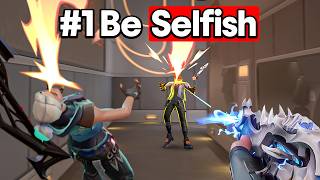
Players often take fair 50/50 fights instead of creating unfair advantages. Unfair fights involve utility, off angles, and swinging with teammates. Before peeking, consider positioning, trade potential, and utility.
Low elo players overreact to the first utility they see or hear, leading to panic rotates. Instead, consider enemy patterns and macro movements before committing to a rotate.
Focusing on RR and outcome causes tilt and frustration. Shift focus to controllable inputs like crosshair placement, utility usage, and communication. Set small process goals each match.
Overcomplicating strategies creates confusion and tilt. Use simple signals like enemy econ, pacing, and rotation info to make straightforward calls. Adapt to team communication level.
Waiting for teammates to lead or clutching makes you passive. Focus on your own impact, mute toxic teammates, and treat every round as if you need to carry. Measure success by personal improvement.
To rank up in Valorant, focus on making fights easier, reading the game, prioritizing process over outcome, keeping strategies simple, and taking personal responsibility for your impact.
What is a fair fight in Valorant?
A straight one versus one, a 50/50 relying on raw aim and luck.
00:52
What are the three aspects to consider before peeking?
Positioning, ability to trade, and utility.
01:44
What is the second common mistake that keeps players hardstuck?
Overreacting to the first piece of utility they see or hear, leading to panic rotates.
03:29
What should you focus on instead of rank and RR?
Focus on controllable inputs like crosshair placement, utility usage, and communication.
05:52
What are the three simple signals to keep rounds straightforward?
Enemy econ, pacing of the rounds, and info on enemy rotations.
07:38
What is the fifth reason why players don't rank up?
Not taking control of the game and waiting for teammates to lead.
09:38
Aim isn't everything
Highlights that consistent growth comes from making fights easier, not just raw aim.
01:32Read enemy patterns
Emphasizes reacting to macro movements rather than single utility sounds.
03:54Process over outcome
Shows that focusing on controllable inputs reduces tilt and builds consistency.
05:52Simple signals for strategy
Provides practical signals (econ, pacing, rotations) to keep strategies simple and effective.
07:38Self-focused mindset
Stresses that focusing on your own impact leads to faster climbs.
10:16[00:02] that you started at. You know you're getting better, but somehow you're still stuck in this endless cycle and you can't break through. And that stops today. I've coached thousands of hard
[00:15] stuck players from low elo all the way to immortal plus. And I've noticed a pattern that every heartstuck player shares. So for that reason, in this video, I'll share with you the five real reasons why you're not ranking up and
[00:27] show you the exact solutions. Let's dive into the first reason, and that's taking the wrong fights without realizing it. Let me explain. In Valerant, many players think that a gunfight is either fair or unfair. And many prefer to take
[00:39] the fair 50/50 over an unfair gunfight. But in reality, you don't actually have to take fair fights. You can make every fight unfair for the enemy and advantageous to you. But what actually is a fair and unfair fight. A fair fight
[00:52] would be a straight one versus one. Think of it like your normal 50/50 where the kill and you're relying purely on raw aim and even a little bit of luck to secure the kill. But on the other hand, unfair fights involve varying factors
[01:05] such as utility support from teammates and double peaks. This is anything that Things like utility, off angles, and swinging with teammates. For example, you notice an enemy on C Long Haven while jump peaking from sight, and you
[01:18] up losing the fight due to a [music] whiff. But an unfair fight could be that instead of simply wide swinging him, you ask your raina for a flash before peeking together. So there's one key thing that you need to remember. Aim can
[01:32] win you games some of the time. But to get that consistent long-term growth and improvement, you need to make fights easier for yourself. A foolproof way to make this happen is to think of three aspects before peaking. Your
[01:44] positioning, ability to trade, and utility. With positioning, think, could I position myself at an off angle where the enemy would never expect me to be in? And for trading potential, you need to think, if I was to swing this angle,
[01:56] me, or can I double swing with my finally, for utility, you need to think about the bigger picture. Are there any pieces of utility from myself or my team that can be used to help me get the kill
[02:09] on this player? Think of flashes, drones, smokes, and so on. But how do you spot when you could have made a fight easier for yourself? And it's your deaths using the replay system, take a look at every gunfight you lost.
[02:22] utility up? Were you flashed? By applying this positioning, trade potential, and utility checklist to your VA reviews help you notice recurring win fights easily. It might take a little bit of practice and time before
[02:36] better at this, you'll take way more favorable fights and win more rounds. good at taking gunfights, but you're still stuck in the same rank and you're struggling to pinpoint exactly what your biggest bottleneck is, my team of
[02:50] Radiant and VCT coaches can give you feedback inside our premium 10-week immortal roadmap program. Our average student gains 500 RR in 10 weeks, and students have to say about us. We offer 100 plus hours of personalized coaching
[03:03] with one-on- ones, custom hands-on mechanic drills, and even private coach facilitated scrims. And we're so confident in our coaching that if you don't rank up 500 RR in 10 weeks, we'll give you a full refund. We only have a
[03:15] few spots left. So don't wait. Use the link down below to book a free call with review your tracker together, go over your goals, and see if we'd be a good fit. Now, the second common mistake keeping hard stuck has less to do with
[03:29] your ability to take gunfights, and more with your strategy. In low elo, many players massively overreact to the first piece of utility they see or hear. themselves, what does this actually say about where the enemy is going? They
[03:41] instantly rotate, panic push, or give up strong positions they might have gained early round. But info by itself is not the problem. It's reacting to what the enemies are doing without thinking about the enemy's overall movements and
[03:54] patterns. Players tunnel on the noise they hear in that specific round without thinking about the bigger picture. Like what have the enemies been doing for the entire half? For example, do they fake going B a lot? Do they play default very
[04:06] often? Consider these options before committing to the rotate. That's where thinking they're going A, you want to think where do they want to end up by taking the space or using this utility. So, how does this look in a game
[04:19] scenario? You hear utility and gunfights on a main corrode. But you remember that they've ended B two rounds in a row and one there every round. You stay put and anchor the site, jiggling from back site for info and only rotating over [music]
[04:31] fully commit onto sight. This way, you're reacting to the macro movement patterns and not just the first utility that's being thrown. But none of these fixes will matter if you're still making this next mistake. And most rank players
[04:44] you're not climbing is simple. You're obsessed with rank and not with the it comes to ranked and valorant, many players only care about ranking up enjoying the game. These kinds of players spam Q and obsess over how much
[04:59] RR they have or had previously basing how good or bad their session was on how much RR they've gained or lost. It's obvious that these kinds of players stop caring about winning rounds and only care about their RR going up or down.
[05:12] But why does this keep you from ranking up? When you only focus on the outcome of a match, it creates non-stop tilt and frustration. Outside, uncontrollable factors like AFKs, bad teammates, or even enemy smurfs start to really bother
[05:25] you. And this leads to burnout, blameshifting, and an inability to really look at yourself and see what you could still do to make an impact. When you start to play scared, end up overthinking decisions and make
[05:38] midame, it'll overall lower your the game. So once you understand that obsessing over the outcome of the game or even rounds can actually be the problem, shift your focus and measure of
[05:52] success based on your inputs and the process. Instead of thinking about your rank, the RR, your KD, or whatever else is outside your control, focus on the factors that you can actually control, such as your crosser placement, utility
[06:05] teammates, or having clear communication. Measuring your success towards improving those skills will give you a clear plan for playing better each round. To apply this, set one or two small goals before each match, such as,
[06:20] I'm going to make sure that I put myself more in situations where my teammates can trade me, or I'll try to use my utility more intentionally for my during the game, you can judge yourself on whether you're sticking to these
[06:32] goals. And after the match, instead of asking yourself, did I rank up or was my KD good? Ask yourself, did I actually work on those goals? And if yes, be content even with the loss. Focusing on the process builds consistency and
[06:46] consistently hit your goals, your gameplay naturally improves, your mental follow. Now, you might be tempted to think that just focusing on those goals will fix everything. But there's one more pitfall most players fall into,
[07:00] which is my fourth reason why you're not ranking up. Many ranked players confuse strategy with unnecessary complexity. They watch pro VODs and think every round needs four-step executes or lurks, even when you're playing in gold with
[07:12] teammates who don't even know what playing postpl means. In reality, most low to mid elo rounds can stay simple and don't require overplanning. And honestly, this applies even in high elo to some extent. Trying to force complex
[07:25] strats often creates confusion, and if anything goes wrong, it can cause tilt, which can destroy a team's mental throughout the game. The real problem is actual game knowledge. These signals allow you to deploy three simple stress
[07:38] to keep rounds straightforward and easy to understand for your teammates. And the signals you need to pay attention to are the enemy econ, pacing of the rounds, and info on enemy rotations. With economy, one enemy save or halfby,
[07:50] a fast, simple sight push all grouped up with your team works best since you deny stack value. So, press tab during the buy phase and check the enemy's econ to call the simple fast sight push. Pacing is also a key signal you should pay
[08:04] you're getting to sight and planting or diffusing the spike. A simple call here is to ask your teammates to commit and not waste any more time when there's little time left in the round. It might seem simple, but I often see students
[08:17] wait too long to start the retake or the sight push. Asking your team to hurry up straightforward call. And another simple signal is enemies rotating. Later in the game, you might have conditioned enemies to start rotating fast after a few sight
[08:31] rushes. This allows you to call one simple fake push to exploit the enemy your first duelist and one or two more teammates on the site you've pushed and the rest of the team slowly takes the other side for free. You also need to
[08:45] adapt to your team. If com well with great utility, try basic fakes or splits. But if your teammates stay quiet, ignore your calls, or tilt fast, defaulting to a fiveman rush or grouping up and trading each other out are
[08:57] sure you can always adapt to these situations. Assess your team from the buy phase. Strong calms and positive responses mean you can layer simple fakes and try more complicated strats. While having silence, or even toxicity
[09:10] means you should probably keep it really simple. In practice, use the signals directly. If you spot the enemy team on a save, you can call a rush C, don't site fast and trade each other out without giving up free kills to the
[09:23] to rotate pretty quickly off a site, make a presence to punish the fast site. Now, even though you fixed all the it's easy to fall into the most common mistake holding any kind of player back.
[09:38] ranking up has to do with who you're watch your teammates, waiting for them to lead or clutch rounds. When things go wrong, they also end up focusing on their teammates mistakes rather than
[09:51] their own game. And this keeps you from ranking up because expecting your team to lead is a sign that you're not trying to take control of the game. You end up actions you can't even control, which then makes you passive and hinders you
[10:04] from trying proactive plays. You're basically wasting mental energy on others instead of spending all that energy to maximize your own impact. The best players and the ones that make the fastest climbs are the players that are
[10:16] focus on what they could have done better and they spend time thinking without being too harsh on their teammates. So to switch to a self-focused mindset, mute any toxic teammates as soon as they annoy you and
[10:29] focus [music] on your own screen and treat every round like you need to carry support your team with utility, and give good comps. Many of you will say that start trolling the game. And if they're
[10:42] staying AFK, there's really nothing you can do. But if you meet those kinds of try to at least bait them for positive traits. Even if your team gives 1% effort and you give 99%, you still create comeback potential. And again,
[10:56] it's not always about winning the game, but measuring your success based on how you are improving as a player. Consistent self focus means faster know in the comments what you're struggling with in ranked. And if you
[11:09] out this video here. Thanks for watching.
⚡ Saved you 0h 11m reading this? Transcribe any YouTube video for free — no signup needed.