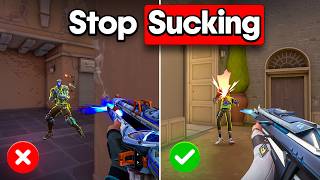

Stop Hesitating in Valorant
45sHesitation is a universal rank killer that many players relate to, making this advice highly engaging and actionable.
▶ Play Clip"Delivers solid, actionable advice that matches the title's promise, though it includes a coaching plug and some repetition."
Coach Seoul shares six years of hard-earned Valorant advice, distilled into 12 minutes. The video focuses on evergreen, hidden skills beyond raw mechanics, covering decision-making, goal setting, soft skills, balance, and the importance of confidence built on preparation.
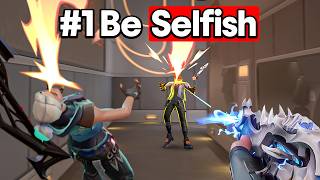
Hesitation is a major rank killer. Commit 100% to quick decisions; execution and timing matter more than the decision itself. Trust your instincts, like Ion disrespecting a drone and fighting the enemy.
Goals are a measuring stick for progress. They can be behavioral or skill-based, not just rank. Set realistic goals based on your available time and commitment. Example: learning one new thing about Valorant each day.
High standards are good but must be balanced with realism to manage stress. Accept a slow improvement curve if you have other commitments. For most, learning one new thing daily is a good start.
To climb in high ELO, master: 1) Building rapport with teammates, 2) Practicing good etiquette (being quiet in clutches, not backseat gaming), and 3) Patience (not getting provoked, accepting mistakes).
Don't tie your entire self-worth to Valorant. Find other interests to avoid emotional rollercoasters. Balance is crucial for long-term sustainability and performance.
Focusing too much on the grind can hinder progress. Enjoying the process reduces stress, increases creativity, and helps achieve flow state. Players who enjoy practice improve more.
Valorant is an FPS; mastery of basics (peeking, spray, aim, movement) is fundamental. This mastery builds confidence, which enables quick reactions, creativity, and good timing.
Confidence is elusive but can be manufactured through preparation. Do more work than others (extra DMs, VOD reviews). If you're not prepared, you'll feel nervous and unsure. Adjust expectations if needed.
The core message is that sustainable improvement in Valorant comes from a combination of mental skills, realistic goal-setting, and a balanced lifestyle, all built on a foundation of mechanical mastery and preparation.
What is one of the biggest rank killers in Valorant according to Coach Seoul?
Hesitation in decision-making.
00:42
What is more important than the decision itself in ranked play?
The execution and timing of the decision.
01:21
What example does Coach Seoul give for a simple, manageable goal?
Learning one new thing about Valorant every day.
03:02
What are the three soft skills needed to climb in high ELO?
Building rapport, etiquette, and patience.
05:32
What is the first step to changing a negative behavior like overheating?
Noticing or flagging the behavior.
04:23
Why is having fun important for achieving flow state?
It reduces stress and increases creativity, which is critical for problem-solving at a rapid pace.
09:20
What is the hard truth about confidence according to Coach Seoul?
Confidence is manufactured through preparation; you can't be truly confident without doing the work.
10:52
What does Coach Seoul say is the most important deciding factor for performance?
Confidence.
10:40
Execution over Decision
Challenges common belief that the 'right' decision matters most, emphasizing timing and commitment.
01:21One New Thing Daily
Provides a concrete, low-barrier goal that ensures consistent progress.
03:02Soft Skills are Key
Highlights often-overlooked interpersonal skills as critical for climbing in team-based games.
05:32Fun Fuels Consistency
Links enjoyment to long-term improvement and creativity, countering the grind mentality.
08:54Confidence is Manufactured
Reframes confidence as a product of preparation, not a fixed trait.
10:52[00:02] a decade. Not only is the game older, the game is also harder than it's ever been to climb with new agents, maps, and constant updates. So, what does this time mean for you and your gameplay if you don't have this level of experience?
[00:15] myself with all this playtime? This is Coach Seoul, and in this video, he'll be focusing on the more hidden, evergreen skills that he's learned over this half a decade peaking Radiant and teaching over 1,000 students how to climb the
[00:28] leaderboard. That way, by the end of the video, you'll learn more about what grinding the game. >> To start, we're going to simplify your to think back to a round where you froze, you search for a decision, but
[00:42] nothing is obvious. If you can recall moments like these, it's likely you can decision-making. In Valorant, it's absolutely fundamental that you are able to make quick decisions and commit to them 100%. I've learned over the last 6
[00:57] years that this is one of the biggest rank killers. The reason is that it can often become overwhelming, cause hesitation, and really detract from our attention to mechanical execution to hesitate, which basically means if you
[01:09] somewhere else, you whiff. In ranked, you really want to go with the flow for is that you are on the same page with your team and making quick decisions. The execution and timing of a decision is often a lot more important than the
[01:21] decision itself. Ranked already comes with so many challenges in communication and teamwork, and the game can honestly be so much simpler when you just focus surroundings, your role, and fighting together. We should also apply this
[01:33] mentality in our individual game on a small scale, not just the way we think about our teams and teammates. For example, let's say you have an enemy in the open and you can flash him. If you trust the flash, go for it. Most of the
[01:45] this rather than trying to coordinate something with a teammate or waiting for mistake, you will know for the future. Another mistake I see inexperienced players make all the time is trying to play a simple and easy fight in a
[01:58] look at a clip from Ion, one of the stars from Envy who got [music] them to climb in the VCT in 2026. Most of the time, your average player fighting Breeze a main may break the drone, ask for one-way from Clove, and fume when
[02:11] they die to someone killing them in this first fight. But what does Ion do? He disrespects the drone, disrespects the Reyna, and trusts in his gut and his aim. Simply put, fight him. There's no need to make a decent play even better
[02:23] because in doing so, you often mistime or create a moment of hesitation that can cost you in some other less tangible way. With that, let's talk about our next point, goal setting and expectations. Like anything in life,
[02:35] Goals are your measuring stick for your progress. If your goals are constantly you're improving? A goal can also be many things, like a change in your behavior or goal in learning a specific character. It's not as limited as just
[02:48] hitting a rank [music] in Valorant. You can also have short- and long-term can even think purely of how to win a round. Whatever it is, be realistic before making that commitment. For example, I personally set a goal very
[03:02] early on in my journey just to learn one new thing every day involving Valorant. While not enough to revolutionize the way I played in all aspects, it helped me to learn a new PC utility, a new off angle, a new position I'd never tried,
[03:17] goal, I knew I always was making some sort of progress, even if my results manageable goal for me and made sense for the level of commitment >> at the time. When setting goals, we also need to consider our own standards.
[03:31] Having high standards for yourself is great for improvement, but it has to be balanced in order to manage the stress of those standards. You have to be ambitious, but have a tad bit of realism in there, too. I wanted to go pro at
[03:44] realistic that while I was still in school and working full-time, that I had to settle for a very slow and steady improvement curve for that time. For most players, just learning one new thing each day is a good place to start.
[03:57] but you will be a more well-rounded player over time. Another idea behind goal setting could be to change your own behavior, like we mentioned before. As personal trait that you don't like and it might be holding you back in your
[04:10] ranked games, such as being easily provoked or overheating for highlights. notice when you do overheat or when you bite on a toxic teammate's passive-aggressive comment. Noticing or flagging a behavior is always the first
[04:23] step to a positive change that can make it so you don't actually get affected by any further and start jotting down all these things we need to work on, it's time you have available to really play the game. Set realistic goals for how
[04:37] things like how much time you want to spend training mechanics. You don't T, but they can serve as a guide. This is how you hold yourself accountable and always on the up in the long run, even if it's not in the short term. And while
[04:51] has it been since you've actually ranked up a significant amount? One month? Six? A year? No matter how long you felt stuck, our team at the Immortal Valorant long-running issues. From VCT-level coaches to Radiant peaks you've only
[05:06] seen on the outside looking in, we have coaches with plenty of experience to help you climb 500 RR in 10 weeks guaranteed. And if you don't, we'll rank or your money back. So, why wait? [music] Try us out in the short term so
[05:19] you can hit your long-term goals for your Valorant journey today. Another experience that I've learned over my time in Valorant is how to control my mental and use my soft skills in order to play better in my ranked games. Now,
[05:32] our previous tips, set the right goals and stick to them, there are some from that experience we just mentioned. Specifically, there's three soft skills you need to master in order to climb in high ELO. First, let's talk about how
[05:45] you interact with your teammates. and don't worry, this isn't your typical to actually get the most out of the people you're playing with so that you importantly, win. It all starts with building a rapport, ideally early in the
[06:00] someone up and when to give them space to play their own way. It's really about social intelligence, reading your teammates, making them feel comfortable, and bringing out their best performance. The key is paying attention to the soft
[06:12] Ask them what they need. Maybe you've been micro-managing without realizing it. Is a teammate quiet or nervous? Bring them in. Ask for their opinion on a play. Make them feel valued and watch how quickly that changes their energy.
[06:24] The second soft skill we're using is simply your etiquette. This is simple Being quiet in clutches, knowing when to allow someone to make a call and not frustrated at a problem and trying to help them solve it, and just basic
[06:38] surprised how much more willing people are to help you, drop you, and buy into your ideas when you speak to them the same way you might speak to a cashier at end of the day and want to feel respected. I think people [music] often
[06:52] because all you see is your insufferable necessarily agree with. And the final soft skill is patience. We're talking allowing yourself to be provoked. [music] Anyone who plays Valorant knows
[07:06] been getting on your nerves all game drops a one-liner comment and you just can't ignore it. In my opinion, most ranked games are lost arguments sparked probably more so than any other single factor. And on the flip side, patience
[07:21] is also about accepting your teammates' mistakes to an extent, not letting their result in you provoking them. Trust me on this, I still struggle with this even to this day, but the level this affects me is significantly less than I started
[07:34] because I actively worked on my own levels to reset quickly when this kind you You control your teammates, and you can't stop them from being toxic, but them. That alone can have a big impact on what you are able to do in a match.
[07:48] This leads us into balance. Soft skills, goal setting, and expectations are all and your emotional control. It's really important that while we want to be ambitious, we also understand that Valorant can't be our entire life, as
[08:02] much as sometimes we wish it was. Trust me, I've tried this, and it's not sustainable long-term, and it's not really a good time either. If you are someone who is tying your entire personality, validation, and self-worth
[08:14] Valorant, you're basically setting yourself up for an emotional roller every ranked game's outcome. So, my advice here is simple: balance. You need to find other things that you enjoy so
[08:26] on this game, especially if you are a hardcore grinder with lofty goals of a pro career or higher ranks. For myself, I'm a musician first and foremost. I've been doing music for years and will continue to enjoy music for the rest of
[08:40] myself and the people around me. So, don't just do this kind of thing for yourself and for your performance in this final tidbit. When talking about having fun, a fellow coach in the scene
[08:54] named [music] Dopa talked about this in a recent video, and I thought you should hear it. What held him back on his grind to becoming a pro was focusing so much on the grind that he forgot to have fun. This might sound corny, but having fun
[09:07] is what helps you stay consistent and ultimately achieve your goals in coach, it's always the people who enjoy the process of practicing [music] and progress. When you are enjoying the game, you are naturally less stressed
[09:20] and more open to taking risks, which in turn leads to greater creativity when approaching problems. Creativity is a critical part of achieving a flow state the box to figure out a different way of holding a site or finding an opening
[09:33] kill that you might not otherwise see. Why does this help you achieve flow state? Because flow state is literally just problem solving at [music] a rapid pace. And you can't problem solve without creativity. Players who are not
[09:45] hours for the sake of it simply don't have as much creativity due to the stress and deeply rooted habits that they're building, leading to a more decision making. And finally, my most important piece of advice, Valorant is
[09:58] an FPS first and foremost. No matter how much utility there is. From my improvement come from a mastery of the basics. The obvious stuff, peeking, spray, the weapons, raw aim, movement, and so on. Mechanics, aim, and just
[10:12] You can't just get around that. Most importantly, mastery of these absolute confidence in your execution under pressure. And confidence makes it easier for us to react quickly, be creative, try new plays, and take correct timings
[10:27] when we see them. Good timings mean we always stay a step ahead. It's seen in every aspect of our game. Confidence allows us to quickly capitalize on poor us more comfortable speaking up in the VC when we see something others missed.
[10:40] It means we act quickly after a teammate throws supportive utility. You probably most important deciding factor for your performance. [music] But unfortunately, for all of us, confidence is often elusive and
[10:52] fleeting. Sometimes it's there and sometimes it just isn't. That's why you manufacture confidence. The hard truth is preparation. And so without preparation, you can't be confident, not
[11:05] truly. Think of it like this. Why should you feel more confident than your train mechanics less than them, don't spend enough time learning your agent decisions. When I say do the work, I mean you have to do more than other
[11:19] people are willing to do. And that's literally the only way you can get ahead that are good for you and over time learn to find satisfaction in it. This is the brutal advice that most people don't really want to hear when they want
[11:33] Valorant. Ultimately, you can't lie to yourself. You know how prepared you really are. Confidence at its core is a result of your interpretation of a prepared, you will feel ready and even excited when coming up against a higher
[11:47] chance to prove yourself and test how you stack up. But if you know you've playing enough games, you probably won't. In fact, you'll feel nervous, shaky, and unsure about your decisions. Often leading to plain inaction. For the
[12:01] channel, you already know what you need to do because we've told [music] you and approach the game. If you aren't seeing progress, maybe you just don't want to do the extra DM, the extra VOD review, your extra time in Aim Labs, and so on
[12:15] and so forth. Or, you just don't believe that the time and effort will be worth case, maybe you should adjust your expectations to help manage some of the stress that you feel when you play. In the long run, it might make you want to
[12:27] progress as a result. Thank you for watching the video. We'll see you next watching the video. We'll see you next time.
⚡ Saved you 0h 12m reading this? Transcribe any YouTube video for free — no signup needed.