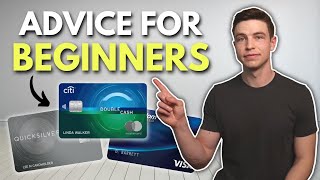

Why Beginners Fail with Credit Cards
45sHigh stakes warning about common mistakes and consequences hooks viewers who fear debt and credit damage.
▶ Play Clip"The title accurately promises five lessons for beginners, and the video delivers exactly that with clear, actionable advice."
This video presents five essential credit card lessons for beginners, focusing on avoiding common pitfalls like high-interest debt and credit score damage. The host emphasizes building an emergency fund, treating credit cards like debit cards, paying full balances monthly, managing credit utilization, and maintaining a perfect payment history.
Having an emergency fund of six months' expenses in savings prevents relying on credit card debt for unexpected costs like car repairs or vet bills.
Viewing a credit card as a substitute for a debit card (only spending money you already have) avoids the trap of using the bank's money and carrying debt.
Paying the full statement balance by the due date eliminates interest charges, making the APR irrelevant. Minimum payments should be avoided as they lead to interest.
Credit utilization (balance ÷ limit) should be kept below 30% (ideally under 10%) to boost credit scores. Prepaying before the statement closing date can lower reported utilization.
Payment history makes up 35% of a credit score. Set up automatic payments or reminders to avoid late payments, which can stay on credit reports for seven years.
What is the recommended size of an emergency fund before using credit cards?
Six months of estimated expenses in a savings account.
01:32
What mindset shift should beginners adopt regarding credit cards?
Treat the credit card like a debit card, only spending money already in the bank.
03:22
How can you avoid paying credit card interest?
Pay the full statement balance by the payment due date each month.
05:39
What is credit utilization and how is it calculated?
Credit utilization is the percentage of your credit limit that you are using, calculated as balance divided by limit.
07:31
What is the general rule for keeping credit utilization low?
Keep it below 30%, and ideally below 10%.
08:11
How can you lower reported credit utilization before statement closing?
Prepay part of the balance a few days before the statement closing date so a smaller balance is reported.
08:41
What percentage of a credit score does payment history represent?
35%.
10:55
How long can a late payment stay on your credit report?
About seven years.
11:50
Emergency Fund as Safety Net
Avoids reliance on credit card debt for unexpected expenses, a key insight for beginners to prevent debt accumulation.
00:50Debit Card Mindset
Shifts perception from 'using bank's money' to spending only what you have, preventing overspending.
03:22Ignore APR by Paying in Full
Emphasizes that interest is irrelevant if you pay the full balance, a crucial principle for cost-free credit use.
05:39Prepay to Manage Utilization
Explains a practical tactic to boost credit scores by pre-paying before statement closing, especially for low-limit cards.
07:18Payment History Dominance
Highlights that payment history (35%) is the most important credit score factor, stressing the need for on-time payments.
10:40[00:00] so if you're a beginner with credit
[00:01] cards it can be exciting with all the
[00:03] possibilities to get sign up bonuses
[00:05] cash back points and a bunch of other
[00:07] cool things but the truth is that as a
[00:08] credit card beginner that's also the
[00:10] most dangerous time for you because
[00:12] there's plenty of ways that you can
[00:13] easily slip up and make some common
[00:15] mistakes that have some pretty bad
[00:16] consequences these consequences include
[00:18] things like getting into high interest
[00:20] credit card debt big drops in your
[00:21] credit score and some other general
[00:23] struggles with money that many people
[00:24] could have avoided that's why in this
[00:26] video we're gonna go over the five
[00:27] credit card lessons that beginners need
[00:29] to learn because these five key lessons
[00:31] can help anyone to get the positives out
[00:33] of credit card usage without any of
[00:34] those bad things that some of you might
[00:36] be afraid of so as always let's not
[00:38] waste any time here and just get right
[00:39] into it make sure to go ahead and tap
[00:41] the like button down below and subscribe
[00:42] as well to get this video pushed out to
[00:44] more people but this first lesson that i
[00:46] want to talk about here is easily the
[00:47] top thing that many people skip over
[00:49] even though it's so important and that
[00:51] lesson is to have an emergency fund in
[00:53] place when using credit cards now i know
[00:55] this might sound boring but hear me out
[00:56] because the reason for having an
[00:58] emergency fund is simple for the most
[01:00] part we all have a good idea of what we
[01:02] expect to spend money on each month when
[01:03] it comes to expenses like rent groceries
[01:06] gas and other typical things like that
[01:08] but there's also many other unexpected
[01:09] expenses in life that are guaranteed to
[01:11] pop up that we overlook in our budgets i
[01:13] know that for me in the past i've had to
[01:15] randomly pay several hundred dollars to
[01:17] get new tires for my car or maybe a
[01:18] couple hundred dollars to take my cat to
[01:20] the vet just things like that that cost
[01:22] extra money that i didn't plan to spend
[01:24] so because of those unexpected expenses
[01:26] i've made it a priority over the past
[01:28] few years to build up an emergency fund
[01:30] of six months worth of estimated
[01:32] expenses in a savings account that way
[01:34] i'm prepared if a random expense pops up
[01:36] i can pay with my credit card to get
[01:37] points but then i pay off that balance
[01:39] immediately because i have the
[01:40] flexibility to do that now unfortunately
[01:42] that's not what everyone does because
[01:44] for most people that don't have those
[01:45] extra cash savings set aside they still
[01:47] might use a credit card to pay for those
[01:49] unexpected expenses however they might
[01:51] only be relying on future cash flows to
[01:54] pay off that credit card balance now
[01:55] under normal conditions that might work
[01:57] if you have a rough estimate of what
[01:58] your income minus your expenses will be
[02:00] each month but honestly we all should
[02:02] know that life isn't always perfect and
[02:04] things don't usually go according to
[02:05] plan i mean what if several expenses
[02:07] start adding up or you have one huge
[02:09] expense that costs you several thousand
[02:11] dollars or what if your income goes away
[02:13] or decreases for some reason when that
[02:15] happens you'll still be left with a
[02:16] credit card balance that you have to pay
[02:18] back pretty soon but with those cash
[02:19] flow issues that could lead you to make
[02:21] the mistake of paying only the minimum
[02:23] payment and carrying a balance which
[02:25] we'll get into later in this video so my
[02:27] point that i'm trying to make here with
[02:28] this first lesson is that life is
[02:30] unpredictable and the best defense
[02:32] against that unpredictability is by
[02:33] having some sort of a cash safety net to
[02:35] fall back on and if you don't think that
[02:37] something like this could happen to you
[02:38] just think about this millions of people
[02:40] in the u.s collectively owe almost one
[02:42] trillion dollars in credit card debt
[02:44] right i guarantee you that a large
[02:46] percentage of those people in credit
[02:47] card debt were just like you and me when
[02:49] they signed up for those first credit
[02:51] cards where they didn't have the
[02:52] intention of carrying a balance ever but
[02:54] still this debt grows and grows because
[02:56] the biggest problem with credit card
[02:57] debt isn't the function of how it works
[02:59] i mean most of us do know that credit
[03:01] card debt is bad the biggest problem
[03:03] with credit card debt mostly has to do
[03:04] with our own behaviors around how we
[03:06] handle our money and manage risk based
[03:08] on our own lives and our own experiences
[03:10] so play it safe and prepare for the
[03:12] worst because you don't want to ever
[03:14] have to turn to high interest credit
[03:15] card debt financing as your only option
[03:17] to pay for unexpected expenses now next
[03:20] for lesson number two this is directly
[03:22] related to what we just talked about but
[03:24] it's more of a mindset shift for people
[03:25] and that lesson is to treat your credit
[03:27] card like a debit card so you may have
[03:29] heard me or others on youtube say
[03:31] something like this before but it really
[03:32] is the right way to think about credit
[03:34] cards too many times i'll see people get
[03:36] a new credit card and they'll see that
[03:37] they have this new credit limit of maybe
[03:39] five thousand dollars over here so they
[03:41] say to themselves that's five thousand
[03:42] dollars of the bank's money that i can
[03:44] use for whatever and then i'll just
[03:45] worry about paying it back later but the
[03:46] mindset shift that i had early on was to
[03:48] almost forget about that credit limit
[03:50] for a minute and pretend that whatever
[03:52] credit card i was holding said debit on
[03:54] the front instead now normally with an
[03:56] actual debit card that card is linked to
[03:58] your bank account so that any time you
[03:59] swipe it to make a purchase the money is
[04:01] simply subtracted from your bank account
[04:03] to pay that means that without
[04:04] considering overdrafts in order to use a
[04:06] debit card you actually need to already
[04:08] have that money in your bank account so
[04:10] the transaction can go through now with
[04:12] a credit card we're involving a third
[04:14] party with the credit card issuer and
[04:15] like i said a lot of people view this
[04:17] like they're using someone else's money
[04:19] with that credit limit but i've never
[04:20] really looked at it like this i've only
[04:22] looked at my credit card as basically a
[04:24] substitute for my debit card by making
[04:26] sure that i've already got plenty of
[04:28] cash set aside in my bank account before
[04:30] i use my credit card for anything and
[04:32] this goes back to the whole emergency
[04:33] fund thing i think it's a good idea to
[04:35] have some money set aside in a savings
[04:37] account for emergencies along with some
[04:39] money set aside in a checking account to
[04:41] pay certain bills and to pay off credit
[04:42] card balances so because i keep several
[04:44] thousand dollars in cash in my bank
[04:46] accounts that i can easily access it
[04:48] doesn't matter if i have a 100 trip to
[04:50] the grocery store or i need to make an
[04:52] 800 tire replacement i know that i can
[04:54] use my credit card to pay for those
[04:56] things because i can pay off that credit
[04:57] card balance whenever i want and because
[04:59] of that i get a few benefits by simply
[05:01] substituting my debit card for my credit
[05:03] card as my preferred method of payment
[05:05] first i earn points or cashback that i
[05:07] can put towards my travel expenses that
[05:09] way i travel almost completely for free
[05:11] i also have increased my credit score
[05:13] pretty quickly so that now it sits in
[05:14] the high 700s because i've learned the
[05:16] importance of payment history and credit
[05:18] utilization those are two things that
[05:20] i'm gonna get into in just a minute as
[05:21] well because in this video those things
[05:23] are so important for beginners
[05:25] especially to understand and
[05:26] additionally i don't pay any interest
[05:28] from credit cards because i pay off my
[05:29] cards in full each month which leads me
[05:31] to lesson number three and that is
[05:33] actually to ignore the apr and minimum
[05:35] payment amount on your credit card
[05:37] statement and just pay off your balances
[05:38] in full every month now i'm not saying
[05:40] that your apr is not important because
[05:42] you should see the number and see that
[05:44] it's anywhere from 15 to 25 and that apr
[05:46] should scare you if you do carry a
[05:48] balance you want the lowest apr possible
[05:50] but as a beginner we're trying to avoid
[05:52] ever carrying a balance in the first
[05:54] place so the reason we actually want to
[05:56] ignore that apr is because that number
[05:58] is irrelevant when you pay your credit
[06:00] card's full statement balance each month
[06:02] by the payment due date when you pay
[06:03] your statement balance in full you won't
[06:05] be charged any interest so the apr
[06:07] doesn't matter it could be 1 000 for my
[06:09] credit cards or it could be 15 it
[06:11] doesn't affect me because over the past
[06:13] six or seven years of using credit cards
[06:15] i've paid off every single one of them
[06:17] on time and info now i have a full video
[06:19] here on my channel simply explaining the
[06:20] whole process for how and when to pay
[06:22] off your credit card bill which i'm
[06:23] gonna link to down below but here's just
[06:25] a few things to know first you're going
[06:27] to have a billing cycle with an opening
[06:29] date and a closing date and on that
[06:30] closing date whatever your balance is on
[06:32] that day is going to be called your
[06:34] statement balance now along with that
[06:35] statement balance you're also going to
[06:37] see a minimum payment due amount and
[06:38] that is likely going to be significantly
[06:40] lower than your statement balance you'll
[06:42] also see a payment due date which is
[06:44] typically at least 21 days after that
[06:46] closing date for this statement where
[06:48] you have to pay at least the minimum
[06:49] payment but like i said before we want
[06:51] to ignore that minimum payment amount
[06:53] because paying the minimum is what the
[06:54] credit card companies want you to do
[06:56] that way the remaining unpaid statement
[06:58] balance can carry over to the next
[07:00] credit card statement and they can start
[07:01] charging you interest at those high
[07:03] interest rates it's a common myth that
[07:04] carrying a balance helps your credit
[07:06] score but that's just not true at all we
[07:08] want to be paying the full statement
[07:09] balance instead by that payment due date
[07:11] all right moving on to credit card
[07:13] lesson number four which is about
[07:14] another thing that easily gets
[07:16] overlooked by beginners because they're
[07:17] not always aware of it and that lesson
[07:19] is to keep credit utilization low so
[07:21] payment history and credit utilization
[07:23] are the two most important factors
[07:25] affecting your credit score and credit
[07:26] utilization basically focuses on two
[07:28] things your credit card balance and your
[07:30] credit card's credit limit it's
[07:31] calculated as a percentage for each
[07:33] individual credit cards as well as
[07:35] across all cards combined and the
[07:36] calculation for this is pretty simple to
[07:38] understand you just take your credit
[07:39] card's balance and then divide it by
[07:41] your credit card limit to see how much
[07:42] of your available credit you're
[07:44] utilizing as a percentage now this
[07:45] calculation is typically done on or
[07:48] right around your statement closing date
[07:49] each month when your statement balance
[07:50] gets reported to the credit bureaus so
[07:52] for example if my credit card statement
[07:54] closed on may 15th and my balance on
[07:56] that date was 500 and my credit limit
[07:59] was 1 000 and my credit utilization
[08:01] would be reported as 50 which is
[08:03] actually too high and likely going to
[08:05] hurt my credit score now a general rule
[08:07] of thumb is to keep this percentage
[08:08] below 30 but ideally below 10 and the
[08:12] lower the percentage the better so for
[08:13] me i don't end up using every single one
[08:15] of my active credit cards every month
[08:17] but for the ones that i do end up using
[08:19] i try to keep my credit utilization
[08:21] maybe around one to two percent i'm able
[08:22] to intentionally manage this and keep
[08:24] this utilization percentage so low
[08:26] because like i said that calculation is
[08:29] done and reported to the credit bureaus
[08:30] on the statement closing date each month
[08:32] so i know that if i actually pre-pay
[08:34] some of my card's balance before then i
[08:36] can get a lower utilization reported if
[08:38] we go back to my example if my statement
[08:40] closing date on my card was may 15th and
[08:42] i had a 500 balance with that 1 000
[08:45] limit i would want to prepay so that my
[08:47] utilization wouldn't be reported as too
[08:49] high so what i would do is maybe a few
[08:51] days before that on may 10th i would
[08:53] prepay an amount that would decrease my
[08:54] balance so let's say that on may 10th i
[08:56] pre-paid 490 that would bring my balance
[08:59] down to just 10 and when may 15th rolls
[09:02] around just a few days later and my
[09:03] statement closes that 10 balance would
[09:05] get reported not 500 so as far as the
[09:08] credit bureaus know from the information
[09:10] that they receive on my closing date my
[09:12] ten dollar statement balance on a one
[09:13] thousand dollar limit is only a one
[09:15] percent credit utilization and that
[09:17] looks like i'm being way more
[09:18] responsible with the credit that i've
[09:19] been given now i usually don't get this
[09:21] exact with pre-paying my credit cards
[09:23] because now at this stage in my credit
[09:25] journey my credit limits are much higher
[09:27] than just 1 000 which gives me a lot
[09:29] more room to spend without having to
[09:31] worry that much about what my
[09:32] utilization is but as a beginner the
[09:34] challenge is that you usually get
[09:35] started with a low credit limit whether
[09:37] that's a limit on a secured or unsecured
[09:40] card so maybe you only have a secured
[09:42] credit card as your first card right now
[09:44] and you had to put down a 250 deposit to
[09:46] get a 250 credit limit to start off that
[09:49] doesn't give you much room for spending
[09:50] a lot when thinking about that card's
[09:52] credit utilization so the best way to
[09:54] use a secured card or any card with a
[09:56] low credit limit in a scenario like this
[09:58] would be to either use that only for a
[10:00] small purchase of a few dollars each
[10:02] month and then pay it off after the
[10:03] statement closes but before the payment
[10:05] due date or if you spend maybe a hundred
[10:07] dollars on something you could make a 95
[10:10] payment partially pay down that balance
[10:11] before the statement closing date that
[10:13] way a much smaller credit utilization
[10:15] gets reported which looks good for your
[10:17] credit score early on as a beginner so
[10:18] with credit utilization just be aware of
[10:21] how that's calculated what your balance
[10:22] is what your credit limit is and what
[10:24] your statement closing date will be
[10:26] because then you can manage what
[10:27] utilization gets reported to boost your
[10:30] credit score all right now finally for
[10:31] the fifth lesson in this video we're
[10:33] gonna move over to payment history which
[10:35] is that other factor of your credit
[10:36] score that's so important and that
[10:38] lesson is to never miss a credit card
[10:40] payment now actually payment history is
[10:42] slightly more important for your credit
[10:44] score than credit utilization since
[10:45] payment history makes up about 35 of
[10:48] your fico score and utilization makes up
[10:50] about 30 basically payment history is
[10:52] important because future lenders looking
[10:54] at your credit report want to make sure
[10:56] that you have a strong history of paying
[10:57] back things that you owe and credit
[10:59] utilization is important because future
[11:01] lenders want to make sure that you're
[11:02] not being too risky and using too much
[11:04] of the credit that you've been given now
[11:06] luckily payment history is more
[11:07] straightforward to understand but
[11:09] there's still some hidden things to know
[11:10] that can help you to stay ahead of your
[11:12] credit cards as a beginner so back to
[11:13] your credit card statement i explained
[11:15] earlier in this video that there's going
[11:17] to be a payment due date that's
[11:18] typically 21 days after your statement
[11:20] closing date the simple thing that you
[11:22] have to do to positively impact your
[11:23] credit score with payment history is
[11:25] just remember to pay at least the
[11:27] minimum payment by the payment due date
[11:29] for it to be considered on time now
[11:31] again the minimum payment is the bare
[11:32] minimum so i do not recommend paying
[11:34] only that amount you should pay the full
[11:36] statement balance by that payment due
[11:38] date to avoid carrying a balance and
[11:40] paying interest but when you have a
[11:41] perfect 100 record of on-time payments
[11:44] that's the best outcome for payment
[11:46] history on that portion of your credit
[11:47] score now with each payment that you
[11:49] actually miss you'll start to see
[11:50] negative impacts to your score and even
[11:52] just a couple of late payments can be a
[11:54] bad thing since those are gonna stay on
[11:56] your credit report for about seven years
[11:58] a missed payment is also probably going
[12:00] to get you hit with a late fee of maybe
[12:01] 30 to 40 but if you realize that you
[12:04] missed that payment within about 30 days
[12:06] of your payment due date the credit card
[12:07] issuer is likely not going to report
[12:09] that to the credit bureaus just yet to
[12:11] hurt your credit score so just make sure
[12:13] to pay the payment as soon as possible
[12:14] and you should be fine also if you want
[12:16] to make sure that missing a credit card
[12:18] payment never happens so that your
[12:19] payment history can remain perfect
[12:21] there's a few things that i like to
[12:22] recommend that people do first you can
[12:24] set up automatic payments on your credit
[12:26] card account so that your statement
[12:27] balance gets automatically paid on or
[12:29] before the payment due date each month
[12:31] now there are two small downsides to
[12:33] this with number one being that if you
[12:34] don't have the money linked in your bank
[12:36] account already then the automatic
[12:37] payment is either going to get rejected
[12:39] or you could overdraft on your bank
[12:41] account and have to pay some fees from
[12:42] that so if you do set up payments like
[12:44] this then make sure that you always have
[12:46] enough cash in your bank account but
[12:47] downside number two is that automatic
[12:49] payments could lead you to having less
[12:51] oversight over your credit card account
[12:53] which could cause you to either
[12:54] overspend on your credit cards or it
[12:56] could cause you to miss charges that
[12:57] aren't supposed to be there that's why
[12:59] personally i just like to set reminders
[13:01] on my phone to check my credit card
[13:02] accounts on a regular basis a few times
[13:04] a month that way i make sure that i'm on
[13:06] top of everything automatic payments can
[13:08] be a good backup plan but in my opinion
[13:10] having visibility over your accounts is
[13:12] also very important so just find a
[13:14] system that works for you that way you
[13:16] don't miss any payments and once again
[13:18] pay off those statement balances on time
[13:20] and in full each month i know that keeps
[13:22] saying that but it is something to
[13:23] always remember now since this video was
[13:25] really focused on credit cards for
[13:26] beginners next you'll also want to check
[13:28] out this video over here on common
[13:30] credit card mistakes to avoid or this
[13:32] one over here that i mentioned earlier
[13:33] about when to pay your credit card bill
[13:35] but as always thank you so much for
[13:36] watching i hope you have a great day and
[13:38] i'll see you in the next one
⚡ Saved you 0h 13m reading this? Transcribe any YouTube video for free — no signup needed.