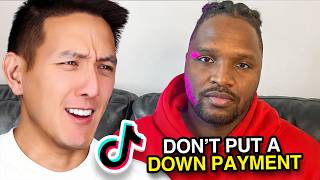

Deduct Your Parties? Ex-Adviser Reacts
44sThe host challenges a popular TikTok claim about writing off mastermind events, offering practical tax advice that sparks curiosity and debate.
▶ Play Clip"Delivers on the premise of reacting to financial TikToks with expert commentary, though some segments are padded."
An ex-financial adviser reacts to a series of financial TikToks, providing honest, raw reactions and practical personal finance advice. The video covers topics such as mastermind events, credit card debt, 401(k) misconceptions, real estate investment claims, checking account balances, and the power of compound interest.
The host introduces the video as a reaction to financial TikToks, promising honest reactions and personal finance advice.
Carlton Dennis suggests replacing parties with mastermind events for networking and tax deductions. The host notes that while masterminds can be deducted as startup expenses (up to $5,000), the tax code requires prorating personal vs. business time, making it impractical for most.
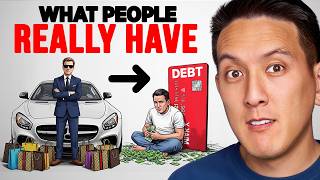
A TikToker shares her story of accumulating $70k in credit card debt due to lifestyle inflation after her income dropped. The host advises keeping lifestyle expenses low until income is stable and recommends consolidating high-interest debt with a personal loan.
A TikToker claims 401(k)s average only 5% returns and are risky. The host disagrees, stating that not investing is riskier, and that 401(k)s act as forced savings. He questions the 5% figure, noting S&P 500 returns are closer to 8-9%.
A TikToker claims celebrities beat the S&P 500 by investing in real estate and promotes a 'bridge method' promising 600% returns. The host calls this a red flag, noting that such high returns are unrealistic and likely a sales pitch.
Grant Cardone advises a teenager to buy real estate that pays $30/month and live off the cash flow. The host appreciates the principle of not touching the principal but notes it's unrealistic for a teen to buy real estate with $300.
A TikToker says she freaks out if her checking account drops below $4,000. The host suggests a framework: sum monthly expenses plus discretionary spending, add a 10-20% buffer, and keep the rest in high-yield savings.
Grant Cardone argues against 401(k)s, claiming taxes on withdrawals. The host clarifies that traditional 401(k) withdrawals are taxed at your bracket at retirement, but Roth 401(k)s offer tax-free withdrawals. He notes Cardone's preference for liquid cash.
A TikToker explains that starting to invest early is crucial. Investing $200/month from age 20 yields $800k by 65, but starting at 30 requires $450/month for the same result. The host rates this video 10/10.
John Finance advises setting up a recurring transfer to savings on the first of the month to 'pay yourself first.' The host agrees, noting it removes guesswork and ensures consistent saving. He rates this 10/10.
The video provides a balanced critique of popular financial advice, emphasizing the importance of skepticism, behavioral finance, and starting early. The host rates some videos highly while warning against unrealistic promises.
What is the recommended framework for determining how much to keep in a checking account?
Sum monthly expenses plus discretionary spending, then add a 10-20% buffer.
12:14
What is the average annual return of the S&P 500 mentioned in the video?
8-9%.
06:30
What is the 'pay yourself first' strategy?
Set up a recurring transfer to savings on the first of the month, so you save before spending.
17:50
What is the difference between a traditional 401(k) and a Roth 401(k) regarding taxes?
Traditional 401(k) withdrawals are taxed at your bracket at retirement; Roth 401(k) withdrawals are tax-free.
15:22
What is the 'bridge method' in real estate, and why is it suspicious?
It involves renting properties you don't own, promising 600% returns, which is unrealistic compared to market averages.
08:10
What is lifestyle inflation?
When your spending increases as your income rises, potentially leading to debt if income drops.
02:49
How much more per month does a 30-year-old need to invest to match a 20-year-old's $800k retirement, assuming 8% returns?
$450 per month, more than double the $200.
16:55
Lifestyle Inflation Trap
Highlights how easy it is to overspend when income rises, leading to debt.
02:49Not Investing is the Biggest Risk
Challenges the claim that 401(k)s are risky, emphasizing the risk of not investing.
05:51600% Return Red Flag
Demonstrates how to spot unrealistic investment promises.
08:38Checking Account Buffer Framework
Provides a practical, actionable formula for managing cash reserves.
12:14Cost of Delaying Investing
Quantifies the penalty of waiting 10 years to start investing.
16:55[00:01] Today we are reacting to financial Tik Toks as an ex-financial adviser. So, my haven't seen just yet. So, you're going to get my honest, raw reactions, and I'm some great personal financial advice as well. Okay, let's get into the first
[00:17] >> Stop throwing parties. Throw a mastermind event instead. Masterminds [music] your group of friends together, we should be talking about revenue going to have alcohol there. you can still have music there. And instead of
[00:31] party and get turned up, we're going to talk about how we're actually going to make some money, help each other, and push our ideas into the world and into you're able to leverage the tax system while still having fun, and turn around
[00:44] your friends. Comment below if you'll be utilizing masterminds as a new way to >> All right, so that was from Carlton Dennis. I've actually known Carlton for quite a bit now, and he has some great tax advice on his channel. And so for
[00:58] this in particular with the masterminds, I do believe you can actually deduct I do believe you can actually deduct about $5,000 worth of a mastermind from your startup expenses. Uh, however, it does say that it mostly has to be for
[01:12] for personal there. There's going to be some personal activities in a mastermind. Let's say you go to, I don't know, Florida for 3 days. There's going going to be talking about business the whole time. And so theoretically, I
[01:25] think the tax code says that you have to prorrate what time of that trip is going to be for tax purposes for business and versus uh personal. But I think that in this case, I'm not actually too sure if I would actually do this. Uh you would
[01:40] then you'd also have to be able to plan a trip and then write off uh at least $5,000 worth of expenses. I think it's a cool idea um in practicality. I just don't know how many people are going to be doing it. So, good video. Uh, no
[01:55] the next video. >> When I was in network marketing, I had >> When I was in network marketing, I had over 70k of credit card debt. Yikes. But let me tell you what got me to that point of 70k in debt. There was a point
[02:07] month. And then all of a sudden, I started dropping to like 5k a month. But my spending habits remained the same. And I remember talking to like one of my uplines and she was like, "You got to spend money to make money." And I took
[02:21] that so to heart and I spent money and enough to get me into 70k of debt. How unhinged was I? >> Yeah. So this happens a lot guys. Like if you are making a certain amount of income. So she says she was making 20 to
[02:36] up your lifestyle to the point where like okay you're spending 10k a month on your rent now and you're spending 5k a month on food and 5k a month on you know buying clothes out. It's really easy to ramp up your lifestyle when your cash
[02:49] flow coming in is so much every single month. But as you can see, what happened to her was maybe the 20 to 30k per month in revenue or whatever she was making lifestyle inflation kind of caught up to her and now she's in $70,000 worth of
[03:03] credit card debt. Now, if you are in this situation, it's really tough because if you have 70K of credit card debt and it has a really high APR, let's say it's 20 25%. The amount of interest that is acrewing every single month
[03:16] might be kind of suffocating you. And in that case, I would probably recommend getting a personal loan. Uh you can it's actually a product. So, a personal loan let's say, by different financial institutions. And they will basically
[03:28] consolidate your credit card debt for you and give you a lower interest rate. However, it's still not going to be very favorable, right? It might be 7% or 8%, but still it's better than 20 to 25%. The lesson here is if you ever start
[03:41] making a lot of money, keep your lifestyle expenses very low as long as lifestyle expenses very low as long as you can until you are 100% sure that you amount of money or that expanded amount of money, 20 to 30k a month for a
[03:55] was making 30 30k a month for, let's say, 3 years, then yeah, maybe she could start to ramp up her lifestyle to 10K a month or 12K a month or 15k a month. But of had like a flash in the pan and then now there's no money left. So, that's uh
[04:12] let's uh let's move on to the next video. What they do is they say, "Put money in a 401k, put money in an IRA, and you're retirement." But no one's doing the math. And here's what the math says. Uh
[04:26] 30-year average on the IRA, do you know roughly over 30 years what the average >> I do not. >> It's 5%. And the reason why that's poop
[04:39] is because you take $50,000, write this number down, take with the passage of time, take 50 grand and ask what happens to it in a 401k over 20 years. It triples. It becomes $160,000. Now, on the one hand, someone might say,
[04:53] like, "Yeah, but did you know in the 60s the average person's 401k and IRA is 200 grand, and at age 55, you've topped off your income at $94,000." Which means that at retirement, you've
[05:06] saved 2 years worth of money. So, after you have cut your expenses in half, you can maybe go four years before it's all dried up. It's poop again. So, that's what happens. And it's not about the 401k, it's the 5% that we get
[05:21] brainwashed is good because it's a safe number and we think that it's a risk of all because we know how the story ends for 99.9% of people. I believe, and he's a real estate investor. And what he's saying is again
[05:38] a kind of a halftruth. I think that, you know, he's trying to say that for 99.9% of people like the 401k is a bad idea and that it's the riskiest thing that you can do. I would tend to disagree with him. I think not investing at all
[05:51] is probably the biggest risk that you can take. And it's been proven that people that have a 401k actually save more money than the person that doesn't because the 401k is a type of forced savings account. you are essentially
[06:04] account or whenever your direct deposit hits directly into your 401k before you even see that money, which is actually a because a lot of personal finance is behavioral. Now, what he is saying is
[06:17] that the 401k only averages about 5% return uh across maybe all the plans that are out there. I don't really know if that's the correct number or not, but let's just say you you actually get the S&P 500 return, it's going to be closer
[06:30] to 8% 9%. So, I don't know where he's getting 5%. We'd have to fact check him on that. He does point out that the average 401k balance for someone that is retiring. Yes, it is in the 200,000 or $300,000 range, which he says is not
[06:44] agree with him there. However, [snorts] I think that having a blanket statement is the riskiest thing that you can do with your life. I don't necessarily agree with him there. I would always question the motives of what someone is
[06:58] real estate investor himself. He probably has a bunch of other courses and types of products that you can buy from him about real estate investing. And my guess is is that he's trying to say this so that people go and check out
[07:12] his course or check out other ways to grow their income uh or grow their nest egg that are alternative methods that are not the 401k. And so I would just be maybe fact check him a little bit there. But uh not everything he said was, let's
[07:29] needs to be checked. All right, guys. Here is our next video. Let's go. >> Warren Buffett is wrong for saying nobody can beat the S&P 500. People like Kanye West, Nicki Minaj, and also Gordon Ramsey easily beat the average S&P 500
[07:43] return of 8.4% over the last 20 years. And yes, they're all millionaires, but classes that you need to copy if you want to become financially free. So, they're all investing primarily in real estate and also stocks. So, if you put
[07:56] $10,000 into the S&P 500, you only make $800 in the first year with the 8% you put that $10,000 into real estate using the bridge method. So, the bridge flow by renting properties you don't own. So, $10,000 investment on a 2-year
[08:10] subleasase can cash flow $2,500 per month. Times that by 24 months equals $60,000. That's a 600% return on investment and exactly why celebrities real estate. I'm actually going to be hosting a free live event showing you
[08:23] property that you don't have to own. Comment the word bridge and I'll send >> All right, this is typical financial Tik Tok selling you something type of video. Um, first of all, he promises a 600% return over two years. Is that what he
[08:38] said? 600% return over two years. Uh, yep. 600% return over two years when the yep. 600% return over two years when the S&P 500 averages 8.4% per year. So that tells you that it's a little bit too good to be true. Is that what I would
[08:53] say? Uh whenever someone promises promises you something that's like 60 times what you can get on average in the market, you you should be kind of looking at this being like your BS detector should be going like way off,
[09:06] don't really like is that you know he says you can do this by investing in real estate and I'm going to be hosting a free live event show that you need to comment to get in. And so there's something implicitly
[09:21] sleazy about this. I don't know the guy. Uh I don't know how the bridge method works. But immediately I'm already kind of hesitant to even believe in it because 600% is just a crazy number. If it was so profitable, how come the whole
[09:35] my take. All right, let's get into the next video. this right now. If you're getting an allowance of 300 bucks a month, buy a piece of real estate that pays you 30 bucks a month. Only use the 30. Don't
[09:48] >> But how would a young normal person get money? >> Allowance, side jobs, side hustles. I was 14 years old. I was working every weekend. I was mowing lawns, doing whatever I could to get some extra
[10:00] interesting clip. This is Grant Cardone. I believe the other person was his daughter. And Grant Cardone has a lot of good money principles in general. I fact, one of his videos I watched a really long time ago taught me a lot
[10:13] about how to allocate money uh whenever I got paid, which I really enjoyed. Uh however, there is a little bit of salesmanship in his videos. Obviously, a kid is not going to be able to buy real estate for 300 bucks, right? Like that
[10:27] is a fact. unless you're buying, you know, digital real estate in the NFT world, but that even then that's not going to cash flow 30 bucks. So, I think trying to say just live off the cash flow, right? Which is like live off the
[10:41] the $30 that you are going to get. Don't touch the principal investment. I really like that. I think that's a that's a good blanket kind of statement because a generating them dividends and they just
[10:54] that's really great. I think it is a little unrealistic to believe that one, a teenager is going to be making 300 bucks that quickly, and two, that they're going to be able to buy real estate for $300. But in general, I do
[11:07] think Grant's heart is in the right place. Um, I just don't know about this video if we can actually follow it to a tea. But I like the principle of, you know, don't touch the principal investment. All right, next video. Here
[11:20] we go. I just saw a video of a girl asking people how much money they keep in their checking account before they start freaking out. And she said that her minimum balance that she never goes below is $4,000.
[11:34] even know. I've [snorts] never seen her before. I'm not going to put any clips cuz I like don't want to on her. This isn't like me insulting her. I am just kind of like baffled. But wait, there's more. Because when I get into
[11:47] the comments, there were multiple people and I barely scrolled through the comments, but I must have seen at least four people say that they freak out if their checking account balance is under 10K.
[12:02] psychological phenomenon here. A lot of account balance goes under a certain number. And whatever that number is for you, let me know in the comments because for everyone, it's going to be a little
[12:14] framework that you can use to know exactly how much you should have in your checking account. And that framework is simply the sum of your monthly expenses plus however much you're spending on a discretionary basis. You want to add
[12:27] those together. So let's say you spent $3,000 a month on all of your rent, your utilities, your insurance, your car payments, etc. That's $3,000. And then let's say you spent $2,000 on discretionary expenses a month. So maybe
[12:40] that's buying coffee out, eating out, etc. That [snorts] is a total of $5,000. checking account should be able to to basically weather the volatility that your checking account will go through on a monthly basis. So, I like to put
[12:54] $5,000 in the checking account to cover those expenses, plus add a 10% buffer. So, you're probably looking at $5,500 or even up to $6,000. So, 10 to 20% of a buffer is really nice. That way, whenever you are getting paid, that
[13:08] optimal amount to have in your checking account. The rest should be in a high interest. But I would say that whatever she is addressing is just highly psychological and so much of money is psychological and I have so many videos
[13:22] on exactly how much you should be keeping in your checking or your savings accounts and I will link those down below or at the end of this video. But this video in general. And if you do keep a lot of money in your checking
[13:34] right, we are moving on to the next video and it's another one by Grant Cardone. I have a lot of money in my 401k. >> Why do you feel sorry for him? It's a way to put money in without paying taxes
[13:47] years. >> Well, you can pull it out when you're >> 13 years from now, will taxes be higher or lower? when you were 50 cuz you'd pay lower taxes. Dude,
[13:59] out money out of your 401k if you wait until you're 63. going to pay taxes, bro. You weren't charged taxes while it sat there. What's >> IRS allows penalty-free withdrawals from retirement accounts after the age of 59
[14:12] >> Penalty free, not taxree. So they're going to charge you a penalty. They're going to put handcuffs on you to sell it before then. But dude, when you're 63 you're going to start paying taxes at that point.
[14:24] >> Exactly. >> Yeah. So Grant Cardone is somewhat right here. You know, in Grant Cardone's opinion, he's a real estate guy. He loves the opportunity cost that comes or the lack of opportunity cost that comes
[14:39] with not having your money in a 401k. Essentially, what he likes is he likes liquid cash. He likes it upfront. He thinks, "Okay, I'm better at investing than the average person. So, I'm going to use the money now and I'm going to be
[14:52] able to make more money with it rather than let it sit in a 401k locked up for 30 years." I get his point of view there. Now, the person who the he's talking to is definitely in the wrong that 401k withdrawals are taxed,
[15:08] especially if it's a normal traditional 401k, you are taxed upon withdrawal at your tax bracket at that time. And the idea is that when you are in a 401k and you're getting taxed on those withdrawals when you're the older age of
[15:22] withdrawals when you're the older age of 63, 65, 67, etc., ideally, you are not working anymore. Ideally, you were just withdrawing from it at a 0% tax bracket and you're not paying a lot in taxes on those withdrawals. That would be the
[15:34] benefit. Now, another way is just to have a Roth 401k. And of course, all those gains are going to be taxfree upon your withdrawal and whenever they are growing as well. So, that's another way to do it. I don't really like these
[15:46] blanket statements as you guys know is don't use a 401k, but this is my uh initial reaction to this. So, I don't really know if I like or dislike this video. It just kind of is. It it just is what it is. All right, moving right
[15:58] along here. Let's go to the next one. >> It doesn't matter how much money you put month. It matters how long you were able to stay in the market. Welcome to day four of investing 101. Compound interest and compounding your money over time is
[16:12] what turns your money, your small amount of nest egg into a fortune over time. The earlier you start, the less money you need to invest to reach the same or if you started investing at 20 years old and you only decided to put $200 into
[16:27] single month and you consistently invested that until you're 65, you will have over $800,000 by the time you turn 65. This is of course assuming 8% per until you're 30 because you thought maybe finance is too hard for me. Okay,
[16:41] finances like real money now at the age 30 and you want to take it seriously and difference does it make? If you want to have that same result of ending up at 65 years old with $800,000 in your bank account, you would need to invest $450 a
[16:55] month. That's more than double of that $200 you could have put for since you're 20. But now you have to double it every single month when you turn 30 just to reach the same result of $800,000. And that's all because you waited. So don't
[17:08] >> Oh yeah. I really like this video. I think she really illustrates the difference of waiting, you know, 10 extra years. So if you if you choose to investing, you actually have to contribute way more to even reach the
[17:21] 10 years earlier. So she really emphasizes the importance of starting video right now and you haven't started investing, I would implore you to do so. But this was a really good video. Um very solid financial advice. I don't
[17:35] know who she is or what her background is, but I would say I would give this a 10 out of 10. Even better. All right, next video. I'm having trouble saving. having trouble saving consistently, you should try paying yourself first. How do
[17:50] I pay myself first? Most people spend first and save what's left over. But the key is to save first and then spend what's left over. Okay, but how do I actually do that? Set up a reoccurring transfer on the first of the month into
[18:02] your savings. That way, you can spend freely for the rest of the month knowing you already saved. Dude, that's genius. Your tips are literally saving me. Oh like your tips are helpful. Well, make sure you follow for more.
[18:16] >> All right, that pun was pretty bad. Uh, I've definitely put some bad puns on the channel here as well. And, uh, that's John Finance. I know John E Finance. I don't think I've met I think I have met him in person. Um, but that's good
[18:28] can pay yourself first and take out any into your way. Like if you never see but you've already saved that money, you know, with a recurring transfer on the
[18:41] first of the month, that's a really great idea. It takes all the guesswork out of it and it makes it just ensures that you are actually saving your money. So, uh, sound financial advice. I would rate this one a 10 out of 10. I'm glad
[18:54] once. Um, so great pick. All right, guys. Let me know what you guys thought reaction videos in the past here on the channel, especially back in 2020, but I haven't done it in a while. So, if you enjoy me reacting to these financial Tik
[19:08] Toks and financial shorts, let me know in the comments. I would love to hear video a bunch because that will signal to YouTube that, hey, this is a good check out another video of mine, I will link to one right here. It'll probably
[19:22] savings account because we talked about this in this video. So, check that video out right here or I will see you guys in a future video on the channel. Thank you for being here. Happy New Year. I believe this video is going to be going
[19:35] out on the 29th or the 30th of December. So, if I don't see you, have a happy new year and I'll see you in 2026. All right. Peace.
⚡ Saved you 0h 19m reading this? Transcribe any YouTube video for free — no signup needed.