
Why Your Paycheck Order Matters in 2026
45sThe video opens with a promise of updated financial advice for 2026, tapping into viewers' curiosity about current economic changes.
▶ Play Clip"Delivers a solid, updated paycheck routine with concrete numbers, though some steps are common knowledge."
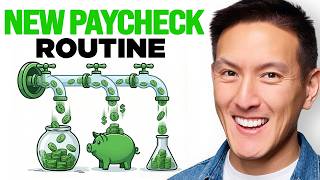
This video provides a step-by-step guide on how to allocate your paycheck in 2026, emphasizing the order of financial priorities to optimize savings, debt repayment, and investing. It covers seven steps, from paying off debt to building multiple income streams, with updated figures for 2026 contribution limits and interest rates.
The video updates a previous paycheck routine to reflect 2026 challenges: higher inflation, lower high-yield interest rates, and increased retirement contribution limits.
Allocate money to debt payments (credit cards, student loans, auto loans, BNPL) to protect credit score. Payment history and amounts owed make up 65% of credit score.
Set up automatic transfers for all financial goals to remove reliance on discipline. Automating ensures money moves before you can spend it.
Set aside money for monthly operating budget (rent, food, utilities, etc.). Example: $2,910/month for necessities. Separate from emergency fund.
Categorize expenses into needs, wants, and savings. Ideal split: 50% needs, 30% wants, 20% savings. Adjust based on cost of living.
Target 4-6 months of living expenses (up from 3 months). Example: $2,500/month needs → $10k-$15k emergency fund. Keep in high-yield savings account (3-3.5% APY in 2026).
Contribute 10-15% of paycheck to retirement. 2026 401k limit: $24,500 (under 50), $32,500 (50+). Always get employer match (free money).
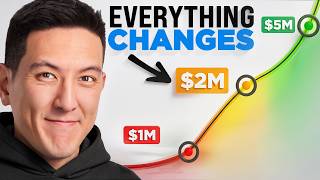
Example: $7,500/year invested for 40 years at 8% return → $2.1 million. Starting early and staying consistent is key.
High-interest debt = >15% APR. Two methods: Avalanche (highest interest first) and Snowball (smallest balance first). Avalanche is optimal, snowball builds momentum.
If debt interest is 4-6% or lower, it may be better to invest (expected 8-10% return) rather than pay off early. Personal choice based on psychology.
Order: 401k match → max Roth IRA → top up 401k or taxable brokerage. Roth IRA: $7,500/year (under 50), $8,600 (50+). Tax-free growth.
No tax advantages, but flexible. Long-term capital gains (held >1 year) taxed at 0-20%, short-term at ordinary income rate (up to 37%).
Diversify income: 65% of self-made millionaires have at least 3 streams. Ideas: freelancing, dividend stocks, content creation, Etsy, teaching, real estate.
Funnel side income back into earlier steps: emergency fund, Roth IRA, taxable account. Compounding accelerates wealth.
The video provides a clear, actionable checklist for managing a paycheck in 2026, emphasizing automation, debt management, and diversified investing. Following these steps can help build financial security and wealth over time.
What percentage of your credit score is determined by payment history and amounts owed?
65%
01:10
What is the recommended emergency fund size in 2026?
4-6 months of living expenses
04:04
What is the 2026 401k contribution limit for individuals under 50?
$24,500 per year
05:40
What is the 2026 Roth IRA contribution limit for individuals under 50?
$7,500 per year
09:53
What is the avalanche method for paying off debt?
Prioritizes paying off the highest interest rate debt first to minimize total interest paid.
07:10
What is the snowball method for paying off debt?
Pays off debts from smallest to largest balance to build momentum.
08:04
What is the long-term capital gains tax rate range?
0% to 20%
10:45
What percentage of self-made millionaires have at least three income streams?
65%
11:52
Credit Score Factors
Payment history and amounts owed make up 65% of credit score, emphasizing the importance of timely debt payments.
01:10Emergency Fund Target Increased
Experts now recommend 4-6 months of expenses instead of 3, reflecting economic uncertainty.
04:04Power of Compounding
A $7,500 annual investment over 40 years at 8% yields $2.1 million, illustrating the impact of early and consistent investing.
06:32Invest vs. Low-Interest Debt
When debt interest is below 4-6%, investing may be financially better, but psychological factors matter.
08:31Multiple Income Streams
65% of self-made millionaires have at least three income streams, highlighting diversification as a wealth-building strategy.
11:52[00:01] money every time I get paid and why the order matters now more than ever since it did three years ago. I've updated this video to reflect the challenges of 2026 and beyond which include inflation numbers, lower high yield interest
[00:15] rates, as well as increased contribution amounts for retirement accounts. The serve as a guideline in how you should be thinking about the flow of your money after you receive a paycheck. And you can always refer back to this video at
[00:28] waste any time. After you get paid, the first place that your money should go is on debt, such as credit card payments, student loans, auto loans, or even BNPL or buy now pay later debt. Think of this as your treading water step. You
[00:43] because if you're late or even just miss one of these payments, your credit score it's going to make qualifying for things such as renting an apartment or getting very difficult. Credit scores are calculated through these five factors.
[00:58] And you can see the top two here. The first is simply payment history. So, as payments, your credit score should be in good standing. And if you keep the reasonable level, your credit score should take care of itself. Because
[01:10] these two factors alone make up 65% of what your score is comprised of. Now, in just yet to take care of all of your debt. You just really want to make sure your automatic payments are set up so that you don't miss any payments. We're
[01:22] strategies in step number five, but for now, let's move on to the next step, which is actually a bonus step today. So, step 1.5, and I'm putting this here everything else in this video easier. Step 1.5 is all about automating
[01:36] up automatic transfers for everything we're about to cover in this video, it you can make because you are removing yourself from the equation entirely. And all psychology. And the psychology here is really simple. You can't spend any
[01:52] money that you don't even have. If the money moves automatically before it even relying on discipline or remembering to do it every month. It just kind of happens and it can just flow into the following steps seamlessly. Most banks
[02:04] and brokerages let you schedule recurring transfers. So, take 15 minutes today, and then automate your money into their respective buckets. All right, step number two today is to put money aside for necessities, aka your monthly
[02:17] this money in my main checking account or even a separate account that I label sure you're accounting for the money you need to live on a daily basis. So things like your rent or mortgage, food, healthcare, utilities, transportation,
[02:31] budgeting spreadsheet, you can see that this person has a rent of $1,750, insurance payment, groceries, cell phone, and internet bill totaling about
[02:43] 2910 per month. That means if I were allocating my pay for step number two, have at least 2910 in my account at all times and upwards of even $3,300 just think that's always nice to have. Note that this money for your monthly
[02:58] operating budget is separate from what's called an emergency fund. So, an emergency fund is for when accidents or unexpected life events happen, which we but just know that this monthly operating budget that you have is
[03:11] notice, this budgeting worksheet is also categorized in terms of needs, wants, important to categorize your expenses and differentiate between what a need expense is and what a want expenses. Ideally, the split between the three is
[03:25] going to be 50 30 20. So, 50% to your needs, 30% to your wants, and 20% to in a high cost of living area, the needs percentage might be closer to 60%. And if you're in a lower cost of living place, it could be 40%. Either way, it's
[03:40] you're getting paid and how much your establishing what that looks like every month or every paycheck. Okay, so once you have that, we'll move on to step number three, and that is establishing
[03:52] your emergency fund in 2026. If you've watched some of my videos before, you should have a good idea of what this is, but as its name implies, it's an account unless it's for an emergency. Now, for
[04:04] experts used to recommend 3 months of living expenses. But these days, with so having 4 to 6 months worth of your expenses as your target is a good goal to have. So, if your monthly needs cost you about $2,500 a month, then your
[04:19] emergency fund target should be somewhere between 10 and $15,000. I know perhaps you set a intermediate goal first. So, maybe get your first $5,000 and then work your way up after that. This is still the thing that I would
[04:32] to invest and allocate my money elsewhere. And honestly, I think it's few years ago. In terms of where to keep your emergency funds, you want it in a generates some interest while staying completely liquid, which means that you
[04:46] it. Now, what's even harder these days is that back in 2023 and 2024, high yield accounts were paying between 4 to 5% per year in terms of interest. But these days, you're looking at between 3 and 3.5% depending on the bank. It's
[04:59] savings account, yes, which averages around.11%. the next few years, we might have to For this year, though, we should still be fine in a high yield savings account,
[05:12] to my favorite ones in the description three or three and a half steps covered, now it's the best time to start step number four, and the best place is with your retirement account or pension
[05:26] of people who watch this channel are in you're in the UK, you have something called a workplace pension. Australia has a super annuation and Canada has RRSPs. Whatever country you're in, the
[05:40] principles here still apply. And I think a good goal here is to contribute at least 10 to 15% of your paycheck towards retirement. In 2026, the 401k limit is now $24,500 per year if you're under the age of 50 or 32,500 if you're 50 and
[05:55] older. If your employer offers an employer match, you need to contribute And I think that you should always do that because it's free money from your contributions. Beyond the match, if you want to save more of your salary into
[06:07] your 401k, that's definitely up to you. But there are some other things that you remember that any money that you do save into your 401k should not be withdrawn until retirement age. This is actually a problem for some people. They might run
[06:20] throughout their earlier years in case they want to use that money for you hit retirement age, which is usually around 59 and a half. But still, I still think a 401k is quite worth it. So,
[06:32] let's say you contribute 10% of a $75,000 salary. That's $7,500 per year. If you invest that consistently for 40 years in the S&P 500, averaging 8% annually, you're still looking at about $2.1 million by retirement, which is why
[06:45] I think it's so powerful to start early when you are young in your 20s perhaps, and you can stay consistent with it. This is also why step 1.5 is so powerful even better and I think it's one of the best places that your money can go. All
[06:58] five, which has to do with paying off any remaining high interest rate debt. High interest rate debt, in my opinion, would be anything over 15%, and there are two main methods that people use to pay off debt. The first is the avalanche
[07:10] method, and the other is the snowball method. Now, both have their pros and cons. The avalanche method prioritizes the highest interest rate debt to be financially optimal, but it can be the most psychologically difficult. So,
[07:23] of debt on the screen right here. You have car payments, credit card payments, and student loans. And you owe $3,000 on each of these. The interest rate is as follows: 7% interest rate on the car, 25% on your credit card, and 4% on your
[07:37] should pay off first? If you said the credit card balance first, then you you the most amount of money every single month because of its high APR and then you would do the car payment and then finally the student loans. Now, in
[07:51] balance the exact same on all of these, which is usually not going to be the going to probably owe a lot more on say your student loans versus your credit card payments. It's important to note that with the avalanche method, you're
[08:04] all you should focus on. The other method, called the snowball method, is where you knock off debt in order of the smallest to largest balance. The goal here is that you will gain momentum by paying off these smaller debts, and that
[08:17] if you're able to maintain momentum and then kill all that debt sequentially. and see which one you like more. It really just depends on who you are and Now, one thing I want to discuss is lower interest rate debt and investing
[08:31] at the same time. So, oftentimes people will ask me if they can still invest if long as the debt is lower than an interest rate of 4 to 6%. For example, interest rate, it may make financial sense to actually invest while you still
[08:46] rationale being that you can make around 8 to 10% in the stock market. So, investing is technically worth more of your money. However, if you want the psychological win, every dollar that you pay off with a student loan debt of say
[08:59] rate that you are getting on your money. It's a guaranteed return of four or 5%. for peace of mind. I personally don't like having debt, but I do know people that like to carry debt and still invest. So, even though my choices might
[09:13] not be the financially best move, for me, psychologically, it is the best. It what people on Reddit or the internet have to say. It's really a personal choice. So, make sure you choose what's best for you. Step number six is to
[09:26] you've done steps one through five, here's my personal investing priority. First, I would do my 401k match. Then, I would max out my Roth IRA. And then, I would top up my 401k or just simply invest in a taxable brokerage account
[09:40] investing in stocks and ETFs. The main advantage of having a Roth IRA is that taxfree. That means when you retire and you withdraw all the earnings on this account, you won't pay any taxes on it. Now, if you're under the age of 50 in
[09:53] 2026, you can contribute $7,500 a year into it. And if you're over the age of 50, you can contribute $8,600 a year as a catch-up mechanism. The catch is with the Roth IRA is that you're contributing to it with after tax dollars. So, you've
[10:05] already paid taxes on this money going in, but you'll never pay taxes on the out your Roth IRA and you want to invest even more, I would say open up a normal taxable brokerage account or just simply max out your 401k. Now, with a taxable
[10:19] investing. There's no special tax treatment, no contribution limits, and you can access your money anytime without penalties. The difference is brokerage account for a reason. Because if you make $10,000 in gains, for
[10:32] example, and you sell some of it, you will actually owe capital gains on that stock and you sell it within the same year, you are going to be taxed at your ordinary income tax rate, which could be upwards of 37% assuming you made profit.
[10:45] Now, if you hold any security for longer than a year and then you sell it for a profit after a year, then it will qualify for long-term capital gains and you will pay a smaller percentage in tax on the gain anywhere between 0 and 20%.
[10:57] sense to me. So, in a Roth IRA, I tend to go for higher growth ETFs and stocks that can maximize my upside. That's because the earnings in this account are growth that's in that account. In a taxable brokerage account, it makes more
[11:11] sense to stick with simple index funds like the S&P 500 or maybe even QQQ or SHD. They're tax efficient, they have low fees, and they are reliable. Now, investing consistently. If you're able to stay consistent and invest regularly,
[11:25] even if it's not like 99.9999% optimized or anything like that, you who doesn't invest at all. All right, lastly, let's get into step number seven, where your money should go, and that I believe is towards multiple
[11:37] in the flowchart, that's amazing. You're already ahead of most people. You've regularly, and now it's more about diversifying how you make your money. According to inc.com, 65% of self-made millionaires had at least three streams
[11:52] relying on just one single income only have we seen layoffs in tech, but AI is reshaping entire industries and every corner. So, I think that diversification can really help against
[12:06] also in your income as well as your skills. You don't have to do 80 hours a week of work in order to do this. But if you can just dedicate just one to three to 5 hours per week to build something on the side, that's an extra 100, 200,
[12:20] could help you change your financial path. So, some ideas here, I'm going to do freelancing or consulting in your area of expertise. So, let's say you're job. Maybe you do it on the side or help businesses with it. Number two, you
[12:35] dividend paying stocks. Number three, you could build a content channel like YouTube, Tik Tok, Instagram, a Substack, etc. Number four, you could start an know some people that run an Etsy shop. They sell jewelry and little charm
[12:48] side income off of that. Number five, you could teach or coach people in what running, climbing, tutoring, something like that, you could teach others how to real estate or wreaths, real estate investment trusts. So, these are all
[13:03] could add an additional income stream to your life. The beautiful part is that additional income streams can be immediately funneled back into steps one your emergency funds. You could increase your Roth IRA contributions. You can
[13:18] have more money in your taxable account. It's going to all compound for you. All right. So, that is what I would do in 2026 if I got paid and the exact order in which I would do it. Make sure to subscribe to this channel if you got any
[13:30] looking for a video on how to invest your money in 2026, you want to check out my beginner's investing guide, which will be linked right here. I hope that see you guys in that one or a future video on the channel. All right, thank
[13:42] video on the channel. All right, thank you for being here. Peace. you for being here. Peace. [Music]


⚡ Saved you 0h 13m reading this? Transcribe any YouTube video for free — no signup needed.