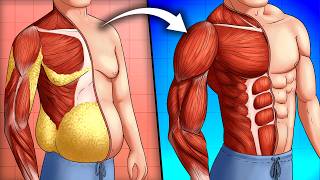
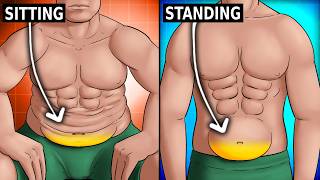
Are You Skinny Fat? 3 Signs
38sViewers instantly self-diagnose with relatable body image struggles, driving engagement.
▶ Play Clip Gravity Transformation - Fat Loss Experts
"Delivers exactly what the title promises: a clear, actionable 5-step plan. No fluff, no bait-and-switch."
This video outlines a five-step strategy to transform a 'skinny fat' physique by building muscle first in a calorie surplus, then cutting fat while preserving strength. The approach emphasizes progressive overload on compound lifts, periodized rep ranges, precise macro tracking, and low-intensity cardio for sustainable fat loss.
Skinny fat is characterized by a protruding belly despite thin arms/legs, and a rectangular upper body shape. The fix requires both fat loss and muscle building, with muscle building prioritized first for beginners.
Focus on progressive overload with barbell squats, bench presses, deadlifts, pull-ups, rows, and overhead presses. Aim for 6-9 reps, increase weight by 5-10 lbs when hitting 9 reps, then rebuild reps from 6 up to 9 again.
Use a 9-week cycle: 3 weeks high reps (10-12), 3 weeks mid reps (6), 3 weeks low reps (3). This improves endurance, strength, and power, and helps overcome plateaus by rotating rep ranges.
Set calories at 10% above maintenance (e.g., 2500 → 2750). Protein: 0.75g per lb body weight. Fat: 20-30% of calories. Carbs: remaining calories (40%+ to maximize strength). Track with MyFitnessPal to ensure accuracy.
After 12-18 weeks of building, cut calories by 10-20% for 4-6 weeks. Maintain strength as much as possible; drop weight only when reps fall below minimum. Fight to keep the bar heavy.
Add walking (multiple miles daily) to burn extra calories without interfering with weight training or increasing hunger. Avoid excessive moderate/high-intensity cardio to preserve strength and muscle.
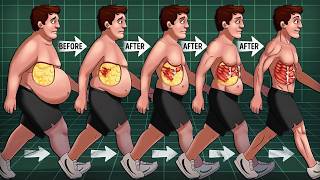
By following these five steps—heavy lifting, periodization, precise nutrition, a controlled cut, and low-intensity cardio—you can break the skinny fat cycle and achieve a leaner, more muscular physique.
What rep range should beginners aim for on compound lifts when first starting out?
6 to 9 reps.
01:59
How much weight should you increase when you can complete 9 reps on a compound lift?
5 to 10 lbs (the smallest increment).
02:13
What are the three rep ranges used in the 9-week periodization cycle?
High reps (10-12), mid reps (6), low reps (3).
02:39
What is the recommended calorie surplus for building lean muscle?
No higher than 10% above maintenance levels.
03:58
How much protein per pound of body weight should you eat during the muscle-building phase?
3/4 of a gram (0.75g) per pound.
04:27
What percentage of daily calories should come from dietary fat to support hormone levels?
At least 20-30%.
04:40
How long should the muscle-building phase last before transitioning to a cut?
At least 12 to 18 weeks.
06:32
By how much should you cut calories during the fat-loss phase?
10 to 20% from maintenance levels (roughly 250-600 calories per day).
07:02
What type of cardio is recommended to avoid interfering with strength and muscle?
Low-intensity, low-impact activities like walking.
08:32
Two-Part Solution
Frames the entire approach: you must both lose fat and build muscle, but prioritize muscle first.
00:52Periodization Cycle
Introduces a structured 9-week cycle of rep ranges to break strength plateaus.
02:39Calorie Surplus Precision
Specifies exactly 10% above maintenance to build muscle without excess fat gain.
03:44Cutting Phase Duration
Recommends only 4-6 weeks of cutting to preserve hard-earned muscle.
06:32Walking Over Cardio
Explains why walking is superior to intense cardio for fat loss while maintaining strength.
08:32[00:01] arms fill or have you noticed that your stomach consistently extends out past your chest or does your upper body look more like a vertical rectangle rather than an upside down triangle if you've answered yes to more than one of these
[00:13] questions you're probably struggling with a skinny fat physique so many doing everything right with their diet and workouts but week after week and even month after month they find that their arms chest back and legs look
[00:26] almost exactly the same and aside from the struggle with building muscle muscle you're now completely stuck with this stubborn lower belly fat that just doesn't want to go away the good news is that this is actually a very common
[00:39] problem for many people and as long as you follow the five steps that I'm about to outline in this video you'll quickly start transforming your body from skinny fat to lean and muscular before we dive into the steps you need to realize that
[00:52] this is a two-part solution you need to lose fat and build muscle even though if you're an AB absolute beginner with weightlifting in most cases it would be much more beneficial to prioritize building muscle first so step one is to
[01:07] focus your workouts on lifting heavier weights for all your compound lifts this is a form of progressive overload that's pretty much guaranteed to lead to muscle growth do not focus your workouts on burning fat as a reminder your major
[01:21] compound lifts include barbell squats bench presses deadlifts pull-ups barbell rows and overhead presses so every week you want to make it a point to increase each of these exercises you should definitely not be doing them all on the
[01:34] same day because lifting heavy is very draining so you want to position your heaviest lifts that you're trying to improve towards the beginning of your workout this is why I recommend that you should at least split your routine into
[01:46] two upper and two lower body heavy weight training sessions every week now I know most people tell you to up the weight but they don't tell you how a stronger when first starting out is to aim for six to nine Reps for all of
[01:59] these exercises this means once you're strong enough to do a given weight load by the smallest increment you can which will typically be 5 to 10 lbs once you do that the number of reps you'll be able to complete with this new heavier
[02:13] weight load before failing will undoubtedly drop down as long as you can still do a minimum of six reps that's perfectly fine you'll spend the next few weeks building back up to seven then eight then nine reps and then up the
[02:26] weight again and repeat the process it's a simple strategy but I promise it works very effectively so do this for all of your compound lifts now you can take this a step further once you've already gotten stronger and you start to hit
[02:39] strength plateaus with this basic 6 to9 rep up your weight strategy so this other strategy incorporates a simple form of periodization you would spend 3 you could within a high rep range like 10 to 12 reps then 3 weeks doing a mid
[02:54] rep range like six reps and finally 3 weeks sticking to a low rep range like three reps then you would repeat that cycle every 9 weeks and I guarantee you range you'll be able to lift a heavier weight load than you did before this is
[03:08] because each rep range has unique benefits and challenges that carry over to the other for example the high rep range of 10 to 12 reps will improve muscular endurance meanwhile doing three reps will help you increase maximal
[03:20] strength and power the other great benefit of only spending 3 weeks per rep range is that if you get stuck at a strength Plateau you'll be moving on to a different rep range very soon where you'll likely be able to make some
[03:32] progress and carry those strength gains back to that rep range that you were originally stuck at when you come back to it next you obviously need to make sure that you're eating enough of the right foods to fuel muscle growth this
[03:44] is a huge very common mistake where people say that they're eating a lot but that they should be eating to build muscle and in this case we want to add lean muscle while minimizing fat gain so you want to set your daily calories no
[03:58] higher than 10% above maintenance levels so for example if you use a basic link in the description and your maintenance levels come out to 2500 calories a day you would aim for 10% higher which would be 2750 calories you
[04:14] don't want too big of a calorie Surplus because that'll increase the chances that you gain more stubborn fat in the process of building that muscle out of those calories you'll want to have about 3/4 of a gram of protein for every pound
[04:27] of body weight now as far as fat fats and carbs first you want to make sure that you're getting at least 20 to 30% of your daily calories from dietary fat levels including muscle building hormones like testosterone the remaining
[04:40] calories can come from carbs because the glucose from those carbs will fuel your heavy weightlifting workouts so let's do an example if I'm aiming for 2750 calories and I weigh 200 lb I'm going to have 150 g of protein I can then take
[04:55] four since there's four calories in each gram of protein then I would take 20% of 2750 calories which would be 550 calories from fat and to get the gram amount I would divide 550 by 9 since there are 9 calories in each gram of fat
[05:11] there are 9 calories in each gram of fat finally the last step is to take 2750 calories and subtract 550 calories for fat and another 600 calories for protein and that'll leave me with 1,600 daily calories from carbs which I would then
[05:25] divide by four since there's four calories in each gram of carbs and now I carbs and fats I should be eating every might seem like a lot of carbs but numerous studies show that allocating
[05:38] 40% or more of your daily calories to carbs maximizes strength performance and muscle growth now step three is to make sure that you're actually hitting these targets and you do that by tracking your calories through an app like my fitness
[05:52] pal for at least a week or longer you want to do this until you fully mapped out all your typical meals and have a a really good idea how many calories and the types of macros that you're taking in on a daily basis you can't imagine
[06:05] how many clients have told me Max I eat a lot Max I eat all day long I'm so full I can't eat more all I do is eat and finally when they agreed to track their calories they realized they were way off either they weren't taking enough
[06:18] calories than they thought they were eating or some other issue so verify by tracking if you eat the same thing every day you won't have to track as long eating something new every day but either way you need to verify that
[06:32] you're hitting these targets after at least 12 to 18 weeks following these a primary goal of burning body fat for the next 4 to 6 weeks the reason why we want to dedicate a longer period of time to muscle growth is because it takes
[06:47] your body longer to add muscle nuclei gain strength and build muscle than to everything you gain just because you didn't spend enough time building muscle want want to be too restrictive with your calories this will help you
[07:02] maintain that muscle and strength that you worked so hard to build in that first phase so only cut your calories by 10 to 20% from maintenance levels that's roughly 250 to 600 calories per day you will have to calculate your maintenance
[07:17] level calories and your Macros again at this point because you won't weigh the same as you did 12 weeks ago you should technically weigh more during this 4 to 6 week period you should still continue the same weightlifting schedule as
[07:29] before for except now that you're at an energy deficit your goal is going to be to maintain as much strength as possible for each of your compound lifts rather than increase it obviously if you can get stronger then that's even more of a
[07:42] plus but for the vast majority of people as the weeks go by you'll get slightly weaker and weaker the best way to slow this decline is to continue with those rep ranges that I talked about earlier and continue pushing yourself to lift as
[07:54] heavy as you can you should only be lowering the weight load when you can't meet the minimum of your rep range so let's say you're sticking to the 6 to n rep strategy you start week one with a weight load you're doing for nine reps
[08:06] then the next week you can only do that same weight for eight that's fine even calories stick to that weight load until eventually as the weeks go by you can only do five reps before failure since six reps is the bottom of that rep range
[08:20] at that point you would drop the weight down and repeat it's kind of the reverse of what you were doing before and your intention should be to fight for every last pound on the bar finally step five is to add low intensity non- exercise
[08:32] related activities like walking to burn some additional calories without negatively affecting the rest of your plan this is very important avoid excessive cardio if you do too much cardio while you're maintaining a small
[08:45] calorie surplus of just 10% above maintenance you can definitely burn away that extra 10% this is going to make it very hard to build muscle meanwhile a calorie deficit so you can burn off the fat performing excess Ive amounts of
[09:00] cardio can lead to faster strength and muscle losses this is mostly because if you're doing too much moderate or high-intensity cardio it can suck up all the strength and energy you would have used for your weight training workouts
[09:12] this could make it tougher to maintain your strength with those key compound lifts as you cut down this is why I recommend low impact low intensity non- exercise related activities like walking even if you walk multiple miles every
[09:25] your performance during your weight training sessions unlike doing lots of cardio again it's very important for you to increase your strength build more muscle and maintain more muscle as you
[09:37] get rid of that body fat to escape the skinny fat vicious cycle and don't miles every day can help you burn an extra thousand calories by the end of the week in a very sustainable way that's because burning calories this way
[09:51] typically doesn't increase hunger the way that more intense forms of cardio do and again it doesn't interfere with your weight training now if you actually follow through on these five steps you should see a dramatic difference at the
[10:03] end if you want to build more muscle and burn more fat afterwards you would just repeat steps 1 through five all over again each time you do this five-step improvements in your body composition this includes fat loss and muscle growth
[10:18] so that about wraps it up I really hope this video has helped you out if you've enjoyed it make sure you subscribe to the channel and also if you're looking to shortcut all the trial and error that typically comes with finding the right
[10:30] diet plan and the right workout plan and instead you'd like a done for you plan that'll help you transform from skinny fat to lean and muscular try my free 6E shred we'll personalize a meal plan for you based on your preferences and you'll
[10:43] also get a 42-day workout plan and a coach to guide you through the entire process to find out more about this free body transformation program just click can head straight on over to my website at gravity transformation.com I'll see
[10:58] at gravity transformation.com I'll see you guys soon p oh
⚡ Saved you 0h 11m reading this? Transcribe any YouTube video for free — no signup needed.