
The Optimal Heart Rate for Longevity
44sPractical, specific numbers for heart health optimization that viewers can apply immediately.
▶ Play Clip"Delivers substantial value on health optimization, but a Q&A format with sponsor segments prevents it from being exceptional."
This Q&A session covers a wide range of health optimization topics, including improving resting heart rate and HRV, meal timing strategies, the effectiveness of HBOT, the impact of prolonged sitting, and the age-related decline in health. The host provides practical advice based on research and personal experience, emphasizing that while a healthy lifestyle can extend lifespan by a few years, radical life extension requires future technologies.
Lower resting heart rate (optimal 35-45) and higher HRV are markers of good health. Cardio fitness, especially HIIT and zone 2, improves these. Walking also linearly increases HRV. Intermittent fasting (16-hour) and not eating close to bed help. Overtraining should be avoided.
Overall calorie and macro split matter more than timing. The host prefers low-carb first half of the day, higher carb after workout. On rest days, carb intake can be lower. Post-workout meal should be low fat, high protein and carbs. Pre-workout can include some carbs for energy.
The study on HBOT increasing telomere length is small and unreplicated. HBOT is more therapeutic than a wellness tool for healthy individuals. Telomere length is not a strong biomarker of aging; shortening rate matters more. Overactivation of telomerase is linked to cancer.
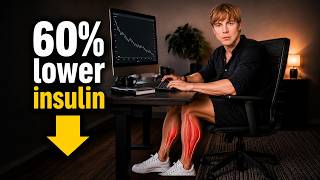
Prolonged sitting reduces circulation and insulin sensitivity. Solutions: standing desk, walking treadmill, and soleus push-ups (calf raises) every second while sitting. Breaking up sitting time is crucial.
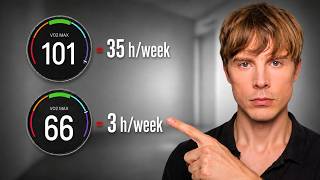
VO2 max peaks at 18, declines 10% per decade. Muscle strength peaks in early 30s. Significant drop in health markers around age 44. Metabolic health declines in early 40s. Heart disease starts in 20s/30s subclinically.
High methionine intake (from muscle meat) requires glycine to balance. Optimal glycine-to-methionine ratio is about 1:1. Most people get too much methionine and too little glycine. Supplementing 5-10g glycine or collagen is recommended.
Main action: schedule surgery. Avoid physical irritation, UV exposure, and harsh products. Cover with a bandage. Anti-inflammatory supplements (omega-3s) and antioxidant-rich foods may help, but surgery is key.
Electrical muscle stimulation (EMS) and blood flow restriction (BFR) training can aid recovery and hypertrophy with light weights. They are best used as adjuncts, not replacements for traditional training. BFR is particularly useful for maintaining muscle during injury.
Limit high-glycemic, inflammatory, and allergenic foods (dairy, sugar, processed). Reduce mTOR activation. Identify personal triggers. Omega-3s and antioxidants help. Red/blue light therapy may assist but diet is primary.
Many overestimate how much lifestyle extends lifespan—only about 3-5 years. Radical life extension (to 150) requires advanced technologies not yet available. Balancing present enjoyment with future health is important.
If biomarkers are in top 10%, focus on weak spots (e.g., VO2 max, ApoB). The host's community offers a health assessment and progressive programs to reach top 1%.
Aggressively lower blood sugar via lifestyle: reduce body fat (especially visceral), lower high-glycemic and ultra-processed foods. Consider fasting, high-fiber low-carb diet, fasting-mimicking diet. Supplements like berberine, omega-3s, chromium. Exercise (walking, resistance) helps.
Achieving top 1% health requires addressing weak biomarkers, balancing nutrition (glycine-methionine ratio), and incorporating effective exercise strategies like HIIT and BFR training, while understanding that radical life extension remains a future goal.
What is the optimal resting heart rate for a healthy person?
Between 35 and 45 beats per minute.
00:29
Which type of exercise is best for increasing HRV according to research?
High-intensity interval training (HIIT) and zone 2 cardio.
01:25
How many steps per day were associated with higher HRV in a Fitbit study?
Up to 20,000 steps per day.
02:19
What fasting duration increases HRV, and what duration decreases it?
16-hour fasting increases HRV; 48-hour fasting can decrease HRV due to autonomic stress.
03:16
What is the optimal ratio of glycine to methionine intake?
Around 1:1, with every gram of methionine increasing glycine demand by 0.5 to 1 gram.
26:52
At what age does muscle strength peak in men?
Early 30s.
22:03
What is the significance of age 44 in the aging process according to a study by Dr. Michael Snyder?
There is a significant drop in many molecules and health markers around age 44.
22:32
What is the most important action before surgery for squamous cell carcinoma?
Schedule the surgery to have it removed.
29:57
How much can curing all heart disease and cancer increase average life expectancy?
By about 5 to 10 years at most.
45:45
What dietary factor is a common trigger for acne?
Dairy foods and high-glycemic foods that stimulate mTOR activation.
38:53
HRV and Resting Heart Rate Combo
Explains the ideal profile (low resting HR, high HRV) and distinguishes it from the aging phenotype.
01:13Intermittent Fasting Effects
Personal experience showing that 12-16 hour fasting lowers resting heart rate and increases HRV.
03:43Post-Workout Meal Composition
Provides a clear protocol: lower fat, higher protein and carbs for optimal glycogen and protein synthesis.
10:46HBOT and Homocysteine
Personal testing showed HBOT lowered homocysteine, though not clinically validated.
14:56Soleus Push-ups
Simple calf raise exercise while sitting that improves insulin sensitivity and glucose response.
19:04Glycine More Important Than Methionine Restriction
Highlights that increasing glycine intake is more beneficial than restricting methionine for longevity.
26:06Gene Therapy for Myostatin
Critique of Brian Johnson's gene therapy, noting potential downsides of excess muscle.
43:57[00:01] we're doing a Q&A session. So, I asked people to post their questions in the question in the future, then make sure you check or keep an eye on the community tab. First question, how to improve your resting heart rate and HRV
[00:16] if you're already relatively healthy and normal BMI and already exercising. So um with resting heart rate it's a greatly matter of your cardiorespiratory fitness
[00:29] your autonomic nervous system balance and uh your body composition. So generally the best resting heart rate so lower resting heart rate which I think optimally should be less than 50. So uh something between 35 and 45 is kind of
[00:46] the sweet spot. So people who are more athletic and um fitter, they tend to have a slightly lower resting heart rate and a higher uh heart rate variability, and a higher uh heart rate variability, HRV. The aging phenotype is low HRV and
[00:59] also low resting heart rate. So elderly people, they have a drop in HRV and also a drop in resting heart rate, which uh is not the ideal scenario. When you're young and you're fit and healthy, you have a lower resting heart rate and a
[01:13] higher HRV. So that's the best combo that we want. Now how to lower the resting heart rate as I said it's cardio fitness so doing cardiovascular exercise doing also resistance training can help although the research suggests that for
[01:25] although the research suggests that for HRV specifically the best exercise is uh high-intensity interval training or kind of zone 2 cardio style resistance training doesn't really increase heart rate durability although it can you know
[01:37] make you fitter it can help you lose weight which will improve those markers but it directly doesn't increase HRV unlike high-intensity interval training. So if you're not doing any like regular cardiorespiratory
[01:51] workouts, then uh you definitely want to add them into your workout routine. So things like some intervals, sprint interval training, regular zone 2 cardio, just going for cycling and such. Another underrated component of HRV in
[02:05] Another underrated component of HRV in my opinion is just regular walking. So in a study on Fitbit users, they found that people who walked more, they had a higher HRV in like a linear fashion. So people who walked up to 20k steps a day,
[02:19] they had a higher HIV compared to people who walk less. And walking, you know, it's not necessarily like cardiovascular exercise, although it can can be for some individuals with lower baseline fitness, but it does, you know, help
[02:34] with your blood flow, circulation. It helps with lymphatic drainage. It can help to lower your stress hormones. It can help to regulate your nervous system and you know things like that. So walking is still underrated and quite
[02:48] useful for increasing HRV. If you want to you know optimize your HRV to the fullest then um you know overtraining is not going to cut it. You don't want to necessarily add a ton of extra exercise. you might need to reduce the exercise
[03:02] you might need to reduce the exercise and just do a lot more walking for uh in a diet perspective from a dietary perspective then innovative fasting has been shown to increase HIV but not if it's too long. So 48 hour fasting can
[03:16] lower HIV because of creating some autonomic nervous system stress. uh but shorter fasting like 16 hours does increase HRV and uh it can possibly
[03:28] also lower resting heart rate at least that's what I have experienced from my own routines that uh I've been doing intermittent fasting for you know 10 years longer than 12 years by now so uh it does lower resting heart rate
[03:43] especially in like the fastest state and uh increases HRV in this kind of a 12 to 16 hour window if you fast for that duration. Not eating too close to bed. So doing some form of earlier time machine eating will also improve these
[03:57] metrics because if you have more food in your stomach, your heart rate will be more elevated in your sleep. Your HIV will be lower in your sleep as a result of that. So what I like to do is, you know, wait at least 5 hours, four or
[04:10] know, wait at least 5 hours, four or five hours before bed uh with the food. five hours before bed uh with the food. So I stop eating quite early. Um then what else? Um you know there's a lot of other things that as well can help with
[04:22] the stress regulation like meditation force baiting uh so mindfulness exercises saunas and cold exposure do that as well. So they cold exposure do that as well. So they are mild like uh exercise mimemetics. So
[04:35] they increase your heart rate in the in the sauna and they basically have this exercise that yes exercise raises your heart rate in the exercise period itself but afterwards when you recover your
[04:48] that's why athletes have lower resting heart rate. Their heart is you know more efficient at pumping blood and um you know basically oxygenating the body. So you don't need to have like a super high
[05:01] high heart rate. So you don't need to have a heart rate that's like 60 beats per minute which is for the average person but I think is um not optimal or at least can be a sign of um lower card fitness. What else uh can be done
[05:17] from a diet perspective? Yeah the certain foods that can help with heart rate and HIV. You know the from a research perspective the Mediterranean diet has been seen to increase HRV but I think the most important thing is yeah
[05:32] just not being uh overweight and not having excess body fat. So being leaner will lower your rest and heart rate mostly also because of maybe lowering you're in a calorie deficit but it certainly does lower heart rate and
[05:46] increase HRV. So if you're normal BMI, then your BMI is not a good marker for body fatness necessarily, but yeah, just being on the slightly lower end of the body fat percentage will improve those heart rate and HRV metrics as well. Next
[06:03] question. Most optimal way to place protein plus fat meals and protein plus carb meals on rest days. So, you know, in the grand scheme of things, it's not that important whe whether or not you have like your
[06:19] protein and fat in the first half of the day or second half of the day and carbs of the day. So, it's kind of, you know, 80% of the results come from the general calorie intake for the entire day and the total macro split for the day. So,
[06:35] you know, how much protein are you eating, how much carbs and fats, etc. the major determinant of your body composition and blood markers etc. Now, of course, you can try to optimize them a little bit more. And the way I like to
[06:50] do it is I prefer to have first half of the day be low carb, second half of the the day be low carb, second half of the day being higher carb. And uh this can day being higher carb. And uh this can contradict some like the standard advice
[07:05] that you've heard probably all your life is that you have carbs for breakfast and no carbs before bed. But you know that's you know having carbs after 6 p.m. is not going to make you gain weight as long as the calories are equal. So uh
[07:19] the meal timing doesn't have that big of an effect especially for people who are already leaner and the exercise because you know the argument is yes that you're less incident sensitive in the second half of the day which can be true but if
[07:34] you exercise then you're incident sensitive 24/7 regardless of of the time of day basically as long as it's not like in the middle of the night. So, and as as long as you or also do early time eating, then it matters even less. So,
[07:49] if you finish eating 5:00 p.m., for example, then having carbs at that moment of the day does it literally doesn't matter because it's, you know, 5 6 hours before bedtime. You'll be also moving around after that helping with
[08:02] the the postpranderial glucose response and the digestion. So it matters even and you've exercised before, for example, because exercise is what makes do resistance training, you deplete your glycogen, your muscles become like
[08:18] sponges for glucose. They will just absorb a lot of carbohydrates quite efficiently and your blood sugar will not even change significantly. Even if you eat a significant amount of carbohydrates, which I've tested with
[08:31] glucose, continuous glucose monitor as well. But yeah, what I like to do is have protein and fat meals first half of the day. So my first meal or first half the day. So my first meal or first half of the day, I keep it quite low carb. I
[08:44] get around 30 to 40 maybe 50 grams of protein in that window. Then I work out protein in that window. Then I work out in the afternoon and u my dinner is 4:5 p.m. I'll have proteins plus carbs with a bit less fat. So yes, it's ideal to
[08:59] not combine high amounts of carbs and fats together. Um but even then if you exercise it matters a lot less on a rest day I would still you know maybe on a rest day of course
[09:12] on a rest day I automatically have less carbohydrates to begin with because you know I didn't exercise I didn't burn that much glycogen so I need less carbohydrates as well but as I said if you exercise the day before then I mean
[09:25] you're not going to lose your insulin sensitivity uh on a rest day you're still probably semig glycogen depleted that if you had a hard workout even 24 hours afterwards and you know protein synthesis from the exercise can stay
[09:38] elevated for up to 48 hours. So even if you do eat carbohydrates on a rest day then it's going to still promote protein synthesis and glycogen reynthesis. So even on a rest day it doesn't matter that much. Now what I would recommend to
[09:53] what I'm what I'm doing is not necessarily always the most optimal way. You don't need to do things the most optimal way always to get optimal results, right? So, you can get optimal results with sub-optimal ways in a lot
[10:06] of ways if you do a lot of things right. So, what's the most optimal way to distribute it? I would still say, you know, having carbs around the workout. before the workout and then carbs after the workout, small amount of carbs
[10:20] before the workout can give you like a can like replenish your liver glycogen relatively fast. You're not going to be able to fill up your muscle glycogen if two hours before, like 300 grams of
[10:34] carbs 2 hours before your workout, then is not going to replenish your muscle glycogen that fast. It takes a lot longer to do that. But in a post-workout window, you've depleted the muscle glycogen from the workout, then you can
[10:46] eat the carbohydrates in a way that will promote muscle glycogen reynthesis. your muscle glycogen will restore itself even if you don't eat carbohydrates, but it's just going to take a longer time. It's going to take over 24 hours for you to
[11:00] replenish your muscle glycogen with like a fat meal. So that's why having fat a fat meal. So that's why having fat after workout doesn't make sense for glycogen synthesis, protein synthesis, and just recovery and you know like
[11:14] exercise adaptations. You want to have the post-workout meal being lower fat, higher protein, higher carb. That's the optimal post-workout meal. And the pre-workout meal can have more fat, but I wouldn't have like I mean fat
[11:29] doesn't have erogenic effects similar to carbohydrates or sugars. So eating fat your performance either unless you're some super fat adapted athlete. But you know, depends on the exercise type as well. So you know breakfast let's say
[11:44] breakfast is several hours before the workout that can be protein and fats workout that can be protein and fats and vegetables and fibers then relatively close before the workout you can have some proteins again a smaller
[11:59] amount with some higher glycemic easier to digest carbohydrates as a pre-workout and then in a post-workout protein plus carbs with low fat that will be the most
[12:11] optimal way in terms of muscle glycogen synthesis and and um exercise performance. I want to take a quick break to let you know about my favorite wellness devices which are the bond charge red light therapy devices. You've
[12:25] longevity influencers using these red light therapy devices. But do they therapy has been shown to have many benefits on skin anti-aging, hormone optimization, pain management, and even exercise performance. I use my device
[12:38] during the winter months when there's not much sunlight. It increases my energy in the morning and makes my skin glow. Just check out the testimonials on the Bone Charge website for the before and after pictures of other people. Most
[12:51] wavelengths of light, which might mean you're not getting the claimed benefits. Bone charge uses the exact wavelengths of light used in research, and they also beneficial to the joints. Head over to bunchcharge.com and use the code seam
[13:06] bunchcharge.com and use the code seam sim for a 15% discount. All right, next question. I would like to hear more about your thoughts regarding Hbunt so hyperbaric oxygen therapy as a longevity tool. The only evidence appears to be
[13:19] the 60% study out of Israel. I created the study myself. I recreated the study myself and tested biomarkers/tie before and after and I experienced no benefit. Of course, I'm just n equals 1, but some have argued I tested my tie
[13:34] you think it's worth doing another 60 sessions to prove them wrong. I own a 2.0 chamber, so I might do it. I'm skeptical HBOT does anything for healthy individuals in their 30s and 40s. So,
[13:48] yes, I mean, that study was quite a small study and um as far as I'm aware, it hasn't been replicated yet. Now I mean Hbot has mechanistic evidence for
[14:01] increasing tie and improving certain biomarkers like lowering inflammation biomarkers like lowering inflammation and such but yes it is true that is more like a therapeutic medical device rather than um like a wellness device. I know
[14:17] HBOT and hyperwork therapy is quite popular in like biohacking and wellness circles nowadays but yeah it doesn't really have any I guess you know health
[14:29] uh empowering or health improving effects if you're not really if there's nothing wrong with you. Now there are certain cases where HTO is very as if they have carbon monoxide poisoning they want to accelerate wound
[14:43] poisoning they want to accelerate wound healing. they want to you know lower the homocyine for example that's what I saw from my own personal testing of hbot it's not clinically validated to do so but it worked for me and other people
[14:56] but it worked for me and other people have also seen that and um you know hbot can also theoretically help with yeah just mold illness or some autoimmune kind of conditions that even healthy people can suffer from occasionally.
[15:13] So yeah, I wouldn't consider HBOT as something that will, you know, take your health to the next level just in of itself. It's it's not just in of itself. It's it's not exercise in that sense that it's it's
[15:28] not going from doing 10 pull-ups to being able to do 15 pull-ups. Uh it doesn't have that same effect, for example. So um yeah I mean telmir length
[15:40] is not a good biomarker of biological aging anyway because it can fluctuate a lot and it's more about the speed of tie shortening that matters rather than the absolute length of tie.
[15:56] If you see that the tie are shortening super fast, then that's what uh can be a sign of like accelerated biological aging or some inflammation or some other aging or some inflammation or some other health concern but having super long tie
[16:08] is not beneficial either or it doesn't translate to longer life if that makes sense. And um you know overactivation of tur the so the like enzyme that makes telmus grow is also implicated in cancer quite
[16:25] quite significantly. So um you know again it's not that simple that longer tamers are better you know the
[16:37] shorter tie or they have experienced tie shorter it can be a great way to maybe replenish some of that tie length but as I said as a healthy person you maybe don't want to overexpress the turt to make tie grow etc as a hordic stresser
[16:53] every once in a while hut can be useful so So it's a same hormetic stressor as you know sauna and cold exposure or altitude training. So if you you know move in the Alps for a few weeks, you exercise in the Alps, you will
[17:08] exercise in the Alps, you will experience this um altitude acclamation cardiorespiratory fitness and uh potentially heart health. And there's some evidence that people who live in the higher higher mountains and such
[17:21] that they have some slightly better cardiovascular health and lower heart disease risk. So, you know, every once in a while can be useful to mimic some of those effects, although it's not the same exact effect. All right, next
[17:33] question. What are the best ways for a knowledge remote worker working at least 8 hours per day at a desk to prevent bad things like hypertension, unstable blood sugar, clogged arteries? Could you make an upgraded video of your daily routine
[17:45] from the moment you wake up to the moment you go to bed? Right? So, moment you go to bed? Right? So, sitting for long hours at a time can be bad for you for sure. It will lower your uh circulation. It can increase your
[18:01] blood sugar response when you eat because of lower insulin sensitivity. It because of lower insulin sensitivity. It can raise your blood pressure. It can increase like risk of blood clotting in older individuals. I mean
[18:13] it's not going to clog your arteries in of itself in the absence of other factors. But yeah, I mean sitting a lot eight hours a day for example at the eight hours a day for example at the desk can be bad even if you exercise you
[18:25] know you finish your 8 hour work you go to exercise it can still be un undesirable to sit for such a long time. So the you know way to go around it is just to break it up you know best option is to get a standing work desk. I'm
[18:38] is to get a standing work desk. I'm standing right now. I do most of my work on a standing work desk. Sometimes I also have the walking treadmill here. Uh that's very easy way to just step and get your steps in while doing work. It's
[18:51] it's super effective. You just 30 minutes at a time. You do it four or five times a day and you'll be accumulating something like 12,000 steps a day without actually going for a separate walk. So that's the best
[19:04] separate walk. So that's the best option. The second best option is to is stand even if you have a standing desk this you want to sit down occasionally because of you know standing in a single position can be equally as bad you're
[19:17] you're not completely as stagnant as when sitting but I mean you're still stagnant so uh break it up even if you're standing either sit down or go for a walk take an exercise break something like that the second best
[19:29] option is to do the solless push-up which is this basically see that calf raise you're doing like a calf raise machine while sitting in front of the computer at a speed of uh something like 60 calf push-ups per minute. So like
[19:42] once a second that's a good speed and uh the research about that has shown that it improves insulin sensitivity or lowers the postprandial glucose response lowers the postprandial glucose response in people who are sitting a long time.
[19:55] So, uh, that's what I would do. Either get a standing work desk with a treadmill, that's like a additional investment, but, uh, the standing work desk in of itself is, uh, good enough. And then do some solless push-ups, if
[20:09] you have to sit, for example. I do the solless push-up when I'm like flying or solless push-up when I'm like flying or driving as well. So, it's a great way to flow. [snorts] What else could you do? Also make
[20:22] upgrade video of daily routine. I'll probably do that at some point. Just need to uh find the right time for that. At what age does the body start to get At what age does the body start to get worse instead of getting better? Like at
[20:36] 20 you can harm the body and it doesn't matter much but do the same. At 40 you see a consequence next day. So I mean depends a lot on the individual depends a lot on the individual and um what's their lifestyle.
[20:50] lifestyle. I mean, after they finish high school, they're already going downhill, right? In terms of their fitness and um body composition and such. So, uh because in in high school and and uh like formal education
[21:08] systems, there is some structured exercise part of the curriculum. You know, people do foot people play sports and do exercise in high school because it's mandatory. But uh it's not mandatory in university in most cases,
[21:21] at least what wasn't for me. And you know, after they finish school, they're probably not going to be doing that much exercise. And therefore, every year that goes by, they see a decline in their fitness and body composition. Quite the
[21:35] rest of their fitness. So V2 max already peaks when you're 18 and starts declining after that 10% per decade in the general population. Of course, if you exercise, you can maintain that. If you do cardio then uh you will have a
[21:48] you do cardio then uh you will have a higher V2 max later as well. You know my higher V2 max later as well. You know my V2 max now at 32 is uh bigger or higher than it was when I was 18 because um you know I wasn't that that like um I wasn't
[22:03] exercising that much basically in in high school. And the same with the muscle strength muscle strength peaks in men in their early 30s. So after that it starts to decline. you know, the more significant drop in
[22:16] health and recovery occurs when you're like in your early 40s. So, there's the study by Dr. Michael Snder. I had a whole podcast with him. They found that in the age of 44 is there like a significant drop in a lot of molecules
[22:32] and health markers in a group of individuals that they studied. So, you know, that's what most people uh that's their anecdotal experience that you hear that uh in their early 40s, that's when they really start to
[22:46] feel aging or they start to recover quite more slowly. it. If you're unhealthier, you'll have it sooner. So, there's no really I mean, there's no way to split test. There's uh different people at different speeds.
[23:01] And there's different like different types of decline. And some people decline with their body fat, others decline with their fitness, others decline with their blood sugar, etc. So there's a lot of different ways it can
[23:15] there's a lot of different ways it can go. But um yeah, I mean naturally vot declines already early 20s. Muscle starts decline early 30s. Bone density really starts to decline also after the drop in muscle
[23:29] and strength. So early 30s for women there's a huge drop off after menopause. >> uh metabolic health typically stays relatively normal until the early 40s. Then it starts to decline significantly. Organ functions as well.
[23:43] The increase of heart disease takes off significantly after menopause for women significantly after menopause for women and for men it can be early 40s already. The issue with heart disease is that it actually starts in 20s and 30s for
[23:56] people. We just don't measure it. People just don't take a CT scan or like a just don't take a CT scan or like a other even like a carroted intima media thickness test. They don't even do that in their 30s and early early 20s and
[24:09] 30s. But some people will already have aththeroscoric plaque in their 30s. Subclinical aththeroscerosis like antioxidant defense and immunity significantly drops also in the 40s. So glutathione drops around 45 on average
[24:25] and melatonin. So another antioxidant and sleep hormone. I mean that drops quite low after puberty already. So um yeah there's different types but incident interestingly you know while your physical and cognitive health
[24:40] decline already throughout your life starting in your early 20s then your mental health improves as you get older. Um so like people in their 70s tend to have better mental health than people who are younger than that. And the
[24:55] reasons for that could be, you know, they're just they've u you know managed to create a little bit more stable life. They've already got family. They've already got a house maybe um and may maybe have accumulated some
[25:10] another explanation is also the cognitive decline that contributes to the higher mental health that it's kind of this ignorance is bliss that their cognition declines which then you know makes them a bit more delusional or
[25:24] optimistic in that sense. That's one of the theories why the mental health might improve as people get older. Next question. Do you do you think we can eat we balance with glycine or collagen/gelatin? What's the ratio? So
[25:38] collagen/gelatin? What's the ratio? So yes, I've talked on the channel that you need to balance methane which you get from muscle meat and eggs and dairy with collagen which you get glycine which you get from gelatinous meats, skins, bones,
[25:52] proteins. And the more methane you eat, the more glycine you also require. In animal studies, methane restriction extends lifespan. So less methane is beneficial for longevity in some sense. But in the
[26:06] same animal studies if uh they fix like the glycine methane ratio then um then uh it doesn't have that kind of an effect on uh like a life shortening effect on uh like a life shortening effect than methane. So it just matters
[26:22] more so the glycine not the methane. So it's more important to increase your glycine rather than to restrict methane. Now unlimited animal products. So I mean there's other reasons you might want to restrict certain foods and
[26:35] whatnot. So in the context of methanine and glycine then there is um you know I mean there's no experiment like that done of how how ratios I mean at some point you will just eat too many calories right and at
[26:52] some point you'll just get fat basically. So the ratio of glycine to methanine is around 1 one like the optimal ratio. So every every gram of methanine you consume increases your glycine demand by about 0.5 to 1 g.
[27:06] That's the approximate estimation. So uh yeah most people are definitely way too much methanine and not enough glycine which is why I take you know 5 10 grams of glycine as a supplement or get it from collagen powder or something else
[27:20] like that contains glycine and I'm not you know over consuming just pure methane in foods. Now there are some other you know harmful effects. So it's also like a balance of fiber in my opinion. So um
[27:34] protein fermentation byproducts they can also be or they have been seen to be implicated in kidney kidney disease progression or kidney aging. Of course if you just eat meat or something else like that. It but over the course so
[27:49] kidneys are very delicate organ. you you're going to you notice someone's um how well they've taken care of their kidneys only in the last part of their life. So, uh, kidneys start to decline or like organ failure through kidneys
[28:05] will start kicking when you're 100 years old, right? It's not going to be that significant before that. Of course, people will develop kidney disease already in their 60s, 70s, 80s. Uh, but that can be because of, you know,
[28:17] diabetes or just hypertension, poor lifestyle, being overweight, etc. If you're a perfectly healthy person, then the kidneys start to decline, you know, after the age of 100, generally speaking. So, so uh even then
[28:32] what I prefer and for gut health purposes I prefer to pair like uh diet basically you also need to eat a high fiber diet to help with u reducing
[28:44] the some of the protein fermentation byproducts which um can be harmful for kidney health. So I think as if someone is eating let's say 1.5 g per kilogram of protein which is
[29:00] kind of the maximum you would want to aim for. So 1.6 is the most uh maximal growth. There's no point in eating significantly more than that. So let's say somebody is eating 1.6 g per kilogram of protein then fiber exact
[29:16] [clears throat] know. For me, I try to aim for at least 40 grams of fiber per day. Even some days I'll get 50 to 60 grams depending on what I'm eating. If I'm eating like a lot of potatoes, then for my carb source, then I'm getting,
[29:29] you know, 20 g of fiber from just potatoes because I eat like 500 g of potatoes per day. So, yeah, you know, you want to aim at least 30 g of fiber you want to aim at least 30 g of fiber more so like 40 more more towards 40 for
[29:43] most people. Next question. And if you had squamus uh cell carcinoma skin cancer, what are some steps that you would take to mitigate its spread like while waiting for the removal surgery? So I mean the first thing is to just get
[29:57] the surgery scheduled so that you would get it removed. That's the most important thing to do. Other things in the meanwhile is to just not exacerbate it. So not um kind of play with it or you know try to scrape it off or
[30:13] something else like that. You don't want to cause basically like rashing. You don't want to cause um yeah rubbing and those kind of things uh direct contact physical contact with it. And um you also want to avoid like
[30:27] certain products that you might use some soap or you know personal care products stuff like that. You want to protect it against uh UV radiation. So it's a skin cancer. So exposing it to excess more UV radiation would um not be a smart idea
[30:44] at that point. And um you I mean just cover it up for example with a bandage. Change the bandage uh frequently. Don't scrub it with stuff. You can take certain like anti-inflammatory supplements or try to
[30:58] lower your inflammation status. Don't eat processed food. Don't consume um very salty foods. Don't um you can take like omega-3 supplements. You can eat
[31:10] omega-3s as a as as a food like fish and such. You can yeah you consume fruits and vegetables, berries with for for as antioxidants. But yeah, the most important thing is to um get it removed at a reasonable time frame.
[31:27] specifically for hypertrophy, angioenesis and mitochondrial adaptation on the effectiveness of using electrical muscle stimulation during occlusion training when deployed for Monday, Wednesday, Friday full body sessions
[31:42] using primarily isolation exercises while using three rounds of 5minut contra contrast therapy ice and bath ice bath and hot every Sunday before bed. Any specific thoughts on using such a protocol in fat loss versus
[31:56] using such a protocol in fat loss versus mass gain phase? So that's a very spe specific question. So let's unpack it. Uh electrical muscle stimulation. So these are these um
[32:10] kind of a patches that give a little jolt. We I mean back in early 2000s you can see from TV ads like these butterfly apps. They were like you know everyone thought it was a scam. Now the this technology has evolved quite a lot since
[32:24] then and uh you know they they can provide some stimulation. I think they these electrical stimulation muscle patches and stuff they can help with recovery like blood flow similar to occlusion training that you're not
[32:37] actively training the muscle but they can help with blood flow to the region and and stuff like recovery. So electrical muscle stimulation patch during occlusion training. So these are blood flow restriction training.
[32:50] blood flow restriction training. Basically you uh olude blood flow out of the muscle limb. So they enable blood to flow into the limb but they restrict the outflow. So that means the blood pools into the arms or legs which is where you
[33:05] use them either the arms or legs and uh basically it increases blood flow and circulation. So kind of swells up. So this swell cell swelling response makes the body think that it's lifting much heavier weights than it actually is
[33:20] and it's useful for muscle hypertrophy. So you can get away with lifting much lighter weights rather than heavier weights and get the same effect. The research on these blood flow restriction bands have shown that even even 20% of
[33:33] your one rep max can be effective for muscle growth um as effective for muscle growth as like higher percentages like 80%. if you go to uh close to failure with these occlusion bands even at 20% of your 100
[33:46] rep max. So imagine if you usually let's say do a bicep curl with 40 kilos, you can get a same similar muscle growth response if you do like um 10 kilos for
[33:59] response if you do like um 10 kilos for example. using primary isolation exercises. So yeah, I mean you're not going to be able to do a lot of compound exercises with these. They're mostly for isolation,
[34:13] these. They're mostly for isolation, like biceps curls or um hamstring curls, for example. Um I mean, I I I like bluffer restriction training. I'm a huge fan of them. I think they're very useful for the reason that you can get a very
[34:26] similar response by having much lighter weights. And um they also uh don't interfere with recovery that much. So you can basically train them every day and recover the next day because the intensities are so low and you actively
[34:42] also stimulate blood flow at the same time. So the best utilization of these occlusion bands, blood flow restriction bands is for recovery. So let's say you had a tendonitis or some knee knee damage. You don't want to
[34:57] start, you know, lifting heavy weights again yet. So uh you use those occlusion bands to not only like maintain the muscle with lighter weights at the same time but also promote actively recovery. So there if you have like a broken arm
[35:11] for example your arm is in a cast you can use the blood for restriction band you can put it on and it can help you to maintain the muscle because if you don't like if you have a one arm is broken
[35:24] cast then this arm is going to be much smaller than the other arm because it's not being used. is not engaging is not being engaged to the muscles. But if you use an occlusion training band like something like the katu band that also
[35:37] actively pumps the band so that actively makes the blood flow then you can maintain the muscle um despite the arm being in a cast. So I um despite the arm being in a cast. So I think it's a very useful recovery tool.
[35:51] It's it's also useful as an adjunct to traditional training, but I think the some form of traditional training because, you know, at least from my own experience, it's just more effective.
[36:05] The blood flow restriction, and that applies especially to the electrical muscle stimulation. So, the EMS is not going to replace traditional lifting in my opinion. it's going to be again for like recovery or some um you
[36:19] again for like recovery or some um you know um adjunct purposes. The blood flow traditional lifting to a certain extent but you probably will get still better results if you do traditional training on top of that especially for mass
[36:31] on top of that especially for mass muscle muscle mass and pure strength because you can't go super heavy with a BFR because you know you're going to injure yourself if you try to go for one rep max with a BFR. So it limits your
[36:44] maximum strength to a certain extent. Uh but it's great for recovery and if you don't have access to heavier weights and then uh using three rounds of five minute contra contrast therapy every Sunday evening before bed.
[36:57] So um I mean the for recovery purposes saunas and uh or hot shower and ice bath are great but you don't want to do them like super close to bed because I mean contrast therapy can increase your alertness quite a lot. So
[37:13] it might reduce your sleep quality if you do it too close to bed. But if you do it during the daytime after you exercise or just in the morning then it can be great great way to you know help with HV as we said before. Um and uh hot
[37:28] showers also help with recovery. For fat loss, this protocol is fine because you know for fat loss, it doesn't matter that much what type of exercise you do. But for muscle growth phase, the more optimal way to go about
[37:41] it is to do some traditional exercise or traditional resistance training and use this occlusion training as an adjunct. So, um if you're doing like at home workouts, you have a pull-up bar, maybe a dip bar, maybe a few kettle bells,
[37:55] some um dumbbells, then yeah, for sure keep it in your routine. do it. You can do it as a finisher like after every workout you finish off with like bicep curls wearing the occlusion bands and going for like lunges or squats with the
[38:11] bands on the legs, but I would, you know, do regular pull-ups regardless and regular dips without the bands. What's the best way to get rid of
[38:23] acne naturally? So let's say you don't want to use any specific medication for that naturally. So um you know some people just have acne during puberty. Fortunately I never had any acne or any like skin problems
[38:40] in even in my puberty. Um but if you do and it's so yeah like often after puberty some people still get some acne
[38:53] uh due to the hormonal fluctuations. So what you want to do is limit glycemic high glycemic foods and inflammatory foods and allergenic foods. The biggest culprit tend to be dairy foods, you know, sugars, processed foods, um,
[39:09] and things like that. Basically, junk food and and dairy foods, things that stimulate mTor activation a lot because, uh, acne. So, mTor stimulation promotes
[39:22] uh, acne. So, mTor stimulation promotes acne. So aim to stimulation with very you know let's say milk milk foods dairy foods sugary foods um and uh just other foods that you might be allergic to. So the best way to
[39:37] reduce the acne is to reduce the inflammatory burden. So avoid allergenic sensitivities to. That can be also tomatoes that can be peanuts, uh pumpkin seeds, fish, eggs, whatever it is. you know you need to find out what is your
[39:52] trigger. If you don't have any sensitivities then it can be just a matter of glycemic response. So lots of uh like fluctuations in your glycem glycemic levels or some aspects of insulin resistance improving that
[40:07] lowering inflammation with again as we said earlier omega-3s some antioxidant supplements vegetables berries unless you're allergic to them and um you know improving the general quality of the diet.
[40:22] you know there might be I mean there is also some evidence for red light and even like the blue light helping with acne. So there is you like a bacterial element as well for the acne that can cause it. So using certain I mean the
[40:38] effective as the dietary changes but um it is a possible like a tool that you can use like either red light or some like blue light. I haven't come across any specific like blue light masks uh but uh there they can like certain blue
[40:54] light lasers at some clinics probably can be useful as well. So I also managed to um pull some questions from Instagram unfortunately Instagram got deleted for some reason. And um I think it was like an automatic this AI detection for you
[41:11] know I don't know why the my guess is that I posted a real about Lionel Messi average because of his growth hormone deficiency that he had in childhood. That was the real. There was nothing else about it. That's the only probable
[41:26] Metas thought it was like child exploitation. Um but I was saying that he's going to live longer than average. So, you know, um yeah, the Instagram is
[41:38] down for now. I appealed that also got rejected. So, it maybe it was like some automatic just uh thing and um you know, I'll try to get it back. I I need to contact someone because if you appeal they reject it, then it's that's it. You
[41:53] can't do anything about it anymore. So, now someone needs to manually uh unddelete the Instagram which, you know, sucks. But um yeah, we're going to do some questions from Instagram that I managed to pull.
[42:06] Uh what's something the longevity community spends way too much time worrying about? Well, you know, depends which side of the longevity community are talking about. So, you know, for me, longevity,
[42:19] yes, yes, living longer and staying healthier, but I think a big important component of longevity is the kind of life extension side of things. So the life extension side of things. So the big problem is that you're not going to
[42:34] extend maximum lifespan with diet, exercise, sleep, and some supplements. exercise, sleep, and some supplements. Uh you know, having a healthy lifestyle, being uh physically active, lowering your stress, sleeping enough, those kind
[42:48] of things. Uh they will make you live longer a little bit, but it's not going to be decades longer, you know, just in of itself. Just these activities won't make you live to 150. They will maybe make you live to 100 if you're lucky, if
[43:01] you have like some luck in terms of genetics and environmental circumstances, but they're not radical life extension. So, I think that's a big life extension. So, I think that's a big misconception about longevity that um
[43:13] you know, everything I'm doing, everything Brian Johnson is doing, everything that Matt Curn is is doing in their own life, you know, these aren't the things that will make people live to 150 because there's no no tool right now
[43:26] that will make people live to 150. The oldest living person was 122, the second was 119. And um you know in the next few decades maybe some people will reach 123 125 thanks to better medical care and thanks
[43:41] to better some uh technologies. But uh for yeah for people to actually live to 150 160 200 whatever it is. So radical life extension, you're going to need things like gene therapies, um not peptides even, but like more
[43:57] advanced versions of some like uh medical uh tools, organ rejuvenation, organ organ replacement, you know, those kind of things. And I mean, yeah, Brian kind of things. And I mean, yeah, Brian Johnson did a gene therapy for um for
[44:11] the fullatin. So that supposedly helps him to maintain more muscle more easily by suppressing uh myostatin. But, you know, I don't think that's a good thing there's a reason your body doesn't want to have too much muscle. Like, there's a
[44:23] reason mass that exists not only for making sure that you don't just, you know, end up burning 10,000 calories a day by having too much muscle, but also because too much muscle will, you know, increase your heart size and make you
[44:35] why like excess body size is bad for for gene therapy is not even going to be a longevity therapy. is going to be maybe reducing some sarcopenia in older individuals but you know that's not it
[44:49] even yet. So maybe so for for real dramatic life extension we will need technologies and tools that don't yet exist maybe they will be developed in the next few years but they don't exist right now. So I think that's an
[45:03] important thing to keep in mind that uh everything we're doing so and it also is like a reality check that you know you could live the hardcore lifestyle you could live the hardcore lifestyle you live in a in a bubble basically you
[45:17] never eat ice cream. You you never fly a plane. you never drive a motorcycle, but plane. you never drive a motorcycle, but then you'll only live 3 4 years longer [laughter] because you know, yeah, living like a monk
[45:30] through a natural sense is not enough to make you live to 150 for example. And like a monk if you're only going to live like 3, four or 5 years longer. Even if you cure or even if you completely cure heart disease and cancer that's
[45:45] projected to increase average life expectancy by about only five 10 years expectancy by about only five 10 years at the most if you cure all diseases but individually the diseases only extend your lifespan by 3 five years uh
[45:58] at the maximum. So uh yes try to improve your health but you know the bigger bet your health but you know the bigger bet of why you would want to kind of be more diligent with your lifestyle is that maybe in the next 10 20 30 years there
[46:12] will be these technologies that might live you longer make you live longer to 150. So it's like the marshmallow test you sacrifice 10 20 years right now so that you can get 100 years later but that's very theoretical there's no
[46:25] evidence that it's going to happen. So uh you need to balance this kind of calculation in your head. Am I going to live like a monk and sacrifice 10 years live like a monk and sacrifice 10 years right now and maybe get 20 years back in
[46:38] the future or more? But it's not certain. It's not 100%. It might be 10 20% certainty that it will happen. So if it doesn't happen then you sacrifice 10 years of your life by living like a monk
[46:51] living like a monk if that makes sense. So uh yeah. So, so what I guess the message is that be reasonable with how strict you are with your life because even if you do everything perfectly right now that is
[47:03] accessible to you, you will live maybe 5 years longer. Um, unless you have good genetics and unless you have some luck involved. So, the bigger bang for your don't yet exist and whether or not and
[47:18] we don't know if they will exist or when they will come. that uh modern world is worse for your health. But the the only solution to
[47:31] modern interventions. You're not going to live to 150 or 200 by going back in time or you know trying to live like your grandparents or trying to live like hunter gatherers. Next question. I'm 30 and all my biomarkers are already in the
[47:46] top 10%. Where should I focus next? Well, you know, if you're in top 10%, then the next focus should be in top 1% with the bioarkers. And given that you're in your 30s, you know, that's uh it's easy to make the shift from top 10%
[48:01] it's easy to make the shift from top 10% to top 1% of health because I mean top 10% already is well above average. You have nothing to like really worry about in terms of your biomarkers if you reach that threshold. Now, there might be some
[48:15] like individual markers that are worse than others. I would start by trying to fix those. So let's say your general result would be in top 10% but you have result would be in top 10% but you have low V2 max or you have high APOB or or
[48:30] slightly higher hemoglobin A1C or you have slightly low bone density or something else like that. So try to fix those try to you know optimize those things because that will all also then raise your general ceiling if you do
[48:45] that. So, I think just start by trying to fix those weak spots, whatever they may be, because no one has perfect blood markers. There's always some small things here that can be a little bit better. So, try to start with those.
[48:58] because in your 30s, you can get away with a lot of things um still. So, it's uh not late in a sense, you have a lot of time to still make a lot of changes of time to still make a lot of changes and even get to top 1% of health. Now um
[49:14] you know I'll also say that we with the community we've now un unraveled the uh new program the new system for assessing your health percentile. So you do a your health percentile. So you do a small little assessment. You can do it
[49:28] for free in the sense that uh you don't need to take some blood tests or you your health percentile. You can also do it for just with some free tests and the basic information. The more you know info you provide the more accurate the
[49:41] come into the community, you do the assessment, you get your percentile. Is assessment, you get your percentile. Is it top 20% or top 18%? Is it bottom 10% like which is the unhealthier side of things? Is it even top 1% now or top 5%?
[49:55] Whatever the case is, you'll know your baseline and then in the community we provide you with the program that will take you to the next level. So if you say that you're in top 10% then you would be getting access to the top 1%
[50:09] program the elite program that will help you to transition from top one 10 10% to you to transition from top one 10 10% to top 1%. So uh yeah and you know that applies to other situations as well. You might be in top 30% which is kind of
[50:23] average in the middle of the bell curve. You will get given a program to get you to top 20%. Once you finish the top 20% program, you'll get the program to go to program, you'll get the program to go to the top 10% etc. So, it's a very I think
[50:35] fun and uh like a linear process as well, like a very straightforward and easy to understand. You just follow the steps. So, uh yeah, if you're interested in doing that to anyone, you can join the community, get your assessment, and
[50:48] the community, get your assessment, and start a program that takes you to top 1% Next question. If you were diagnosed with pre-diabetes tomorrow, what would your first month look like? Well, the pre-diabetes um
[51:03] can be like um you know like a legitimate real situation or it can be also that you just you know um have had a rough few weeks or few days before the
[51:16] test. So I mean pre-diabetes for sure take it seriously and it's still early enough to fix it relatively easy. Let's say pre-diabetes is 5.8 8% hemoglobin. Yours is 5.9 or mine if mine if mine were to be 5.9 or 6% then I would just
[51:33] do aggressive blood sugar reduction for a few uh weeks just to get it to normal quickly and then go forward from there. You know you don't even need to take metformin or anything like that at this stage. You can do it very easily with a
[51:46] lifestyle change. In most cases, it comes down to lowering body fat, specifically visceral fat and um reducing high glycemic foods, reducing ultrarocessed foods. So, you know, pre-diabetes or high insulin resistance,
[51:59] it walks handinhand with high triglycerides, usually high CRP, high visceral fat, high fasting blood sugar, uh excess body fat need in general, and etc. So, I would try to target like the triglycerides. So you know there's
[52:16] triglycerides. You can you can even just the fast even you can even I could even go for 48 hour or 72-hour fast and that will you know lower triglycerides and um the blood sugar also quite rapidly. But uh from a general perspective,
[52:31] personally, I would just go on a high fiber, slightly lower carb, also fiber, slightly lower carb, also slightly lower fat diet for the would improve because that's the most effective way to lower the blood sugar
[52:44] something like even like a fasting mimicking diet probably could be quite effective. If if the situation walks also comes with excess body fat and excess visceral fat, then losing the fat easy with something like a fasting mimic
[52:59] diet for a few days like once every two weeks or once a month would be a pretty fast way to actually resolve it. Um, you know, GLP1s are also quite effective, although you don't need them at like this stage. And
[53:15] you you wouldn't even need like metformin, although probably I would still take bourberine for for pre-diabetes. And I would take omega-3s. I would take chromium.
[53:27] I would, you know, walk more, do some resistance exercise, maybe not add cardio. It's not necessary to add cardio, but it would certainly help with uh blood sugar regulation and um losing the fat. So, that's what I
[53:42] Q&A. If you want to ask me a question in the future, then make sure you keep an if you want to get your health assessment, discover what health percentile you're at, then join our top 1% health community, the link is down
[53:57] assessment and get your program to get you to top 10% of health. Once the bit you to top 10% of health. Once the bit of time,

⚡ Saved you 0h 54m reading this? Transcribe any YouTube video for free — no signup needed.