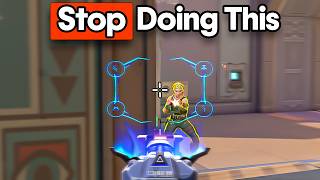

Stop Holding Angles Like This!
56sThis tip directly addresses a common mistake players make, with a clear before/after improvement that's relatable and actionable.
▶ Play Clip"Delivers solid, actionable tips, but the title is generic and the video includes a lengthy coaching plug."
This video offers six essential tips for Valorant players looking to improve their rank, focusing on crosshair placement, positioning, trading, aim style, training routines, and mental fortitude. The coach emphasizes practical drills and mindset shifts to overcome common bottlenecks.
The video starts by stating that players stuck in the same rank often have a specific bottleneck, such as lacking game sense, which leads to constant deaths. The goal is to find and solve that bottleneck.
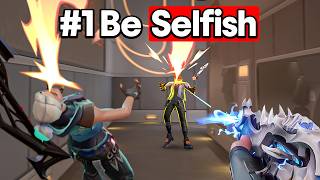
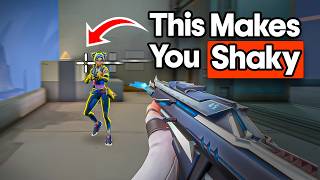
Holding crosshair too close to the wall edge limits chances in fights. Instead, keep it about four heads away from the angle to avoid clunky adjustments and whiffs.
Relying on reaction time alone is a mistake. Pros can hold angles tightly due to low reaction times and zero latency in tournaments, but in regular games with 40ms latency, it's better to hold angles at a distance.
Load a custom game, place bots around the map, and practice keeping crosshair four heads away from angles. Alternatively, use TDM for close-range fights.
With practice, this crosshair distance awareness becomes second nature, improving your ability to win fights.
Even good crosshair placement can fail if you overexpose yourself to multiple angles. Angle stacking occurs when you peek wide and are visible to multiple enemies.
On Ascent, swinging B main exposes you to market, stairs, CT, and boat house. This makes you vulnerable to being traded instantly.
To avoid overexposure, peek angles one by one, gradually clearing each angle. This makes individual fights easier and prevents instant trades.
When scaling up, use utility (like smokes) to reduce the number of angles you're exposed to. Practice this by clearing angles one by one in a bomb site.
You can practice slicing the pie in deathmatches, though it's harder because players move around constantly.
Trading correctly is essential. It means working closely with teammates so if one dies, the other can trade the kill instantly, preventing loss of numbers.
On attack, trading keeps numbers for site takes and post-plants. On defense, it helps eliminate the first attacker. Position yourself one to two steps behind your teammate.
Peak about half a second after the entry goes out. Not too fast (revealing both) and not too slow. The goal is for the defender to shoot at the entry, giving you a window to trade.
Ensure your peak is wide enough to see every defender that could have killed your teammate. Example: on Haven C site, when Jett dashes in, you swing long to trade.
On defense, trading is about controlling space and slowing down attackers, not just keeping numbers even. It prevents free kills and forces attackers to use more utility.
On Bind B long, one player in cubby by TP and another close on long can trade instantly if one gets contact or dies.
Players have different aiming styles: calm/steady vs. flicky. Identify yours by watching replays. If you flick a lot, practice smoothness; if smooth, find pros like Yay or less.
Calm aimers often use lower sensitivity (250-300 EDPI), while flicky aimers use 350-400 EDPI. Copy a pro with similar style and tweak from there.
Don't mindlessly play. Divide time: 10-20% aim training (range or Aim Labs/Kovacs), 70% ranked, 10-20% VOD review. Diagnose your gameplay first.
Watch back to identify mechanical mistakes. If raw aim issues, focus on specific aim trainer scenarios. If movement issues, practice in range and deathmatch.
Mark down moments during gameplay where you're unsure, then look for pro replays in similar scenarios. This offloads learning so you can focus on ranked.
Mentality is fundamental. Focus on what you can control, not blaming teammates. Everyone makes mistakes; review your own to improve.
Set limits on games played or RR gained/lost to protect mental state. Avoid tilting by identifying triggers and taking breaks.
When frustration builds, mute toxic teammates or step back. A positive mindset prevents spreading tilt, which can cause teammates to troll.
Mastering these six areas—crosshair placement, positioning, trading, aim style, training, and mentality—will help you rank up faster in Valorant. The key is to practice deliberately and maintain a positive, focused mindset.
What is the recommended crosshair distance from an angle?
About four heads away from the angle.
01:25
Why do pros hold angles tightly in tournaments?
They have low reaction times and zero latency in tournaments.
00:58
What is angle stacking?
Peeking so wide that you are visible to multiple angles and enemies at once.
02:46
What is the technique to avoid overexposure?
Slicing the pie: peeking angles one by one.
03:13
When should you peak to trade after your entry?
About half a second after the entry goes out.
04:44
What is the primary goal of trading on defense?
Controlling space and slowing down attackers, not just keeping numbers even.
05:35
What EDPI range do calm aimers typically use?
250 to 300 EDPI, or even lower.
07:19
What percentage of time should be spent on aim training?
10-20% of your time.
08:13
What is the recommended split for practice time?
10-20% aim training, 70% ranked, 10-20% VOD review.
08:13
What should you do when you feel frustration building up?
Identify your tilt triggers and take a break or mute toxic teammates.
11:11
Crosshair Placement: Don't Hug the Wall
Challenges a common habit and provides a concrete fix (four heads away) that directly improves gunfight outcomes.
00:16Angle Stacking Explained
Clearly illustrates a positioning mistake that many players make, with a specific map example.
02:32Trading is a Key Fundamental
Emphasizes a team mechanic that is often overlooked but crucial for winning rounds.
03:51Train with Purpose
Provides a concrete time allocation strategy to avoid mindless play and maximize improvement.
07:47Mental Fortitude is Fundamental
Stresses that mindset can negate all training, a key insight for competitive players.
09:50[00:02] still stuck in the same rank? After years of coaching, I can tell you that there's a bottleneck that needs to be addressed. For example, your game sense are lacking, you'll be dying constantly. So, to help you find and solve your
[00:16] bottleneck, in this video, I'll go over six tips every Valent instinctively rest their crosshairs tight on the edge of the wall when
[00:30] safer, but this habit actually limits your chances in real fight. By hugging it way too far from where the enemy's head will appear, which forces a clunky adjustment the second a gunfight starts. And this makes your shot late or forces
[00:44] And this whiff happens because players rely on reaction time alone, hoping they can outreact the swing. And one of the reasons why players hold their crosser and see pros getting one taps while holding angles. But the only reason
[00:58] some of them just have crazy low reaction times. And second of all, it's tournament, which means they have zero latency and ping. But in reality, doing this in a regular game with even 40 milliseconds of latency is very hard. So
[01:12] unless you're Aspus or TENS, in most standard scenarios, you should just hold angle, especially when you're at close range. To fix this habit of holding too close to the angle, load up into a custom game on your favorite map. Grab a
[01:25] different spots around a certain area of the map. Then make sure your crosshair is about four heads away from the angle. Alternatively, if you prefer, you can use TDM instead and focus on taking [music] as many close-range fights as
[01:37] kind of awareness will become second nature, and you [music] won't even have of angles, many players believe they position themselves perfectly when show you why [music] even good cross replacement can fall apart without
[01:51] overexposure. [music] I understand that even with these tips, you might still be struggling to pinpoint which exact hip directly ranking up. So if you're feeling lost trying to guess what to work on and you
[02:04] our thousands of students, the Immortal Road program is built exactly for you. Inside our 10e premium coaching program, you'll get over 100 hours of and VCT coaches. And we're so confident in getting you results that if you don't
[02:18] rank up at least 500 RR in 10 weeks, not only will you coach you for free until also give you your money back if you don't see results. So, if you'd like to below to book a free call with me or one of our coaches to see if we'd be a good
[02:32] cross replacement, positioning is just as crucial. But it's easy to overlook how exposing yourself to multiple angles puts you at risk. Angle stacking happens when you peak so wide or at the wrong spot that you're visible to multiple
[02:46] angles and enemies at the same time. For example, when you swing bite on ascent, enemies in market, stairs, CT, and boat house can all see you at once. So, how you're peeking out? To avoid overexposing yourself to multiple
[02:59] break down angles one by one, which makes it much easier to win individual fights and avoid getting instantly traded by enemies. This example from Asa [music] works. You're peeking out step by step, gradually clearing any possible
[03:13] angle and off angles on his site. And notice how when he does this, he pre- peeking wider. You won't be able to clear everything with the slicing the pie technique, but when you're unsure of the enemy's position, slicing the pie is
[03:25] a good habit to peak [music] safely. And one important tip to note is to use while scaling up. Instead of running towards the center of the site, utilize reduce the amount of angles that you're exposed to. And to practice this, load
[03:39] into your favorite map and pick a bomb site and slowly clear angles one by one, angles you've already cleared. And this is also something you can practice in death matches, although it might be a bit harder since people just constantly
[03:51] move around. Now, this next third tip is essential, and many players don't pay mechanic, which is trading. Trading correctly is a key fundamental skill in of you winning the round drop [music] drastically. Let's talk about the basics
[04:04] First of all, training means working closely with your teammates. If one of you dies, the other is ready to trade to death instantly. This prevents your team can lose rounds fast. [music] So, on attack, trading lets you keep numbers
[04:18] for sight takes and post plans. And on defense, it helps eliminate the first harder. To trade well, position yourself near your teammates and peak wide enough being able to support them. Usually, this means being just one to two steps
[04:32] behind them, not trailing too far back or right behind them so you block their attention to the pace you want to peak as well. We don't want to be lining up pay attention to the [music] pace that you want to peak. And as for the timing,
[04:44] you're going to want to peak about half a second after the entry goes out. Not and not so fast that you're revealing both of you at once. The goal is for the defender to shoot at the entry or the first player, which gives you a window
[04:57] mind is that you need to make sure that your peak is wide enough to see every defender that could have killed your teammate. An example of this in action attacking seasite on Haven. You're right behind your jet and she dashes into
[05:09] shooting at the jet and eventually kill her. You're already swinging the angle on long to trade and kill the defender who killed your entry. And this trade. And as I've always mentioned, one for one trades usually favor the
[05:23] defenders will need to rotate and a four versus four post plant with sight control is easier to play compared to a retake. And now that we've spoken about attack, what about defense? On defense, trading kills plays a different but
[05:35] equally important role compared to attack. The primary goal is less about keeping the numbers even and more about controlling space and slowing down the attackers. When you trade effectively on defense, you prevent enemies from easily
[05:48] to use more utility or even make giving attackers [music] free uncontested kills. If you peak poorly or sit in an aggressive angle without any support, you risk being picked off
[06:00] of the map. By coordinating trades with teammates, defenders can hold the sight down a lot easier. For example, let's look at bind B long. If one player plays in the cubby by TP and another plays close on long, they allow themselves to
[06:13] player gets contact or dies, the other player can instantly be there to swing understand the importance of trading with your team, it's time to talk about finding an aim style [music] that suits your play style and tendencies. In
[06:26] different aiming style. Some players have calm, steady aim, while others rely on fast flicks, and [music] many lie in between. Calm a focus on smooth maintaining composure under pressure, while flicky aimers excel [music] at
[06:39] snappy flicks and being able to still aim accurately while playing on high sensitivity. So, what you can do is finding a pro whose aiming style looks practice and study their habits and routines. If you aren't sure what kind
[06:52] and easy way to figure this out is by watching your own gameplay through the new replay system. Pay close attention to whether you aim more reactively, which is relying on fast flicks and quick responses, or if you play with
[07:05] small micro adjustments. If you notice that you're flicking a lot, then try to something and watch their bots to see for if you have smoother aim and find pros such as Yay or less that match your
[07:19] style. Palm aim and flicky aim also depend on what kind of sensitivity you use. Palm aimers usually opt for a much lower sense in the 250 to 300 EDPI range, if not even lower, while flicky aimers usually run 350 to 400 EDPI
[07:33] feeling comfortable with your sensitivity, you can try copying the pro that has a similar aiming style to you and tweak it from there based on how it own aiming style that feels comfortable and unique to you, rather than looking
[07:47] understand the importance of developing your own aim style and dialing [music] training with purpose before playing. And let's break down how to train effectively like the pros do. If you're looking to rank up as fast as possible
[08:00] to spend your time in Valerant wisely. You can't just log in, spam a bunch of it a day. That's just playing mindlessly, and wasting your time. Instead, here's my recommendation for how to divide up your time. Spend 10 to
[08:13] 20% of your time aim training in the range or using aim trainers like Aim Labs and Kovacs. Now, spend 70% of your time playing ranked and the remaining 10 to 20% watching your own VODs or pro-ranked replays of your agent. Before
[08:26] doing this, you actually need to diagnose your gameplay. Watch back how mechanical mistakes that you're making. Maybe your micro adjustments are off or inaccurate. To keep it simple, if your issue is raw aim mistakes like missing
[08:40] target prioritization, then make sure that you focus your time on the right scenarios when you play aim trainers that help with those issues. You can below to find playlists targeting specific aim skills like micro
[08:54] adjustments, tracking, or reflexes. But let's say instead you're struggling with movement, then make sure to spend more time practicing in the practice range and death matches. These components of your mechanics are much more trainable
[09:07] obvious [music] reasons. And if you're not sure what drill can help you out, channel. For example, you can check out my 46-minute mechanical mastery guide. And lastly, to improve your game sense, mark down moments while you're playing
[09:21] or how to use your utility. Then look for pro replays from the best players on similar [music] scenarios. Since you're offloading aim training and game sense be able to fully focus on ranked matches without worrying about fixing everything
[09:37] out while you're playing. So by systematically dividing up your time in Valerant will help you tremendously in improving your weaknesses. And trust me, you'll [music] see much better results. Now, I saved this tip for last because
[09:50] there's one aspect that completely negates all kinds of training that you mentality is a fundamental part of ranking up in Valerant. [music] Because throwers, and all kinds of different obstacles. What you need to understand
[10:04] is that the best way to improve and climb the ranks is by focusing on what tempting to blame your teammates when when games don't go your way, but that won't help you get better. Everyone makes mistakes, and even the top pros.
[10:17] [music] fix those mistakes. Instead of blaming others, focus on what you could rounds and review them after the game or some mistakes or missed opportunities. The difference between some of the best
[10:30] important to know that one of the most crucial aspects of having the right playing. If you're on a win streak, easy to let Creed take over and queue [music] one more game only to lose more. And the same goes for when you're on a losing
[10:44] streak, keeping the mentality that we can't end on a loss, which usually just setting limits on how many games you play or how much RR you're willing to gain or lose is just as important to protect [music] your mental state. And
[10:57] a loss streak. It's an important way to prevent tilt and to make sure that you stay fully locked in for your next games. And talking about breaks, tilt is at Valerant. It can be triggered by anything from toxic teammates to
[11:11] And that's why it's also very important to be able to identify your tilt triggers. When you feel frustration building up, don't hesitate to do what tilting. Whether that's muting the toxic teammate or standing up and taking a
[11:25] step back before the next round. A positive mindset helps you stay focused from spreading tilt onto your teammates, which can be just as damaging. Many people [music] don't like to hear or see others tilted, and some might even troll
[11:38] your games back if you're tilted. So, it's important to never [music] project your anger out to others. And once you can master your mentality, games will become much easier, the kills will come faster, and you'll rank up faster than
[11:50] it goes. And if you made it this far, you might be interested in more advice that's the case, check out this video that we made here. Thanks for watching.
⚡ Saved you 0h 11m reading this? Transcribe any YouTube video for free — no signup needed.