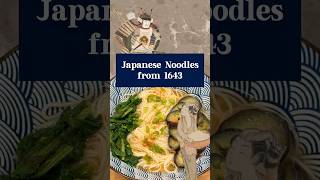
500-Year-Old Noodle Recipe Found!
44sThe mystery of an ancient Japanese noodle recipe sparks curiosity and cultural intrigue.
▶ Play Clip"The title is accurate and informative, promising a historical recipe and delivering exactly that."
This video explores a 500-year-old Japanese noodle recipe from the 1643 cookbook 'Ryōri Monogatari'. It discusses the historical context of noodles in Japan, including their legendary origins and the influence of Portuguese traders, before detailing the simple ingredients and preparation of the dish.
The recipe is from the Ryōri Monogatari, a cookbook written in the early Edo period, which reflects a time of significant change in Japanese cuisine.
Legend says noodles came to Japan via a Chinese monk in the 8th century, initially as a luxury before becoming a common food.
The cookbook includes various noodles like udon, soba, and sōmen, and features early dishes served at the imperial court during sumo banquets.
The Portuguese were the first Europeans in Japan (1543), and their influence introduced dishes like tempura, castella, and kompeitō, though this recipe is from an older style.
The dish uses dashi (kombu and bonito), miso paste, noodles, and is topped with eggplant, mustard greens, and pepper—simple but flavorful.
What is the name of the 1643 Japanese cookbook mentioned?
The Ryōri Monogatari, written in the early Edo period.
00:01
According to legend, how did noodles first come to Japan?
A Chinese monk in the 8th century.
00:15
Which types of noodles are mentioned in the recipe?
Udon, soba, and sōmen.
00:27
Who were the first Europeans to land in Japan, and when?
The Portuguese, who arrived in 1543.
00:53
Name three dishes introduced by the Portuguese that became part of Japanese cuisine.
Tempura, castella cake, sōmen kiriatan, and kompeitō candies.
01:09
What are the main ingredients in the 500-year-old noodle recipe?
Dashi made from kombu and bonito flakes, miso paste, noodles, eggplant, mustard greens, and pepper.
01:22
The 1643 Cookbook
Provides a specific historical anchor for the recipe, showing its age and provenance.
00:01Legendary Origins of Noodles
Highlights the cultural significance and mythological origins of noodles in Japan.
00:15Portuguese Influence
Demonstrates how foreign trade shaped Japanese cuisine, introducing now-iconic dishes.
00:53Simple Recipe, Deep Flavor
Shows that traditional cooking can be both simple and delicious, relying on quality ingredients.
01:22[00:01] в 1643 году. Рецепт взят из « Рёри Моногатари», написанного в начале периода Эдо, когда японская кухня претерпевала значительные изменения, но к тому времени уже существовала довольно давно. История происхождения японской лапши затерялась
[00:15] в прошлом, но одна легенда гласит, что она попала в Японию вместе с монахом, который Китая в VIII веке. В то время они были полностью или, по Лапша из гречки и пшеницы
[00:27] лет, но впоследствии стала распространенным видом лапши в Японии. В этом рецепте используются такие виды лапши, как удон, соба и сомэн . Одно из самых ранних позднему периоду Хэйан, когда его подавали при императорском дворе
[00:41] во время Сумай-но-сэцзе, ранней формы соревнований по сумо, совмещенных с банкетом. Спустя несколько столетий была написана та самая поваренная книга, которой я пользуюсь сегодня, и хотя она содержит много рецептов старого стиля, таких как
[00:53] сомэн, в ней также прослеживается новое европейское влияние на японскую кухню, в были первыми европейцами, высадившимися в Японии в 1543 году, и японцы называли их нанбан, или южными варварами.
[01:09] ста лет происходил активный торговый и культурный обмен, прежде чем Япония изгнала их и приняла изоляционистскую внешнюю политику. Однако именно в этом столетии такие блюда, как темпура, пирожное кастелла, сомэн киританан и конфеты компейто, вошли в японскую кухню. Многие
[01:22] сегодня считаем типично японскими. Но эта лапша относится к гораздо более древнему стилю японской кухни, она проста, но очень вкусна. Они заказывают даси, который готовится из комбу (морских водорослей) и хлопьев рыбы бонито. Затем мисо-пасту медленно
[01:35] процеживают и добавляют к бульону даси и лапше, а сверху выкладывают баклажаны, горчичную зелень и перец. Простой, но невероятно вкусный рецепт. Чтобы узнать больше об истории сомэна, посмотрите полное видео на YouTube, а этот рецепт есть в
[01:48] video on YouTube, and this recipe is in the Tasting History Cookbook.



⚡ Saved you 0h 01m reading this? Transcribe any YouTube video for free — no signup needed.