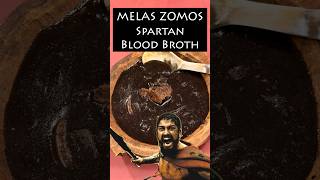

The Black Broth of Sparta
45sThe extreme description of the soup and the quote about preferring death over eating it immediately hooks viewers with shock value.
▶ Play Clip"Delivers exactly what the title promises — a genuine taste test of Spartan black broth with historical context."
The video explores the infamous Spartan black broth, melas zomos, made from pork and blood. It provides historical context on Spartan training and dining, then attempts a modern recreation of the dish.
Melas zomos is a Spartan soup made with pork and blood, infamous even in ancient times.
The agoge was a brutal training system that deliberately deprived boys of food, encouraging theft but punishing those caught.
Spartan warriors ate at a sissition, a communal dining hall, with meals of barley cake, boiled pork, and occasional olives, cheese, or figs.
Plutarch tells of Dionysius of Sicily spitting out the broth; the cook said he needed to exercise and bathe in the Eurotas to enjoy it.
No original recipe survives; modern recreations add onion, bay leaves, and vinegar to blood soups for flavor and color.
Melas zomos was a Spartan staple that symbolized their harsh, disciplined lifestyle, and while the original recipe is lost, modern recreations offer a tangible connection to ancient history.
Melas Zomos: The Black Broth
Introduces the central subject—a historically infamous soup—and its key ingredients (pork and blood).
The Agoge's Brutal Logic
Explains how deliberate food deprivation and punishment for being caught shaped Spartan resilience.
00:25The Cook's Retort
A memorable quote that ties the broth's taste to the Spartan lifestyle, illustrating cultural conditioning.
01:08Reconstructing the Recipe
Shows how modern cooks use vinegar and blood to recreate the dish, offering a practical way to experience history.
01:23[00:00] Today I am eating like a Spartan warrior with melos zomos, the black broth of Sparta made with pork and blood. And even in the ancient world, this soup had a reputation. To quote a man from Sybaris, after he ate with the Spartans,
[00:13] it is no wonder that the Spartans are the bravest of men, for any man in his right mind would rather die 10,000 times over than live as miserably as this. But when you grew up in Sparta, any food at all was considered a luxury.
[00:25] Boys were subject to a brutal training system called the agogi, which purposefully deprived them of food. They were encouraged to steal more if they could find it, but if they were caught, they would be flogged. Not for stealing, but for being caught. Now,
[00:37] provided they survived this training, the Spartan warrior could then be voted into a sessition, essentially a communal dining hall. And according to Dikearchus, the men were fed barley cake, boiled pork, and on occasion, some olives, cheese, or figs, but always their black
[00:52] pork soup, melasomos. It was also said that only Spartans could actually eat this soup. Plutarch even tells a story of when Dionysius, the tyrant of Sicily, asked his Spartan cook to make it for him. Well, he took one bite and spat it out. So the cook told him, your majesty, it is necessary to
[01:08] have exercised in the Spartan manner and to have bathed in the Eurotas in order to relish this broth. Now, I have not exercised in the Spartan manner, nor have I bathed in the Eurotas, but I'm still going to try this soup. Unfortunately, there are no surviving recipes from Sparta,
[01:23] and the ancients just say that it had pork and blood. But looking at other blood soups from places like Eastern Europe and the Philippines have gone ahead and added some onion, bay leaves, and most common, vinegar. Now this is all simmered together before adding the blood to thicken it up
[01:36] and it turns it that characteristic black color. Now provided you don't add too much vinegar and you aren't completely put off by the color, it really doesn't taste half bad. Now who knows what else the Spartans put into it, but this version, which is in the Tasting History cookbook, is really
[01:50] worth a shot. I'm not saying it's going to make you into a great warrior, but I'd say it's a good place to start.


⚡ Saved you 0h 01m reading this? Transcribe any YouTube video for free — no signup needed.