
AI Summary
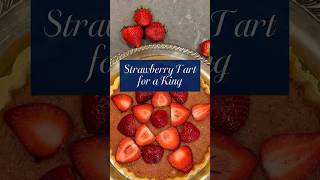
This video explores the history of the strawberry tart, tracing its evolution from a luxury item reserved for the wealthy in Tudor England to a dessert accessible to all, thanks to a French spy's discovery in Chile. It culminates in a recipe for a Tudor-era strawberry tart, highlighting the key ingredients and techniques.
Chapters
In Henry VIII's time, European strawberries were small and produced only one tiny berry per year, making them a luxury for the rich who had large gardens.
In 1712, French spy Amédée-François Frézier was sent to Chile and Peru, where he encountered larger Chilean strawberries from the Picunche and Mapuche tribes.
Frézier brought five Chilean strawberry plants back to France, but they were all female, resulting in tiny, deformed berries.
Fifty years later, gardener Antoine Nicolas Duchesne discovered that planting Chilean strawberries next to another variety produced large, beautiful berries, understanding the male-female plant relationship.
Duchesne worked for decades to make strawberries redder and more aromatic, resulting in the Fragaria ananassa (pineapple strawberry) variety, which is the ancestor of most modern strawberries.
The video features a recipe for a Tudor-era strawberry tart with a creamy, strawberry-flavored filling and a buttery, flaky crust, described as one of the creator's favorites.
The strawberry tart's history is a story of global exploration and scientific discovery, transforming a rare delicacy into a common dessert. The recipe offers a delicious way to connect with this rich past.
Mentioned in this Video
Study Flashcards (5)
Why were strawberries a luxury in Henry VIII's time?
easy
Click to reveal answer
Why were strawberries a luxury in Henry VIII's time?
They were small, produced only one tiny berry per year, and required large gardens.
00:02
Who discovered the larger Chilean strawberries?
easy
Click to reveal answer
Who discovered the larger Chilean strawberries?
French spy Amédée-François Frézier in 1712.
00:16
What was the problem with the strawberry plants Frézier brought back?
medium
Click to reveal answer
What was the problem with the strawberry plants Frézier brought back?
They were all female, so they produced tiny, deformed berries.
00:41
What discovery did Antoine Nicolas Duchesne make?
medium
Click to reveal answer
What discovery did Antoine Nicolas Duchesne make?
He discovered that planting Chilean strawberries next to another variety produced large, beautiful berries, understanding the male-female plant relationship.
00:54
What is the scientific name of the modern strawberry variety?
medium
Click to reveal answer
What is the scientific name of the modern strawberry variety?
Fragaria ananassa, or pineapple strawberry.
01:07
💡 Key Takeaways
The French Spy's Discovery
This is the pivotal moment that changed strawberry accessibility, linking exploration to culinary history.
00:16Understanding Plant Sexuality
Duchesne's insight into male and female plants was a key scientific breakthrough that enabled large strawberry cultivation.
00:54The Birth of the Modern Strawberry
The creation of Fragaria ananassa is the direct ancestor of all modern strawberries, making this a foundational fact.
01:07Full Transcript
[00:02] во времена правления короля Генриха VIII, который, как говорят, был большим поклонником этой изначально использовалась гораздо меньшая по размеру клубника, произрастающая в Европе. И их могли только богатые, потому что они занимали много места и давали всего
[00:16] одну крошечную ягоду в год. Таким образом, для приготовления такого пирога вам нужен был сад подходящего размера . Но в 1712 году произошло событие, благодаря которому клубника стала доступна всем. В том году французский шпион Амеде Франсуа
[00:28] Фрезье, чья фамилия по совпадению означает «клубника», был отправлен королем Людовиком XIV шпионить за испанскими колониями в Чили и Перу. И пока он там находился, жители Чили, племена пикунче и мапуче, познакомили его со своей клубникой.
[00:41] Конечно, они были далеко не такими вкусными, как дикая европейская или виргинская земляника, но зато были гораздо крупнее. А поскольку Фрезье знал, что его король во Францию пять растений. К сожалению, он привёз только женские
[00:54] растения, поэтому выросшие ягоды клубники были крошечными и немного деформированными. Лишь 50 лет спустя молодой садовник Антуан Николя Дюшен заметил, что крупные, красивые ягоды клубники вырастают, если чилийскую клубнику
[01:07] посадить рядом с другим сортом. Он первым понял взаимосвязь между мужскими и женскими нескольких десятилетий работал над тем, чтобы сделать клубнику более красной и ароматной. В итоге получился сорт Fragaria ananassa, или ананасная клубника,
[01:21] фрукта очень похож на аромат ананаса». Эта клубника является включая те, которые обычно продаются в продуктовых магазинах, и именно их я и использовала.
[01:36] клубникой, кремообразная начинка обладает насыщенным клубничным вкусом. Тесто, которое также появилось в 1545 году, маслянистое, рассыпчатое и очень вкусное. Это, пожалуй, один из моих любимых рецептов, которые я когда-либо готовила на канале, и его
[01:50] выпуск об истории клубники, загляните в видео на YouTube, а check out the video on YouTube, and the recipe is at tastinghistory.com.