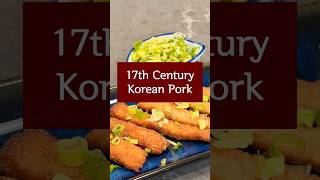

The 17th-Century Korean Cookbook by a Woman
39sHighlights a rare historical artifact—a cookbook by a woman in 17th-century Korea—sparking curiosity about women's roles in history.
▶ Play Clip"The title promises a historical recipe and delivers exactly that—a fascinating story with a practical dish, no fluff."
The video explores a 17th-century Korean cookbook, the Yumshik Dimibang, written by Jang Gye-hyang, and highlights its historical significance as the first surviving cookbook written in Hangul. It also details the invention of Hangul by King Sejong and shares a simple recipe for gajayuk from the book.
The Yumshik Dimibang, written around 1670 by Jang Gye-hyang, is likely the first or second cookbook in Asia written by a woman and the first surviving cookbook in Hangul.
Before Hangul, Koreans used Hanja (Chinese characters), which were ill-suited for Korean sounds and grammar, making literacy rare.
King Sejong the Great, who ruled from 1418 to 1450, is credited with inventing Hangul, an easy-to-learn phonetic alphabet.
The cookbook was intended for the wives of her seven sons and includes recipes from royal court cuisine and her mother's village.
Gajayuk is a simple dish of sliced pork marinated in soy sauce and oil, coated in whole wheat flour, and fried with pepper. The video suggests adding ginger, garlic, and green onion.
First Surviving Hangul Cookbook
This fact highlights the historical significance of the cookbook in Korean literacy and culinary history.
00:13King Sejong and Hangul
Explains the origin of Hangul and its role in making literacy accessible to Koreans.
00:39Simple Gajayuk Preparation
Provides a practical, easy-to-follow recipe that viewers can try at home.
01:05[00:00] This is a 17th century Korean recipe for gajayuk, simple but delicious pork marinated in soy sauce and sesame oil and then fried. It comes from the Yumshik Dimibang, written around 1670 by the poet,
[00:13] mother, painter, calligrapher, and all-around remarkable lady Jang Gye-hyang. It's likely the first, maybe the second cookbook in Asia written by a woman, and it's the first surviving cookbook written in Hangul, the Korean alphabet. Now before the invention of Hangul in the 15th century,
[00:27] Korea had used Hanja, or Chinese characters, to write their language. The Chinese writing system had been around for about 3,000 years at this point, but it was not well suited for Korean sounds or grammar, and learning the Chinese writing system,
[00:39] and then how to apply it to Korean, was so complicated that very few people were literate. Then along came King Sejong the Great, who ruled from 1418 to 1450, and he is widely credited for having invented Hangul himself, though maybe it was his scribes.
[00:53] Either way, this led to an easy to learn phonetic alphabet that would allow Koreans to write in their own language. Now it would be hundreds of years before the alphabet was adopted as the official script of Korea, but the noblewoman Jang Kae-hyang used it to write her cookbook. The
[01:05] book is likely intended to be for her family, namely the wives of her seven sons, and it includes recipes inspired by the royal court cuisine as well as that of the village where her mother grew up. This gajayook is likely from the latter, a simple preparation of sliced pork
[01:20] marinated in soy sauce and oil coated in whole wheat flour then fried with a little pepper on top. I'm also topping mine with a mixture of ginger, garlic, and green onion. Now she doesn't include this in the recipe, but there's nothing to say that she wouldn't have these things hanging
[01:32] around her kitchen. This dish is just too easy and too delicious not to make, so check out the recipe in the Tasting History Cookbook.

⚡ Saved you 0h 01m reading this? Transcribe any YouTube video for free — no signup needed.