
AI Summary
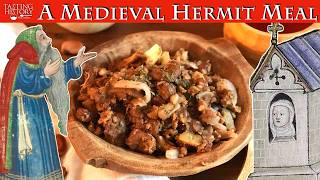
This video explores the surprisingly varied diet of medieval hermits, contrasting the extreme austerity of figures like Saint Guthlac with more common meals like fried fava beans and onions.
Chapters
8th-century hermit Saint Guthlac ate only barley bread and muddy water, but most hermits had more varied diets, including fried fava beans and onions.
Hermits were monks or nuns who left society to live contemplative lives, often in caves or huts.
Anchorites were hermits who lived in small cells built on the side of a church, often with a cat and two servants.
The original recipe from the Form of Curry calls for sweet spices like sugar, nutmeg, and cinnamon, but the modern version uses fresh herbs like sage and marjoram to match the hermit's austere lifestyle.
Mentioned in this Video
💡 Key Takeaways
Saint Guthlac's Austerity
Provides a concrete historical example of extreme hermit diet, contrasting with the more common, moderate fare.
00:01Hermits' Living Arrangements
Explains the variety in hermits' lifestyles, from caves to church cells, and the role of patrons and servants.
00:26Recipe Adaptation
Shows how a modern cook adapts a medieval recipe to fit the hermit's ethos, avoiding 'decadent' ingredients.
01:07Full Transcript
[00:01] eat? Well, the 8th century hermit, Saint Guthlac, ate nothing but barley bread and muddy water. But most hermits weren't quite so austere. So, they might century recipe for or fried fava beans and onions. But what
[00:14] exactly was a hermit? Well, it was someone, very often a monk or a nun, who decided to remove themselves from society to live on their own, sometimes in pairs, so they could live a contemplative life without distraction.
[00:26] the wilderness and live in a cave, but more often they lived in huts just wealthy patron who would pay to keep of hermit known as an anchorite. Now, the term varied from time to time, but
[00:40] women who anchored themselves to one place, usually a small cell built on the side of a church. There they would spend the rest of their lives in relative solitude. And I say relative because they would very often have a cat as well
[00:53] as two servants. Austere living with servants. And it was the servants' job anchorite with food, perhaps something like these fava beans and onions. Now, the original recipe from the Form of Curry calls for sweet spices to be
[01:07] added, things like sugar, nutmeg, and cinnamon, but no self-respecting hermit would allow such decadence. So, I opted for some fresh herbs like sage and marjoram. Now, I'm not going to lie, this is not a delicious dish. It is what
[01:19] it is. It's a plain but filling medieval bowl of beans and onions, perfect for feeding a hermit. The full video on medieval hermits is up on YouTube and medieval hermits is up on YouTube and this recipe is at tastinghistory.com.