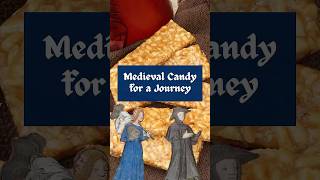

Medieval Travel Candy: The Original Energy Snack
45sReveals surprising historical facts about portable food that viewers never knew existed.
▶ Play Clip"Delivers on the promise of a medieval travel candy recipe, though the title oversells the 'traveling' angle slightly."
This video explores a 14th-century candy recipe designed for travelers, sourced from the English cookbook 'The Forme of Cury.' It highlights the use of Cyprus honey and sugar, the candy's portability, and its historical context, including its association with King Richard II and advice for pilgrims.
Medieval travelers and pilgrims, such as those heading to Canterbury or Jerusalem, needed portable, non-perishable sweets. Cedar nut candies were an ideal solution.
The recipe comes from the 14th-century English cookbook 'The Forme of Cury, or Method of Cooking.' It is an early form of brittle candy made with Cyprus honey and sugar.
Sugar was processed on the island of Cyprus into a product similar to modern sugar. This was the most expensive way to satisfy a sweet tooth, fitting for a recipe written for King Richard II.
Similar sweets were available to most people on special occasions. The 12th-century Codex Calixtinus advised pilgrims to Santiago de Compostela to bring their own food to avoid illness from local cuisine.
The candy has a honey flavor with ginger at the end. It requires contemplation, making it suitable for long journeys. The full video is on YouTube, and the recipe is at tastinghistory.com.
The video presents a historically grounded recipe for travel-friendly candy, emphasizing its practicality and luxury status in medieval times, while offering a taste of history for modern viewers.
What was the primary concern for medieval travelers regarding food?
They needed portable, non-perishable food that would not spoil quickly.
00:01
From which cookbook is the candy recipe taken?
The Forme of Cury, or Method of Cooking, a 14th-century English cookbook.
00:16
What ingredients were used in the candy?
Cedar nuts, Cyprus honey, and sugar.
00:16
Why was the candy considered the most expensive way to satisfy a sweet tooth?
Because sugar was processed on Cyprus and was a luxury item, especially for a recipe written for King Richard II.
00:29
What advice did the Codex Calixtinus give to pilgrims?
To bring their own food because local cuisine could cause illness.
00:42
Portability as a Key Requirement
Highlights a practical aspect of medieval travel that is often overlooked.
00:01Historical Recipe Source
Provides a concrete, verifiable source for the recipe, adding authenticity.
00:16Luxury Status of Sugar
Illustrates the economic and social significance of sugar in medieval times.
00:29Pilgrimage Food Advice
Shows historical advice on avoiding illness, relevant to understanding medieval health practices.
00:42[00:01] люди брали с собой в путешествия в Средние века. Теперь, торговый город или совершали паломничество в такие места, как Кентербери или Иерусалим, Они должны были быть портативными и не портиться быстро. Так что эти конфеты из кедровых орехов
[00:16] идеальным вариантом. Рецепт взят из английской поваренной книги XIV века «The Forme of Cury, or Method of Cooking». По сути, это ранняя форма хрупких конфет, приготовленных из кипрского меда и сахара. Это был сахар, который
[00:29] а затем перерабатывали на острове Кипр, превращая его в продукт, похожий на тот, который мы едим сегодня. И это, безусловно, был самый дорогой способ утолить свою тягу к сладкому. Но ведь этот рецепт был написан для короля Ричарда II, так что это неудивительно. Однако
[00:42] подобные сладости были доступны большей части населения по особым в месячное путешествие в такое место, как Сантьяго-де-Компостела. В Кодексе Каликстина XII века автор советует тем, кто отправляется
[00:56] еду, потому что, если они будут есть местную кухню, я цитирую: «Вы, без заболеете. Ибо вся рыба, говядина и свинина в Испании и Галисии вызывают у иностранцев недомогание». точно, но я точно взяла с собой немного этих конфет на всякий случай. Мед
[01:11] , а имбирь ощущается в самом конце. И, безусловно, на это нужно осмыслить, но в долгом путешествии что еще остается делать? Полное видео о medieval travel is up on YouTube, and the recipe is at tastinghistory.com.
⚡ Saved you 0h 01m reading this? Transcribe any YouTube video for free — no signup needed.