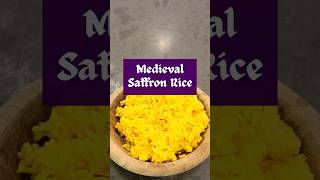

Why Saffron Was the King of Medieval Spices
44sThe surprising fact that saffron appears in 40% of medieval recipes and its high cost due to hand-harvesting makes for an intriguing and educational hook.
▶ Play Clip"Delivers exactly what the title promises — a rare and refreshing look at a historical recipe."
This video explores the history and cultural significance of a medieval saffron rice dish from 'The Forme of Cury,' one of England's oldest cookbooks. It details the spice's high cost, its use as a status symbol, and the extreme measures taken to ensure its purity, including the creation of a special court and the outbreak of a war. The video concludes by noting that despite its high price, a small amount of saffron is enough to flavor a dish, making it a relatively affordable luxury.
The recipe is from 'The Forme of Cury,' and it's essentially rice with saffron. Saffron was used in 40% of the recipes in the book, both for flavor and for its vibrant yellow color.
Saffron was very expensive because it had to be imported from Asia, although it was also grown in Spain and France. The harvesting process is labor-intensive, as the stigmas must be picked by hand within hours of the flower opening.
Due to its high value, merchants would often adulterate saffron with fillers like marigold. In Nuremberg, a 'Saffron Court' was established to inspect the spice, and those found selling impure saffron could be fined or even burned at the stake.
The Saffron War began in 1374 over a group heading to Basel, Switzerland. Despite its high price, the amount of saffron in a dish costs only a few dollars, as a little goes a long way.
Saffron's history is a fascinating blend of economics, law, and culinary art, showing how a single spice could shape societies and spark conflicts.
What is the name of the cookbook from which the recipe is taken?
The Forme of Cury
00:01
Why was saffron added to the rice dish?
To provide a vibrant yellow color and a characteristic flavor.
00:15
Why were most spices expensive in medieval Europe?
Because they were imported from Asia, making them expensive.
00:28
What was the 'Saffron Court' in Nuremberg?
The 'Saffron Court' was a body in Nuremberg that inspected and verified the purity of saffron being sold.
00:55
In what year did the Saffron War begin?
The Saffron War began in 1374.
01:09
Saffron's Use in 40% of Recipes
This statistic underscores the immense popularity and importance of saffron in medieval cuisine, making it a key insight into the era's culinary practices.
00:15The Saffron Court
The creation of a special court to verify saffron purity shows the high economic stakes and the prevalence of fraud in the medieval spice trade.
00:55The Saffron War
This historical event demonstrates the extreme lengths to which people would go to control and protect the saffron trade, highlighting its immense value.
01:09[00:01] кулинарной книги «The Forme of Cury», и по сути это рис с шафраном. В средневековье люди очень любили шафран. На самом деле, он встречается в 40% рецептов из этой вкуса, так и для окрашивания, поскольку яркие блюда были как раз в тренде
[00:15] . Шафран также использовался для окрашивания тканей, применялся в медицине и желтых чернил, используемых в иллюминированных рукописях. Дело в том, что это было и остается очень дорого. В средневековой Европе большинство специй стоили дорого, потому что
[00:28] их приходилось доставлять из Азии. Но шафран выращивали в Испании, Франции и даже объясняется трудоемкостью процесса сбора урожая. Шафран получают из цветка Crocus sativus, который образует всего три рыльца, или
[00:41] в течение нескольких часов после раскрытия цветка, иначе они засохнут и станут непригодными. Даже сегодня это по-прежнему делается вручную, что делает эту специю самой дорогой по средневековые торговцы часто подмешивали в него такие ингредиенты, как бархатцы или
[00:55] вкусу и цвету не имели ничего общего с ним . В Нюрнберге к шафрану относились настолько серьезно, что создали « Шафрановую выставку» для проверки шафрана, продаваемого нечистым, торговца штрафовали, а иногда и сжигали заживо на костре.
[01:09] Была даже война, Шафрановая война, которая началась в 1374 году после того, как группа направлявшуюся в швейцарский город Базель. Сейчас, я думаю, из- дорогой, по крайней мере, если покупать его на развес. Дело в том, что он
[01:24] количество шафрана в этом блюде, вероятно, стоит не больше пары долларов для получения этого прекрасного желтого цвета и характерного шафранового аромата нужно совсем немного. Итак, шафрановое блюдо, которое называется «рис из мяса», потому что его принято подавать с
[01:38] meat, I'll have the recipe up on tastinghistory.com.


⚡ Saved you 0h 01m reading this? Transcribe any YouTube video for free — no signup needed.