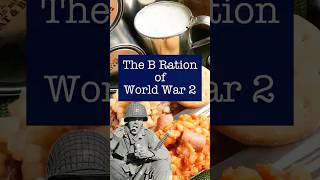

I Cooked WW2 Army Rations (B-Ration)
45sThe novelty of tasting historical military food combined with the visual of cooking from a 1945 army cookbook sparks curiosity and engagement.
▶ Play Clip"Delivers exactly what the title promises — a fascinating, if brief, taste of history."
This video explores the different types of rations provided to U.S. soldiers during World War II, specifically the B-ration and C-ration. The creator tastes a meal from the B-ration, made from a 1945 army cookbook, and shares their thoughts on the food's taste and practicality.
The B-ration consisted of canned and dehydrated ingredients, designed for transport without refrigeration.
The C-ration was a fully canned meal that could be eaten cold or warmed on a tank's engine.
The Vienna sausages were unpleasant, with unnaturally soft meat, while the beans were decent.
The pineapple milk, made from powdered milk, was a highlight, tasting like a melted Dole Whip dessert.
The video offers a fascinating, hands-on look at the culinary realities of WWII soldiers, highlighting the trade-offs between freshness, practicality, and taste in military rations.
What was the main component of the B-ration?
The B-ration consisted of canned and dehydrated ingredients that could be transported without refrigeration.
00:01
What was the C-ration?
The C-ration was a fully canned meal that could be eaten cold or warmed on a tank's engine.
00:40
What was the host's opinion of the Vienna sausages?
The host described the Vienna sausages as 'really rather unpleasant' and the meat as 'unnaturally soft'.
00:53
What was the host's opinion of the pineapple milk?
The pineapple milk was made from powdered milk and tasted like a melted Dole Whip dessert.
01:07
B-Ration Ingredients
Explains the practical trade-off between fresh and shelf-stable ingredients in military logistics.
00:01Cooking on a Tank Engine
Illustrates the resourcefulness of soldiers in the field, using available heat sources to warm their rations.
00:40Taste Test Verdict
Provides a personal, sensory perspective on the historical rations, making the past more tangible.
00:53[00:01] во время Второй мировой войны, а именно солдатам пайка B, который состоял из консервированных и обезвоженных ингредиентов, предназначенных для рецепты из американской армейской поваренной книги
[00:14] 1945 года, я решил приготовить венские сосиски с фасолью, яблочно-клюквенный Конечно, хотя свежие ингредиенты в рационе А были предпочтительнее, рацион В был гораздо практичнее, поскольку его можно было перевозить на большие расстояния
[00:27] без охлаждения. И по крайней мере, эти блюда были свежеприготовленными, паек С, был совсем не свежим. Это были полноценные консервированные блюда, которые, если солдату везло, можно было разогреть на маленькой плитке или, может быть, на
[00:40] горячем двигателе танка. Консервы были громоздкими, еда однообразной, вызывала солдату приходилось носить их с собой. Что касается пайка B, то его, как известно, квартирмейстерский корпус, а готовили специально обученные повара. Но это не значит,
[00:53] что это всегда было вкусно. Венские сосиски с фасолью были действительно довольно неприятными. Фасоль была неплохой, но мясо оказалось неестественно мягким. приготовленный из сушеных фруктов, больше напоминал компот, но, думаю, он хорошо бы сочетался
[01:07] этого блюда, безусловно, является ананасовое молоко. Несмотря на то, что он приготовлен из сухого молока, на вкус он напоминает растопленный десерт Dole Whip, и я бы обязательно приготовила Второй мировой войны, подписывайтесь на мой канал на YouTube, где я буду рассказывать обо всех
[01:19] основных державах, участвовавших в войне. А если вы хотите приготовить эти блюда по этим рецептам, они доступны want to make these recipes, they are up on tastinghistory.com.


⚡ Saved you 0h 01m reading this? Transcribe any YouTube video for free — no signup needed.