
AI Summary
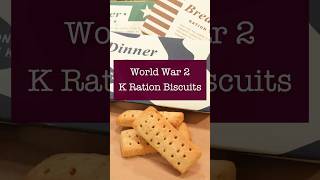
The video presents a taste test of the K-ration defense biscuits used by American soldiers during World War II, prepared according to the exact 1942 recipe. The presenter explains the design philosophy behind the ration—prioritizing shelf life over taste—and describes the various components, including biscuits, coffee, cheese, and a synthetic lemon drink. He shares his personal verdict on the biscuits and offers the recipe for viewers to try at home.
Chapters
The K-ration was designed for paratroopers, with components chosen for long-term edibility, not flavor.
The ration came in three variants—breakfast, lunch, dinner—each with different biscuits, all made from whole wheat, sugar, and molasses.
Other items included soluble coffee, canned cheese, meat and pork loaf, and a synthetic lemon drink that soldiers used to mop floors.
Though designed for 3 days, some soldiers lived on K-rations for up to a month.
The presenter finds the biscuits dense and 'healthy-tasting,' not bad but unappealing as a staple.
Mentioned in this Video
Study Flashcards (7)
What was the primary design goal of the K-ration components?
medium
Click to reveal answer
What was the primary design goal of the K-ration components?
To remain edible for long periods, with taste being secondary to preservatives.
00:14
How many meal variants did the K-ration come in?
easy
Click to reveal answer
How many meal variants did the K-ration come in?
Breakfast, lunch, and dinner.
00:14
What were the main ingredients in the K-ration biscuits?
medium
Click to reveal answer
What were the main ingredients in the K-ration biscuits?
Whole wheat flour, sugar, and molasses.
00:27
Name three items included in the K-ration besides biscuits.
hard
Click to reveal answer
Name three items included in the K-ration besides biscuits.
Soluble coffee, canned American cheese, meat and pork loaf, and a synthetic lemon drink.
00:40
What did soldiers reportedly do with the synthetic lemon drink?
medium
Click to reveal answer
What did soldiers reportedly do with the synthetic lemon drink?
They used it to mop floors.
00:40
Who was the K-ration originally designed for?
easy
Click to reveal answer
Who was the K-ration originally designed for?
For paratroopers (airborne troops).
00:54
How long did some soldiers live exclusively on K-rations?
medium
Click to reveal answer
How long did some soldiers live exclusively on K-rations?
Up to a month.
01:07
💡 Key Takeaways
Taste vs. Preservation
Explains the core trade-off in military ration design: shelf life over flavor.
00:14Unexpected Use of Lemon Drink
Reveals how soldiers repurposed an unpalatable item, showing practical adaptation.
00:40Extended Use Beyond Design
Highlights the gap between intended and actual use of military supplies.
01:07Full Transcript
[00:02] пайка К, который употребляли американские солдаты во время Второй мировой войны. Я приготовил его по точному рецепту, выданному интендантской службой в 1942 году. Этот и другие компоненты пайка K-ration зависели от их способности оставаться съедобными в течение длительного
[00:14] времени. Таким образом, вкус был определенно второстепенным по отношению к консервантам. одна для завтрака, одна для обеда, и еще одна для ужина. И во всех трёх вариантах использовались разные виды печенья, ни одно из которых не было
[00:27] особенно аппетитным. Большинство из них были приготовлены из цельнозерновой пшеничной, цельнозерновой и сахара и патоки, а также множества других ингредиентов, которые, мягко говоря, не было много других вещей, которые могли бы быть вкуснее, например, растворимый
[00:40] кофе, консервированный американский сыр , мясной и свиной рулет, а также синтетический лимонный напиток, который солдаты использовали для мытья полов, а не употребляли внутрь. Затем, сигареты и туалетная бумага — все самое необходимое для десантирования
[00:54] они изначально и были разработаны — для десантников. Но большинство мужчин на фронте в итоге какое-то время жили за счет этих продуктов. Однако эта идея никогда не выходила за рамки 3 дней. Однако есть рассказы о том, как солдаты питались исключительно сухими пайками
[01:07] до месяца. Должен сказать, я бы не справился. Эти печенья, хоть и не плохие, но просто невкусные. Они плотные и, как мне кажется, на вкус очень полезные . Если бы я съедал пару штук в день, всё было бы в порядке, но эти составляли основу каждого моего приема
[01:21] этого сделать. Но если вы хотите сами попробовать эти армейские бисквиты, I'll put the recipe up on tastinghistory.com.