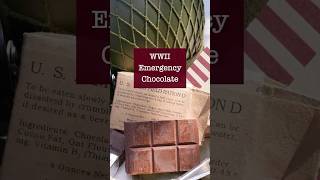

Why WWII Chocolate Was Made to Taste Bad
44sThe counterintuitive concept of deliberately making a chocolate bar taste bad is intriguing and shareable.
▶ Play Clip"The title accurately describes the content—a historical and practical look at the WW2 chocolate D ration—without exaggeration."
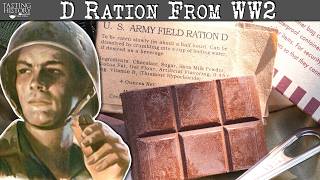
The video explores the history and creation of the WWII chocolate D ration, a specially designed emergency food for American soldiers. It details the collaboration with Hershey, the unique ingredients, and the practical challenges of production and consumption.
Captain Paul Logan wanted to develop an emergency ration for the American army in the 1930s, leading to the creation of the D ration chocolate bar.
Hershey collaborated to create a nutrient-rich chocolate bar that was meant to taste unpleasant to prevent overconsumption.
The formula included cocoa, sugar, cocoa butter, dry milk, and oat flour, making it different from regular chocolate.
The bar was very hard and slightly gritty due to oat flour, and it included thiamine hydrochloride to prevent beriberi.
Soldiers found the taste 'pretty lousy' but appreciated its life-saving value in emergencies.
The bar had to be pressed into molds by hand because it couldn't be poured, and it was wrapped in cellophane and wax-coated boxes.
The presenter taste-tested the bar, noting it wasn't terrible, and melted it in water as soldiers often did, hinting at a future recipe video.
Who wanted to develop an emergency ration for the American army in the 1930s?
Captain Paul Logan
00:01
Which company collaborated to create the D ration chocolate bar?
Hershey
00:14
What ingredients were included in the D ration formula?
Cocoa, sugar, cocoa butter, dry milk, and oat flour
00:29
Why was thiamine hydrochloride (vitamin B1) added to the chocolate?
To prevent beriberi
00:42
What was the texture of the D ration chocolate bar?
It was very hard and slightly gritty
00:42
How long was recommended to eat the D ration bar?
About half an hour
00:54
Why was the D ration chocolate bar pressed into molds by hand?
Because it could not be poured, so it had to be pressed into molds by hand
01:06
How was the D ration bar packaged?
Cellophane and wax-coated boxes
01:06
Origin of the D Ration
Explains the historical context and the specific need for an emergency ration during WWII.
00:01Hershey Collaboration
Highlights the partnership between the military and a major chocolate company to develop the ration.
00:14Unique Formula
Details the specific ingredients that made the D ration different from regular chocolate, including oat flour and added vitamins.
00:29Texture and Additives
Explains why the bar was hard and gritty, and the purpose of adding thiamine to prevent beriberi.
00:42Soldier Feedback
Provides insight into how soldiers perceived the taste and texture, calling it 'pretty lousy' but a lifesaver in emergencies.
00:54Packaging and Production
Describes the manual pressing process and the packaging methods used to preserve the bar.
01:06Taste Test and Melting
Shows the practical use of the bar, including melting it in water as soldiers often did, and hints at a future recipe video.
01:19[00:01] Второй мировой войны, который был специально разработан так, чтобы иметь неприятный вкус. Неплохо, но и не отлично. Дело в том, что в 1930-х годах капитан Пол Логан хотел разработать аварийный рацион для американской армии и решил, что шоколадный
[00:14] с компанией Hershey, чтобы создать богатый питательными веществами шоколадный батончик, который следует употреблять вкус это блюдо было лишь немного лучше вареной картошки. В общем, не ужасно, просто нормально. Разработанная ими формула включала какао и сахар,
[00:29] как в обычном шоколаде, но с добавлением какао-жира, сухого молока и овсяной муки. шоколада до тех пор, пока он не нагрелся до 49°C. Затем они добавили немного ванильного ароматизатора и гидрохлорида тиамина, или
[00:42] витамина B1, чтобы предотвратить бери-бери. Из-за этих добавок, а именно овсяной муки, текстура шоколадного батончика получилась очень твердой и немного зернистой, вероятно, поэтому на коробке было написано, что его нужно есть медленно, примерно в течение
[00:54] получаса. Солдаты говорили, что это был довольно паршивый шоколад, но в чрезвычайной ситуации он оказался настоящим спасением. В отличие от обычного шоколада, его нельзя было разливать, поэтому его приходилось вручную прессовать в формы объемом 4 унции . Затем его заворачивали в
[01:06] целлофан и помещали в коробки, покрытые воском, а в конце концов даже наносили тонкий он сохранял свою форму. Должен сказать, хотя текстура и не идеальна, вкус не ужасный. А когда я растопил его в воде, что часто делали солдаты,
[01:19] поскольку солдаты носили их с собой месяцами, прежде чем поесть, может быть, мне стоит Чтобы узнать больше об истории пайка D, подписывайтесь на мой канал на YouTube, и я выложу этот follow me on YouTube and I'll put this recipe on Tasting History channel.
⚡ Saved you 0h 01m reading this? Transcribe any YouTube video for free — no signup needed.