
Why Hyperrealism in Games is Boring
45sChallenges the common desire for realism in games, sparking debate on what makes immersive experiences engaging.
▶ Play Clip"The title accurately describes the content: in-depth animation analysis and staff spotlight for JJK S3 teaser."
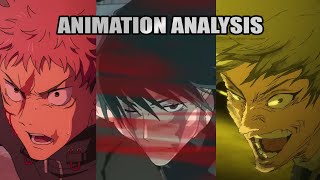
The video analyzes the Jujutsu Kaisen Season 3 teaser trailer, focusing on the concept of magical realism in animation and the impact of key staff members like series director Shōta Gosso. It discusses how the production quality has improved compared to Season 2, despite ongoing industry challenges.
Human beings crave escapism, but hyperrealism can be boring; surrealism can be unrelatable. The sweet spot is magical realism: impossible scenarios executed in a realistic way.
Magical realism involves impossible scenarios presented with realistic execution, making them feel tangible. Examples include Utapon's animation and the contrast between Thunderclap part one and part two.
Chainsaw Man Season 1 emulates realism perfectly; the movie dials up expressionism. Jujutsu Kaisen Season 3, led by Shōta Gosso, aims for ambitious, fascinating content 100% of the time.
Gosso supervises all elements: art direction, compositing, music, sound, and animation. His hands-on approach is evident in the Hidden Inventory arc, but the schedule limited his supervision during Shibuya.
Season 3 has a stable core staff and better scheduling, allowing for unified directorial vision. Art direction and compositing are the best in the series, with character designs by Yōsuke Yajima and Hiromi Niiwa.
Assistant director changes from Toyota Ike to Yōsuke Takada. Composer Yoshimasa Terui remains. The production pipeline is still broken but improved, with more time for each project.
Early episode releases strain production. Examples like Dandadan and Frieren show negative effects. The speaker criticizes producers prioritizing profits over production health.
Detailed breakdown of the trailer: art direction, compositing, character corrections, effects animation, and specific animator styles (e.g., Shinsaku Kozuma, Rui, Hayate Kurasaki).
Jujutsu Kaisen Season 3 promises to be a masterpiece with improved production conditions and a talented staff, though industry challenges persist. The trailer showcases exceptional animation and directorial vision.
What is magical realism in animation?
Impossible scenarios executed in a realistic way, making them feel tangible.
1:07
Who is the series director for Jujutsu Kaisen Season 3?
Shōta Gosso.
3:08
What are the two character designers for JJK Season 3?
Yōsuke Yajima and Hiromi Niiwa.
10:00
Why was the production of JJK Season 2 particularly difficult?
It followed Chainsaw Man's TV anime production, lacked a core staff, and had a terrible schedule with 17 of 23 episodes worked on days before airing.
13:08
What is the main critique of early episode release gimmicks?
They strain production by cutting short the schedule for episode 1, which is crucial for setting the show's identity.
14:52
Which animator is known for using geometrical square-like shapes in effects animation?
Shinsaku Kozuma.
21:46
What tool does Gosso use for 3D backgrounds?
Blender, making them himself rather than depending on a 3D team.
27:06
Definition of Magical Realism
Core concept that frames the entire analysis.
1:07Gosso as Visionary Director
Highlights the key creative force behind JJK S3.
3:08Season 2 Production Struggles
Contextualizes the improvements in S3.
13:08Critique of Release Gimmicks
Insightful industry commentary on production strain.
14:52Trailer Art Direction Analysis
Detailed breakdown of visual techniques.
16:39[00:00] It's no secret that human beings crave
[00:02] escapism. Anything that separates us
[00:04] from our boring, miserable lives allows
[00:06] us to keep going on with our boring,
[00:07] miserable lives. So, we seek out
[00:09] immersive worlds in other media. And
[00:11] while such immersive media can be really
[00:13] intriguing because of the technical
[00:15] progress that goes into making it so
[00:17] hyperrealistic, it can also be boring.
[00:21] I play games to escape reality, not to
[00:24] be annoyed by it. So, what about the
[00:26] other end of the spectrum? Surrealism.
[00:27] it is. Then this is not possible in real
[00:30] life whatsoever. I can only do this in a
[00:32] video game and that's boring. If you
[00:33] remove any semblance of realism
[00:35] whatsoever, that piece of art is no
[00:37] longer relatable. If it's not relatable
[00:39] whatsoever, it's not possible to get
[00:41] invested in it. I don't want to drive a
[00:43] hypercar with zero sense of speed
[00:45] worried about fuel consumption and tire
[00:47] wear. Neither do I want to do barrier
[00:48] rolls on a hypercar cuz that is
[00:50] absolutely impossible. But so is driving
[00:52] a hypercar through a thunderstorm.
[00:54] However, something's different here. The
[00:55] presentation of the impossible here is
[00:57] realistic. Raindroplets are not that
[00:59] big. However, the physics with which
[01:01] they sway left and right look absolutely
[01:03] stunning. This is realism with a splash
[01:05] of expressionism thrown in there.
[01:07] Magical realism. The idea of coming up
[01:09] with impossible scenarios, but then
[01:11] executing it in a way that feels real.
[01:14] And the appeal that this magical realism
[01:16] has, it can translate to animation as
[01:18] well. It's one of the things that makes
[01:19] Utapon's animation so appealing. He
[01:21] constantly drops you into settings that
[01:23] make no sense. But he animates
[01:25] everything in it realistically as if it
[01:28] could exist in our world. Look at this
[01:30] space. It physically makes no sense. Why
[01:33] is there no floor? Why is the background
[01:36] this color? But what if you draw a
[01:37] character running realistically through
[01:40] the space? If a goo monster slowly
[01:42] reformed its body, what would that look
[01:44] like in real life? A boy hanging off the
[01:46] face of a dragon. It's impossible. But
[01:48] even then looking at this animation some
[01:50] part of your brain goes holy [ __ ] that
[01:52] is so realistic. That contrast of
[01:54] realism is incredibly appealing. Now
[01:56] this magical realism as I call it it
[01:58] does fall in a spectrum. Examples I
[02:00] could use to explain this is Thunderclap
[02:02] part one and Thunderclap part two. The
[02:03] spaces that Nakaya onen and Miso
[02:05] constructed for Thunderclap part one.
[02:07] All of them physically make sense. Yes,
[02:09] a bunch of buildings melting together.
[02:11] It's unrealistic, but if it did exist,
[02:14] this is probably what it would look
[02:15] like. Our brains understand that. For
[02:17] Thunderclap part two, on the other hand,
[02:18] Hakugo immediately drops you into a
[02:21] space that makes no sense. Why does the
[02:23] background slowly shift from floor level
[02:25] to the side of a building in between the
[02:27] fight? It makes no sense, yet it is
[02:29] grounded in absolute realism because
[02:31] look at these movements. The body
[02:33] dynamics of the characters still have
[02:35] weight. Chainsaw Man season 1 is
[02:37] incredibly technically impressive
[02:38] because it emulates realism to such a
[02:41] perfect degree. Chainsaw Man's movie
[02:43] dials up the expressionism to a degree
[02:45] where you still feel like it's
[02:47] technically impressive because of how
[02:48] realistic it is, but the action scenes
[02:50] are just more fun to watch. Shono has
[02:52] put Jiu-jitsu Kaisen season 3 at the
[02:55] extreme end of the spectrum. He's
[02:56] dropping us to a world that he's
[02:58] constructed. There are unique and
[02:59] unrealistic colors that exist in this
[03:01] world and yet all these elements are
[03:03] grounded using realistic rules that make
[03:06] sense to us. Due to Kaisen season 3's
[03:08] core staff mostly remains the same. It
[03:09] is still led by the most visionary,
[03:12] ambitious director of our generation,
[03:14] Shiro Jizono. It would be on the same
[03:15] level as if Atsushi Kabayashi or
[03:17] Toshiuru directed the entirety of Naruto
[03:20] instead of individual episodes or if
[03:21] Hakugo or Miso directed a whole series.
[03:24] I guess it is also happening with Fate
[03:26] Strange Fake, but you can't really call
[03:27] that show a proper series now, can you?
[03:30] But yes, what can you expect when a
[03:31] highlight director is the series
[03:33] director? You'll get a show that is
[03:35] trying to be ambitious and fascinating
[03:37] 100% of the time. Series directors
[03:40] supervise the entire project and
[03:41] supervise every single element of the
[03:43] entire project whether that's art
[03:45] direction, the compositic, the music
[03:47] direction and sound direction and with
[03:49] action animators turned directors like
[03:51] Shushono of course he supervised the
[03:53] action animation and the animation
[03:54] direction as well. Gosso's supervision
[03:56] as a series director can be best seen in
[03:58] the hidden inventory arc. He was very
[04:00] hands-on with the first five episodes of
[04:01] season 2. So even though every episode
[04:03] of H inventory arc was directed by
[04:05] different artists, you could absolutely
[04:07] still make out Shotokuno's sensibilities
[04:09] within these same episodes. The
[04:10] atrocious schedule of season 2 didn't
[04:12] allow him to maintain that level of
[04:13] supervision throughout the show. For the
[04:15] Shibuya, he basically went back to his
[04:17] role of episode director while also
[04:18] doing a lot of emergency key animation,
[04:20] emergency direction, and also some
[04:22] highlight animation thrown in there as
[04:24] he's still a [ __ ] insane artist. For
[04:25] the Culling Games teaser, it just looks
[04:27] like every single shot was supervised by
[04:29] Gosso, which kind of checks out because
[04:31] from my understanding, most of these
[04:32] shots are from episode 1, which is
[04:34] almost always storyboarded and directed
[04:36] by the series director. So, in this case
[04:38] being Gosso, but expect the base level
[04:41] of quality for season 3, to be the same
[04:43] as that for the first five episodes of
[04:44] season 2, which is incredible cuz that
[04:46] arc was a masterpiece, quite possibly
[04:49] the best produced arc in modern shownen.
[04:50] Now, Gossu's hands-on supervision does
[04:52] not mean that you're not going to see as
[04:54] much experimentation as season 2. What
[04:56] Gossu is going to provide as a series
[04:57] director is an incredibly ambitious base
[04:59] for experimentation and also super
[05:02] highquality supervision that comes with
[05:03] all of his experience. There are
[05:05] definitely going to be episodes where
[05:06] he's going to be mostly handsoff because
[05:08] there are going to be other equally
[05:10] ambitious episode directors in this
[05:11] project. God, I'm so excited for it. His
[05:13] skill with direction does not end with
[05:15] the visual elements. The director is
[05:16] supposed to supervise everything and you
[05:18] can tell that in the trailer. This is
[05:19] the best art direction and compositing
[05:21] that Juditsu Kaisen has ever had. Even
[05:22] though the staff in that regard remains
[05:24] unchanged from season 2. It's just that
[05:26] the team couldn't focus on these two
[05:27] elements while producing season 2
[05:29] because 17 out of season 2's 23 episodes
[05:31] were being worked on days before they
[05:34] went on air. I am not even exaggerating.
[05:36] But here the compositing, the art
[05:38] direction and the animation can be
[05:40] unified under a proper directorial
[05:42] vision. The other things that have
[05:43] changed is the art style itself. The
[05:46] character designs have changed. Season
[05:47] 2's character designs were great. Hakoso
[05:49] provided a really good base for the
[05:51] artist to work with, but it wasn't
[05:53] really the most impressive from an
[05:54] aesthetic sense. This is not me
[05:55] disparaging Asia Koso. Absolutely. Now,
[05:58] she's an incredible artist, but it was
[05:59] in the same vein as the art direction
[06:01] and compositing in the sense that the
[06:02] goal was just to provide something for
[06:05] the animators to start working. Kosiso
[06:07] was picked because she was a character
[06:08] designer alongside Hiamatu in season 1.
[06:10] So, she's most familiar with the designs
[06:12] and can provide a solid easy to work
[06:13] with base. And they were just really
[06:15] good on model designs. They were not
[06:17] trying to be ambitious, unique, or
[06:19] idiosyncratic, which of course didn't
[06:21] matter because everyone did whatever
[06:22] they wanted with her designs anyway,
[06:24] including Saiaka Koso herself. As the
[06:26] season progressed, we could see Koiso's
[06:27] art style evolving, especially with the
[06:29] Blu-ray covers that she drew. These look
[06:31] absolutely nothing like her own
[06:32] character designs. Season 3, the common
[06:34] recurring theme is to treat every single
[06:36] element as a work of art that can be
[06:38] pushed to its limit. There were six main
[06:40] chief animation directors for season 2
[06:42] or at least it started off as such.
[06:44] Takusho Shimizu left after the fifth
[06:46] episode to most likely work on Chinsaw
[06:47] Man. Technically, she did contribute in
[06:49] Shibuya arc. She made this wonderful
[06:51] Megumi drawing, but for the actual
[06:52] anime, she didn't actually do anything.
[06:54] The rest of the names were significantly
[06:55] important to the production, especially
[06:58] Yoshi Yajima and Soazaki who did
[07:00] absolutely unfathomable levels of work.
[07:02] Yamasu displayed his talent as a
[07:04] character designer almost instantly. He
[07:06] almost always did his own thing or what
[07:08] the episode director expected out of
[07:10] him. Whereas Yuzuki Aajima was focused
[07:12] on elevating the base character designs.
[07:14] He was never really displaying his own
[07:16] artistic idiosyncrasies, but his
[07:18] impressive artistic sense could
[07:19] immediately be spotted. This looks like
[07:22] it's faithful to the character design,
[07:23] but it has its own yosima appeal.
[07:26] Whereas this is just a complete
[07:28] transformation of the design by Nakaya
[07:29] onen. And that's just what these artists
[07:32] usually do. Yuki never did that. Even
[07:34] when he drew with a ridiculous level of
[07:36] detail, he kept the aesthetic of the
[07:37] base designs in mind. So, I was really
[07:39] excited to see what his interpretation
[07:41] of the designs would look like. And
[07:42] guess who the character designer is for
[07:44] season 3? Yajima's designs look
[07:46] absolutely stunning. Yajima's
[07:48] corrections were exclusively composed of
[07:50] full even lines with very sharp
[07:52] features, which definitely makes the
[07:53] lives of Dogemen much easier cuz all you
[07:56] have to do is trace those simple lines.
[07:57] Whereas if I was a dog man and I saw
[07:59] this drawing, I would be [ __ ] crying
[08:01] which wouldn't matter at the end of the
[08:02] day cuz Soaut Mazaki would do the dog
[08:04] himself. Here the designs that Yajima
[08:05] has created itself has uneven lines and
[08:08] it it's rendered so beautifully. The
[08:10] appeal in this animation is the fact
[08:11] that it's handdrawn animation and the
[08:13] raw unprocessed nature of this line art
[08:15] just boosts that appeal. The most
[08:17] impressive thing about this is just that
[08:18] these are the base designs. This is what
[08:21] the drawings made by the character
[08:23] designer looks like. The base level is
[08:25] this astronomically high which just
[08:27] means that every drawing will look good.
[08:30] Yajima is not the only designer
[08:31] involved. There are two character
[08:32] designers. You might be expecting
[08:33] another name from this list. But no,
[08:36] this artist was not credited as one of
[08:37] the main chief animation directors for
[08:39] the project. It rarely happens where you
[08:41] have to change the credit after the show
[08:43] airs. But honestly in this is one of
[08:44] those rare cases where it should have
[08:46] been done. And I'm talking about Hiomi.
[08:47] Na was not credited as a chief animation
[08:50] director because she was not a chief
[08:52] animation director when the project
[08:53] charted up. She was a recurring
[08:54] animation director even for season 1 of
[08:56] Jutsu Kaisen. For season 2, she
[08:58] continued with the same working as an
[08:59] animation director. Halfway through the
[09:00] production, however, she made her chief
[09:02] animation director deb alongside the
[09:03] affforementioned Yosi and Raina. Then
[09:06] she appeared once again as a chief
[09:07] animation director for the last four
[09:08] episodes back to back chief animation
[09:10] director for four episodes in a row
[09:12] because the last four episodes were the
[09:14] absolute extreme of brute forcing, the
[09:16] tail end of the worst TV anime
[09:18] production of all time. But the point is
[09:20] all the other people who worked as chief
[09:22] animation directors for all the episodes
[09:24] were usually a combination of these
[09:26] names. In rare cases, we did have guest
[09:28] chief animation directors like episode
[09:30] 14 with Totos and Shun. They probably
[09:32] just moved their chairs from the
[09:33] Chainsaw Man side to the Jiujitsu Kaisen
[09:35] side to work on this episode. But yeah,
[09:36] they did not consistently keep appearing
[09:38] in the last four episodes as well. Well,
[09:40] there was one exception in Yuruko Ishi.
[09:42] All the other names credited as were a
[09:44] combination of the main chief animation
[09:46] director's name with the sole exception
[09:48] of Hiominiba. So yeah, she was basically
[09:50] one of the main chief animation
[09:51] directors for season 2. She was just not
[09:53] credited as such. She was just so
[09:54] skilled and familiar with Jiutsu Kaisen
[09:56] that she was allowed to take up that
[09:58] role halfway into the project. And now
[10:00] she's a casual designer alongside Yosuki
[10:02] Hajima. From the sequences in the
[10:03] trailer, it looks like most of the UT
[10:04] sequences were corrected by Neva and the
[10:06] Eugis were corrected by Yajima to
[10:08] further create a dichotomy while they
[10:10] fight. It's a poetic production. Of
[10:12] course, it's going to be with Gosso as
[10:13] the head. Neva has drawn Yugji as well.
[10:15] I mean, this KV is just a testament to
[10:18] her skill. Another change with the core
[10:19] staff list is the assistant director
[10:20] Toyota Ike being replaced by Yosukada.
[10:23] I'm assuming it's because Ike was just
[10:24] busy acting as a chief director for
[10:26] Mono, which by the way, incredible
[10:28] production. Just have to point that out.
[10:29] And the best possible person to replace
[10:31] him is Yosukakada. The first proper
[10:33] Gosso high-profile episode was episode
[10:35] 17 of Jiu Kaisen season 1, which was
[10:37] followed up by episode 18 by Yosuket
[10:40] Takada. Go then directed season 2,
[10:42] episode 1, which was followed up by
[10:43] Yosuk Takata's episode 2. Gosso then
[10:45] directed episode 9 of season 2 which was
[10:48] followed up by can you guess episode 10.
[10:51] He's also directly worked alongside
[10:53] Gosso with episode 18 where he processed
[10:55] the storyboards alongside him.
[10:56] Regrettably a very broken episode
[10:58] because of the schedule. The rest of the
[10:59] core staff remain unchanged. I'm
[11:00] particularly happy about Yoshi Master
[11:02] Tui staying as a composer. In episode 8
[11:04] of Chainsaw Man, we saw the best
[11:05] utilization of Kenuk Ushio's score.
[11:09] And watching the trailer for season 3,
[11:10] it's pretty much guaranteed that Gosso
[11:12] is going to be doing the same with
[11:12] Tedui's music.
[11:16] We still don't know what the full extent
[11:17] of the core staff is like, you know,
[11:19] more chief animation directors maybe. We
[11:21] don't know who the main animators are
[11:22] going to be. I'm assuming Kosuk Kato
[11:24] might not be back because he was busy
[11:25] with the IBA and the other three main
[11:27] animators definitely has some level of
[11:28] contribution in the Chainsaw Man movie
[11:30] as well. But the production pipelines in
[11:31] Mapa is still completely broken. Uh it's
[11:35] not really accurate to say that. It's
[11:37] more like they've never existed in the
[11:38] first place. And while that is still
[11:40] technically a bad thing, it is no longer
[11:42] as awful as it was before. What I mean
[11:44] by the production pipelines not existing
[11:46] is that MAPA operates in a way such that
[11:48] they put whatever stuff is available on
[11:50] whatever project at whatever time they
[11:52] need them to be there. That is not
[11:54] necessarily a bad thing. It is howable
[11:56] operates for example and they're doing
[11:58] great. It's just that they simply have
[11:59] more time for each project. And for the
[12:01] first time in forever, MAPA has that
[12:04] too. Splitting production lines can also
[12:06] have their demerits like Mob Psycho
[12:08] season 3 for example. We got one Utapon
[12:10] scene for the show. I wanted more Utapon
[12:12] scenes. Utakan Nakamura himself wanted
[12:14] more Utapon scenes. He loves the project
[12:16] so much and wanted to work on it so
[12:17] desperately that he ended up
[12:18] contributing with second key animation
[12:20] just to have his name attached to the
[12:21] project once again cuz the production
[12:22] lines between Mobs 100 and My Hero
[12:25] Academia are split and he has to focus
[12:26] more on My Hero Academia. But in Studio
[12:28] Mappa's case, even though Mazaki is a
[12:30] chief animation director for a bulk of
[12:32] the Chainsaw Man movie, I wouldn't be
[12:34] surprised if he appears on Jiujitsu
[12:36] Kaisen season 3. Conversely, I also
[12:38] wouldn't be surprised if Yajima did
[12:39] something for Chainsaw Man, though his
[12:41] presence is not really needed there. The
[12:43] staff list is [ __ ] insane after all.
[12:44] Basically, what I'm getting to is that
[12:46] the Sichimo team has such an insane
[12:49] range of staff. They can definitely be
[12:52] split for the most part into two
[12:54] different project. And as long as these
[12:55] two projects have enough time available
[12:57] for production, all the animators and
[12:59] animation directors can just work on
[13:01] both of them as there are going to be
[13:02] buffer periods during the production.
[13:04] keywords as long as both of them have
[13:06] enough time. Jujutsu Kaisen season 2 was
[13:08] produced in a particularly unlucky time
[13:10] because what it was following up was a
[13:12] TV anime production of Chainsaw Man.
[13:14] Also, they did not have a core staff.
[13:15] So, it was the classic mappa technique
[13:17] of building a new production line out of
[13:19] an existing production line and making
[13:21] an anime out of it. This time, you have
[13:22] a base because the jiu-jitsu kaizen
[13:24] season 2 staff are still here. The
[13:25] Chainsaw Man season one staff are still
[13:27] here for the most part and you're
[13:29] following after a movie production, not
[13:30] a TV anime production, which is also
[13:32] greatly beneficial. It's going to
[13:33] release in January. Is that a healthy
[13:35] production? No, there's no way that's a
[13:36] healthy production. But it's more in the
[13:38] line of classic anime industry bad like
[13:40] how Frein is a struggling production.
[13:43] Like how My Hero Academia is a
[13:44] struggling production. It's no longer
[13:46] mapper levels of bad. And that is fine.
[13:48] And considering the staff that's on
[13:50] board, this is definitely more than
[13:51] enough time for them to create a
[13:53] masterpiece. It might not be perfect,
[13:54] but that's basically every project in
[13:56] the anime industry. But I do feel like
[13:57] this production line is going in a
[13:59] better path, especially because it might
[14:00] not even just be a single production
[14:02] line anymore. Neither Chainsaw Man Movie
[14:04] nor Juju Kaisen season 3 have revealed
[14:06] who the animation producer is going to
[14:07] be. And Quesog Sashima was promoted to
[14:09] an executive officer at MAPA. So any of
[14:11] the production assistants who worked
[14:12] under him might have been promoted to
[14:14] animation producers now. So all we know
[14:15] JJK and CSM might have two different
[14:17] animation producers with Sichimo just
[14:19] acting as the head. And regardless of
[14:20] whether you're working with the same
[14:21] talent pool or not, having different
[14:23] animation producers is always going to
[14:25] be beneficial for two different
[14:26] projects. And January sounds good for a
[14:28] single core, unless they throw some
[14:30] release gimmicks in there.
[14:36] Why do they do this? Episode one of a
[14:38] project is a special project is the
[14:40] prime opportunity for the core staff to
[14:43] show everything that they have. which is
[14:44] why it's usually directed by the series
[14:46] director, which is why usually it's
[14:48] corrected by the character designers.
[14:50] So, these dumb [ __ ] release gimmicks
[14:52] do nothing but unnecessarily strain the
[14:55] project. Episode one of Heavenly
[14:56] Delusion, for example, had a production
[14:58] schedule of two [ __ ] years. They're
[15:00] not just producing one episode. They're
[15:01] laying out the identity for all the
[15:03] future episodes. Particularly, cutting
[15:05] short the schedule for episode 1 for a
[15:08] [ __ ] release gimmick only puts strain
[15:10] on the production. I might have to make
[15:12] a whole video on this cuz it it
[15:13] completely [ __ ] sucks. When has this
[15:15] ever worked out? Demon Slayer has first
[15:17] episodes grouped with other episodes and
[15:19] released in form of movies. Sure,
[15:20] produced in a specialized studio like
[15:22] you with strong in-house culture. Do the
[15:24] same with Dandelan. What do you get? A
[15:26] completely [ __ ] up production. While
[15:28] Ever Garden can release the first four
[15:29] episodes simultaneously in a specialized
[15:31] TV slot, producing Kyoto Animation, the
[15:33] studio that finishes production months
[15:35] before the first episode airs. Breen
[15:37] does the same thing and what happens? A
[15:39] [ __ ] up production. No [ __ ] The
[15:41] producers are looking at the release
[15:42] gimmicks and only thinking about the
[15:43] possible profits. Release gimmick can
[15:45] only exist in gimmick studios. And yes,
[15:48] your portable and cyto animation could
[15:50] be called gimmick studios. I'm not
[15:52] saying that in a negative way. I'm
[15:53] saying that in a positive way. In the
[15:55] vast hellscape of the anime industry,
[15:57] having good working conditions is a
[15:59] gimmick. The only thing it does is
[16:01] negatively affect the show. Some shows
[16:02] can't even figure out what their gimmick
[16:04] is before releasing. Like [ __ ] fade,
[16:06] strange, fake. At best, this November
[16:08] release of the first two episodes didn't
[16:10] negatively affect the production, but it
[16:12] undoubtedly put some level of strain on
[16:14] the project that did not need to exist.
[16:16] People are blaming Demon Slayer and
[16:18] Evotable for this. But are they really
[16:20] at fault? If your studio is built in a
[16:22] way such that it facilitates making more
[16:24] profit, why the [ __ ] wouldn't you do it?
[16:26] The problem with other studios is that
[16:27] they only look at the latter half of
[16:29] that sentence. I'm sorry. I'm just
[16:31] really annoyed by this goddamn movie
[16:33] release gimmick. It is what it is. What
[16:36] are you going to do about it? Let's just
[16:37] finally talk about the actual animation
[16:39] in the trailer. All right, literal first
[16:40] cut from the trailer. And look at that
[16:42] art direction. The anime is supposed to
[16:44] adapt and elevate. This is what doing
[16:46] both looks like. If you put the manga
[16:48] panel side by side, I mean, there really
[16:50] isn't much competition here, is there?
[16:52] The position of Yugji is changed with
[16:54] respect to the manga as well. This was
[16:55] definitely a deliberate decision to
[16:57] parallel where Gojo was sitting in
[16:58] episode 5. The art direction is
[17:00] absolutely gorgeous. The glass painted
[17:02] window and the red coming through it,
[17:03] the reflection of that red on the tiles,
[17:06] it's surreal in the sense that a red
[17:08] space like this doesn't make any sense,
[17:11] but it is also tangible. It's also
[17:13] realistic. I've never seen the sky in
[17:15] this shade of red. But for creating that
[17:17] artistic mood, realism can be dropped.
[17:19] So, while this space makes no sense, if
[17:21] this space existed, this is exactly how
[17:23] it would look. When you talk about the
[17:24] sky in my hurricane looking bland, the
[17:27] usual retort that the fans of the show
[17:28] throw is, "Isn't the sky supposed to be
[17:30] blue?" That is called missing the point.
[17:32] The sky is supposed to be blue. Yes, but
[17:34] the sky can also be red. The fact that
[17:36] it's unrealistic does not matter if
[17:38] there is a vision behind it. Hm, I
[17:40] wonder why the sky suddenly turned red
[17:42] in this shot. Why was realism suddenly
[17:44] thrown out of the window? You see the
[17:45] point? Speaking of being thrown out of
[17:47] the windows, everything is reflected on
[17:50] the windows as well, right? Every
[17:51] element of the art direction is
[17:52] reflected on top of the window. So, we
[17:53] have a ray tracing on here. The screen
[17:55] is engulfed in pink light. It's not
[17:57] entirely engulfed in the light in a way
[17:59] that literally every element looks pink.
[18:01] No, but the overall color profile is
[18:03] pink. Really cool effects animation
[18:04] here. Lots of granularity in that
[18:06] effects. And the shot composition is
[18:08] also incredible. UT just casually walks
[18:10] in front of the frame. Two different
[18:12] layers of animation and two different
[18:13] layers of art direction. You have the
[18:15] background art all the way behind the
[18:16] building, which is just the sky. You
[18:18] have the building itself, which is also
[18:19] part of the art direction, but on top of
[18:21] the building, you also have a layer of
[18:23] hand-drawn effects animation. Then in
[18:25] front of it is another layer of art
[18:27] direction. The background painting that
[18:29] has all these boxes, this cloth, and
[18:31] then another layer of 2D animation that
[18:32] walks in front of it. It's a very
[18:34] ambitious board and wouldn't really be
[18:35] possible if the compositing and art
[18:37] direction wasn't completely in tune with
[18:39] the director. And the thing is, this is
[18:41] not even that complex with its short
[18:43] composition. It's difficult to get your
[18:44] point across if you don't exaggerate
[18:46] things. Depth, for example, doesn't
[18:48] exist. It's a 2D medium. There's no
[18:50] depth. Gosso uses all kinds of fisheye
[18:52] and complex perspectives to get that
[18:54] sense of depth across here. It's simply
[18:56] just art direction and compositing
[18:58] brilliance here. Even through the
[19:00] incredibly pathetic YouTube compression,
[19:03] the shape of the shading within the
[19:04] smoke definitely looks like something
[19:06] Hayer Kurasaki would do. All but
[19:07] confirmed to be working on Chainsaw Man
[19:09] as well. Just another further proof that
[19:11] there's going to be a lot of intermixing
[19:12] between the staff. Starting with great
[19:13] shots of hands over here. I'm assuming
[19:15] that's Yuji's hand washing away the
[19:17] blood. This I don't really understand
[19:18] the sense of scale. That's either a very
[19:20] big hand or a very tiny chair. A very
[19:22] cool shot. It almost looks like 4x3.
[19:24] It's It's cinemascope, right? Yes, it's
[19:26] cinemascope, but it looks like it's 4x3
[19:29] just because of this box framing. You're
[19:31] looking into a room past these glass
[19:34] ornaments. There's only one director
[19:35] who's thinking of shots like these. And
[19:37] this is just exceptionally beautiful
[19:38] animation over here. It looks like
[19:40] something Soaki would do. Here you can
[19:42] really look at the design language. Very
[19:44] similar to something like look back.
[19:45] This is the kind of beautiful line art
[19:46] that would usually be lost in second key
[19:48] animation or Doga, but here it looks
[19:50] beautiful. Of course, it's going to be,
[19:51] I'm assuming, the first scene in season
[19:53] 1, so it makes sense that it looks good.
[19:55] And these effects look very much like
[19:57] Masahiro Tko's effects. The curses are
[19:59] handdrawn, but they look 3D because of
[20:01] the incredibly fluid movements, which
[20:03] again, if it's Tokomo animating, that
[20:05] kind of checks out. This is not CGI.
[20:07] That is handdrawn animation. Took is
[20:09] just that guy. We see another incredibly
[20:11] beautiful correction. Look at the
[20:12] strokes of black lines on his hair.
[20:14] particularly some of it has dyed
[20:16] outlines but on other cases there's some
[20:18] strong black outlines thrown on top the
[20:20] facial shading why is there an
[20:22] unevenness over here cuz that's how
[20:24] light usually bounces off someone's face
[20:26] when you look at my face you can tell
[20:27] that there's levels of depth to it is a
[20:29] 2D character look at his nose it's two
[20:32] lines throw this droplet shaped light in
[20:34] there however and boom you have a nose
[20:36] it also moves it and moves quite a bit
[20:38] I'm assuming it was probably just two
[20:40] key frames for the entire thing and the
[20:42] rest was completed by doga it doesn't
[20:44] look like auto in betweening as well
[20:45] like you portable uses. Same with Megumi
[20:47] again individual frames that's done
[20:49] beautifully. I'm assuming just two key
[20:50] frames again and the rest of it is
[20:52] filled in by the in between animators.
[20:54] Lots of subtle acting as well. Like just
[20:56] look at Yuki moving her face a little
[20:58] bit. Those are individual frames that's
[21:00] going to add to the frame count of the
[21:02] episode. About the background, however,
[21:04] don't know what the [ __ ] is going on
[21:05] here. I don't know if that's intentional
[21:06] or not. It's such an obvious error if
[21:08] it's unintentional. So, I'm not sure.
[21:10] They do seem to be in a different
[21:12] dimension here. They do have red
[21:13] outlines. Choso is officially a good guy
[21:15] as well, I'm guessing. Again, just small
[21:17] subtle movements that you would usually
[21:19] only see in a movie production. The
[21:21] crumpling of his shirt as well, the
[21:22] force of his hands. The illustration of
[21:23] the hand itself, the shading is so
[21:25] gorgeous. This is more in line with the
[21:26] complex layouts that we used to seeing
[21:28] from Gosso. There's a giant monster in
[21:30] the background, but that's not the only
[21:31] thing he wants you to look at. Of
[21:32] course, there are curses flying in the
[21:33] foreground as well. This white mirror,
[21:35] I'm assuming that is Utah landing in
[21:38] there. And then it's just beautifully
[21:40] flows into cubic debris. it it's not
[21:42] utapon cubes but the shapes of the cubes
[21:44] are very utaponesque. It's definitely
[21:46] Shinsaku Kosuma's animation. I don't
[21:48] know who this character is in the
[21:49] forward. I think it's the same guy who
[21:51] we see fights Choso later. And yes, this
[21:53] cut is also once again absolutely done
[21:54] by Kosuma. He uses a lot of geometrical
[21:57] squarel-like shapes with his FX
[21:58] animation and he uses like no depth
[22:01] outline within those drawings. Like this
[22:04] smoke has no layer of depth. Like it's
[22:06] just one layer of smoke. It's like the
[22:07] exact opposite of Hayatkuraki style. And
[22:10] I'm assuming that's a metaphorical
[22:11] representation of UT's hand. Another
[22:13] case of just adding frames for the sake
[22:15] of animation. The way his sword vibrates
[22:17] there looks so cool. That's three or
[22:18] four frames of animation, right? It's
[22:20] not really necessary, but it adds
[22:22] something to the scene. This is funny. I
[22:24] think they're still using the same CGI
[22:26] finger model from season 1. It's iconic
[22:28] at this point, so I'm glad that they're
[22:30] using it. Another really ambitious shot
[22:31] composition. There's no pseudo fish eye
[22:33] effect here, but still, it's a really
[22:34] good perspective drawing. Multiple
[22:36] elements to the animation. Again, Eugi's
[22:38] character model drawn with extreme
[22:39] realism to the character acting. In the
[22:41] background, there's lots of effects
[22:42] animation, but to add to that depth
[22:44] perception, this background element is
[22:46] also animated. That is really cool. It
[22:47] could definitely be a rough 3D model
[22:49] that is made to look 2D via Go Magic.
[22:52] Another excellent utilization of 3D
[22:53] background here with flawless
[22:55] perspective on Yuji. I love the smears
[22:57] on the electric lines going upwards as
[22:59] well. Looking at the debris animation
[23:00] here, I'm assuming that's still animated
[23:01] by Kosuma. Yeah, the effect is very
[23:03] similar to Utapon Cubes, but but there's
[23:05] really any anticipation with the timing.
[23:06] The knife just breaks apart in a gradual
[23:08] manner. These do look like Hiro Miniva's
[23:10] collections and these look like Yoski
[23:12] Aima's collections. So, I'm assuming
[23:13] that's how they're just going to stick
[23:15] with episode one. Particularly enjoy the
[23:17] look of Uta's hands here. So
[23:18] three-dimensional and so rounded. Hiro
[23:20] Mininoa does use a lot of rounded
[23:22] shapes. I guess that's how you can
[23:23] differentiate between their and Yugi
[23:25] Hajima style, which is a lot more sharp
[23:27] with the features. This is once again
[23:29] some other dimensional stuff. And yeah,
[23:31] it's our main cast again. Um, these
[23:33] cuts, they do look a little bit awkward,
[23:35] which I'm just assuming is because of
[23:37] the editing because it's just one
[23:38] zoomed-in cut going to another zoomed-in
[23:40] cut. It reminds me a lot of um, episode
[23:42] 9, another storyboard by Gosso, but in
[23:44] that case, I'm sure it happened only
[23:45] because it's unfinished. If you saw the
[23:47] full cuts and we saw the clips in order,
[23:49] I'm sure it would look much better.
[23:50] Sometimes the opposite is also true. I
[23:52] had seen Chainsaw Man's trailer so many
[23:54] times that once we got the full
[23:56] Tatsuyoshi power cut, that ended up
[23:58] looking awkward because I was so used to
[24:00] how it was edited in the trailer. And
[24:01] Utah looks [ __ ] menacing, man.
[24:03] Another incredibly beautiful collection
[24:05] right there. Here we go. I think that's
[24:06] the same character. The drawing style is
[24:08] very shiny inspired. I'm assuming this
[24:09] is done by Rui. Go's Ohira style timing
[24:12] is a little bit different to this. This
[24:13] feels more in line with Rui's timing.
[24:15] Rui is just such an incredible up and
[24:17] upcoming animator. He's so awesome. The
[24:19] space they're fighting in again is feels
[24:21] so surreal, right? The background here
[24:23] works as such an appealing negative
[24:25] space. If this is the same guy as we saw
[24:27] previously, I'm quite sure that this is
[24:29] a Zenin character because escaping
[24:31] Jiujitsu Kaisen spoilers is next to
[24:33] impossible if he is a Zenin because of
[24:35] the way he's basically teleporting here.
[24:37] I'm assuming he has the same technique
[24:39] as the old guy Zenin. His technique is
[24:41] animation. Basically, he's skipping
[24:42] frames quite literally. Oh yeah, these
[24:44] drawings are absolutely unreal. I mean,
[24:45] Ruy did this. So yeah, as for the
[24:48] drawings, I'm still assuming that these
[24:49] are corrected by Yosuk Yajima,
[24:51] especially Choso cuz you know Yajima and
[24:53] Choso is a match made in heaven.
[24:55] Incredible use of negative space. And
[24:56] look at the line art. Dyed outlines for
[24:58] his hair. First of all, it's white
[25:00] outlines over here cuz the background is
[25:02] black. Even his blood is almost black. A
[25:05] very slight shade of purple in there. As
[25:07] for here, I do not understand this
[25:08] background. Oh, yeah. I can see I can
[25:10] make it out right here. What is that
[25:11] supposed to be though? And then Yuji
[25:13] punches a curse here. Yep, that's a
[25:15] curse that's exploding into effects
[25:17] animation. Again, looks like Tokomoto's
[25:19] effects. Assuming that's still animated
[25:20] by him. The corrections there, however,
[25:22] it's just straight up Yajima. This is
[25:24] just straight up season 2. Yosuki Ajima.
[25:26] So, I haven't read the manga, but I'm
[25:27] assuming this is Ra's blood. Ra or Rico.
[25:30] Okay, so Ra is Uta's curse. Rico is the
[25:33] one who got shot by Toji, which would
[25:35] kind of make sense because it might mean
[25:36] that this gang is going to meet up
[25:38] Tangen, which is that alternate reality
[25:40] that we saw. Yuki does say that this is
[25:42] where everything started. It was Toji
[25:44] who unknowingly set off all the events
[25:46] that we see in Shibuya arc, because he
[25:47] decided to kill teenagers. It's kind of
[25:49] borderline creepy that we getting to see
[25:51] this. This is definitely Kale reference
[25:53] and that's Maki who's looking [ __ ]
[25:55] insane here. There's also Mai over here.
[25:58] I also remember reading in some
[25:59] interviews somewhere that there's a Maki
[26:02] episode coming up and Gosso really
[26:03] wanted to do that. I'm assuming this is
[26:05] what he was talking about. Extreme
[26:06] attention to detail where it matters.
[26:08] Look at the way her boobs are moving
[26:10] with the inertia. God, that's
[26:12] incredible, isn't it? Yeah. Here she
[26:13] she's twisting her body. It's going this
[26:15] way. So, her boobs are basically
[26:17] squished over here. here because of the
[26:18] inertia, they're still tilted towards
[26:20] her left and then they catch up over
[26:22] here. Beautiful animation and yeah,
[26:24] incredible perspectives over here. I do
[26:26] not appreciate the motion blur. Hope
[26:28] that won't exist in the final version,
[26:29] but again, it's uh mainly the editing
[26:31] that kind of makes this look awkward. As
[26:33] for guessing who animated this scene,
[26:35] the way the jawline is drawn is a dead
[26:37] giveaway that this is not corrected by
[26:39] the base chief animation directors. I
[26:41] have a couple of guesses here. It could
[26:42] be Nakaya onen. The line art here feels
[26:45] a little bit too clean to be by Onen. It
[26:47] could also be a Taku Ninuma correction
[26:49] or his key animation, which would be
[26:50] very interesting. Ninuma rarely draws
[26:52] action. And the shading and the volume
[26:53] that's presented through these drawings
[26:55] look very Ninum like. Regardless, I'm
[26:57] very excited to see who really animated
[26:59] this. That is 3D debris. I can make out
[27:01] from the debris that's flying into the
[27:03] air. It's go trickery. Again, go 3D
[27:06] looks very much like 2D cuz he's, you
[27:07] know, making them himself in Blender.
[27:09] He's not depending on the 3D team and
[27:11] doing that. Another cool cut. The red
[27:12] just fading away from the background and
[27:14] going back to grayscale. I wonder what
[27:16] that's about. Maybe this scene is before
[27:18] the Rui cut. It's a space that's
[27:20] supposed to be red. Engulfed in red.
[27:22] Maybe Choso's red. Another really cool,
[27:24] impressive cut. Again, self-made 3D
[27:26] backgrounds. Again, classic Yajima
[27:28] corrections over there. Look at this
[27:29] drawing. So [ __ ] cool. Finally, we
[27:30] left with another drawing that doesn't
[27:32] really look like it's Yajima. I'm
[27:33] assuming it's Nea again. So maybe the
[27:35] theory is correct. All the Uta
[27:36] corrections by Nea, whereas everything
[27:38] else is being done by Yajima because I'm
[27:39] sure Choso is also Yajima. And even the
[27:41] Rui cut over here with all the obvious
[27:43] line art insanity, it still feels like
[27:45] there's a base correction by Yajima over
[27:47] here. So yeah, that's an excellent
[27:48] trailer. I mean, what were you [ __ ]
[27:50] expecting? Some of the best stuff that
[27:51] the industry has ever seen. No longer
[27:53] completely nerfed by the schedule. You
[27:55] were always going to get something of
[27:56] this caliber. I'm not sure if I'll get
[27:57] to watch the movie cuz I'm going to be
[27:58] really busy with personal stuff in
[28:00] November, but I am really excited for
[28:01] Chainsaw Man later this month. I'm
[28:03] definitely going to be watching that.
[28:04] Outside of that, this was just supposed
[28:05] to be a quick and easy to make video,
[28:06] but all of my focus currently is going
[28:08] towards making videos on Takupi.
[28:10] regardless of whether those videos don't
[28:11] get views or if they get age restricted.
[28:13] So, I hope you're looking forward to
[28:14] that. It's a lot of work, but I'm trying
[28:16] my best. If you like this video, leave a
[28:18] like. If you did not like it, leave a
[28:19] dislike. Tell me what you liked or
[28:20] disliked about it in the comment
[28:21] section. I read most, if not all,
[28:24] comments. If you'd like to give me an
[28:25] extra little bit of support, you can
[28:26] join these fellow art connoisseurs as
[28:28] one of my members. But yeah, that's
[28:30] about it. Thanks for the views.
⚡ Saved you 0h 28m reading this? Transcribe any YouTube video for free — no signup needed.