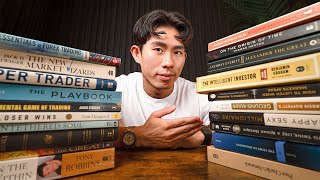

12 Books That Made Me a Millionaire Trader
45sThe promise of wealth and success through a curated book list immediately grabs attention and offers high perceived value.
▶ Play Clip"Delivers exactly what the title promises — a solid list of trading and life books with personal insights, though it's more about his journey than a 2026-specific guide."
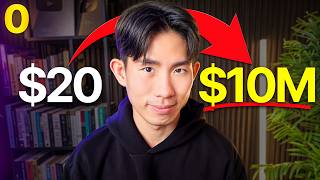
A trader shares the 12 books that shaped his journey from poverty to a $10 million trading empire, emphasizing that books provide knowledge but the market provides wisdom. He details why each book mattered, the life stage to read it in, and key lessons on trading psychology, risk management, and personal growth.
The trader introduces 12 books that changed his life and helped build his $10 million trading empire. He will share why each book mattered, the season of life to read it, one lesson, and one quote.
Trading books are useful but did not make him rich; the market did. The market gives feedback daily, and the best information about trading is your own trading. Journaling and reviewing trades are essential.
Found at a secondhand bookstore at age 17 for $9.80. It introduced him to Forex and trading jargon, but he didn't understand it then. It planted a seed that prepared him for later learning.
Interviews with top traders show there is no single path to success. Common traits are discipline, emotional mastery, self-awareness, and independent thinking, not strategy.
Read while in the military. Shifted focus from perfect entries to building a system where math works over time. Key lesson: you are responsible for your results; manage risk like a professional.
Insights into how professional traders develop: they review trades, build a playbook, and refine their edge. Every trade costs financial, intellectual, and emotional capital.
Practical approach to trading psychology. Emotions are signals, not problems. Use guardrails (pre-set rules) to protect yourself from emotional decisions.
The best trading book he's read. Losing is part of the game; the best traders know how to lose properly. What separates winners from losers is which brain they listen to.
These books made him a better person: The Untethered Soul (you are not your thoughts), 38 Letters from Rockefeller (wealth requires character), the Bible (success without soul is empty), Alexander the Great (ambition guided by wisdom), Awaken the Giant Within (decisions shape destiny), and The Almanac of Naval Ravikant (freedom over wealth).
The trader emphasizes that books provide knowledge, but only action turns knowledge into wisdom. The ultimate goal is not just wealth but freedom and becoming the person you are meant to be.
10 Essentials of Forex Trading
book
The New Market Wizards
book
Super Trader
book
The Playbook
book
The Mental Game of Trading
book
Best Loser Wins
book
The Untethered Soul
book
38 Letters from John D. Rockefeller to His Son
book
The Holy Bible
book
Wisdom of Alexander the Great
book
Awaken the Giant Within
book
The Almanac of Naval Ravikant
book
EdgeFlow
service
What is the definition of wisdom according to the trader?
Knowledge plus experience compounded with time.
01:57
What common traits do successful traders share, according to The New Market Wizards?
Discipline, emotional mastery, self-awareness, and the ability to think independently.
07:59
What is the key to trading success according to the quote from The New Market Wizards?
Emotional discipline; making money has nothing to do with intelligence.
08:15
What did Super Trader teach about professional trading?
It's not about perfect entries but building a system where the math works over time, focusing on position sizing, expectancy, and risk.
10:38
What does the quote 'emotions are signals not problems' mean?
Emotions are feedback showing weaknesses, not something to eliminate; e.g., fear shows lack of trust in the system.
16:09
What is the main idea of The Untethered Soul?
You are not your thoughts or emotions; you are the awareness behind them.
21:27
What does Rockefeller's quote 'you are your greatest capital' imply?
Before building wealth, you must build yourself because money amplifies the person holding it.
24:04
What is the key lesson from the Bible according to the trader?
Build success but do not worship it; do not lose your soul in the process.
26:13
What did Alexander the Great teach about ambition?
Greatness requires courage, but ambition needs to be guided by wisdom.
28:09
What is the quote from Naval Ravikant about true wealth?
A fit body, a calm mind, a house full of love. These things cannot be bought, they must be earned.
31:44
Market is the greatest mentor
Emphasizes that real trading experience, not books, is the ultimate teacher.
01:01Common traits of successful traders
Highlights that discipline and emotional mastery outweigh strategy.
07:59Trading is a system, not perfect entries
Shifts focus from entry perfection to risk management and long-term math.
10:38Emotions are signals, not problems
Provides a practical framework for dealing with trading psychology.
16:09You are your greatest capital
Connects personal character development to financial success.
24:04[00:02] trader. These books will change your life. These books will make you think like a millionaire. And this one book changed the way that I think about wealth, freedom, and happiness. These are the 12 books that changed my life
[00:16] and allowed me to build my $10 million trading empire. But I don't want to just give you a random list of books. I'm going to share why each book mattered to me. the season of life that you should
[00:30] read it in, the one lesson that I took from it, and the one quote that stayed with me. The first six books are trading books. These books help me understand how professional traders think, how to manage risk, how to deal with losses,
[00:45] and how to build a playbook and most importantly, how to master the mental game of trading. And the next six books are not just books about life. These are books that I believe are worth rereading for the rest of my life. Now, before I
[01:01] get into the trading books, I want to be very, very clear. Trading books are useful, but trading books did not make me rich. The market did. I believe the market is the greatest mentor because it gives you feedback every single day.
[01:17] gives you feedback every single day. every loss, every win, every time you break your trading rules, the market shows you exactly who you are. So remember this, the best information about your trading is your trading. So
[01:31] if you want to become profitable as fast as humanly possible, don't just read as humanly possible, don't just read books, journal your trades, review your trades, study your mistakes because books give you knowledge. But what you
[01:44] need is wisdom. And wisdom is something that only the market can give you. To me, I define wisdom as knowledge plus experience compounded with time. So
[01:57] don't read these books thinking they are going to make you profitable overnight. Read them to understand how professional traders think, what they do on a day-to-day basis, and then go to the market, apply the lessons, take the
[02:11] feedback, and let experience turn that knowledge into wisdom. So with that being said, let's start with the book that got me started in trading. The first book from the list is the 10 essentials of forex trading. So this is
[02:25] the book that got me started into trading. When I was 17 years old, I started getting into books because I realized something. Every single millionaire read books. And back then I was poor. I had less than $100 in my
[02:39] bank account. And I desperately wanted to become successful to become a millionaire so that I could retire my father. So that is where I started going to libraries and secondhand bookstores because like I wanted access to
[02:52] expensive courses. I couldn't afford mentors but I could afford used books. And one day I walked into a secondhand bookstore and I saw this book lying on the shelf 10 essentials of forex trading. That title stopped me because
[03:10] of this one word, Forex. A few weeks before that, one of my friends who was waiting tables with me told me that he had just made $500 trading Forex. And back then, we were earning like what, $7 to $10 an hour waiting tables. So, when
[03:26] he told me that he just made $500 by pressing a buy and sell button on his phone, I was like, "What the hell is Forex? What is this scammy shit?" So, when I saw this book on the bookshelf, it felt like it was staring back at me.
[03:41] I mean, like every other book on the bookshelf was like super old, yellow, and musty, and looked like it came out from 1982. But this one actually had like clean white pages on it. The only problem was someone had just gone crazy
[03:54] with the highlighter and scribbled all over it. It looked like someone tried to study trading and gave up halfway. And the price tag was $9.80. it was inside my budget. So I thought
[04:07] myself, hm, maybe this is my chance. Maybe this is how I can quit this job and get out of poverty. There's this quote that I will never forget from this book. And it says, "To trade the forex market, you must come to the trading
[04:21] table prepared." And at 17 years old, I was definitely not prepared. I went home excited. I opened up the book. I started reading it. And bro, my brain just died. that I don't understand like what the
[04:36] hell is bulls, bass, leverage, candlesticks, Fibonacci. It felt like trying to read Japanese when I barely passed English. There were chart diagrams everywhere. There were trading terms everywhere. And honestly, like it
[04:48] was fascinating, but nothing really clicked. Not a single neuron fired. So, I decided to just put this book back on my bookshelf. Like, I literally gave up. I thought that forex was way too confusing for me. Maybe my friend just
[05:02] got lucky. Maybe trading wasn't for me. So that was in 2019. Fast forward to 2020 during the coid9 pandemic. I got into investing in the stock market because once again that's another habit that I heard millionaires did right is
[05:17] to invest and allow their money to grow. And from investing I fell in love with that is where I stumbled into day trading. And suddenly all the jargon that I struggled with came rushing back. I was like, "Wait, I know what a
[05:33] candlestick is. I know what leverage means." And that's when it hit me. That means." And that's when it hit me. That random $980 book planted the seed. I didn't understand it back then, but it prepared me. It gave me the vocabulary
[05:49] before I had context. That book did not teach me how to trade, but it opened a door. It pointed me toward a path that I didn't even realize I was about to walk. And looking back now, I always think sometimes God doesn't give you the
[06:04] answer. He give you a breadcrumb and then he waits to see whether you will follow it. That book didn't make me a trader, but it gave me the first whisper that a different life was possible. And honestly, to this day, that was probably
[06:22] the best 10 bucks I've ever spent. The second book is The New Market Wizards. And this was another gem that I found from that secondhand bookstore. Like you from that secondhand bookstore. Like you can just tell by how musty and brown the
[06:36] pages are. It looks super old, super used. It look like you have been sitting on someone's bookshelf for like decades. But I think that's what made it special because sometimes the best books don't look new. They look like they have been
[06:49] passed through the hands of people who were actually searching for something. And this book was the first time I got to see how professional traders actually think. This book is part of the market wizard series where the author Jack
[07:05] Dwagger basically goes around interviewing some of the greatest traders in the entire world. These are traders from completely different backgrounds trading different markets using different strategies and different
[07:19] time periods. And that's what makes this book so powerful. You're not just learning one trading system. You are getting inside the minds of people who have actually made it at the highest level. The market wizard series showed
[07:32] me that there is no single path to becoming a successful trader. Some traders are discretionary. Some are systematic and mechanical. Some are trend followers. Some are people who trade based on fundamental and economic
[07:45] news. Some just trade pure price action. And some trade indicators. But the common thread between all of them, all of these billionaire millionaire traders of these billionaire millionaire traders was not the strategy. It was discipline,
[07:59] emotional mastery, selfawareness, and the ability to think independently. One quote from the book that stuck with me is the key to trading success is emotional discipline. Making money has nothing to do with intelligence.
[08:15] And that hit me because most beginners think that they just need to be smarter. indicators, more information, more causes, more concepts, more entry models. But the best traders in this entire world are not necessarily the
[08:30] smartest people in the room. They are the most disciplined. They know themsel. They know their edge. They know when to trade and when not to trade. And most
[08:42] importantly, they know how to manage themsel when the market puts pressure on them. That was the biggest lesson I took from this entire book. Great traders don't all trade the same way, but they all manage themsel extremely well. So
[08:58] the third book is Super Trader by Dr. Vanc. And this book came at a very different stage of my trading journey. The first two books got me started, but The first two books got me started, but this book helped me mature as a trader.
[09:13] And I remember reading this when I was in the military. I remember bringing it with me on a mission to Quantan, which is like a part of Malaysia. We were actually deployed there to train with soldiers from the UK, Australia, New
[09:27] Zealand, and Malaysia as part of this thing called the five power defense arrangements. And whenever I had free time after training, I would just pull this book out and just read. Sometimes I would literally fall asleep while
[09:40] reading it because of how tiring the training was. But didn't matter. I just continued showing up. And by that point, I wasn't completely new anymore. I was already like somewhat profitable. I had some wins under my belt. I had some
[09:54] confidence. I had a proper trading plan. I had started to believe that, okay, maybe I can actually do this. But deep down, I knew there was another level. I wanted to scale my trading to the point where I can make six figures a month
[10:09] consistently. Even though I could make money, I still didn't fully understand how professionals thought about risk. Like most traders, I was still obsessed with entries. I wanted the perfect setup, the perfect strategy, the perfect
[10:24] setup, the perfect strategy, the perfect market conditions. But this book shifted my focus. It made me realize that professional trading is not about finding the perfect entry. It's about building a system where the math works
[10:38] over time. Dr. Van Kub talks a lot about position sizing, expectancy, R multiples, risk, and the psychology behind your trading results. And one quote that really stuck with me is you
[10:53] are responsible for the results you get. That hit me hard because most losing traders blame everything except themsel. They blame the broker. They blame the They blame the broker. They blame the market, news manipulation, strategy,
[11:08] basically some external factor where they cannot control. But professional they cannot control. But professional traders take responsibility for the only things they can control. How they show up every single day, their risk, their
[11:22] position size, their execution, their discipline, their journaling and reviewing process. And this book taught me that you don't become a professional trader by finding the perfect entry, by winning every single trade. You become a
[11:37] professional trader by managing risk like one. Because if your risk is wrong, it doesn't matter how good your setup is. You can be right and still blow your account. You can have a bunch of wins and still fail the funding challenge and
[11:53] still lose money. So that was the biggest lesson that I took from Super Trader. Trading is not about being right. It's about creating a process where your edge can survive long enough to play out. So if you're already
[12:07] trading and you're starting to get some results, but you still feel this is the book that I will recommend to you because it will force you to stop thinking like a gambler and start thinking like a professional risk
[12:20] thinking like a professional risk manager. The fourth book is The Playbook by Mike Bellaf. This is a big boy one, huh? Just look at how thick this is. Mike Bellafior is the co-founder of SMB Capital, which is a proprietary trading
[12:34] firm in New York. And what makes this book so powerful is that it literally gave you a look inside how traders are actually developed in a professional traders still think that getting better
[12:48] at trading means learning more strategies, more setups, more concepts. But professional traders, they improve very differently. They review their trades. They study their best setups, their worst setups. They build a
[13:01] playbook. They know exactly what their A+ setups look like. And they constantly refine their edge, improve their trading system. That's why this book changed how
[13:13] I thought about improvement. It made me realize that trading is not just about taking more trades. It's not just about winning more trades and making more money. Trading is a performance skill. And just like an athlete watches the
[13:26] game tape, a trader has to reveal their trades. One quote that stuck with me from this book is you need to learn which trades are not worth your financial, intellectual, and emotional capital. And that hit me because so many
[13:41] traders think every setup deserve their attention. Every single pair, every single opportunity that arises in the market. But the truth is every trade cost you something. It doesn't just cost you money. It costs you mental energy.
[13:59] It cost you focus. It cost you emotional bandwidth. All of which is finite and limited. So if you're wasting your energy on low probability setups, guess what? You won't have any energy for the high probability setups that is actually
[14:14] worth your capital. And once again, that's why journaling and reviewing your trades is so important. Because like I said, the best information about your trading is your trading. And once you start looking at your own data honestly,
[14:28] you realize something even deeper. Most of your trading problems are not of your trading problems are not technical. They are mental. And that brings me to the next book, which is the mental game of trading. Now, whenever
[14:41] traders talk about trading psychology, they almost always bring up Trading in the Zone by Mark Douglas. And honestly, I agree. Like, Trading in the Zone, hands down, probably one of the greatest trading psychology books of all time.
[14:56] But here's the thing. To me, trading in the zone give you the philosophy of trading psychology. It teaches you how to think about probabilities, uncertainty, fear and belief. But the
[15:10] mental game of trading give you something more practical. It give you a way to actually work on your psychology. Because most traders already know their problems. They know they revenge trade. They know they overtrade. They know they
[15:26] hesitate. They know they move their stop-loss. They know they break their trading rules after taking a loss. But knowing the problem is not the same as fixing the problem. And that's why this book is so powerful. The author of this
[15:40] book, Jared Tendler, breaks down trading psychology like a performance coach. He doesn't just say, "Yo, bro, just go and control your emotions." Because honestly, that advice is pretty much useless, right? Like, no Sherlock.
[15:55] Every trader already knows that they should control their emotions. The real question is why do those emotions show up in the first place? Why do you do why do you revenge trade? Why do you break your trading rules when you already know
[16:09] better? One quote from that book that stuck with me is emotions are signals not problems. And that completely changed how I looked at trading psychology. Because for the longest time I was taught to eliminate my emotions,
[16:23] to not feel any emotions anymore, to feel nothing. No fear, no greed, no anger, no frustration, no doubt. But then I realized that emotions are not
[16:35] the problem. Emotions are simply feedback. They are showing you where your weakness is. Fear might show you that you don't trust your trading system enough. Anger might show you that you are too attached to being right. Revenge
[16:50] trading might show you that you haven't accepted the risk before entering the trade. So the goal is not to suppress your emotions. The goal is to understand what your emotions are trying to reveal. And honestly, that's one of the reasons
[17:05] that I built my trading super applow because I believe that traders don't need more motivation. They don't need to rely on willpower. They need gut rails. A gut rail is something that you set before you trade while you are still
[17:20] calm, logical, and rational. So in ad flow, you can set your max daily loss, your max profit limit, your max number of trades, your risk per trade, and your trading window, and most importantly, your rules for when you are allowed to
[17:34] enter. When you are calm, it's very easy to say, I'm going to follow my trading system. I will respect my risk. But when you're emotional, when you just lost a trade and you feel the urge to make it back, that's when willpower disappears.
[17:48] And that's why I believe willpower is not a trading strategy. Gut rails are. You need to install gut rails in your trading system that protect you from yourself before emotions takes over. So
[18:03] if you want to trade with gutrails instead of emotions, you can check out Edgeflow at ww.edflow.com. The sixth trading book is Best Loser The sixth trading book is Best Loser Wins by Tom Howard. And in my opinion,
[18:17] this is the best trading book I've ever read. It literally teaches you everything you need to know to trade profitably. Now, most traders want to win, but they don't know how to lose. And in trading, losing is not a mistake.
[18:32] Losing is part of the game. You can follow your trading plan perfectly and still lose. You can take A+ setups and still lose. You can do everything right, have all the stars in the universe that lines up and still be wrong. And that is
[18:47] what destroys most traders. They cannot accept the loss. So they revenge trade. So they increase their risk. They abandon their trading system. And one normal losing trade turns into a blown account. One quote from the book that
[19:01] stuck with me is what separates the 10% of winners from the 90% of losers is which brain they are listening to. And that hit me because trading is not just a battle against the market. It is a battle against your own instincts. Your
[19:17] normal brain wants to be right. It wants certainty. It wants revenge after pain. But the professional trader has to think differently. They have to learn how to lose small. They have to learn how to lose according to the plan. Lose without
[19:32] making it personal. And that is why I love the title of this book, best loser wins. Because the best traders are not the traders who avoid losses. They are
[19:44] the traders who know how to lose properly. And if you can learn how to lose well, you can survive long enough for your edge to play out. So, if you entire list, I would tell you to read this one because once you learn how to
[19:58] lose properly, you will finally give yourself a real chance to win. So, the first six books made me a better trader, but these next six books made me a better person because I believe that your P&L is simply a reflection of your
[20:14] character. The market is just a mirror and if you don't like what you see in the mirror, you don't blame the mirror. You change the person looking back at you yourself. Nasim Taylor famously said, "A good book gets better at the
[20:29] second reading. A great book at the third. Any book not worth rereading isn't worth reading." And that's exactly what I feel about these next six books. These are not books that you just read once and you forget. These are books
[20:45] that is worth rereading because they will hit differently at different stages of life. Every time you come back to them, you find something new. Not because the book has changed, but because you change. So these are the six
[20:58] books that changed my life. I have four with me right now and the other two is the next six books, I'm going to like speedrun through them because this video is really longer than I expected. So the seventh book is The Untathed Soul by
[21:13] Michael A. Singer. Is that how I pronounce his name? Singer. Singer. Anyways, this is actually the book that I'm currently reading right now. And the main idea of this book is very simple but very powerful. You are not your
[21:27] thoughts. You are not your emotions. You are not the voice inside your head. You are the self, the [snorts] awareness, the pure consciousness behind it all. The quote that really stuck with me is you are not the voice of the mind. You
[21:42] are the one who hears it. That changed the way that I look at my own mind because most people believe every thought that appears. If the mind says panic, they panic. If the mind says you're not good enough, they believe it.
[21:56] If the mind says revenge trade, prove yourself to the market or protect your ego, they follow it. But the moment you realize that you are the awareness behind the thought, you create space. You create distance and separation. It
[22:10] becomes like this subject and object relationship. And in that space or distance or separation or whatever you like to call it, you get freedom. You get control. That's the biggest lesson from this book. Inner peace begins when
[22:23] you stop identifying with every thought and emotion that passes through you. So physical copy because I read it on my Kindle itself. And the next book, the eighth book of the list is the 38 letters from John D. Rockefeller to his
[22:39] son. Like this is such an underrated self-improvementish book, right? A lot Rich, the seven habits of highly effective people. Like all of these you can see on my bookshelf, loads of them. But this is the one that that they
[22:54] just really hit me, right? Like every single letter just resonated with me so much. And just like what the name suggests, it was literally 38 letters which the richest man in the entire world at one point in time had passed
[23:08] down to his son. This book changed the way that I think about money, ambition, and legacy. Because John D. Rockefeller wasn't just rich. He thought long-term.
[23:20] He thought generationally. He understood the importance of discipline, patience, restraint and responsibility. And that is what most people miss about wealth. Most people think about wealth as just the ability to make more money
[23:36] or accumulate more money. But real wealth is really about your character. It is about what you do after you make the money. is about whether money makes you more disciplined or more reckless,
[23:50] more generous or more selfish, more responsible or more arrogant. And the quote that stuck with me from this book is from poverty the road to prosperity is always unobstructed. The important thing is that you firmly
[24:04] believe that you are your greatest capital. And I love that quote because when you're starting from nothing, it's easy to think that the only thing missing is money. But Rockefeller's point is that before you build wealth,
[24:18] you have to build yourself because money only amplifies the person holding it. If you're impatient, money just makes you more reckless. If you're undisiplined, money disappears. If you have no character, money exposes that, too. So
[24:34] from this book is that wealth is not just something you chase. It is something you become responsible enough to carry. Making money is one skill, but
[24:46] keeping it, growing it, and using it for something bigger than yourself, that requires character. The knife book is the Holy Bible. You guys already know that I'm a man of faith, so I had to put this in here. To me, the Bible is not
[25:02] just a religious document. It is an operating manual for life. Because every single time I apply a principle from the Bible, my life improved significantly.
[25:14] It has fundamentally shaped the way that I think about God, purpose, suffering, money, humility, discipline, and success. And one verse that has always stayed with me is, "For what shall it profit a man if he shall gain the whole
[25:31] world and lose his own soul?" That verse hits hard because it reminds me that success without God is empty. You can make all the money in the world. You can build a business. You can become a profitable trader. You can get millions
[25:44] of followers. You can win in the eyes of the world. But if you lose your soul in the world. But if you lose your soul in the process, what was the point? The Bible taught me that the goal is not just to become rich. The goal is to
[25:58] become the person God called you to be. Because money itself is not evil. Ambition is not evil. Success is not evil. But if those things become your god, they will destroy you. So the biggest lesson I took away from the
[26:13] Bible is build success, but do not worship it. Make money but don't get attached to it. Do not let money own you. Chase excellence but do not lose your soul in the process because at the end of the day I don't just want to
[26:28] become successful. I want to be faithful. The 10th book is wisdom of Alexander the Great or basically any biographies that is related to him. When I was young girl, Alexander the Great was one of my biggest role models. He
[26:44] showed me what was possible for a young man with vision, courage, and obsession. accomplishments, you realize that at 20 years old, Alexander became the king. And then by his early 30s, he had
[26:58] conquered most of the known world. So when I was trying to make it at 20 years old, I remember thinking to myself, if key could carry that kind of key could carry that kind of responsibility at 20, if he could lead
[27:13] responsibility at 20, if he could lead armies, if he could conquer empires, then why can't I build something great too? Alexander famously said, "There is too? Alexander famously said, "There is nothing impossible to him who will try."
[27:25] And that quote gave me permission to think big. Because most people are not limited by what is actually possible. They are limited by what they believe is impossible for them. They set this limiting belief on themsel by themsel.
[27:40] Alexander taught me the power of ambition. He taught me courage. He taught me that if you want to do something great, you cannot think like an average person. But he also taught me the danger of ambition because ambition
[27:55] the danger of ambition because ambition without wisdom can consume you. You can win the entire world and still lose yourself. So I guess the biggest lesson that I took away is greatness requires courage but ambition needs to be guided
[28:09] by wisdom. The goal is not just to conquer more and more. The goal is to become someone worthy of what you conquer. The 11th book is Awaken the Giant Within by Tony Robbins. And honestly, Tony Robbins is the goat when
[28:24] it comes to personal transformation. This book is about making the right decisions, raising your standards, adopting the identity that is congruent with your goals, you know, managing your emotional state, and just overall taking
[28:39] back control of your life. When I first started trying to change my life, you know, going from someone who was insecure, filled with a lot of trauma and insecurities and grew up with poverty to becoming someone who's
[28:52] poverty to becoming someone who's actually worthy of wealth and success. I realized that I didn't just need more information. I needed to become a different person. I needed to raise my standards. Because your life doesn't
[29:05] change when you feel motivated. Your life only changes when you make a real decision. And one quote from the book that stuck with me till this day is, it is in your moments of decision that your destiny is shaped. And that quote really
[29:21] hit because most people are waiting for their life to change before they decide who they want to become. You know, they are waiting for all the stars in the universe to line up before they start trading. But it works the other way
[29:33] trading. But it works the other way around. You decide first. You decide what kind of person you are going to become. You decide what standards you are no longer willing to accept. You decide what life you are no longer
[29:48] willing to tolerate. And then your actions will start catching up to that actions will start catching up to that decision. So remember, your life changes the moment you stop negotiating with your old identity. Because if you want a
[30:02] new life, you cannot keep being the old you. The 12th and final book is The Almanac of Naval Ravikhan. And I saved the best for the last. I first read this book when I was 18 years old. You know, when I was broke, still trying to figure
[30:18] out how money worked, how success worked, how freedom actually worked. And this book just completely changed my worldview. It changed how I thought about wealth, happiness, success, and freedom. And what's crazy is I recently
[30:34] reread it again now that I'm 24 years old, you know, after becoming successful and making millions of dollars. And it just hit me completely differently because at 18 years old, I was reading it as someone dreaming about freedom.
[30:48] And at 24, I was reading it as someone trying to protect his freedom. Like just last week, I even bought a physical copy translated in Chinese when I was on my
[31:00] family trip in China and I gave it to my father. And even he who is an avid reader, said that it was one of the best books he has ever read. Funny enough, this is the only book on the entire list that I don't currently have a physical
[31:14] copy of, which is kind of ironic because it's like, like I said, the best book keep it on my Kindle is so that I can actually read it anytime, anywhere. Like whenever I feel like I'm chasing too much, I'm too attached to the outcome, I
[31:29] just go back to this book to remind myself what wealth, happiness, and freedom actually means. My favorite quote from Naval is, "A fit body, a calm quote from Naval is, "A fit body, a calm mind, a house full of love. These things
[31:44] cannot be bought, they must be earned." And that quote is the perfect way to end this list because after all the money, trading, business, ambition, and success, all of this stuff, the things that actually matter the most still have
[31:58] to be earned. You cannot buy a calm mind. You cannot buy real love. You cannot buy health. You have to live in a way that creates them. And that is the
[32:10] biggest lesson that I took from this book. The goal is not just to become book. The goal is not just to become rich. The goal is to become free. So those are the 12 books that changed my life and allowed me to become a
[32:22] millionaire trader. But now I want to know from you what is the one book that it down below because I'm always looking for new books to read. And if you want a part two or you want my full reading list, you can see I got a hefty amount
[32:37] of books at the back right here. Comment books below as well. Also, if you're a trader or you're just someone who is starting out and looking to get into trading and you want to learn my full trading system for absolutely free, I
[32:51] just gave away my entire market mechanics mentorship on YouTube. You can check out the playlist here. Start from day one, watch in order and actually apply what you have learned because like I mentioned, books only give you
[33:04] knowledge. Only action turns knowledge into wisdom. And as always remember, you into wisdom. And as always remember, you are just one thread away.
⚡ Saved you 0h 33m reading this? Transcribe any YouTube video for free — no signup needed.