
I Paid $60 for This Game - Was It Worth It?
45sThe reviewer's personal investment and immediate verdict hook viewers curious about the game's value.
▶ Play Clip"Title accurately promises a 100% review and the video delivers a complete analysis, though with some spoilers for the first game."
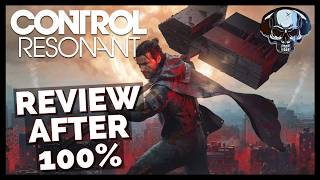
This review video covers the game Control Resonant, a sequel to Control, focusing on its unique level design, exploration, combat, and technical performance. The reviewer, Mortem, provides a 100% completion review, highlighting strengths like world-building and exploration, while noting weaknesses in combat pacing and some design choices.
The reviewer purchased the game themselvesense of ownership, and no review key was used. The 100% review covers approximately 30 hours of game time. The game launched on September 24th.
The game's level design is exceptionally unique, with gravity anomalies and folding city structures. The exploration, especially in later zones, is highlighted as a memorable experience.
Combat starts slow but improves with abilities like summons and status effects. The combat system is described as hack-and-flash with light and heavy attacks, abilities, and execution mechanics. It can get repetitive, but it's enjoyable enough.
The game runs well on Steam Machine (1080p/60fps) but is nearly unplayable on Steam Deck due to frame rate drops during combat. There were isolated stutter issues during zone transitions.
The story focuses on Dylan Faden, Jesse's brother, as he navigates a Manhattan under attack by the Hiss and other entities. The narrative has a good character arc, and the universe expansion is engaging.
Difficulty is customizable via assist mode, but the options are labeled under 'assist mode' even when they make the game harder. New Game Plus is available with plans for future 'NG+ plus' and a photo mode.
Control Resonant offers a memorable exploration experience in a unique Manhattan world, but its combat and some design choices hold it back from greatness.
Unique level design
The level design with gravity anomalies and shifting perspectives is the game's standout feature.
01:34Exploration is a highlight
The Manhattan setting feels lived in yet abandoned, making exploration a key selling point.
17:06Steam Deck vs Steam Machine
The game is not recommended on Steam Deck due to frame rate issues, but runs well on Steam Machine.
20:47[00:00] What's going on everybody, Mortem here, this time bringing you my review out there 100% for Control Resonant,
[00:13] the latest entry into Remedy's ever-expanding universe, and more specifically, a sequel to Control. In the case of this game, a few things to mention. One, no review key here, I did in fact pay for this myself,
[00:25] and simply because I inevitably wind up getting a comment in response to that statement, As somebody who regularly receives keys for video games, it's important that I note when I don't, because I am legally obligated to disclose those things.
[00:38] Either way, however, I'm sure plenty of people at this point are aware of the 100% reviews, but there is a link to a video down below covering everything I go over, and my Steam profile is public, a link below as well. So, in the case of Control Resonance, it is a very easy 100%.
[00:53] I think you're looking at probably ballpark 30-ish hours, and none of the achievements are particularly bad. Like, one of them is a little grindy, but that's about it. And with this game having released about a week ago, on September 24th,
[01:07] pretty much all the guides and everything are already up if you need help with something. And beyond that stuff, the only thing I really wanted to mention here is that, while I don't plan on spoiling the entirety of this game or anything, it is worth mentioning that because this is a sequel to the original game,
[01:21] you can't really talk much about the story here without spoiling the first game, Control. So that game is definitely getting spoiled. And if you want to go into this completely blind, maybe skip the story section. Otherwise, let's get into it in full.
[01:34] I think the thing that stands out the most about Control Resonance, for me at least, was the exceptionally unique stuff that they did with level design and exploration. So the game itself is set in a mostly open world section of Manhattan
[01:48] that is experiencing some paranormal phenomenon. The game refers to this as patterning and causes a lot of the city to sort of fold in on itself. And the really cool thing about that is you get to explore all of that in a pretty fun way that actually sees you shifting and navigating gravity anomalies that just kind of change your perspective and how the game is constantly shifting that, especially in some of the later zones that you'll be in, that really lean into that as a mechanic are just really cool stuff.
[02:18] I have seen games play around with these concepts before, certainly, but I will say that Control Resident really takes a lot of that stuff and turns it up to 11, and it's a very memorable game for that, if nothing else. Looking beyond that, however, I would say the ways in which the Remedy universe continues
[02:34] to expand is just inherently really interesting. I think taking a game like this and setting it in what is effectively a modern-day version of Manhattan, while fighting off all of these strange entities, just scratches a very particular
[02:47] itch. That makes it no real surprise people have been enjoying this one. I will say, gameplay-wise, on the combat side of things, combat gets off to a slow start, but with everything that you are able to do,
[02:59] it reminds me a lot of that old game prototype in some of its execution and how you actually navigate the city. But that said, there are a few films beyond that that I think could stand to be touched up a little bit.
[03:11] This game does that annoying thing with dialogue wheels sometimes where you get shown a short excerpt of what your character is about to say. However, it doesn't really match up with what your character says at all, especially in terms of, like, tone and actual words.
[03:24] And there were multiple times throughout this where I picked a dialogue option that seemed fitting only for the execution of what was said to be completely different from what I had in mind. And this is a small nitpick, but for a game that gives you visual customization
[03:37] for our main character, a lot of the outfits and stuff feel underwhelming. But let's dig a little deeper with the technical state. How is this game running? So on my end, the game did crash on me one time,
[03:49] and I did experience some stutters, mostly in the zone transitional areas. I believe the crash might have simply been a fluke, to be honest. However, the stutters were usually where you are loading in between one zone to the next.
[04:01] So the game is mostly open world, but there are certain areas that connect those individual zones that are clearly hiding some loading. And those are the spots that I was experiencing some stutter as you transition from one zone to the next.
[04:14] Otherwise, I did not have any real problems, though I will say a quick perusal through the Steam user reviews tells me that some people are experiencing more issues than I have, but that does not seem to be particularly widespread,
[04:26] so your mileage may vary on that front. Next up, let's talk about difficulty in New Game Plus. Difficulty for this game in particular is a little bit strange in the sense that it starts you off with a base difficulty. However, it does have customizable sort of modular difficulty options
[04:41] that allow you to adjust all sorts of stuff to both make the game either easier or more difficult. However, the reason I describe this as odd is because it is all labeled under the game's assist mode,
[04:53] which the game seems to inherently think that people are going to use to make the game easier. Which I say because it specifically gives you a message about how the game is meant to be a little challenging, and, you know, how they want you to experience that before you go and mess with the difficulty sliders.
[05:08] but a lot of those options give you the option to make things more difficult, not easy, and it just seems like that's implemented a little bit awkwardly, even though it's not really a big deal. Either way, within the game's assist mode, you have tons of options to change outgoing damage, incoming damage, stun damage,
[05:25] just all sorts of little things you can tweak to make the experience whatever you want it to be, or as difficult or as easy as you would like. For the sake of this review, I pretty much just played on the default settings, though, since it seemed like they were trying to curate experience.
[05:38] There is also a new game plus mode and in fact they plan on expanding that in the future according to their initial launch plans post So right now once you beat the game you can continue playing Nothing is really missable it seems like as you are able to again continue playing after the story ends
[05:54] and wrap up anything you may have missed. But if that's still not enough for you, you can choose to take your progress into New Game Plus as well. And they've already made plans to allow you to do that another time with New Game Plus Plus, alongside the development of a photo mode with
[06:09] the New Game Plus option arriving in October and photo mode coming in November, apparently. But let's keep it moving, this time with the story setup and my thoughts on it. So, again, just a small spoiler warning, I'm going to be spoiling the first game,
[06:22] with only some minor stuff for the second one, basically the initial plot setup. Control Resident puts us in the role of one Dylan Faden, the brother of Jesse Faden, the protagonist from the original game,
[06:34] who also happens to be the director of the Federal Bureau of Control. a government entity in the U.S. that is responsible for cataloging, containing, and just generally studying all of the paranormal phenomenon in the world.
[06:48] And naturally, they get up to some shady things, a lot of which is the crux of Remedy's games. Now, throughout the entire first title, Jessie Faden goes about trying to save her brother Dylan, the character we play this time around.
[07:01] She does that by combating a seemingly aggressive resonance known as the Hiss, which twists and warps people into hideous monsters, and that included Dylan at one point. And throughout the events of the first game, Jessie goes and cleanses Dylan of the Hiss, and then continues her role as the director of the SBC.
[07:20] However, their headquarters, a place known as the Oldest House, has been locked down for the last seven years. And so when this game begins, we are mysteriously stabbed by Jesse with an interesting weapon known as the Aberrant,
[07:32] which seems to be responsible for bringing us out of a coma, yes, but also gives us a means to defend ourselves. And as we make our way through the oldest house, we can quickly come to grips with at least the basics of what happened here.
[07:46] It seems that seven years later, when Dylan wakes up from his coma, the Hiss has attacked, but the oldest house has actually been opened up again, and you escape the oldest house into the area of Manhattan,
[07:58] only to discover that the Hiss are only now part of the problem. Some sort of paranatural entity has sort of separated Manhattan seemingly from the rest of the world, and erected a barrier around it, and the Hiss, and whatever did this,
[08:12] the entity that is causing all of these problems, seem to be fighting each other with everyone else who's kind of in the way. Dylan, however, is a bit of a dangerous individual. He was once a prime candidate, somebody who could potentially take over as the director of the FBC because of his nature as a para-utilitarian, somebody who could wield para-natural powers to great effect.
[08:33] And with everything else gone to hell, this puts Dylan here, who had been in lockdown previously due to his dangerous nature, in a position to actually help people, which is exactly what we're going to do. And the story from there really revolves around Dylan trying to get to the bottom of what is happening here, why, and of course what can actually be done about it.
[08:52] Which leads to a whole bunch of interesting reveals around the background of Dylan, Jesse, the FBC as a whole. And it's all pretty well done. I enjoyed the story quite a bit. And without spoiling it, that's as much as I want to say for the most part with a couple of extra things.
[09:07] I will say I have seen a little bit of online chatter talking about the way Dylan presents himself. He's definitely a bit of a Debbie Downer, and he's pretty harsh on himself just generally,
[09:19] but I think a lot of that makes more sense when you consider who he is supposed to be. So if you follow the lore of the game, Dylan was taken in by the FBC when he was in like fifth grade, which means he never got much of an education past that point.
[09:31] He's been constantly tested on, beat, tortured, put into a coma for the entire rest of his life, and to consider him a well-socialized individual would be folly. I think the way Dylan behaves is characteristic of exactly what his background is.
[09:47] Someone who was already kind of timid as a child, then going through untold horrors. And the entire point of the game, in my opinion, at least narratively, is how Dylan grows and evolves from that in accordance with everything else going on that he has to deal with.
[10:00] And so I think there's a great arc to him throughout this story. And if you judge that entirely by how he behaves in the beginning, I think you're missing the hook. But suffice to say, I really enjoyed what they did with this story.
[10:12] I thought it was great. I love what they're doing with this universe. And so let's move on a little bit to progression mechanics. So Dillon here, being a pari-utilitarian, is going to be increasing his control over his own abilities.
[10:25] This takes the form of his bond with his weapon, the Aberrant. You'll first pick a primary form and then a secondary form. These are your light and heavy attacks respectively. and you can actually get a couple of different ones throughout the story
[10:37] and swap them out from there. And you can also upgrade your combo finishers after you basically successfully complete a combo. It will finish by doing a particular attack that you have assigned,
[10:49] and there's about six of those. So your main, like, combat attacks, if you will, are however you decided to mix and match these. Your primary, your secondary, and your combo finishers, which you will be unlocking as you move through the game, of course.
[11:02] Beyond that stuff, we also have talents. Often at big moments in the story and whatnot, you will earn talent points to put into your talent tree. And all of this is accessed by accessing the gap, by the way, which is this little space you can transition to from almost anywhere.
[11:18] But your talents are where you're going to, I would say, decide your build a little bit. You do get a lot of talent points and you can choose to hyper them like a certain thing or spread out if you want to You can definitely kind of do all of the above and you get some items to respec and things to allow you to try multiple different
[11:35] things. But the talents take that basic setup of your weapons and then later your abilities and allow you to specialize in things like summoning or dealing with specific status effects etc. Then there are your artifacts. You will find these in an untapped state, that is to say an unusable
[11:51] states, but if you choose to spend resources on awakening them, you can equip up to three of them, which will then also help you decide how you want to play a bit. Then there are your abilities themselves. So in addition to all that, you do get active abilities to use that usually come at the
[12:07] expense of power. Your ability to spend your paranatural abilities, basically. Kind of like mana, honestly, but your power doesn't do you any good until you actually get the abilities to use.
[12:19] Throughout the game, you're going to be fighting various bosses. These are known as resident entities, and when you destroy them, you'll get the ability to choose between two different abilities, for the most part. There's a couple exceptions to that, like the very last one only gives you a singular option,
[12:34] which is a dominate ability. Completing a side quest allows you to get both abilities from a single boss, actually, and then you can actually go to the gap and swap them out as you please anyway. So there's that. And these abilities are all sorts of fun stuff, like allowing you to apply status effects to your weapons and whatnot.
[12:51] And once you get some abilities rolling, combat gets a lot more interesting. But as far as progression goes, the last thing I want to mention are the health and power upgrades. Throughout the city, you'll find all sorts of things, but one of the better resource caches you can find are little pieces to health and power upgrades.
[13:07] Collecting three of these will increase your base health and power, respectively, which is obviously pretty useful. But now let's talk about the gameplay and world section. Really the showpiece, I would say, of Control Resonant in the sense that exploring Manhattan,
[13:23] seeing everything there is to see, engaging with the quests and activities, that is where this game shines. Seeing what they did with the levels and how you can navigate them was honestly just such a fun time. And on that alone, I would say this is probably going to be on the forefront of people's minds
[13:39] in terms of game of the year conversations. and while I'm not ready to make a declaration like that personally, I would say it's definitely something on my mind, at the very least. But either way, as I alluded to a bit earlier, we are in Manhattan,
[13:51] and Manhattan itself is divided up into seven different zones or biomes, if you will, and each of them has a sort of different flavor to them. And as you progress through the game, these biomes get more and more intense,
[14:04] starting from the relatively basic downtown area, which kind of just has enemies for the most part, all the way to the Central Park area, which is overflowing with a sort of edible mold that you probably shouldn't be eating,
[14:16] but there's a fun story there, and then to the much more dramatic areas that are like mirrored versions of itself across like different planes of gravity. It gets crazy. And naturally, those zones are going to come with plenty of things to do.
[14:31] Now, every time you defeat a resident entity, that is to say one of the major bosses, the overworld sort of resets, if you will. Not entirely. Some things will stay done, of course. However, things like enemy respawns
[14:45] alongside what they call world feats, which are basically just like little world event quests you can do, all get reset. And when they do this, they actually increase the difficulty of the monsters themselves to keep them from just being absolutely destroyed by you.
[14:59] Outside of things like that, you can take on side quests from mostly people we have met previously. in control and the like, such as Emily Pope or Langston, and they're going to give you interesting quests that deal with things that are going on in the universe, like Langston gives you quests
[15:13] revolving around the altered items, that is to say items that have an effect on their reality in interesting ways, and you can also discover and take part in a handful of interesting quests if you are actually exploring enough to find them, and that's to say nothing of the game's
[15:28] other activities. So you can solve little puzzles, use your powers to break into things, and of course find resources and the like. There are also longer running quests like making friends with a dog that seems to have mysterious untold powers of its own, sneaking up on a camera that keeps
[15:44] freezing everybody in its photos, etc. But the thing I really want to hone in here on is really the level design. So as you complete certain activities normally through the story known as
[15:56] Fault, you will be earning movement abilities for the most part. Completing those grants you abilities like reach and shift which allow you to navigate the city in various ways. So completing those faults is important because it actually allows you to traverse different areas of the
[16:10] city in ways you couldn't personally. Reach and shift are the big ones because this is going to allow you to effectively grapple to a point on a surface and then just instantly navigate to it and then shift is the other side of that. Shift is how you can walk up to things and shift your plane of
[16:25] gravity throughout various anomalies. This plays a very big role in a lot of the sort of navigational puzzles as the game progresses, and some of them get to be a lot to unpack, actually, in a really
[16:37] fun way, however. And those abilities in particular, combined with how they hold all of the level design itself together, just makes for such an interesting experience that isn't quite like anything I have played in quite some time, even if I've seen games dabble with these concepts before.
[16:53] You combine all of that with it being set in a version of Manhattan that feels lived in, while at the same time abandoned, and just all the little details that are flying around the city and everything you can do in engaging with that,
[17:06] and it's just an incredible time on an exploration level. And yet we still have one other big thing to talk about and that is combat So in my initial first impressions video I did mention that I was a little concerned about combat getting repetitive and a little boring
[17:20] and I think for a lot of people it probably will. But I will say that for me, combat did get better as I moved through the story, and I think that's mostly because combat gets off to a really slow start. The game seems like it's really concerned with you missing some of the basics around how combat works,
[17:35] and as a result it kind of timegates out a bunch of stuff that I think would be better served to be implemented more quickly, like some of your abilities that actively make combat more fun, like say the summons, or the ability to light your weapon on fire more or less to start burning enemies,
[17:51] or even access to some of the more interesting status effects. Once you get all of that stuff working, combat gets pretty fun, but even the novelty of all that isn't going to last forever, because ultimately combat is a hack-and-flash system built upon a light and a heavy attack,
[18:07] your abilities, your capacity to falter or stun your enemies, and then, of course, use things like your status effects, etc. to devastating effect. Now, on the enemy side of things, you'll be fighting a few different types,
[18:19] mostly the Hiss and the Mold. The Mold has taken over Central Park and has turned all sorts of things into their own versions of hideous monsters that you'll have to fight your way through. But all enemies, regardless of their type, come in light and heavy versions, basically.
[18:33] So the light versions are just kind of cannon fodder. They die super easy, and they're just kind of generally in your way a little bit. The heavy enemies are the ones you actually need to put in some effort to kill, will typically fight back more.
[18:45] And what's more important, the little enemies will continuously spawn until all of the heavy enemies are dealt with. So those are the ones you want to focus on so you can actually end the combat encounters. Looking past that, however, combat and what you get out of it,
[18:58] I think is really going to come down to your capacity to build around different things. There are a few obvious builds, such as leaning into the summoning side of things, or focusing more on dominating the melee, and I mean that a little literally,
[19:11] because one of the main status effects you'll get there is called Dominance. Basically, if you completely stun an enemy, you can execute them, which will then activate the Dominance status effect, which can then be upgraded and enhanced to give you more effect out of it, because what it does is basically just increase your melee damage.
[19:26] And then, of course, there's a few other things you could do as well, but like I said, combat gets off to a slow start, and even what's here isn't likely to, I would say, last for, you know, tens upon tens of hours.
[19:38] I would say the roughly 30 hours it took to 100% this is about right for how long this combat lasts for me, but mostly this feels like a solid base of combat that could be built into something a little more compelling than it is.
[19:51] because as it stands, combat is alright, like it's enjoyable enough for what it is, but compared to everything else, it's a little lackluster. That then brings us to the Steam Deck and the Steam Machine. So, interesting case here in the sense that I wouldn't recommend this at all on the Steam Deck,
[20:06] but it plays quite well on the Steam Machine. So, on the Steam Deck, we have an official rating of Unsupported, and you can pretty much immediately tell why, and that is because your framerate tanks any time you are in combat. If you are willing to adjust the settings, you can get a decent framerate,
[20:20] like if you're standing still or moving slowly around the city, but the second combat starts, the frame rate just tanks into oblivion, which makes it pretty much unusable. So on the Steam Machine side of things,
[20:32] with the extra power we get from that bit of hardware, you can definitely play this at like 1080p, 60fps, that kind of thing, and you could go a little higher if you're willing to sacrifice some frames in order to do so, but overall, it's definitely a pretty solid experience on the Steam Machine,
[20:47] but unplayable on Steam Deck, in my opinion. Not literally, mind you. It's just a really bad experience. But I would say that's what's important to note there, which then brings us to our positives and negatives, and we'll wrap this thing up.
[20:59] So on the positive side of things, exploration, the universe, the level design. I love everything they're doing there. It was so fun to explore and see what they did with various abilities, how they kind of, I would say, took some ideas I've seen elsewhere
[21:12] and iterated on them to a point where they feel fresh. It's really cool. and then putting you in a city that feels so, again, sort of alive but abandoned and also really explorable feels great.
[21:24] And the fact that they did that with the already compelling universe that they've been setting their games in is all the better. On the negative side of things, mostly just a handful of nitpicks. Like I said, combat gets off to a slow start.
[21:36] I don't enjoy how they handle dialogue with, again, a lot of the times you pick an option and then what you say does not really line up with the option you just picked. I also think if you're going to allow us to customize a character, you should give us a lot more options than are here.
[21:50] But I don't think any of that stuff really detracts from the experience too much, or at least in my case it didn't, which brings me to my conclusion. For $60, US Control Resonance is, I think, doing a lot of things that feel unique, even if I have definitely seen pieces of them elsewhere.
[22:05] And it makes exploring the city and the universe that Remedy has built incredibly entertaining, even if the combat side of things is just alright. and as a result of that having paid $60 for it
[22:17] I feel like I got my money's worth out of it and to that end if that sounds like a good time for you it's a game I would definitely recommend to people and thus I'm giving this game a buy which is where we're going to wrap up this video I certainly hope you enjoyed it
[22:29] if you did by all means like, comment, subscribe or YouTube jazz but regardless of any of that truly just thank you so much for watching I really do appreciate it may you wander in wisdom and have an amazing day
[22:43] Thank you.
⚡ Saved you 0h 22m reading this? Transcribe any YouTube video for free — no signup needed.