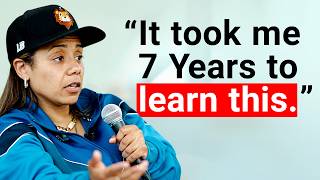

It Took 6 Years to Become an Overnight Success
38sThis raw admission that success took years then exploded in one year challenges the myth of overnight success and resonates with aspiring creators.
▶ Play Clip"Title suggests urgent advice but episode is a general success story; still delivers value but could be more specific."
In this podcast episode, content creator Nikki Saunders shares her seven-year journey from part-time freelancing to full-time content creation, emphasizing that overnight success is a myth. She discusses the importance of experimentation, celebrating small wins, and staying authentic in a competitive landscape.
Nikki spent about seven years creating content part-time before it became her main income, with significant growth concentrated in the final year.
Success often builds gradually over years and then accelerates suddenly, as described in Mark Batterson's book.
Nikki recommends trying different content formats and platforms as experiments, treating them as data collection to discover what works.
To avoid burnout, evaluate content by three metrics: money, views, and personal fulfillment, not just one.
Celebrating small monetization milestones (e.g., first $2.12 from affiliate marketing) can provide motivation to scale.
Posting trending content that doesn't align with your niche can attract the wrong audience and hurt long-term growth.
Live streams are underrated but highly effective for building a loyal community and converting viewers into customers.
Tapping into childhood passions and personality traits helps create authentic content that differentiates from AI and competition.
Building a full-time content career requires patience, experimentation, and a focus on genuine connection over vanity metrics. Authenticity and self-awareness are the ultimate competitive advantages in a crowded market.
How many years did Nikki Saunders take to go full-time as a content creator?
About seven years.
01:34
What three metrics does Nikki recommend to evaluate content sustainably?
Money, views, and personal fulfillment.
08:15
What book does Nikki reference about success being gradual then sudden?
Mark Batterson's 'Gradually and Then Suddenly'.
03:28
Why did Nikki sunset her podcast 'Nikki and Moose' after 182 episodes?
She was burnt out and felt it became a routine rather than a passion.
37:19
What is Nikki's advice to stand out in content creation in 2026?
Tap into childhood passions and self-awareness to be authentic.
42:23
Gradually Then Suddenly
Articulates the common pattern where long-term effort leads to rapid breakthroughs.
03:28Avoid Trend-Chasing
Warning that broad appeal content can dilute audience and hurt long-term growth.
22:08Lives Build Deep Connection
Underlines the high engagement and conversion potential of live streaming.
29:10Authenticity Through Self-Awareness
Connects childhood interests to unique content style, making authenticity tangible.
42:23[00:01] part-time or a full-time content creator even with increasing competition, even with algorithms changing? Well, the answer is yes, and today's guest proves it's not overnight. >> It took long and it didn't happen fast.
[00:16] Five, six years that you were doing, cool. This one year that you figured it out, here's all the brand deals, here's the community building, and that's didn't even know what I wanted to do. I was one of the kids that just didn't
[00:29] know what they wanted to be in life. The whole point of going full-time is to be able to wake up with pure joy of wanting to do this. they are starting from scratch today or thinking about some principles or how
[00:41] advice would you have for people that want to go full-time as a content >> I wish I would have focused on that sooner. >> Today on the Think Media podcast, we're actually joined by Nikki Saunders, who
[00:54] has built over 300,000 followers across platforms, a six-figure income, but she didn't start there. She started with 9-to-5 jobs and freelancing and serving in the Navy and figuring out her path. And the cool thing is that there are
[01:06] principles you can apply to your own journey. So, if you want to go part-time or full-time as a YouTuber, content creator, then this is the episode for you. Let's lock in cuz it's packed full of nuggets. Here we go. Overnight
[01:19] success is never overnight. How would you answer the question of how long did it take you to go full-time as a content creator? >> I would I would really have to say from a long version, probably about seven
[01:34] years, per se. Um and then it like ramped up in like a Um and then it like ramped up in like a year, year and a half, right? Um so, I started creating content on Instagram, uh going live, everything like that when
[01:49] I was helping Eric Thomas. Uh that was the only thing that I had was go live. >> But what year was that? >> That was 2016-17,
[02:08] growing, but it wasn't kind of making any type of money. And then this is where I realized, okay, we were the pandemic started, and so everybody was like trying to figure out content,
[02:23] trying to figure out different ways. So I had started a podcast uh called The good. It had a few views. We had one sponsorship. It was It was making little So it it gave me that itch of like,
[02:37] okay, this kid this has something, right? Um but it wasn't until probably when I went all it wasn't until probably when I went all in on my own channel, um all in on being
[02:50] in on my own channel, um all in on being consistent on multiple platforms and a specific niche where it was like, okay, that that 5-6 years that you were doing, cool. This 1 year that you figured it out, here's all the brand
[03:04] deals, here's the community building, here's the the merch, here's all that. And that's when it started to click like, okay, content can actually make me
[03:16] full-time. I don't have to worry about 9:00 to 5:00, stuff like that. I don't have to worry about figuring out different freelance stuff and all of different freelance stuff and all of that. And uh but it happened so at it
[03:28] took long and then it happened fast. >> Interesting. There's a a book uh from Mark Batterson that I think is called Gradually and then Suddenly. >> Yeah. >> That like everything How How do you get
[03:42] out of debt? Gradually and then suddenly you're out of debt. Gradually. >> Yes. >> Absolutely. >> So, this idea of gradually then suddenly
[03:55] that's fascinating. Now, of course, you're sitting in the place today where a lot of people want to be. They want to be part-time or full-time income. They content. And we could talk about those principles, but I'm fascinated
[04:08] in the timeline and in the lessons of how you got through those gradually >> So, just to kind of put the timeline together, 2016-ish, you're doing freelance content
[04:21] for Eric Thomas, among other things. >> And that's And then you start doing stuff on Instagram. And then, before we hit record, you said around 2023, you sunsetted a podcast, went all in on your own stuff, and that's been your
[04:34] growth place. >> Okay. So, what were you doing to pay the bills since 2016? >> Yeah, so I had different client work, right, for content creation, running social media pages, and things of that
[04:48] nature. And that was cool. I think that helps me get in the game of like really was just content creation. >> itself. Would you recommend if like the thing you wanted to do eventually by yourself, like have a
[05:04] if you could do it for somebody else, you could do it as a freelancer, it just helps you like compound something you love and practice and get paid for it? love and practice and get paid for it? >> I'm I'm big on uh my my my big brother
[05:16] CJ always told told me like uh before you can get a team, you got to be on a >> Mhm. >> Right? And so, I I take that in all kind of different aspects of before you get big, you have to be on other platforms
[05:28] that are big. You have to be with around different teams that are big, right? And so, seeing it from different personal brands, different big companies, how they do things, I was like, okay, I know what to do and what I don't want to do.
[05:43] Like one of the things that uh a lot of people do that I don't personally like people do that I don't personally like doing is the daily webinars and stuff. I can't do that. I could do quarterly, you know what I mean? Like maybe I could do
[05:55] that. But I had to go through what they did. I had to see it from their aspect. I had to see the money that can come from that, try it, and then be like, "No, I'm not going to do that." Or yes, that works for my thing.
[06:10] The thing that I learned very well was try everything. you try everything. >> When you say try everything, could that look like try live streaming, try shorts, but what else could that look
[06:23] >> Like that could be uh try building a community, try doing you know, writing when it's not your natural, right? So, start a Substack,
[06:35] start your own blog, you know? Uh go live every single day for a whole Uh go live every single day for a whole month. Go and post not non-edited videos, just you on your phone for 3 months straight. Like the the thing that
[06:50] I've learned by doing things that I wasn't comfortable with or that didn't >> Mhm. >> It's sometimes not about how I feel, it's about what the audience wants and what the platform wants, right? Um with
[07:05] a sense of how I feel. All right. And so, there's a like small experiments or something like tiny experiments. And what was good about it is like everything is an experiment. So, what you're doing is
[07:19] saying, "Okay, I'm going to do this from this day to this day, and it's only this day to this day, and it's only purely for collecting data." And so, whether it is from a money standpoint, whether it's from a view standpoint,
[07:32] whether it's from a feeling standpoint, how does that all play into part? And so, that's how I was starting to make my moves, not just off of feelings, not just off of views, not just off of money, but all three of them to be like,
[07:45] "Okay, I like this." Cuz I've seen it being on these big teams. I've seen where the money thing happens and how a lot of creators get burnt out and just miserable when they're just focusing on the money or they're only focusing on
[08:01] So then they get burnt out off of that way and then they're almost guaranteed to go back to a 9-5. And so I was like, "Okay, let's do three metrics and see how that goes along to figure out what
[08:15] how that goes along to figure out what is my like full-time part-time formula." >> So what did you eventually discover? >> I discovered that I'm a great community builder. I love working with brands. So brand
[08:27] I love working with brands. So brand deals have been great for me, right? Um deals have been great for me, right? Um and I love experiences. Meaning not necessarily like the mastermind style like that per se, but more of bringing
[08:41] like that per se, but more of bringing people together and like locking in on uh like finding a hotel and us just working and creating something at the end. Yeah, so in-person stuff. >> Yeah, that's
[08:54] >> That that's what that's what I realized is my thing. >> Yeah, like so one thing that has been real big for me is what is the world that I'm building,
[09:07] right? Not what is and I say community because that's like the common trend word, but what is the world that I'm building? How for me, I'm big on feeling seen and heard
[09:22] by being their authentic self, creating content, being a global brand without burning out. That's my biggest thing. How do we create that world that allows them to do that with the right systems, with the right support, and all of that.
[09:37] So, for me it's it's looking at my own life and that's what I've realized that the best creators do is like looking at their own life and what has made them get to the next level. What has helped them be
[09:50] happy? What has helped them go through uh get out of the burnout and everything like that. Why am I not creating that? For others. Why am I just keeping that >> Yeah. >> I want I actually want to pay for that.
[10:05] Like it like yes, the educate especially in this AI world, education is so in this AI world, education is so available. It's how are you making me feel accepted, but also guiding me through all of this overwhelm. And so,
[10:22] that's what I've been building with the with Lion's Behavior where okay, I have the educational side when I want to tap into it. I have the uh in-person stuff when I want to tap into it. And then of course, I love working
[10:37] tools and all that. I love working with different brands because that's another another way of working inside of like until I can figure out my own quote-unquote tool or my own product, I'm looking at how these other AI tools
[10:52] are doing it. I'm seeing their launch products. I'm seeing how they're doing it and the importance of how creators are. Like my my goal now is like, what is the big company that just needs a content creator?
[11:05] >> Mhm. >> The in in an executive role. Because >> now thinking about from the place of influence and authority that you've built about becoming like a fractional team member of the right AI tool
[11:19] >> Not not not even from an AI tool per se because what I'm realizing is like business owners suck at creating content, right? >> Yeah. >> Content creators suck at the business
[11:34] >> Right? So, how do we collab more? Not necessarily just like, "Okay, I talk about AI, get more AI tools, more that but like I have a strong tool and most content
[11:48] creators have a strong tool of storytelling, of attention, of the already a built-in audience. And these business owners are like, "You're exactly what I need and I'm
[12:03] I'm trying to create content and it's not really working." Well, because you're getting people who are building the actual product to try to create content. Let us do it. Let us like But that's a role. That's like a high
[12:18] like I know exactly what you need. I know how many content creators you probably need on your team. I know the campaigns you need and things of that nature now of "Oh, content creators have a whole new
[12:33] role if they look at it in that way. It's not just the product service but it's also Fortune 500s, they may be able to put you in a a C-suite type
[12:47] >> If you know what you're doing. >> That's actually kind of fascinating. You know, I want to unpack these years before you went full-time, but I think as even a side quest for somebody who's aspiring to be a full-time content
[13:00] >> Yeah. >> Meaning we've had multiple people like in our VRA program become even employees or VRA program become even employees or contractors to be the hired talent
[13:13] what you're talking about cuz you already have your own, you know, like you're very established and you've got like that independent income, but as you want to be independent, but being a full-time content creator perhaps by
[13:26] living creating content. >> That's fine. >> And so, if a company could pay your salary, so you could be the face for then you're a full-time content creator. So, I'm curious though, back to
[13:40] these years when it's part-time, when you're juggling multiple things. >> What do you think are like the mindsets or the principles you're doing right now? >> No. I didn't even know what I wanted to
[13:53] just didn't know what they wanted to be in life. or you wish you were getting results faster? I recommend checking out viralvideocoach.com. You know, years ago in my life, I was
[14:06] experiencing chronic pain in both arms. It was up to a level 10. It was so frustrating. My hope was actually going down, and I ran into a bunch of dead didn't actually read them. I'm sure the books were good. I bought some online
[14:20] courses, and again, did about half, but still found my stuff unable to fully solve the pain. But then everything changed when I hired a specialist. And that really is what viralvideocoach.com is. We have a coaching program here at
[14:34] Think Media that will give you the accountability, and the support, and the feedback, so that you can see the things that you can't see, the opportunities on whether you want to start and accelerate, or whether you're an expert
[14:49] leads and customers, and just wants the shortcut to doing YouTube right. So, just go to viralvideocoach.com, fill out a short form, and then we'll There's a link in the show notes. You could use that as well. And with that,
[15:04] let's dive back into the podcast. Okay, so, do you think by your personality, >> Yes. >> So, you're sort of following where life organic. >> Yeah, because I So, I started in the
[15:18] >> Yeah, because I So, I started in the Navy as one, I didn't even have a job, right? So, which is so not recommended. So, I was doing all like the grunt work, painting and everything like that, but exploring everybody else's job
[15:31] >> to see what I want, right? And then, I went into IT, still exploring what I wanted to do cuz I felt like that really wasn't it, right? And then, when I got
[15:43] out, and then I was like, I have something about this content thing, but I went into let's manage social media, not knowing I I was getting closer, right? Everything is still closer to what I am
[15:57] doing right now, but I never had that like I know this is what it is. And I And I live very like what you know, what's meant for me is meant for me. Like, if I get an idea, it's from a higher power. If it's this,
[16:13] coming from a higher power, I'm great with that. When I'm looking at now the path of like the part-time side, I'm looking for like little momentum things. Like, I was so happy when Instagram gave me 10 cents. I was like,
[16:29] >> Interesting. >> When YouTube find like gave us a dollar, what? We're about to blow. Like, you I just needed something to be like because the great thing about content creators
[16:44] I I say ideas are clouds. Like, you can't touch them, right? It there's just in our heads, and the fact that we can create a video and it not only gets impact, but there's also monetization from it, it's now a matter
[16:59] >> Mhm. >> It's, okay, I got 10 cents. Now, I said I wanted to make money. I didn't say how much. This that's that's specific with how much we want to make, but I didn't say how much, but we made
[17:12] it. So, now, how do I make it into $10? How do I make it now into 100? How do I make it now into 1,000? Now we're starting to get specific with with content creation. Now I want to make six figures
[17:26] >> in content creation. Okay, what does that all entail? Okay, that's multiple streams. Okay, do I have my affiliate, you know, do I have a a conversation with brands, do I have different courses, merch, things of that nature?
[17:42] >> So, I really love I'm listening >> to like principles of how to go full-time as a content creator. Curiosity is in there, experimentation, try experiments. Um celebration, celebrating small wins.
[17:56] >> And like, yeah, I I remember when I made my first $2.12 from affiliate marketing in 2010. It Is it logical that I should be excited on the one hand because I could go wait tables that night and make $100
[18:10] >> But I wanted to click my heels like a leprechaun cuz I was like, "Whoa, this is real. This $2.12. So, how do I scale it?" So, that that grind to be in a >> Mhm. >> Um and it is and it can take a lot of
[18:27] time, but celebrate when you first get monetized or when you make that first 10 it is. What else on the journey do you think
[18:39] way, as well, from your upbringing or from maybe your mindset, maybe where do you see other people getting stuck and giving up? What is it that keeps you going or that could be a useful tool for listeners
[18:53] they're maybe overwhelmed with their main hustle and their 9-to-5? >> Yeah, so I have to remember that impact brings money, right? Um and that's a brings money, right? Um and that's a very hard thing to like really grasp in
[19:09] this whole attention, views, like era that we're in because uh for example, that we're in because uh for example, when I sunsetted the podcast, right? I >> Yeah. >> Because you're looking at metrics.
[19:23] >> called Nicki and Moose. >> We had it for like 3 years. >> How many episodes? >> It was 182 or 84, something around >> Which to principalize this, if that's a word
[19:37] too, I think it is interesting that you had more than one project before >> Yes. >> It's crazy how many people we've talked you're full-time on YouTube, you got a silver play button on YouTube.
[19:49] >> Yeah. >> channel three. No, I had a couple and whoever you work for as well. >> Yeah. >> That's interesting, but I'm interrupting you. So, that podcast goes for 3 years,
[20:02] decision to shut it down. >> Yeah, and I I shut it down, and then I >> Yeah, and I I shut it down, and then I heard an uproar of like, "Yo, why'd you why'd you cancel it? Why'd you stop? Oh my god, we love it." I still hear it to
[20:16] this day. "Yo, I'm a Nicki and Moose fan." And I'm like, >> Yeah, they were not vocal during that >> Right, like, we came out with this, we started a Patreon, you where were you, right?
[20:29] come back. Are you thinking about coming?" No, I'm not. It's not coming?" No, I'm not. It's not happening, right? But it taught me that the impact, because because they were saying this, brands would start looking
[20:45] at it of like, oh, you got their attention. And they followed you to your >> Mhm. >> Okay, how can we work together, right? >> Okay, how can we work together, right? Um and at Of course, I think in any
[20:59] content creator's journey, there's going to be a season where you just focus on weird survival mode. >> the bills. Money for the mission. >> I got to figure this out if this is going to be a thing. And what I realized
[21:15] going to be a thing. And what I realized because I had that part-time stuff with E and everything like that, I was able to like focus on the money, but a really focus on the impact more. That's why I was
[21:28] okay starting a whole brand new channel cuz we had like 18,000 subscribers and everything like that. I could have just pivoted, unlisted some things, and try to make it work. I started a whole new channel and but I took the lessons that
[21:43] I learned from that channel of like, "Okay, we're not going to talk about all these other topics. We're going to focus >> this a little bit. So, I was going to ask you that. The lessons you learned, you got to do a podcast. It grew to a
[21:55] place where people were sad it was ending. It grew to 18,000 subscribers, >> Oh, absolutely. >> And then you launched more informed each time in every iteration of your brand. But, what were those lessons or mistakes
[22:08] you'd say you made? >> One was not talking about seven different things in like a a month, right? different >> about So, even though we thought we had
[22:20] the theme of like business and personal branding, right? We were still relying too much on uh trending content. So, if Kevin Hart
[22:32] did something, a launch, and we would try to focus on the business side and Kevin Hart's episode. You're like, "Cool, I got views." Yeah. But, it wasn't necessarily
[22:46] everybody who was clicking to learn about business and branding. Yep. Whatever you packaged it as. And the temptation could also be to package it >> in such a broad appeal way that it'll get max views, but won't necessarily
[22:58] the audience over time. >> And I didn't that at the time. >> Right. A great example that we did was we interviewed Anthony O'Neal, right? Off, amazing, amazing interview. We talked
[23:13] about his content journey, his brand, his going growing his YouTube and all of that. But there was one question that we talked about, which was A, why did you leave Dave Ramsey to go on your own and create this brand that you have still
[23:28] >> Yeah. >> But >> But it it people saw that and thought drama, >> Of course, yeah. >> Right. Like, oh, and Anthony O'Neal left
[23:40] Dave Ramsey. And then so I looking at that, the views, great, cool. We thought that, the views, great, cool. We thought this was great. Um realizing also >> Mhm. >> Because once they got the answer, then
[23:53] thing in the title. >> else. So something that we thought was like, okay, this is going to make a lot of money, right? It was it was decent, but we knew it could have been better. And then we realized that one hurt the
[24:08] >> Mhm. >> And so our views started to tank because like that. >> Yep. >> And we couldn't figure it out for the life of us. So we were continuously
[24:23] just archived that one. We should have unlisted that in hopes of keeping that channel. >> but also counterintuitive because basically in a way like a a video that's
[24:35] >> Yep. >> is a video that actually >> Yep. >> Because ultimately it's conditioning the algorithm with a long-term audience that you don't really want. Or that the next
[24:49] upload that's coming is not something that's going to satisfy them. >> That takes it seems like it's a lesson that for many content creators is hard it until you might learn it painfully. >> Mhm.
[25:01] it's ego, ignorance that we chase algorithms and not necessarily >> God. Um I think it has to do a lot with both,
[25:17] right? With ignorance and ego. And that we we just don't know anything >> Sure. >> It's It's just getting now where being a content creator is a thing, right?
[25:30] >> Like a practical It's unconventional cuz this conversation is like it's curiosity, it's seasons, it's persevere over here, it's do this. principles and there's so many patterns. Yourself,
[25:43] interviewed, you know, our students, your students. Like it's wild. It's not quite as linear as other careers, but it's a real career. now. I think this is like the third, fourth year in Forbes where they just
[25:58] have Forbes content creators and everything. Like it's a thing, but before it was it wasn't necessarily like we would still just look at as the views and followers and you know, just pure metrics. And so we didn't understand We
[26:14] knew, okay, there's impact to it, there's money to it, but you don't get that until you get the views and the followers, so we thought, right? followers. >> and so it's a it's a ignorant situation
[26:28] because you don't know anything until you're in the game. When you're in the game, you then you start to go outside and you start to what people are saying. You start to read the DMs, you start to get the
[26:41] emails, and you're like, "Okay, this is this is a different This is not what I expected. You know, this is a a relationship that I'm I'm building with the audience. This is a true connection that I was there Monday
[26:56] at 9:00 p.m. situation and I took that away and and now a father and daughter is riding in silence going back to their crib when they were used to used to crib when they were used to used to listen to the show. Like that that right
[27:12] there had changed a lot for me to where it's like, okay. The things that we come out with has to be impactful. It has to be in order to level up or create some type of connection with our with our audience.
[27:26] It can't just be views cuz it doesn't do anything. It doesn't make our audience feel any better and it doesn't bring more money to our pockets for the long more money to our pockets for the long term. If I can make my audience happy,
[27:40] they're going to continue to pay me for a long term. >> Right? Where we can for people who build communities, we hear this this lovely term called churn rate, right? And so
[27:55] some people will have like a 3-month churn rate or whatever. I have people in churn rate or whatever. I have people in my community for over a year. Like and they're planning to go nowhere. Not necessarily because they're using
[28:08] all the resources that I have or anything like that. They're like, yo, I've feel the most seen and heard here. I know you care. >> And that's the most important like the impact is is so important. And so yeah,
[28:23] the the views are great and I look at it in the sense of the metric still has to attract people that don't know us, meaning the brands. >> You know? Um so there has to be a strategy of all right, we still have to
[28:39] pay these types of bills with this type of metrics. But now if we're thinking about long-term bills, right? Long-term money. How are we building this pieces of content that was going to connect it? That's why lives are so
[28:56] important to me. I do like probably a 2 and 1/2 3-hour live every Monday. Just for that. I want to pour in so much to you that you are like, I love you. Where are we going next? I'm I'm taking
[29:10] this ride with you, right? I think lives are the most underrated but best converting content. >> Interesting. That's cuz of depth, too. If someone's hanging with you for 30 minutes, an hour, 2 and 1/2 hours, 3
[29:23] hours. Um okay, so in a second, I want to get like kind of just your principles that you would encourage somebody who's starting from zero or somebody who wants >> Yep. >> And your advice to them today in today's
[29:37] would do differently. >> Yep. curious describe where you sit now. You When did you go full-time? >> Mhm.
[29:51] >> Mhm. >> What are some misconceptions people do you own? >> Ha, none. >> [laughter] >> Um what's the lifestyle of a six-figure,
[30:04] you know, full-time content creator? >> Happy in a Honda. You know what I mean? Happy, but that's that's the thing, happy. I focus more on happiness and freedom than I focus on anything material or
[30:18] than I focus on anything material or anything like that, right? We anything like that, right? We we work so hard to have that. Like if I'm not If I don't wake up like, okay, I love what I do, right? Then I'm doing
[30:30] something wrong. I might as well just go back to the 9-to-5 situation. I might as like that cuz I was doing stuff I didn't want to do. >> Mhm. >> The whole point of going full-time and
[30:43] doing the things that I do now is to be able to wake up with pure joy of wanting to do this, right? Um, and not focusing on like I right? Um, and not focusing on like I don't have to worry about money in a
[30:58] accounts like I used to. >> If you're an entrepreneur or a creator that wants to scale their online business, that's why we created the Think Media Mastermind. >> I have so much more clarity as to my
[31:10] ideal target audience now, which means my content is about to be so much better person I'm trying to reach. >> Super intimate, high-level strategy. >> [music] >> I feel like I went to my next level.
[31:26] >> For entrepreneurs and creators that want to scale with YouTube. >> This was the first time that I was able to get in a room with a lot of other serious YouTubers and talk with other people who love creating content and
[31:39] love YouTube. Usually I don't get to do that, so this is really special. thinkmediamastermind.com. >> Yeah. >> Not sitting here like I'm going to Bora Bora every single week either, right?
[31:51] >> Um, I'm not on the flex economy, as I like to say. There is a whole section of people who like to just create the content of what they're doing with it. I'm more of like I'm happy, I'm blessed, my family's good
[32:07] and in great health, and that's the only thing that matters to me in my little Honda, and I'm okay with that, right? >> And how big's your team grown? >> And how big's your team grown? >> Uh, we are we actually downsize. We have
[32:19] probably about three people now, right? >> So, seven years plus >> Mhm. >> one to two years of explosive growth members >> Yeah.
[32:33] >> 500 agents, AI agents, you know, like AI agents tools. You're doing this, you're scaling. And I love that there's already been many principles we've pulled out of your story, but I am curious your advice
[32:47] >> for somebody that first comes up and is like, is this still possible to be a content creator full-time? And if so, or if I want to And I actually love how you know, we have similar values and like not really flex economy, how we you
[33:02] know, might steward or or manage our money. But what I love about the creator economy is I think it's probably grossly overrated of becoming like a social media millionaire. It's also grossly underrated of how practical it is to
[33:16] know, tens of thousands of dollars a year >> as supplemental income. Like maybe you still got your main thing, but you could go more part-time, you know, if you were the long tail. So, saying that for the
[33:28] starting from scratch today or thinking about some principles or how they might approach that, what just advice would you have for people that want to go >> One, that this is a journey. That they have to have in mind that if
[33:42] don't even try. >> You think it's 10 years? >> Some people say three at least. >> no, no, no, no, no. I'm saying the in in >> Long haul mindset. >> not want to do this for 10 years,
[33:56] >> Let alone time to commit to it. Because you Yeah, once you're successful, now >> Because it can it the way that >> actually love creating content? >> That's what Do you love creating content? Do you love talking to your
[34:09] audience? Do you love the good experiments and the bad experiments? Like Like the best thing is like [clears throat] right? How are you going to act when
[34:24] when that when you get the below like 10 views, how are you going to act when that account is still at $10 every single month, how are you going to act? Do you still love it, right?
[34:39] >> Okay. >> And so, that's why I say in you have to have that long-term thought process of if I could do this for 10 I'm good. Like this is this is for me, right? Then also being
[34:54] very balanced and or try to be balanced as much as you can with the creative and >> Did that come naturally for you or >> did not come naturally to me. >> to learn more of the business side because I'm a natural creative. So, the
[35:10] business side was a lesson, but I wish I would have focused on that sooner, right? Um but because I had the side situation, I was able to focus on the creative more.
[35:24] And then when I wanted to be like, "Okay, this is full-time." Like I I got to get more into the business side. I got to understand the different streams. I got to understand and not the different streams like how typical
[35:37] entrepreneur uh creators talk about of like real estate and yes, cool. I'm talking about my talent. How are we creating multiple streams with just my creating multiple streams with just my talent? The what people know me for. So,
[35:52] talent? The what people know me for. So, being open-minded to what are the the from a business side, what are the different streams are we willing to try? Not stay, but just what are we willing to try? Are we willing to do the brand
[36:07] deals? Are we willing to do the affiliate and and broadcast other people's content other people's stuff that is not ours? Are we willing to get into the merch side? Are we willing to do courses? Are we willing to do events?
[36:20] Um are we willing to like what are we willing to do? once. And if you don't like it, that's okay. Like it's all about building our like our monetizing creator formula. Like and
[36:36] and understanding that's going to take a little bit of time. But because I'm a dollar here. I'm going to collect a hundred here. I'm going to collect so the open-mindedness of doing that has to be there. And then probably the last
[36:52] thing I would have to say is if it is not creating any type of fun or after a while, let it go. >> Let it go. >> If you're not having joy doing it. >> Have to you have to let it go because
[37:07] >> Mhm. >> burnt out? >> I've been Yeah, that's one of the main reasons why I had to stop the the podcast. I was burnt out. I was
[37:19] >> What did that feel like? >> Drained, impossible, like in the morning. >> is it was it just wasn't I didn't want to come up with the ideas. I it felt more like a routine now.
[37:34] Right? It didn't When I couldn't get more ideas, that's when I knew I was burnt out. Cuz one of the things I I do know that I can come up with an idea in one. Uh but when that stopped, I was like,
[37:49] >> But let's go through the you know, sometimes you got to push it through, right? Um some but sometimes you don't need to push it through. Sometimes the >> Mhm. >> Um and
[38:02] you have to take the time to be okay and it's not a failure. It's a lesson. Like the podcast was not a failure. We did a hundred and eighty-something episodes. That's not a failure. We build an audience. That's not a failure. Right?
[38:15] We had a uh a YouTube channel that hit over 18,000 subscribers. That's not a failure. It was more of okay, here are the lessons. The season is done. Stop pushing yourself just because you're
[38:28] like, oh, we got to be consistent. This is finally going to blow up the way that we we see the the comparison drug is a drug that we need to stop taking, okay? It is it is horrible because you look at
[38:43] you look at these podcasts that's been in the game 6 7 years and then you see >> So, you're in year three and you're like, okay. I got three more years and then it's going to go, but you're dying inside.
[38:58] Like what was there's a statistic that most podcasts don't make it past three three episodes, you know? And and then even a smaller percentage make it to 20. >> I should be celebrating that I made it to 20.
[39:12] >> I should be celebrating that we made it to 50. If we didn't do anything more, that's okay because so many lessons happened from that, but the smarts of a
[39:24] really good creator is understanding when things need to die. That's the best is like when when do we need to let certain brands, certain products, certain services, when
[39:39] >> That's such good advice for anybody that wants to go part-time or full-time. So many nuggets in there. I do have one additional question for you, but I want you to give a shoutout. Think Media Podcast, of course we'll link this in
[39:52] conversation. The other part's all about your AI tools, genius workflows. We'll but if people want to follow you, where can they follow you at? >> This is Nikkie's on all social media platforms, Nikkie Saunders on YouTube.
[40:07] everywhere. It's a great it's a great feeling. >> Final question, like what are some of your feelings of maybe the challenges and opportunities people should consider >> Yeah. in a 2026 world.
[40:21] >> Yeah. >> algorithms changing, increased competition. I mean, on YouTube, YouTube revealed that 20 million videos are >> Yeah. >> That feels overwhelming.
[40:33] >> But, you know, in our community, we're watching our students recently, Sherry, watching our students recently, Sherry, she's 77. She had zero social media >> Across every platform. She had no platforms.
[40:46] She had just a smartphone. And we did a cohort for 5 weeks. >> She posted her first video at the end of the cohort. She got 37,000 views. Just shot on her iPhone. Now, again, whole process, and it was
[40:59] about actually the passing away of her dog. Tapped into an identity of other people who've lost animals and pets. But there's structure to it, super basic, but like an art form all the way through. But what did it reveal? It
[41:12] channel. This is 4 weeks ago. You can start a YouTube channel right now, >> Yeah. >> and get 37,000 views. If that's >> then it's not too late to start. >> No.
[41:24] >> But, it competition is fierce. There are challenges. AI's disrupting everything. I'm curious kind of your perspective for people of what it means to navigate and go forward today,
[41:37] challenges and opportunities. >> Challenge, well, I'll say opportunity. This is probably the best year to figure out who you are. >> Meaning, self-awareness is what's going to make you stand out in social media,
[41:51] in content creation. The more that you are aware of who you are, your personality, how what makes you stand out, your childhood loves and everything like that, is what's going to make you stand out
[42:06] from the AI stuff, from all the competition, because they're running off authenticity. >> Mhm. You know? And so, the the thing that even myself this year have tapped into when I talk about I read this book
[42:23] Almanac of Naval, right? And he talked about people tapping more into the things they liked as a child as a child, right? Because it has a pure effect of who we are now. And I had to tap into that of like,
[42:38] okay, what are some the things that I liked as a child that really can stand out in content creation, right? I used to love music videos. So, that breaks down why I love the visuals and the storytelling. I loved computers and and
[42:55] and all of that. That breaks down the educational side of me and always wanting to find out the latest updates and things of that nature. I used to go to camp, so that's why experiences are so important to me. And
[43:09] me being so aware of that makes me navigate how I create content, how I do the business side more because I'm leaning more in my strengths of what I had instead of oh, that that happened in the past or
[43:23] doing these types of things. But the more that I'm aware of myself, the more that I can relate to people and give them exactly what they want because it's exactly what I wanted when I was coming up. This is exactly what I did. So, I
[43:39] we have so much competition and everything like that, the still what is rare is authenticity. And that's why we hear that so much that people are so sick of hearing it. But because it's still not like it's it's still not
[43:55] tangible. Like not everybody is authentic. Not everybody is consistent and that's why we continue to hear consistency. But I think if we tap more into who we are, do the personality test, do anything that you can to figure
[44:08] a better content creator in a business side. >> That's really powerful tip at the end there and not just surface level stuff and not just surface level authenticity but really unpacking your childhood,
[44:20] unpacking um those unique things about you, growing in self-awareness, becoming a superpower to supercharge your content >> Thank you. >> Grateful for you and thank you for the
[44:33] Um like, rate, share, review wherever you watch or listen. If you made it this far, sending you massive love and respect and gratitude. My name is Sean profitable YouTube channel. Cannot wait to connect with you in a future episode.
[44:46] Until then, keep crushing it and we will talk soon.
⚡ Saved you 0h 44m reading this? Transcribe any YouTube video for free — no signup needed.