
AI Summary
This video outlines five habits to stop in your 30s to ensure better health in your 60s. It covers relationships, alcohol and smoking, cardio, sleep, and monitoring health markers, each backed by research and practical advice.
Chapters
Time with friends declines with age, while time alone increases. Building close relationships or finding a partner doesn't get easier in your 40s and 50s. Quality of relationships is a major predictor of life satisfaction and supports longevity.
A large analysis of 843 studies found alcohol intake is associated with a linear increase in cancer risk, with no clearly safe level. Recommended intake is 2-3 drinks per week. Smoking cessation reduces lung cancer risk by 30-50%.
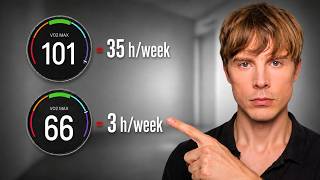
VO2max starts declining in your early 20s. Aerobic capacity at age 34 predicts arterial stiffness in your 60s. Cardio keeps arteries clean and the heart strong.
A 2026 study found that every 10 years higher brain age is associated with a 39% higher dementia risk. Poor sleep increases brain plaques, creating a vicious feedback loop.
Ignoring abnormal blood markers (blood pressure, triglycerides, HDL, hemoglobin, fasting glucose, waist circumference) can lead to problems in your 50s and 60s. Colorectal cancer is rising in younger adults; a yearly FIT test (about $20) can detect invisible blood in stool.
The video delivers five evidence-backed habits to stop in your 30s—neglecting relationships, heavy drinking, smoking, skipping cardio, and ignoring health markers—to protect your health in your 60s.
Mentioned in this Video
💡 Key Takeaways
Relationships Predict Longevity
Highlights that social connections are a major, often overlooked, factor in health and life satisfaction.
00:24No Safe Alcohol Level
Cites a large meta-analysis to counter the common belief that moderate drinking is harmless.
00:43VO2max Declines Early
Shows that aerobic capacity starts declining in the 20s, making early cardio important.
01:07Yearly FIT Test
Provides a simple, low-cost screening method for colorectal cancer, which is rising in younger adults.
02:30Full Transcript
[00:00] If you want to be healthy in your 60s, here are five habits you need to stop in your 30s. First, stop letting your relationships disappear. Research shows that time spent with friends declines dramatically as people get older,
[00:12] whereas time spent alone increases. Building close relationships or finding a partner generally doesn't become easier in your 40s and 50s, so you should protect those relationships now. The reason this is important is because the quality of relationships is one of the biggest
[00:24] predictors of life satisfaction and they support your longevity. Second, stop getting hammered every weekend. You might recover from alcohol easily when you were in college, but a new large analysis of 843 studies found that alcohol intake was associated with a linear increase in the risk of several cancers, with no clearly safe level observed.
[00:43] If you do drink, I recommend keeping it to around 2-3 drinks per week, instead of getting hammered once a week. And while you're at it, stop smoking. Smoking cessation can reduce the risk of lung cancer by 30-50% compared to if you keep smoking.
[00:55] When you're young, your risk of cancer is low, but if you smoke for decades, your risk of cancer is astronomically high in your 50s and 60s. Third, stop neglecting cardio. When muscle mass and strength begin declining in your 30s,
[01:07] VO2max already starts declining in your early 20s. Muscle mass and strength become more important in your 50s and 60s, but VO2max matters a lot more earlier. It seen that aerobic capacity at age 34 predicts arterial stiffness in your 60s and subclinical atherosclerosis has already been seen to start in 20 So cardio will keep your arteries clean and your heart strong 4 Stop sacrificing sleep In a 2026 study researchers created a brain aging index based
[01:34] on brain activity in your sleep. Every 10 years higher brain age above chronological age was associated with a 39% higher risk of dementia. Poor sleep increases the amount of plaques in your brain, which in turn reduces your ability to get good sleep. So it's a vicious feedback loop.
[01:50] You want to stop that snowball rolling by getting good sleep consistently. And finally, stop ignoring abnormal health markers. In your 30s, it's quite easy to just ignore red flags in your blood work, for example. You ignore them, you shrug them under the carpet. But if you keep shrugging them under
[02:03] the carpet, it's going to explode in your 50s and 60s. Measure your blood pressure, EPOB, triglycerides, HDL, hemoglobin, MNC, fasting glucose, and your waist circumference. When something is abnormal, act quickly instead of waiting. Colorectal cancer is also rising among
[02:17] younger adults. A big reason for that is that younger people aren't screened and they don't think they have colon cancer. You can easily prevent this by getting a yearly fit test, which is one inexpensive, non-invasive option. It basically looks at invisible blood in your stool
[02:30] and it costs only around $20. The last part is especially important because if you don't measure it, you can't really know if you're improving or not. If you want to see where your health currently ranks for your age, take my 3-minute health percent assessment. It looks at your
[02:42] biomarkers, fitness, body composition, and lifestyle. Click the link below and start now.