

Steam Deck Price Shock: 45% Jump Overnight
45sViewers will be hooked by the shocking news of a 45% price increase on a beloved budget device, sparking outrage and curiosity.
▶ Play Clip"The title accurately reflects the video's focus on the Steam Deck price increase and its root causes."
The Steam Deck, once a $400 gaming handheld, recently saw a 45% price jump due to skyrocketing memory and storage costs. The root cause is that 90% of global DRAM production is controlled by three companies—Samsung, SK Hynix, and Micron—which have shifted capacity to high-margin HBM memory for AI, squeezing supply for regular DDR and LPDDR. This trend is driving up prices across consumer electronics, from laptops to phones, and may persist for years.
The 1 TB OLED Steam Deck jumped from $649 to $949, a 45% increase, due to rising memory and storage costs.
Three companies—Samsung, SK Hynix, and Micron—control 90% of global DRAM production, giving them significant pricing power.
HBM memory requires stacking 8-16 DRAM dies vertically, using three times the factory capacity of DDR/LPDDR, with yields as low as 35-40%.
Memory manufacturers have reallocated production to HBM for AI applications, reducing supply of regular DDR/LPDDR and driving up prices.
Memory companies avoid overinvesting in new fabs due to past boom-bust cycles; new facilities cost $15-20 billion and take 4-5 years to become operational.
Entry-level Windows laptops are reverting to 8GB RAM, phones may have less RAM, and used markets are seeing higher prices as people hold onto devices longer.
Consumers initially complain about high prices but eventually accept them, as seen with RTX 20-series laptops and the $2,000 RTX 5090.
The Steam Deck price hike is a symptom of a broader memory shortage driven by AI demand for HBM. With limited competition and long lead times for new production capacity, elevated prices for consumer electronics are likely to persist, and the market may normalize these higher prices over time.
What three companies control 90% of global DRAM production?
Samsung, SK Hynix, and Micron.
01:30
How much more factory capacity does HBM require compared to DDR/LPDDR?
Three times the capacity.
02:30
What is the typical yield for HBM modules?
35-40%.
03:00
Why are memory manufacturers reluctant to build new production facilities?
Past boom-bust cycles have shown that overinvesting leads to industry collapse; new fabs cost $15-20 billion and take 4-5 years to become operational.
05:30
What is the Stargate project and how much DRAM wafer capacity does it require?
OpenAI's Stargate data center project is projected to require 900,000 wafers per month, about 40% of global production.
06:00
What trend is emerging in entry-level Windows laptops due to memory price increases?
They are reverting to 8GB of RAM and reduced storage to keep prices tolerable.
06:30
Steam Deck Price Shock
The 45% price jump on a beloved product is a visceral example of how memory shortages affect consumers.
HBM Yield Woes
The revelation that 35-40% of HBM output is defective due to stacking complexity is a striking insight into manufacturing challenges.
03:00Price Normalization Cycle
The observation that consumers eventually accept high prices, as with the $2,000 RTX 5090, is a cynical but accurate take on market psychology.
08:00[00:00] The Steam Deck is arguably the best gaming handheld on the market. It has a great gaming experience, but its best part has always been its price point. This thing launched at $400, and the reason why Valve could price it so low is because they make money on every game that's sold on the system. They have that like console caliber advantage. It was always cheap, but recently it got a hefty price bump. The 1 TB OLED model
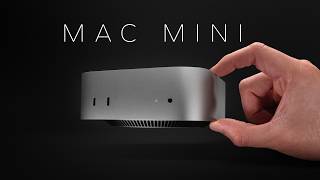
[00:24] went up by 300 bucks from 649 to 9.49, and people were understandably upset. It's a 45% jump overnight. And it's not just Valve. It's Xbox pricing, PS5 pricing, ROG Ally, even Nintendo, who almost never raised their prices, jacked the price of the Switch 2 up by like 50 bucks before it even shipped. And in the computer space, the cheaper entry-level Mac Mini is gone. Laptop prices are jacked up. It sucks. And the root of it is
[00:48] that memory and storage prices have skyrocketed. But I don't think most people realize how bad the memory situation is. So 90% of the world's memory production is done by three companies. So Samsung and SKH Highix, those are both in South Korea. And then in the US there's Micron. That's it. So three companies that make up 90% of the world's DRAM production. So there's various flavors of DRAM. And all these companies make all the different flavors, but
[01:12] the big ones are uh DDR. So that's the kind of memory you'd see in desktops. Then there's LP DDR, which is like low power DDR. That's for like lower voltage, more energyefficient applications like laptops and phones. Uh, and the third type is HBM. It stands for high bandwidth memory. And this stuff is the type of memory that you see in like the Nvidia GPUs that run chat GPT. But the killer is that HBM modules require three
[01:37] times the factory capacity of DDR or LPDDRAM. So in other words, for every gig of HBM that you produce, you could have produced 3 gigs of DDR or LPDDR. So regular RAM, like the stuff you'd see in the Steam Deck, a phone, a laptop, a desktop, that memory is essentially a flat chip. It comes from a big silicon wafer. It's one layer and it's etched with billions of memory cells. They cut it up, they package it,
[02:01] and it gets used. And both DDR and LPDDR are done in the same way. But HBM is a different thing. It still originates from a wafer, but HBM modules are built in a stack. They take 8, 12, sometimes 16 DRAM dies and they stack them vertically and then they drill thousands of channels straight through. And these channels allow the data to move up and down in parallel, which is why HBM memory is so high bandwidth. But
[02:25] this process of stacking is absolutely brutal on production rate or like yields because when you stack dyes and even one of those layers has a defect, which is actually pretty common, uh-oh, too bad. you got to dump the whole thing. And so yields on HBM modules are often low. Like 35 to 40% of HPM output is burnt. It uses a lot of factory capacity. And because it's so wickedly expensive and timeconuming and just difficult to make,
[02:49] companies charge a lot of money for it. And the profit margins on HBM is way higher than DDR or LPDDR. And so a lot of factories have shifted their production to HBM. And as a result, for regular memory, since there's less of it being made and there's still strong demand, the price of it goes up and up and up until you have a nearly $1,000 Steam Deck, which is seemingly crazy. But it's not like Valve being
[03:13] greedy here. The price of the memory and the storage inside this device are probably triple of what they want it to be. So they just this is how they're reacting to it. Now, if there was one company or one group of companies to point the finger at, it would be the memory manufacturers, right? They're the ones that decide to reallocate their production to HBM. They're the ones that are setting the price of uh regular DDR and
[03:37] LPDDR. And if they wanted to, they're the ones that could theoretically switch back to making this kind of memory and just have normal pricing. But the memory industry is like a graveyard. In the '90s, there were so many DRAM makers, but today there are three big ones left. The rest of them either got bought out or they died from making the same mistake of making too much memory. Because when you make too much, demand goes down,
[04:02] price goes down, and the industry just collapses. So for the guys that remain, SKH Highex, Samsung, Micron, they know that the number one rule that you never break is never make enough memory. Always make sure that demand is unmet and so the prices can spike and keep you in business because the alternative is to make enough memory and then it's over. The it's like the party is over. So when AI showed up and was like, "Hey,
[04:26] we can offer you guys the fattest profits you've ever seen if you make HBM." So they all transitioned. They've all switched over to because that's just the nature of the business. Now, we've seen expensive RAM for a couple years now. A very expensive gaming handhelds, I think, is the least of our problems. I think it gets way worse. Let me show you some numbers. So SKH Highix is fully booked for the RAM production for the rest
[04:50] of the year, mostly to Nvidia. Also, OpenAI has this massive data center project called Stargate. And that thing is projected to require 900,000 wafers per month of DRAM. Like that is 40% of the global production of these wafers being sent to one project. And that's just for OpenAI, the guys that handle chat GBT. All the other AI providers and all the other hyperscalers like Microsoft, Meta, like everybody wants this RAM. So, I think we're going to
[05:14] have supply issues for years. Now the first reaction you might have is like if this is the case why don't they just make more production facilities right well like I described before most memory companies do not want to overinvest and get burned cuz these things are expensive these facilities are like 15 20 billion to make it's like crazy but they have started it but keep in mind these facilities take like four or five years to come
[05:38] up to operation and even when they're running the first couple years have terrible yield so this thing like this issue is so it goes so deep and for so long now one thing we're already starting to see is this trend of lowered specs. So, we're starting to see entry-level Windows laptops being reverted back to 8 gigs of RAM and reduced storage just to keep the prices tolerable. But 8 gigs of RAM in a Windows laptop in
[06:02] 2026 is just not good. And keep in mind that a lot of modern laptops have RAM that's soldered on. You can't ever upgrade it. It's baked on. So, you're stuck with the life of that product with 8 gigs of RAM on a Windows laptop that you bought in 2026. That's just the worst. is so bad. Um, and we're seeing the same kind of stuff in the phone market. We're seeing new devices, at least they're rumored to
[06:27] have less RAM than the previous generation. And this for entry-le stuff and like mid-tier stuff, high-end stuff is like we're likely going to see elevated pricing. Now, the second thing that's coming from this is that the used market is just getting decimated. Like when new stuff goes up in price, usually the used market follows and it just bumps up. But this is seeing such escalated pricing that people are holding on to their devices for longer because
[06:51] they don't want to upgrade. And so there's less devices even entering the used market and the prices of that stuff is just way higher than it used to be. And it's really painful to see. And the third thing that I think is really important but almost difficult to talk about is just okay when the new price comes or is revealed and it's super expensive usually people complain about it pretty aggressively upfront but then after a while
[07:15] it kind of like people get complacent and then that super expensive new price becomes just the normal price. The best example that I can think of is like the 20 series gaming laptops. When those first came out, I made so many videos being like, "This is crazy pricing." These 20 series gaming laptops, let's say like a 2070 or 2080, those things were like 50% more than the 10 series stuff for like 15% better. Sometimes like 10%
[07:39] better. And I was like, "This is super expensive. Don't buy this stuff. It's not worth it." People in the beginning agreed. They're like, "Yeah, this is super expensive." But then enough people bought it and then they became the normal price. People were like, "Yeah, this is just the way it is." And so when that happens, like this is a a gaming handheld that jumped up by, you know, 40 45% in price. And I just checked before
[08:03] I started shooting this video, these things are sold out. This thing, like people complain. They're like, "Oh my god, this is crazy. How is it? How is it $300 more than it was yesterday?" And then today it's sold out. It It just This is just the way it is. And when more and more people buy these things and just accept that price and it's not valve, right? It's the the markets of the world that are influencing
[08:27] this, but it becomes the norm and it never comes back down. Look at desktop GPUs. When the 5090 first came out with its $2,000 MSRP, people were outraged at the price. They were like, "This is crazy." But then people got used to it. People bought it. And now you can't even keep a 5090 on the shelf. It pops up. it gets sold immediately because at this point a $2,000 590 is arguably a good price. And like
[08:52] here's the thing. I made this video because when I saw the price of the Steemit go up, I had this like sick almost visceral reaction to it because I thought if there was one product that would be able to withstand the whole RAM and storage price bump, it would be this thing because Valve has their Steam store. They can subsidize the cost of this with Steam sale or game sales. And even Valve got hit. I'm like,
[09:16] "Holy." So, this is just like like a brain dump. I hope you guys enjoyed this video. I hope you learned something from it. But this is just my my kind of immediate reaction to this whole uh Steam Deck going up in price.



⚡ Saved you 0h 09m reading this? Transcribe any YouTube video for free — no signup needed.