Fed Raises Rates for First Time in 3 Years
45sThe announcement of a rate hike after a long pause is a major financial event that attracts immediate attention.
▶ Play Clip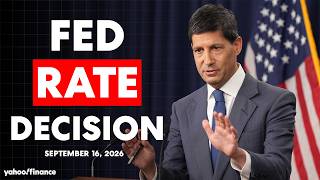
"The title accurately describes the event, but the content is a lengthy press conference with repetitive Q&A, so it's solid but not exceptional."
In this press conference, Federal Reserve Chairman Kevin Warsh announces the FOMC's decision to raise the federal funds rate by a quarter percentage point to a range of 3.75% to 4%, marking the first rate hike in three years. He emphasizes the committee's commitment to price stability, citing persistent inflation above the 2% target, while acknowledging the resilience of the U.S. economy and labor market. The chairman also addresses questions on the effectiveness of rate hikes, the Fed's independence, and the impact on consumers.
The FOMC raised the target range for the federal funds rate by 25 basis points to 3.75%-4%, the first increase in three years.
Economic activity is expanding at a solid pace, with strong productivity, robust capital investment, and a low unemployment rate of around 4.1%, despite elevated uncertainty from geopolitical developments.
Inflation remains elevated, with 12-month PCE inflation estimated at 3.6% in August, core PCE at 3.2%, and core CPI at 2.4%. Many categories are still rising above 3% on both 6- and 12-month bases.
Summer inflation readings do not indicate meaningful improvement in underlying trends; the committee remains focused on the price stability side of its mandate.
The Fed must be confident that underlying inflation is moving toward the 2% objective clearly and at sufficient speed; this standard has not been satisfied, prompting the rate hike.
The SEP median projections show real GDP growth of 2.3% this year and 2.4% next year; total PCE inflation at 3.7% this year, falling to 2.3% next year; unemployment steady at 4.1%; federal funds rate at 4.1% at end of this year and next.
Powell acknowledges that rate hikes cannot affect individual prices like oil or food, but ensures that relative price changes do not broaden into broader inflation.
Powell states he is not in the forward guidance business, emphasizing that decisions are made based on observed data and principles, not pre-committed paths.
The rate hike aims to deliver stable prices, which benefits the least well-off by preserving purchasing power and enabling real wage gains over time.
Three factors changed since the July meeting: stronger economic data, persistent inflation trends, and geopolitical developments, leading to a unanimous decision.
Powell describes financial conditions as not restrictive, and the rate hike removes a dose of accommodation to align credit conditions with objectives.
Powell views the neutral rate as an academic concept (Wicksellian rate) with no operational effect on current decisions.
Powell criticizes over-reliance on individual data points, stating 'trends matter, data points are noisy,' and that data point dependence is a dangerous preoccupation.
Powell emphasizes that Fed independence is a two-way street, with the Fed staying in its lane and others handling trade and fiscal policy.
Stable prices are crucial for the ~50% of Americans without financial assets, as it allows their paychecks to maintain purchasing power and deliver real wage increases.
Most advanced economies face similar price pressures; Fed decisions spill over globally, and coordinated rate hikes help quash inflation worldwide.
Powell's assessment shifted due to data showing the economy has strengthened, but inflation remains the core problem, necessitating the rate hike.
Long-term yields have risen due to economic strength, competition for capital (especially from hyperscalers), and geopolitical tensions affecting crack spreads.
Despite SEP projections pushing 2% inflation to 2029, Powell reaffirms the commitment to deliver price stability on a timelier basis, without prejudging future actions.
Powell mentions a Fed task force to study AI's implications for the economy, but leaves policy decisions on AI risks to other government branches.
Powell asserts that achieving price stability does not require harming the labor market; the two mandates are not at cross-purposes over the medium term.
The Fed's decision to raise rates reflects a firm commitment to price stability, driven by persistent inflation and a resilient economy. Powell emphasizes a data-driven, trend-focused approach, while reassuring that the path to stable prices will not sacrifice full employment.
First Rate Hike in Three Years
Marks a significant policy shift after a prolonged period of accommodation.
00:06Inflation Too High for Too Long
Highlights the Fed's primary concern and justification for the hike.
03:00Trends Over Data Points
Clarifies the Fed's decision-making philosophy, emphasizing long-term trends over noisy data.
16:02Fed Independence as Two-Way Street
Reinforces the Fed's institutional autonomy and separation from political pressure.
17:15No Trade-off Between Mandates
Assures that fighting inflation won't harm the labor market, a key concern for markets.
27:43[00:06] In the meeting just concluded, the FOMC decided to raise the target range for the federal funds rate by a quarter of a percentage point to 3 and 3/4 to 4% in
[00:18] mandate. The committee is continuing its policy of maintaining ample reserves in the banking system. As noted in the policy statement released just a short while ago,
[00:31] economic activity is expanding at a solid pace. While uncertainty remains elevated, owing in part to geopolitical developments, domestic spending has been resilient.
[00:44] Productivity growth, strong. And capital investment is robust. workforce, and the unemployment rate has changed little. But inflation remains elevated.
[00:59] Today's policy action will support a timelier return to the committee's 2% This committee will deliver price stability. Now, getting into some further detail. Our decision comes at a time when the
[01:15] strengthening. New hiring, private sector earnings, business capital investment. Each of these markers has improved in recent months and is pointing in a good direction.
[01:30] Credit flows have been robust, particularly for businesses. And as I said at the policy symposium in Jackson Hole, I would be hard-pressed to describe broad financial conditions as
[01:42] restrictive. This view was widely shared by the committee. So, we removed a dose of accommodation. Consider the geopolitical landscape of shocks and uncertainty,
[01:56] and you begin to appreciate the resilience of the US economy. Given that resilience and the potential for even greater performance, an attitude of optimism is exactly what I heard inside the FOMC these last 2
[02:12] days. One basic sign of strength is the state of America's labor markets. The jobless the jobless rate remains low at around 4.1% and both job openings and weekly hours
[02:27] have been increasing. Unemployment claims on a 4-week moving average are running at levels consistent with full employment. So, the labor side of the Fed's congressional remit is in good shape.
[02:41] Yet, for more than 5 years, inflation has been running above target. So, our predominant focus is on the price stability side of our mandate. The plain fact is that inflation is too high and has been for too long.
[03:00] This summer's inflation readings do not tell me that underlying trends have meaningfully improved. Based on the most recent CPI and PPI data, the 12-month change in total PCE prices likely was around 3.6% in August.
[03:17] Core PCE and CPI prices running at about 3.2 and 2.4% respectively. Too many categories are still posting increases above 3% on both a 6- and
[03:31] 12-month basis. I noted in Jackson Hole that overall commodity prices also bear watching. And over the intervening period, the prices of many of these key inputs have risen.
[03:45] Since my first FOMC meeting as chairman in June, my colleagues and I have been unequivocal in our commitment to price stability stability and to our 2% PCE inflation objective.
[03:59] At our July meeting, we all agreed that inflation remained too high and we expressed our joint readiness to act as circumstances might require. And a good majority of my colleagues and I thought the wiser course then would be
[04:14] to await new information in the intermeeting period. Last month in Wyoming, I expressed my commitment to a monetary policy discipline, not to a decision. I defined the standard for action.
[04:29] We must be confident that underlying inflation is moving to our objective clearly and at sufficient speed. Today, the FOMC decided that this standard has not been satisfied.
[04:45] The committee's unanimous vote shows our resolve to achieve price stability on a timelier basis. We aim to ensure that credit and financial conditions are consistent over time with our mandate.
[04:58] That relative price changes in some sectors of the economy do not broaden. That inflation compensation in market prices stays low. And that inflation expectations remain well anchored.
[05:13] This afternoon, you also received the summary of economic projections. It reflects the views of my colleagues on the committee. But as in June, I've not offered a projection of my own. But like in June, I said I would
[05:26] faithfully discharge the summary of their projections. So here goes. In the summary's median projections, real GDP rises at 2.3% this year, 2.4% next year. Total PCE inflation runs at 3.7% this
[05:42] Total PCE inflation runs at 3.7% this year and falls to 2.3% next year. The unemployment rate holds steady at about 4.1%. The median participant judges that the appropriate federal funds rate to be
[05:55] 4.1% at the end of this year and to remain there next year. Inflation risks are to the upside while Inflation risks are to the upside while labor risks are roughly balanced.
[06:07] In my meetings these last few weeks in Jackson Hole in Asheville at the G20 meeting which the US hosted and a central bank conference in Basel it was evident that most advanced economies are facing price pressures.
[06:24] Their central banks are making their own judgments consistent with their own remits. Our decision today reflects our best Our decision today reflects our best judgment in service to our remit.
[06:36] The Fed has a role in sustaining the economic progress happening in America right now and the rising opportunities that come with it. Those who are least well off have the
[06:48] most to gain from a durable expansion, a solid labor market and stable prices. We at the Fed are unwavering in our vital and straightforward purpose full employment and price stability
[07:03] and a thriving American economy that sets the standard for the world. questions. >> Thank you.
[07:16] >> Uh Chair Powell, thanks for doing this. Um I'm Richard Escobedo with CBS. let me navigate over to my questions. Um you know, a quarter point rate hike does not reopen the Strait of Hormuz. Um
[07:28] and so I wonder how you think these smaller rate hikes will be effective when it can't necessarily address the energy supply side of inflationary >> Yeah, it's a it's a it's a good question, uh Richard. We cannot affect
[07:41] any individual price, whether it be oil prices, whether it be foodstuffs at the grocery store. But what we can do and will do is ensure that any change in relative prices don't broaden out. Don't have second and third
[07:55] what we're tasked to do and that's what we will do. Times. When the Fed starts raising rates, it generally follows with a
[08:10] sequence of hikes. Is there anything different in today's assessment of the economic conditions that would suggest that the typical pattern does not apply? And I guess second to that, what impact do you expect higher rates to have at
[08:23] keeping inflation elevated is stemming from supply shocks? >> So we're trying to get to more people. So now I get to cherry-pick my preferred question from you, Colby. Um this won't surprise you. I'm not in the forward
[08:35] guidance business. The decision we made today was a sober decision, serious decision, responsible decision, one that we have been preparing for and thinking we have been preparing for and thinking about in my 110 or 20 days here. Uh you
[08:49] heard from other people in the dots effectively what their forecasts are. Uh I'm not going to prejudge any future decisions we make. Uh you might have heard me saying Jackson Hole, I committed to a discipline, a set of
[09:02] principles. I committed to look outside the window and see what I can observe. Uh that's what I did in Jackson. That's what we did today. what we did today. >> Edward
[09:15] from Fox Business. Um so the market priced in a 90% chance of a rate hike today. You don't want the Fed to lead the markets. Was this a market-led rate yields are going up. That's one of the indicators. Um is debt part of that
[09:31] issue? >> So um I've said this before, I'll repeat it. Uh the Fed has an enormous amount of power. These are decisions we make. But getting the understanding right
[09:45] a balance that I've long thought could be better struck. We made this decision today based on our assessment of the situation, based on our assessment of uh the trajectory for employment, based on our judgment on the strength of the
[10:01] sometimes the market uh uh tries to prejudge our outcomes. I'll observe market prices and uh and uh see what they have to say, but today was our decision. >> Steve Thompson, the Washington Post.
[10:28] could tell us just what will this move today actually do for American consumers? And have to ask uh what is your message here to President Trump who has repeatedly called to cut interest rates, not raise them?
[10:41] I've got nothing for you on uh on a discussion with the president. So, but I Um on the American people, as I said in my prepared remarks, the least well-off
[10:55] from stable prices. The decision we made today was the right decision to deliver on the remit that Congress gave us to ensure stable Moreover, I would say because of the underlying strength of the economy,
[11:11] because we are, as I mentioned, uh largely acting consistent with full employment, we can be focused on stable prices. Some months ago I said we will deliver stable prices. Today's action is consistent with that.
[11:25] consistent with that. >> Chris Rugaber you tell us a little more about what changed from the July meeting when as you noted the Fed did stand pat until today and as part of that could you give
[11:41] a sense of whether or not things like the retail sales report today and possibly threatening higher prices as well. Thank you. >> Yeah, so as you might know I'm not a data point dependent guy.
[11:56] So I won't I won't react one way or another to data that that shows up on our doorstep. But on your first question I think the more important one what last met. First I would say a good majority of my
[12:10] colleagues seven weeks ago thought seven weeks is a good investment is a way to buy time so we can make a wise decision. I'll highlight three things that have happened in that inter-meeting period. One is
[12:22] I made out a judgement seven weeks ago about the strength of the economy. There's been a pretty wide-ranging set of data including the labor markets that the economy has strengthened. You might have heard me say that in Jackson Hole a
[12:34] It's a judgement that I have and the committee has. Second inflation trends. I said in Jackson Hole trends matter. I said in Jackson Hole we need to look
[12:47] reality. My judgement some weeks ago was the inflation summer trends weren't passing the test. I've seen very little information since that would make me reverse that decision so I've stuck with
[13:01] it. And the third thing that's changed in seven weeks are geopolitics. I mean there's no hiding from hotspots around the world. And our judgement about what is the most likely or least likely of the geopolitical situation has changed.
[13:16] All three of those things led led themselves to a firm unanimous decision today. >> Clear.
[13:30] You said today's decision removes a dose of accommodation. In your view, and the table, too, are interest rates now at a level that you would describe as restrictive or not? Thank you.
[13:45] >> Uh I've described previously I found it conditions as restrictive. I think I said I was hard-pressed. What I heard around the table in the
[13:57] last couple of days is my colleagues were hard-pressed to describe it that way, too. Um we removed a dose of accommodation so that financial and credit conditions would be more consistent with our
[14:10] ultimate objectives. That was the decision. That was our judgment. And uh prospectively. >> Uh Steve Liesman.
[14:23] Liesman, CNBC. I I want to follow up on that question. Um previously most Fed officials have described the rate as modestly restrictive. And if you remove the accommodation, could you give us your sense of
[14:37] where the Fed funds rate is relative to neutral, and some detail, if you wouldn't mind, on your sense of is there a short-term longer-term neutral rate? Do you think in terms of those?
[14:49] in terms of those? >> Uh in a word, no. Um in a few words, I'd Um I've always been interested in a neutral rate as an academic matter. Back when I learned economics, we used to think of
[15:02] it as a Wicksellian rate. It's a real equilibrium rate. Um it's useful academically. It's uh it's a discussion help us think about policy. Do I think it has any operational effect on decisions that we make today? No, I
[15:17] on decisions that we make today? No, I don't. you don't like data dependence, including today. Um but heading into
[15:31] this meeting, there was a ton of focus on the August CPI, and I'm wondering if you think that um that was appropriate on the part of markets, or if you uh learned anything about how you might approach communications going forward.
[15:45] >> Um so, market participants and reporters, I think generally over the course of the last decade or so, have grown accustomed to waiting somewhat breathlessly on a data point. Um that isn't my view. Um I was
[16:02] not waiting breathlessly on what any particular data was, whether it was retail sales this morning, or a CPI print last week. Um I'll just reiterate, trends matter. Data points are noisy.
[16:16] Data point uh dependence is a dangerous preoccupation. It's not something uh that concerns me. Markets over time will come to understand how this Fed makes its decisions, what's relevant and not, and I wouldn't want to editorialize that
[16:31] for them beyond it. >> Zack Halaschak. >> Uh thanks for doing this, Mr. Chairman. Zack Halaschak the Washington Examiner. the president uh sent out a message essentially threatening to cut off trade
[16:44] lowered. Obviously, an unanimous decision to do the opposite. What would is another test of the Fed's independence? And then kind of when was president? Do you anticipate a post- decision meeting, or
[17:00] >> You you gave me a long menu from which to choose. They're all very tempting. Um I don't have anything for you on on discussions with the president. Um and I'm not a Wall Street newsletter. Um part of the independence of the Federal
[17:15] Reserve is we stay in our lane. Independence is a two-way street. We'll let people that do trade policy and fiscal policy stay in their lane, too. That's how we can stand up here and call them the way we see them.
[17:28] them the way we see them. >> Brian Cheung. is the least well-off and what does a rate hike do when those people might be pinched by higher mortgage rates, higher gas, higher grocery prices, and now
[17:43] >> Yeah. Um it's a fair question. In the macroeconomics, we tend to look at aggregates around here. Aggregate GDP, overall labor market trends, the state of inflation. A lot of people in
[17:58] distributional consequences, and that's their job and their business. What I was referring to in the least well-off tend to be people [snorts] that don't own financial assets. Call that a bit less than 50% of the country. They
[18:12] don't have equity in their home, they don't have a equity in a 401k plan. So, they're living off their uh paycheck that comes every couple of consistent with our mandate is two things. Ask ourselves is the country
[18:27] running more or less at full employment? And we've done that. Um that doesn't mean that individuals aren't searching for a job, but in aggregate, we're running more or less at full employment. If so, we can then look at the other
[18:39] side of the our mandate and let that be our focus. And stable prices, uh an environment where inflation is running consistent with our 2% objective offers good news, cuz that way when they get their wages, they can put their head
[18:53] above water and deliver real take-home pay increases. We don't have total responsibility for it, but we do have responsibility for stable prices. As I've said before, inflation's a is a choice, and today we took a step in
[19:06] >> Miriam. >> Yes, this is Miriam with the New York Times. I'm here at the mic. >> Yes, sorry. France-Presse AFP. Are you looking at the other central
[19:18] banks? And what do you think about the European Central Bank's move? They hiked twice this year, but not in a row. Thank you. uh I don't ask them to prejudge decisions
[19:31] that we're going to make, so I won't prejudge decisions that they make. But I will say this, I've spent some time with uh foreign central bank not just in the last 20 years, but over
[19:43] I mentioned in Jackson Hole, um at the G20 meeting we hosted in North Carolina, and uh at a central bank meeting in Basel. What I heard around the table from most of the advanced economies is they're
[19:58] suffering from price pressures, too. And they're making their own choices consistent with their remit. Um it tells me a couple things. One is when the Federal Reserve makes a policy choice, uh it matters not just to the US
[20:12] economy, but it spills over to the rest of the world. To a lesser extent, that's true for them, too. When foreign central banks make decisions where they're confronted with higher prices, and they choose consistent with their remit to uh
[20:25] raise rates, then they're helping to quash inflation in their countries, and both directions. Beyond that, I won't opine on what other central banks may choose to do this week or beyond. >> Nick Timiraos.
[20:43] Street Journal. Uh Chairman Powell, last fall you expressed concern that the Fed was about to make its, quote, sixth or seventh big mistake by deciding the economy was too strong to justify lower rates. Now, today you raised rates. Can
[20:56] you give some sense as to what changed your own assessment as to what changed your own assessment of the US economy between then and now? >> So, I don't I I reme- remember the full context, but I can tell you uh Nick
[21:08] about the state of growth now. My suspicion 110 or 20 days ago when I showed up was that the US economy was strengthening. Even over the last several weeks, I think we now have data broadly defined
[21:23] that says the economy has indeed strengthened. Um underlying growth is higher. Uh inflation is the problem. Stable prices have been the problem for now more than 5 and 1/2 years.
[21:37] So what the committee decided to do today was take an action to ensure a timely return to our price stability objective. Price stability is foundational to economic growth, and I think we took an
[21:49] important step today to deliver it. And we did it in part by removing the dose of accommodation that I that I mentioned before. before. >> Uh Neil Irwin.
[22:03] yields are up uh quite a bit over the last few months, especially the last few market is telling you, especially about the growth outlook, the neutral rate, uh monetary policy? >> Yeah. Um let me speak to the history.
[22:18] What bond market prices do prospectively, I want to let them do that I want to let them uh tell me any story they wish to. I want to try to interrogate that. But why did yields rise, let's say,
[22:31] since the last FOMC meeting till this? I'll give you the three three reasons, but I would say these things tend to be over determined. This is a complicated set of things that are affecting the most important asset anywhere in the
[22:44] world, the 10-year Treasury. It's the risk-free asset upon which every price of virtually every asset in the world um is related to. economic strength. I think part of the reason why we've seen over the course of
[22:58] 2026 long-term yields go up is the economy is strengthened. Second reason, competition for capital. the surge in capital expenditures, which I referenced in my remarks, is real.
[23:14] And the so-called hyperscalers are out in the market raising funding, and so the competition for capital is real, and I think it partly explains the increase in yields. The third is geopolitics.
[23:27] Um the situation in hotspots around the world are driving long-term yields. Um it's not simply spot prices of energy or spot prices for corn or soybeans or
[23:39] but it's the difference between those spot prices and so-called crack spreads. What that means for products that find their way into uh stores uh across the leading explanations, but certainly not an exclusive list.
[23:56] >> Michael McKee Michael McKee from Bloomberg Radio and Television. Uh you said in Jackson Hole that you want to see inflation come down clearly and at sufficient speed, which is a standard without necessarily a
[24:10] ask is because uh today you say today's policy action will support a timelier return to the committee's 2% target, and yet in the summary of economic projections, the
[24:22] median pushes the 2% target achievement out to 2029, another 2 years. And I'm things. >> Um one easy way to square that, Mike, is
[24:34] Um those are the forecasts of my 18 colleagues, and I tried to represent them dutifully to you. Um my business is to not give forward guidance, but my commitment in June was
[24:50] to reaffirm to the American people, to anyone listening, that we will deliver price stability. My commitment in July was to say, we want to buy a little bit of time. We want to evaluate what's happening across a range of dimensions.
[25:05] August is we're committed to a discipline, not to a decision. Today's action uh starts to show we're serious about >> And we will deliver on the price stability objective. And as the
[25:20] statement said, we'll do it on a on a timelier basis. That's our decision. And uh when we continue our discussions over months, we'll have more to say about it, but I'm ill prepared to prejudge those
[25:36] future actions. >> Matt, from CNN. >> Thanks, Chairman Powell. Matt Egan with CNN. You've spoken in the past about the widespread adoption of artificial intelligence.
[25:52] How concerned are you, if at all, about these increasingly alarming warnings we've heard from AI leaders about losing control of this powerful technology and doing real-world damage, damage that would presumably impact the real
[26:05] economy? >> So, I've spent a lot of time uh thinking about AI. And before I found my way to this post, I spent a lot of time talking Um independence of the Federal Reserve is
[26:17] about staying in our lane. We care very much about what's happening about the implications on the demand side of the economy, and ultimately on the supply side of the economy. I care so much, I think it's so important that
[26:33] we established a task force that should report by the end of the year to help us think about the implications for our future policy conjuncture. But the policy decisions that are made about the risks and rewards, the
[26:47] decisions made by other parts of the government. I'm going to leave it to them to make those those those political decisions, those policy decisions. The obviously have some bearing on our day job, and that's where we'll be focused.
[27:01] >> And for the last question, we'll go to Jennifer Schonberger. Is that right? Schonberger with Yahoo Finance. Inflation has run up mostly from higher
[27:15] energy prices and tariffs, which some say are supply shocks that rate hikes cannot fix and should fade on their own, so long as inflation expectations stay anchored. And now that you have hiked rates, do you need to push growth below
[27:29] potential, unintentionally pushing weakness on the job market to bring inflation down? And how do those dynamics play out given the forcefulness right now? >> So, there's a there's there's a lot
[27:43] there, Jennifer. Let me see if I can't do just a little bit of it. Um first, we believe that the unemployment rate is basically running consistent with full employment.
[27:55] Uh I don't believe that we need to do harm to the labor markets to achieve our objective. I don't believe that the two parts of our mandate, price stability and full employment, are working at cross-purposes over the medium term. So,
[28:10] uh ensuring continuous, sustainable, durable economic growth, that's the business we're in. And the job we did today, the job we'll continue to do, is to ensure price stability,
[28:25] which can mean that sustainable, durable economic growth can go on for longer, the economy can be stronger, and as I mentioned before, the least well-off can >> Thank you. >> Thank you.
The speaker immediately establishes authority by announcing a major policy decision, positioning themselves as a key figure in economic governance. This creates a sense of importance and urgency, compelling viewers to listen for details.
In [TIME], [AUTHORITY FIGURE] announced [MAJOR DECISION], marking [SIGNIFICANCE]. Here's what it means for [AUDIENCE].
AI-generated clip ideas for Shorts based on the transcript
The announcement of a rate hike after a long pause is a major financial event that attracts immediate attention.
▶ Play ClipThis strong statement directly addresses a top concern for viewers, making it highly relatable and engaging.
▶ Play ClipThis quote is controversial and challenges common market narratives, sparking debate among viewers.
▶ Play ClipThe discussion of Fed independence, especially in a politically charged environment, is a hot topic that resonates widely.
▶ Play ClipThis segment explains the real-world impact on everyday people, making it highly educational and shareable.
▶ Play ClipSnapshot 2026-11-23
Every observation TubeSum recorded, plotted as measured.
The vertical axis starts at 73.5K, not zero, so later observations stay readable.
Based on 5 observations · last observed Nov 23, 2026 · solid lines connect consecutive measurements (≤2 days apart); dashed lines span days TubeSum did not measure. · vertical axis focused on the observed range (starts at 73.5K)
Based on 5 observations · last observed Nov 23, 2026 · solid lines connect consecutive measurements (≤2 days apart); dashed lines span days TubeSum did not measure. · vertical axis from zero
Exact daily observations; gaps mean no observation was taken that day.
| Date | Views | Avg views / hour | Channel median |
|---|---|---|---|
| 2026-11-23 | 73,585 | 45.1 | 5,380 |
| 2026-11-22 | 73,581 | 45.8 | 4,799 |
| 2026-11-21 | 73,573 | 46.4 | 4,799 |
| 2026-11-20 | 73,556 | 47.2 | 4,799 |
| 2026-11-19 | 73,541 | 48.4 | — |
Audience reaction — separate from the performance metrics above.