
What is an Imbalance in Trading?
45sClear visual explanation of a core trading concept that is often misunderstood, appealing to both beginners and experienced traders.
▶ Play Clip"Delivers a solid 2-minute guide on imbalances, though it ends with a community pitch."
This video is a concise guide to understanding and trading price imbalances (IMB) in financial markets. It explains what an imbalance is, how to identify it on a chart, the three main rules for trading it, and why the concept works based on market algorithms. The presenter also offers a free trading community for further support.
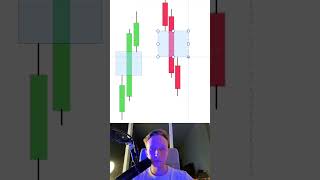
An imbalance is a zone where there was only one-sided trading, either only purchases or only sales, creating a gap between candles.
Imbalance forms between the shadows of the first and third candles, creating a price gap. The second candle is typically strong and contributes to the gap.
Always determine the imbalance gap by the shadows of the candles, not the bodies.
Focus on the nearest imbalance; ignore farther ones unless the nearest is fully filled.
Combine imbalance with other patterns like order blocks, mitigation blocks, or breaker blocks to increase trade probability.
The market is algorithmic; every buy requires a seller. When price moves too fast, the algorithm cannot provide two-sided trades, creating an imbalance that must be filled.
Look for two signals: a reaction (price touches zone and refuses to go further) and displacement (next candle sharply moves in opposite direction).
Trading imbalances is a powerful strategy based on market mechanics. By following the three rules and confirming with reaction and displacement, traders can improve their effectiveness. The presenter encourages joining a free community for further learning.
What is an imbalance in trading?
A zone where there was only one-sided trading (only purchases or only sales), creating a gap between candles.
00:01
How do you identify an imbalance on a chart?
Look for a gap between the shadows of the first and third candles, with a strong second candle.
00:31
What is Rule 1 for trading imbalances?
Always determine the gap by the shadows, not the bodies.
00:46
What is Rule 2 for trading imbalances?
Work with the nearest imbalance; don't look at the far one unless the first is full.
01:00
What is Rule 3 for trading imbalances?
Combine with other patterns like order blocks, mitigation blocks, or breaker blocks.
01:12
Why does the market create imbalances?
Because the market is algorithmic; when price moves too fast, the algorithm cannot provide two-sided trades, creating an imbalance that must be filled.
01:25
What two signals confirm an imbalance has worked?
Reaction (price touches zone and refuses to go further) and displacement (next candle sharply moves in opposite direction).
01:38
Definition of Imbalance
Provides a clear, concise definition that is the foundation of the entire strategy.
00:01Rule 1: Shadows over Bodies
A specific, actionable rule that prevents common mistakes in identifying imbalances.
00:46Algorithmic Market Explanation
Explains the underlying mechanism, making the strategy more credible and understandable.
01:25Confirmation Signals
Provides clear criteria for when to act, increasing the reliability of the strategy.
01:38[00:01] this video to the end and you will make trades more effectively. This is an imbalance. This is imbalance. This is also imbalance. fill it in? Imbalance is the zone where there was only one-sided trading,
[00:17] only purchases or only sales of the best of the opposite side. We have, uh, a bullish bearish example. Ah, let's figure it out. We have the first candle, the second candle and the third candle. That is, as we see, between the first and third candles, between the shadows,
[00:31] we have formed, a, such an imbalance in the price, that is, a gap. This will be an imbalance. This is it. And it also doesn't matter if it's a have the first candle, the second candle, the third candle. Our second candle, you see, is
[00:46] quite strong, and it also forms a gap in the price between the first and third candles. Be sure to look at the shadows. Three main rules for working with imbas. Rule number one: always determine the gap by the shadows. Rule number two: work
[01:00] with the nearest imbalance. Don't look at the far one unless the first one is full. And rule number three: combine with other patterns. If you see an order block, mitigation block, breaker block, always look and use it as
[01:12] your deal more likely. Now let's talk about why this works. The market works algorithmically. Every time you buy, someone has to sell to you, otherwise the deal simply won't happen. When the price moves too
[01:25] have time to provide trades in both directions . Accordingly, a price imbalance is created, and the algorithm is obliged to fill it. Imbalance is an area where there was no fair trade. Rebalancing is bringing the price back to correct
[01:38] this. Now how do you know that the imbalance has worked? Always look at two things. The first is a reaction, the price touches the zone and shows a refusal to go further. And secondly. Displacement is the next candle that sharply moves in the opposite
[01:52] direction. The display is a strong candle, the same as when the imbalance was formed. Want to make your trading more efficient? Join my I also have a free trading community where I help people
[02:04] earn money from day one, conduct like sessions, offer training for beginners, and provide personal support from me. Everything is inside.



⚡ Saved you 0h 02m reading this? Transcribe any YouTube video for free — no signup needed.