
Giant Pterosaur Weight Surprise!
40sThe surprising comparison of a giant pterosaur's weight to a pig creates a curiosity gap that hooks viewers immediately.
▶ Play Clip"Delivers a solid, informative explanation of pterosaur flight mechanics, though the title's promise of 'how' is only partially fulfilled with limited depth."
This video explores the biomechanics of how giant pterosaurs, such as Quetzalcoatlus, were able to fly despite their enormous size. It explains the adaptations in wing structure, weight, and respiratory systems that made flight possible, and highlights the unique launch strategy they used to overcome the challenges of taking off.
Pterosaurs had wings with elongated finger bones, similar to other flying vertebrates, but having wings alone doesn't guarantee flight; weight and wing size matter.
Despite a massive wingspan, giant pterosaurs weighed about as much as a large pig, which made the wing-to-mass ratio more favorable for flight.
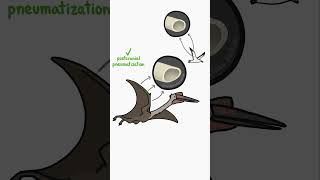
Giant pterosaurs needed strong muscles to flap their wings, and they had mostly hollow bones that increased respiratory system volume, similar to modern birds, allowing efficient oxygen delivery to flight muscles.
Taking off is the most energy-intensive part of flight. Giant pterosaurs couldn't jump like birds due to their size, so they used their powerful wings for both launching and flapping, a strategy also independently evolved by bats.
Giant pterosaurs overcame the challenges of flight through a combination of lightweight bodies, efficient respiratory systems, and a unique quadrupedal launch using their wings, a strategy that bats also convergently evolved.
What was the approximate weight of a giant pterosaur?
About as much as a large pig.
00:14
What adaptation did pterosaurs have to increase respiratory efficiency?
Mostly hollow bones that increased the volume of their respiratory system.
00:29
Why couldn't giant pterosaurs launch like birds?
They were too heavy; jumping would require giant legs that would make them too heavy to fly.
00:58
What launch strategy did giant pterosaurs use?
They used their powerful wings for both launching and flapping.
01:13
Which modern animal independently evolved a similar launch strategy?
Bats.
01:28
Weight Comparison
Provides a relatable comparison that helps visualize the pterosaur's mass.
00:14Hollow Bones and Respiration
Explains a key anatomical adaptation that enabled flight.
00:29Quadrupedal Launch
Reveals a surprising and efficient launch method that challenges assumptions.
01:13[00:02] что у птерозавров были крылья с удлиненными костями кистей , как и у всех остальных летающих позвоночных. Но наличие крыльев само по себе не означает, что вы действительно можете летать. Если вы слишком тяжелы для размера этих крыльев, или если
[00:14] вы не можете махать ими достаточно быстро, вы никуда не доберетесь. Но, несмотря на размах крыльев этого гигантского птерозавра, ученые подсчитали, что он весил примерно столько же, сколько большая свинья. Теперь, когда соотношение массы крыльев стало более приемлемым,
[00:29] гигантским птерозаврам все еще нужно быть достаточно сильными, чтобы ими махать. Поэтому вполне логично довольно крепкими. [музыка] Кроме того, у птерозавров были в основном полые кости, которые [музыка] увеличивали объем их дыхательной системы,
[00:44] подобно современным летающим птицам, что позволяло им доставлять тонны кислорода ко всем этим летательным мышцам. Всё это, вероятно, помогло огромному телу Кетцалькоатля удержаться в воздухе. Но сам процесс подъема в воздух —
[00:58] это самая сложная и энергозатратная часть полета. Гигантские птерозавры были настолько огромны, что для того, чтобы подпрыгивать в воздух, как птицы, им нужны были бы поистине гигантские ноги, которые сделали бы их определенно слишком
[01:13] тяжелыми для полета. Таким образом, они решили всю проблему запуска другим способом. Они использовали свои мощные крылья для двойной цели: взлета и взмахов. И эта стратегия настолько эффективна, что летучие мыши [музыка]
[01:28] независимо от неё тоже её выработали. Кстати, это, пожалуй, мой любимый I think that this is my favorite fact about giant pterosaurs –and bats, of course.


⚡ Saved you 0h 01m reading this? Transcribe any YouTube video for free — no signup needed.