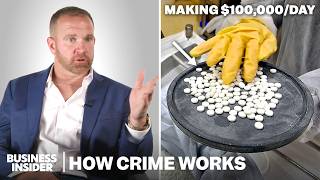

Stole Patient Lists from Rival Pill Mill
45sThe dramatic confrontation with a rival clinic, including pulling a gun, is high-stakes and immediately hooks viewers.
▶ Play Clip"Delivers a detailed, first-hand account of illegal pain clinics, though the title's promise of 'how it works' is partially diluted by lengthy personal history."
In this video, a former drug trafficker recounts his involvement in running illegal pain clinics in Florida and Georgia, detailing the mechanics of the operation, the corruption, and the eventual federal investigation and conviction. He also discusses his earlier cocaine smuggling career and reflects on the systemic issues that allowed such operations to flourish.
The narrator was convicted in 2014 for distributing millions of pain pills. He explains how his operation stole patient lists from competitors and used intimidation, including pulling a gun on a rival.
Pain management clinics are legal businesses where doctors prescribe opioids like Oxycodone. The narrator describes how he transitioned from cocaine to running pain clinics after a friend introduced him to the lucrative opportunity.
Florida laws allowed pain clinics to have in-house dispensaries under the doctor's DEA forms. This eliminated reliance on pharmacies and increased control and profit.
They moved to Jacksonville to intercept patients traveling from out of state, saving them a 12-hour round trip. They used Craigslist to recruit doctors and leased rooms to them.
There was an unspoken rule to prescribe no more than 240 pills per patient per month. The in-house dispensary was 100% profit, while scripts covered overhead. Daily profits ranged from $6,000 to $100,000.
They hired a retired DEA agent as a consultant to navigate vague regulations. The business doubled daily, requiring round-the-clock security due to long lines.
To compete with the George brothers, they hired a stripper to infiltrate and steal patient lists, and also obtained lists from a portable MRI operator, Pete Tindell.
They hired front desk staff via Craigslist, but the staff accepted bribes to bump patients up the list, leading to chaos and eventual firing.
They made $100,000-$150,000 a day in cash, causing banks to freeze accounts. They had to arrange for banks to pick up cash to avoid suspicion.
After a falling out with Zach, the narrator started his own operation in Atlanta with Roland, investing hundreds of thousands to build a legitimate-looking clinic.
As the DEA and FBI increased pressure, the narrator considered shutting down, but partners wanted to continue. They planned to transition to pharmacies, but were indicted first.
The narrator was arrested in Georgia and later indicted in Florida. He was found not guilty in Georgia but guilty in Florida, receiving 15 years in federal prison.
The narrator criticizes Purdue Pharma and the Sackler family for creating OxyContin and lobbying to avoid prosecution, while street-level dealers like him faced harsh sentences.
Due to COVID-19 and prison reform efforts, he received clemency from Trump, reducing his sentence. He now runs a construction business and a clothing line called Dope Boy Empire.
The narrator reflects on the moral ambiguity of his actions, blaming both himself and the system that allowed such operations. He warns against idolizing the criminal lifestyle, emphasizing the real consequences of imprisonment and the harm caused to others.
What was the unspoken rule for prescribing pills per patient per month?
No more than 240 pills per patient per month.
06:41
Why did they move to Jacksonville?
To intercept patients traveling from out of state, saving them a 12-hour round trip.
04:23
What was the role of the retired DEA agent?
He was a consultant who understood what the DEA was looking for in the rules.
08:03
How did they steal the George brothers' patient list?
They hired a stripper to infiltrate and print the list, and also got lists from a portable MRI operator.
09:44
What was the daily profit from the in-house dispensary?
It was 100% profit, ranging from $6,000 to $100,000 a day.
07:21
What happened when they tried to deposit large amounts of cash?
Banks freaked out and froze their accounts, so they had to arrange for banks to pick up the cash.
14:27
What was the narrator's sentence in the Florida case?
He received 15 years in federal prison.
43:48
Who created OxyContin?
Purdue Pharma, owned by the Sackler family.
44:00
How did the narrator avoid prison time?
He received clemency from Trump during COVID-19.
48:40
Moral Justification
The narrator rationalizes his actions by comparing himself to Big Pharma, highlighting the systemic hypocrisy.
08:29Purdue Pharma's Role
He points out that the real culprits are pharmaceutical companies that lobbied to avoid prosecution.
44:00Clemency and Second Chance
His clemency illustrates the impact of political decisions on criminal justice.
48:40Warning Against Idolizing Crime
He advises against glamorizing the criminal lifestyle, emphasizing real consequences.
51:25[00:01] in 2014 I was convicted of distributing millions of pain pills in a drug millions of pain pills in a drug conspiracy and this is how crime works. were our competition and we stole their patient list so we got all their contact
[00:16] information. I walk into the office and our people are just making phone calls American pain all out state patients are going to be going to Jacksonville pain from here on out if you show back up at American pain in West Palm Beach you'll
[00:30] be discharged. The next day I just see two vehicles pull up to the front door a Range Rover and Mercedes. I said so get ready so we grabbed our guns and the doors open all these dudes come in so I pull out a gun and I put it to his head
[00:43] and he actually calls the cops on me. So they start investigating us. is a front it's a white coat doctor front for a drug business. All they're
[00:58] saying is that we're hiding behind a doctor's coat to run pills rather than you see a drug dealer on the corner we're actually putting drug pill mill the reason why is I didn't
[01:10] business that the government allowed me. A pain management clinic is a business see a doctor and they treat you with medicine rather than through like a chiropractor or surgery you're going to try pain management which is Oxycodone
[01:26] Percocet's Vicodin stuff like that. I was in the cocaine business during the 2000s beginning of 09-ish somewhere in there I was done. During my cocaine days I had a close friend of mine that I grew up with Zach Rose. 3-4 months after I
[01:41] got out of the cocaine my phone rings and he says listen dude I went to a guy in there just absolutely just blowing tons of money. He owns all these pain clinics
[01:54] and his name is Vinnie Colangelo Vincent Colangelo. I was telling that I already bunch of people and all this other stuff and he's like, "Dude, you need to get out of that. You need to come and invest with me and and let's run this
[02:06] operation." And he's like, "Everything that he's got going on like it's it it's like you know, you got to get your license, you got to set everything up. It's all legal." And then he takes me by one of the clinics,
[02:18] uh Vinnie's clinic off of Commercial Boulevard 995 down in Fort Lauderdale. certificates and all the things on the wall and doctors and patients and like it's chaotic and I'm like, "This is crazy. This thing is running downtown
[02:31] everybody. Cops are driving by." You go inside, they've got like a waiting room doctor's offices and you know, and all this stuff and in-house dispensary. So, you could see the doctor and get your pills in the
[02:45] doctor's office. So, I'm like sitting and looking at this stuff. So, now the wheels are turning. I'm like, "This is crazy. Like this is absolutely going to do it the right way." So, I'm like, "Okay.
[02:58] we're going to do it right." He says, "Jason, we're going to do it right." Vinnie to uh invest into his clinics. He had so much money, but he needed another
[03:14] 50,000. Zach's plan was he's like, "Jason, I'm going to make a copy of everything. I've already started the process." enough to figure out the ins and outs and we're going to go do our own thing.
[03:26] to worry about this stress and worry about if the doors are going to get kicked in because of all this drug activity going on. In Florida, they had the rules the laws where you could have a pain clinic and then run in-house
[03:39] dispensary under the doctor's 222 forms. So, they could order pills and sell them So, it was a win-win. We write the scripts, right? And they go to CVS and If there's an employee there that is just absolutely against this,
[03:54] they're reporting you, they're calling law enforcement, they're declining to give your patients meds when the doctor is a legit doctor is allowed to do it. So, it's red flag in the business. So, having an in-house dispensary, you
[04:09] eliminate that. You control everything. So, you write the scripts and sell them on and how much pills they're getting. We have high school diplomas, no college We don't know nothing about the medical field.
[04:23] we're ready to go. So, we go to Jacksonville, Florida. And the reason why we go to Jacksonville is because in South Florida is where all the South Florida. Well, everybody's coming Most of the people are coming from out
[04:35] of state. Tennessee, Kentucky, Ohio, Virginia. All coming from all over the place, but your biggest hub is that area. So, we were thinking like, why don't we cut them off? Save them 6 hours from state line
[04:50] to Fort Lauderdale. 6 hours back 12. We're like, Jacksonville, perfect. Soon as Vinny found out what we're doing, he cut Zach off and didn't pay us, buy us we had there, which was fine. Whatever. We had some money I had money put away.
[05:04] Jacksonville Pain. It's the first one we start. Craigslist. And so, what we did is we we ran an ad, we got the building, we built
[05:19] case a doctor want to see it, we can show him. So, we run some ads, we get a bunch of hits. We're creating these medical We're going to do is we're going to lease the room to these doctors. That's
[05:32] we're not doctors. We're just We're going to put the money in the buildings, patients to you. You're just going to rent the room. And it worked. You have a lot of doctors that are
[05:45] that are 60, 70, 80 years old, okay? They had money, they didn't know how to manage the money like most doctors don't. They were just family doctors. And their practices went under, or they
[05:57] got a divorce, or they were running low on money, or they needed a part-time They were an employee of Jacksonville Pain, we 1099 them, they're subcontractors in a way. Each doctor uh has a 224 register so they can fill
[06:13] out to the DEA to get medicine. So we would use their 22 forms and we'd pay them extra money to be able to house medication in our in-house dispensary. Pharmaceutical companies distributors will only give them so much per doctor.
[06:28] if I owned a pharmacy, I can get unlimited amount of pills. But in a in-house dispensary, they're kind of like, "Ah, you know, like it's not give you too much." So you have to build
[06:41] was an unspoken rule like, "Don't prescribe more than 240 pills per patient for a month." An average doctor probably sees 25, 35 patients, and a higher-end doctor will
[06:54] want to stay within these guidelines, and people are like, "Well, you're just drug operation." I mean, you could say it either way, however you want to look at it. But I never once told our doctors what
[07:07] couldn't, or how much to prescribe. We charged extra for them to fill pills in our our dispensary because they're going to pay extra to have the scrutiny to guarantee they'd be filled their scripts. Writing the scripts
[07:21] pays the bills. The in-house dispensary is 100% profit. dispensary, you wouldn't make very much money, maybe six to nine thousand dollars a day. I mean, that's a lot of money. But not a hundred thousand
[07:35] dollars a day. The scripts would cover paying the building, overhead, employees, pay the doctors, buy the medication. All of it by writing the medication. All of it by writing the scripts. Literally 100% profit of the
[07:48] pills. We had an ex-DEA agent over the pharmaceutical part. He was 20 years in on the DEA. He retired, became a consultant. He like understood what the DEA was looking for in the rules because this stuff was so vague, it was not even
[08:03] funny. There was no black and white print of what you can and can't do. So, nobody knew what the rules were. Nobody knew what the law was. Every day we're doubling. So, first day, say we had 50 people at the door. Next day we
[08:15] Before you know it, with the weekend, we got before we get there at 6:00 7:00 in lined up out in front of this place and we can't control it. We have to hire a round-the-clock security. I knew that this stuff was bad and I knew it what
[08:29] was doing. But, what separates me from Big Pharma or whoever approves me to do it. If you're going to allow me to do something for somebody that has a mindset like me, I'm going to do it. I'm not proud of it.
[08:43] Does that make sense? The person that was using the pills is They They came to me, I prescribed them. That's 50/50. Just like in the coke put nothing in nobody's head and say, "Do this." They came to me. That's a
[08:58] 50/50 transaction. I'm half the problem, they're the other half. So, you can't put a You can't put more blame on me as the person that's using blame on me as the person that's using it.
[09:15] advertising, we weren't doing nothing because we were trying to still collect money from Vinny's operations and not get screwed out of it and still be in there to learn as much as possible. And what we did was the George brothers,
[09:28] competition. So, me and Zach were like, "I don't know who these dudes are, but Let's steal their patient list. Let's show them who's the boss is in town, the new warden. This is where I our young minds, dumb minds come into play.
[09:44] So, we are going to hire a stripper to go in and work there and print the list impossible [clears throat] because too many eyes inside. Wasn't able to do it. We found out where they were getting all their MRIs. So,
[09:57] they worked a deal with this guy named Pete Tindell. He owned a portable MRI machine. So, it was a semi-rig. And he would put it behind strip club could run it 24 hours a day. And strip clubs are open all night and nobody
[10:10] would pay attention during the daytime. So, people would go there 24 hours and to Thailand, Philippines, they would read them, come back and he would print them were fake. People were paying extra to get fake MRIs. They're all the same
[10:24] MRIs. So, we worked a deal with Pete to give us his patient list, everybody who went to American Pain. information. We were going to call them and just say, "Hey, listen, we're a new
[10:38] pain clinic. We open up in Jacksonville. We could save you 12-hour round trip. Now, I walk into the office and they're all they're just making phone calls, like six of them. And they're telling them,
[10:51] outside patients are going to Jacksonville. We're going to save you a blah blah. You're going to get the same thing you were getting down there, "Wow, like we're you know, they were so happy, couldn't wait." And the first day
[11:05] that we finally opened, we show up like 8:00 in the morning to open the doors the front door. And the George brothers realized that a lot of people didn't show up, so they started calling them. And they realized that they're like,
[11:18] are you talking about?" But the very next day, they tried to send somebody through. Um we caught them, kicked them out. I get in the car of George brother, Chris George, in his car.
[11:32] like, um, that's one of ready." So, we grabbed our guns and the doors open, all these dudes come in and, um, they, um, were asking for Zach. Zach was behind
[11:45] to him, they started to getting into it. The other three guys were out in the hallway with me and they were running their mouths, threatening, saying just started laughing. He asked me what I'm laughing at and he's like, "I got
[11:58] he's digging in his pocket. So, I pull out a gun and I put it to his head. And he actually calls the cops on me. Feds show up, they take them to jail and they tell them that that is their pain clinic, that they invested money in
[12:11] us, that they were supposed to we were supposed there to collect money. So, the Feds are thinking like, "How do we miss this been watching them and we don't know anything about this clinic?" So, they
[12:23] anything about this clinic?" So, they start investigating us. run the front desk. So,
[12:35] Zach and I put an ad on Craigslist saying $20 medical office job an hour, that today. I didn't realize it was going to be the worst thing that we ever
[12:47] did also. The girls were accepting bribes, you couldn't control them. Guys to to, um, I want to pay 50 bucks or $100 to bump my file to the top of the list. Well, if guy after guy does
[13:01] it, so the guy that started bumping the second or third, he keeps going down cuz this guy's complaining. So, I fired all the girls. manage and like that. Zach came in, got
[13:14] back and that's when I knew that was just going wrong. Zach had told me, he had to do." And Zach was just like, took money from everybody and was promising didn't care, he just wanted to ride around in his Ferraris and Lamborghinis
[13:28] and helicopters. Zach wants to be the top dog. He doesn't want nobody else above him, nobody had more than him. So, he wants everybody to look up to him. So, he's the type of person that takes money from
[13:41] 10 different people, gives everybody 10 different pieces, but he's the hub. There was this guy named Roland that was in my indictment, and he was invested from down south. He knew the ins and outs. He's the one that had the
[13:55] companies. You couldn't get it an account with them without somebody door. When we were having so many problems and we couldn't keep a Zach worked against us every which way we could.
[14:09] the operations. Fire everybody, clean everything. Roland fired everybody. Zach girls. So, Roland's like, "I'm done with this. I Roland's like, "I'm done with this. I quit."
[14:27] $25,000 to $50,000 a day to over 100 profits. So, we're walking in with 100 150,000 a day, and the banks are freaking out. Within weeks, the banks are like, "Uh
[14:40] no more. Come get your money." Somebody put us on Have the bank that you're dealing with have them come pick up the money so they it doesn't look like you're selling on the corner."
[14:54] That saved us. So, we were able to start putting money in the bank. At first, we were putting every penny in the bank because it's legit. We wanted to claim every penny. And then, we started to learn to not put
[15:07] every penny in there. It was legit. Legal. We had attorneys writing up the paperwork, accountants in line to take our money. Nobody had a problem. Nobody Wide open. Now, everybody wanted to be involved once we started making money.
[15:22] Everybody. like literally one guy from down south has his two guys show up with a briefcase handcuffed to one of the guys much money and to the point where we were bringing
[15:36] in $4 million a month in cash. In my height I was getting around probably 800, somewhere in there, thousand a month.
[15:50] I played a day-to-day role of open make sure the doors are open, they needed, any supplies, stuff like that. Uh once weeks, months, about a month in, once I realized that we had a office manager and we had it set up
[16:05] was not nothing. We were talking about going to Georgia because what we wanted to do was shorten the drive down even more. wanted out of there. The deal was that I was supposed to be a percentage of every
[16:18] clinic. Well, I found out Zach was doing it behind my back and was bringing cut out through somebody really close. somebody else and promised him, so that was their deal.
[16:30] So, I was like, "Well, that's fine. I'm going to do my own operation." So, I offered Roland a percentage owner and opening up pain clinics for me and doing away from Zach. So,
[16:43] wasn't never been in trouble, never nothing. He um And so, we started to I started investing money into researching and the whole deal and we started to build an empire. I was the only one that backed
[16:59] it with funds. Hundreds of thousands. We came up with Atlanta Medical Group. It was going to be more downtown, but we ended up doing a north side off 75 in Acworth, Cartersville area. And it was a nice building. Uh we called
[17:12] Mercedes. That was our logo. I had it professionally done up done to the T like a real medical place really nice and I was not going to cut costs nowhere. I wanted to be top-notch the
[17:26] right stuff right everything did it all the right way so we set everything up and our operation wasn't crazy. We didn't have lines. We didn't We didn't have to have none of that. And
[17:38] that's the difference between running one where you don't have a partner as a drug dealer business owner. Our goal was just to open up three or four in Atlanta and we were moving out to Hollywood. We were moving to Missouri
[17:50] Texas. We were had attorneys working on all over the place. We had a little all over the place. We had a little harder time opening because um the patients knew that I didn't play the same game that Zach did. So, I had to
[18:05] were trying to bribe. They were trying to give tips. They were trying to do all this stuff and the word got around the drug dealers and the patients. They knew that in order to get more pills they had to lie and they would literally they
[18:17] have videos the DEA have videos of like them walking across the street with crutches people helping them to the door and everything and as soon as they walk the back of the car and get in the car like it was nothing.
[18:30] And I'm like but they lied. They said, "Yeah, but y'all should have known better." We had three doctors on every day and we were grew the right way. Um all my doctors were found through
[18:44] staff. I paid people to hire the staff. I paid people to hire the doctors. I was a very good business person. I thought I could trust him. Roland was businesses all the things and then Jesse was going to come in to oversee them
[18:59] make sure that they're running right my eyes and ears. I gave Roland 25% for running the whole operations. Jesse eventually bought into other 25% to oversee my operations. I got money coming in. I'm making tons of money. My
[19:13] monthly spending is around maybe like quarter million, $300,000 a month. Everything's going good. Then we learn through this whole process that the pain clinic business is coming to an end. The DEA and the FBI is breathing down
[19:27] pull patients over. They're starting to harass your patients. They're starting attorneys and them to go meet with the DEA. To see what how are we not in compliance? How can we
[19:41] be better in compliance? They said, "It's not our job." They're like, "But give us the rules. Where's the rules? We want to see what industry."
[19:53] that. We'll let you know when you break them. How about that?" That's what they told us. So I told Roland and um Jesse, I was like, "Let's shut this business Like let's just done. And Jesse, I'll never forget Jesse's like, "We can't do
[20:06] Let's just keep it open a little bit longer because I was going to get into I was going to shut all the pain clinics down and just go straight pharmacies. One of our pharmacist techs,
[20:21] her dad had a pharmacy, couple pharmacies, CVS and Walgreens and Rite Aid came in, they were buying up all the mom-and-pops. And he held out and they paid him good money for holding out.
[20:35] "I would set up shop within a block or two of every CVS, Walgreens, or Rite Aid and step on their toes." He goes, "I would compete with them in prices and everything and make all your patients or advertise to all the pain
[20:48] clinics that you will sell to uh sell pain management management meds." And he money off of that to give everything away else for free to step on their toes." So now I don't have to run this operation no more. I just put a couple
[21:02] people in there run, you know, an a manager, a two pharmacy techs, somebody supplies and stuff like a CVS, Walgreens like that on a smaller level. and I get unlimited amount of pills. So, I can now I can sell more pills and fill
[21:16] Who knows how much money I was going to make. I was planning on to start at least 50 plus to make them buy me out for 50 100 million dollars. I had 10 locations under contract all within
[21:32] locations under contract all within blocks of a CVS, Walgreens or And I had two of them that were about to open. I was doing one, you know, one or two at a time. And then the feds came
[21:45] a time. And then the feds came before I could get going. Beach, Florida. It's known for cattle and citrus. It was a small town, it's
[21:58] about a little over a north of uh West Palm Beach. So, back in the '80s Miami was a hot spot for drug smuggling. Well, once the Everglades in Miami became really a hot spot, they fly the planes past Miami. Tampa to Vero Beach
[22:12] is straight across Florida, it's like the cut off on the fuel support. So, they would go down on uh waterbed bladders. So, they would take the bladder out of a waterbed and fill it full of fuel
[22:24] and fly down on that. They would land in Central Florida cuz it was all cattle, small towns. Everybody was on payroll. You can buy everybody. spot for drug smuggling. And that's how like my dad and everybody else got
[22:38] involved. And my dad wasn't directly involved, they offered him. But, everyone in his circle of friends became drug smugglers. When I was a kid, I used to sit behind my parents or my dad and they'd be around campfires drinking the
[22:51] marbles. And uh I remember sitting around the talk about drug smuggling. And that's what got me excited to it. kid sitting behind them listening to the adults that was coolest thing ever talk
[23:06] to get into the weed business at a very young age. 14, 15 is when all my buddies there was um a market in it. Um I've been in trouble with the law before that just doing like regular kids stuff uh trespassing, just
[23:21] But the first time I ever been arrested was dealing with stolen property. I ended up going to juvenile prison over it. Late '90s, early 2000s. Like '99, 2000 somewhere in that era. My sentence was supposed to be a level six program
[23:33] eight months in Martin County boot camp. having a hard time. Like it was really really rough. I go into this prison system that where they're all called state babies.
[23:45] So they're raised by the state. Dad's in prison, mom's a prostitute in the streets, grandma wants nothing to do with them. Their dates came and gone. they see you have visits, get commissary, uh a family and stuff, like
[23:59] they just do everything they can to ruin it. And they just run around and try to up each other on violence and just doing the craziest things for no odd reason. I was at the level eight in Okeechobee, Florida and um
[24:11] called for chow. And I remember we were going to the main line to go eat dinner. And we went by this other unit and for no odd reason this other kid just picked other kid in the head. And I think the first hit like kind of knocked him out.
[24:26] smashing his head in. And there's two female staff and they didn't even know him. So this kid's just getting his head. And all the kids are just like joke. And I ended up finding out later he did it because
[24:40] they the other kids dared him to do something or whatever. Literally just seven or nine more uh battery charges different juvenile prisons. And I was not able to uh work my way out. I ended
[24:54] up timing myself out. Once I turned 18, I um kind of like settled in where up getting out right before I was 19 years old. They released me cuz I was going to age out. The state doesn't do anything for you. They don't give you no
[25:07] help, no nothing. They literally just kick you out and say, "Hope you do good." Like literally you walk out the gates, no help, no money, no nothing. Um it's set up for everybody to fail. It's up to you. I went through this stage of
[25:22] was like, "I'm never breaking the law again. If prison's like this, I want nothing to do with it." 6-8 months goes by, you're living life, you forget. Just good, but you always give it that next shot after some time. You forget about
[25:37] all the bad. So, my friends graduated from doing So, my friends graduated from doing smoking pot to cocaine.
[25:50] coke business, but my buddies were complaining. My next door neighbor was this female when I lived with my brother, and this guy would come over all the time. And I never forget he drove this Dodge like on 26's, a truck.
[26:02] over it. And I was like, "Hey man, can I talk to you?" And he's like, "Yeah." So, I hit him up. And I was like, "You know, what's you know, I noticed that you what's up? What what do you need?" I'm like, "My boys want a eight ball."
[26:15] So, I get it. I take it to them. They're like, "Holy this is good. Like this is thinking like, "Why am I doing this for extra dollars. Like I'm struggling." What I did was I took an eight ball and
[26:28] I put a little bit of cut on it, short the bags. I made 4 g out of 3 and 1/2. So, I made an extra 50 bucks. I did that twice within a couple hours. I was selling ounces by the end of the month. And you got to remember, timing's
[26:41] everything. So, I have some of the best product. My prices are great. And it's unlimited. And there's a drought. So, all my competition right now can't find nothing really. One thing led to another and it
[26:54] thinking like, "Ah, it'll be fine. I'm only going This is not going to be something I do a long period, just short." It's like an Gets really addicted then money starts coming in and you're like, "Yeah, yeah,
[27:07] 30,000. Then let's make 50,000." The money is not as so addictive as the lifestyle, being involved in everything, the power is what I call it. Within like the first 3 months I started pushing kilos. I
[27:20] started at the very bottom, I was pushing kilos. Some months I can make pushing kilos. Some months I can make 75,000. I'd say 35 to 75,000 depending on how much product I was able to get. I had a big clientele where I was like a
[27:33] grams and eight balls. Like a good month and everybody paid me and I didn't get shorted or somebody get busted or get hit with my products, I can make $75,000 my guy up and be like, "Hey, listen, I need to get up with you." When I say get
[27:46] up with you, that means I'm ready to re-up. Once they leave, I break it up, call them back and be like, "Hey, where are you at?" And then I would drop it off or have one of my guys drop it off. It's a simple process. It's not as
[27:59] complicated as they make it as like in the movies and stuff. There was a family in Florida, I think Port Saint Lucie or something, off the side of the Florida Turnpike a whole family was executed. Husband, wife, and
[28:11] the two kids, a Mexican family. And rumors had it he stole like 60 kilos from the Mexican cartel. Once that happened, which was crazy, like my connect and all them disappeared. So I was like, "What in the world?" Like
[28:25] so when something big like that happens and you understand how the game works, heat's coming. So I was here I am pushing three to five keys a week, sometimes a month depending on like how cuz I mean my connects would I
[28:40] couldn't get it in right amount of time or whatever. One would be good, one would be garbage, they would put just coke on top, re-press it. And I'm like, desperate, I was buying this stuff and I was losing. I was losing my clientele
[28:54] because of the quality, whatever they choose to cut it with, they mix it uh so take a kilo, turn into a kilo and a quarter or kilo and a half, and then they put it back in a press and re-press it. Getting a uh um a kilo from actual
[29:08] like Columbia or straight from the main source, they come with like a thick rubber that can seal. So think of like my um truck inner tube. So inner tubes to a bicycle, but semis, they're really,
[29:22] take a razor knife and cut it two or three times. And they vacuum seal it with the tape with the label on the top has that like thick rubber like inner tube like
[29:36] sealing on it, you know you got a real brick. And the stamps if you go and look at pictures, you'll see like the stamp is like rounded when they're kind of like rounded. And they have like a wood grain look into it,
[29:50] Um re-presses are not going to have that. I'm paying 28, 32,000 dollars a money. And it's not even that good. At the very beginning when I was in Mexico, I was paying around 18 five. And that was a really good price. Went
[30:05] to like 22, 23 pretty quick, but then it kind of capped out. I think most I paid was like 25 at times. I gave up on United States. I realized I wasn't going to find it. Nobody wanted to give up their people.
[30:17] lying. So I was like, well, let's go back to Bahamas. My family had a house in Bahamas. I didn't go to the island my from there. I went to Freeport, which is
[30:30] talking to some sources I know, and they're like, bro, dude, like I know people that are getting 50, 60, 100 kilos out of there in shipments. Like it's there. So I was like, so they're really like
[30:43] it's never ended. Just remember there's more drugs in the there's more population now, more drug use. here? The smuggling, it's easy part I feel like. Finding the connect has been
[30:57] I was like, well, I'm not giving up. There was this guy. He kept like strolling the block on Lakaya. Kept riding around. We see him all the time. talking to him and I'm like, man, why is it so hard to find stuff here? And he's
[31:11] about. Like, not you know, didn't know if we were agents or what. And there was this room, this door, and everybody kept coming in and out of it. And I'm like, what do you mean? I'm like, what's back there? Why do people keep coming in and
[31:23] man, I empty everything. I'm like, I ain't nothing, dude. So, Bohemians are not allowed to gamble. There's casinos on the island, but the Bohemians are not allowed to. So, he had all the underground gambling.
[31:36] had all these little back back rooms that had like slot machines and all this locals. people? He goes, maybe. I think I paid 13 five
[31:50] back at home. I said, that's a good nothing. I can sell bricks and make good money. I was like, listen, I want five He said, not a problem. There's probably 15 20 other people over here doing the
[32:04] over there enough, you start realizing you're looking around like, holy like, what do you think they're doing? The same thing as you. I ended up grew up with somebody. I kind of had somebody ask questions on
[32:19] going on? Somebody close. And I was paying him to ask questions as a close information, he'd be like, hey, listen, we're patrolling we're next couple weeks we're going to be patrolling off of Freeport. We're surveillance in there.
[32:33] We know some stuff going on. That was a $5,000 payout. I would at least make it worthwhile like, thank you so much. This is 2006-7 era, you know, time 2005-7. Um, at this point we're moving five or
[32:46] 10 at a time. I had custom dive tanks made. right off the bottom cuz you got these little black plastic caps that go in and And we'd pull them off and had a machine shop cut them precise. And then they
[33:01] little O-rings and all this stuff and these little pins. So, we'd pop them there. So, you can leave about that much out the top and still have air and the gauge would say that it had so much pressure
[33:13] and have air. And we would be able to fit um three to up and shoved them in each one of them. I known somebody that was a drug smuggler like when I was a kid, so I hit him up. I was like, "How do you do it?
[33:27] Like, what's going on?" I I knew I could trust him. He says, "If you're going to do small amounts, do not hide it in your boat. Don't do nothing. Just put it like Put a little bit of weight in it." He says, "If you start seeing them come in,
[33:40] the boat. Don't put enough weight in it to where it'll go straight to the He says, um or not enough weight to where it it floats. You want it the current to to carry it as far as possible
[33:54] the bottom. You got to remember the Coast Guard over in the middle of the ocean. They're going to wait until you come into out of where you're going, right? United States. Well, once you get out of
[34:07] States water, the water's only like 60-ft deep. go straight to the bottom, what are they going to do? find it. So, I would come across like I was fishing the banks all day, not even
[34:21] go to the islands where it showed on radar that I was going and I was going to swing in and dive down, grab the dope. I don't weed lines where the two currents come together and it pushes all the trash in
[34:34] where the two currents come together. I would have a tracker on the boat. And my guy that was fishing these weed lines would be out there just come out what day I would come back. And I would come and once he seen me
[34:48] beeper, the tracking device, he would see it on his thing, okay, this is where he's at. Now I would just ride by, not stop, just throw the dope over. And the the boat dope and keep fishing throughout rest of day and I'd come
[35:00] right on in empty loaded. When they're watching the satellites and the radar, they just see a boat going out 10, 15, 20 miles, fishing all day just like They don't see him intercepting a boat out there where two boats pull up on it.
[35:12] He didn't go to Bahamas. So, they're not watching him. literally lived like a bum. I would have like a decent vehicle. I lived in a
[35:27] small house. Because you have to play the game. How am I going to be living in something big and don't have nothing to show how I got it? That's the best way to get gossip and people to uh talking about
[35:39] law enforcement guy. And one of the main reasons why they never really came after me is because I was so quiet. I wasn't loud. Somebody spotlight from me. So, I never spent no money really, didn't really do much. I
[35:53] stuff like that behind the scenes. I invested into uh medical marijuana and uh weed operation out in Colorado and California. So, we are making pretty good money at the time. But, when I got out of the game, it was so depressing
[36:07] you don't realize the excitement that's real and how you whole time until you get out of it. Now all of a sudden your phone's not blowing up. You're not the popular guy. You ain't cool no more.
[36:20] Somebody else done took your place. When I tell you the day you get out of the game, it's like within 24 to 48 hours. Um Who are you again? Jason who? And it was kind of depressing. I mean,
[36:33] cuz I was so addicted to making money. Now I had this little loan sharking thing, some other stuff going on, but it wasn't can actually be like, "Hey, you know, where are you
[36:47] pain clinic. You know, it the money's in the bank I didn't buy stuff cash. I was swiping on a card. Swipe, swipe, swipe. There we go. It was the root of all evil. That's
[36:59] when we started buying Ferraris, Lamborghinis, you know, 20, 30 thousand helicopters wherever we wanted to drop them at. My average monthly spending between all my bills and operations was 250, 350 thousand dollars a month.
[37:14] I mean, we were going through so many race car was a half million dollar race car, a drag car, six second outlaw. And it's Uh we didn't have no advertisement on it. We had a half million dollars in the
[37:29] car and hadn't even made it down the track yet. The motor alone was 101,000. Just 100,000 and you every so many passes, it cost another 14,000 just to freshen it up after so many passes.
[37:41] Tires, this, that. My daughter was born 8/13/08. So, beginning to '09-ish, somewhere in there, I was done. I was It was over with. I had enough
[37:56] And I was just at the point where I was just like, "It's it's not worth it." Once I had my daughter and I come home and I held her after that last go-around, I told myself I was done. How much did you have at
[38:08] that point? It's hard to say because you got assets, cash, bank accounts in the millions. I had millions.
[38:23] when our investigation started. 2000 end of 9 beginning of 10. They put a task force on us. I walked away from Zach. I started the Georgia thing and moved on. Was it months later
[38:35] the George all three pain clinics in Florida got shut down by the DEA. I'll never forget I was going to get pump gas and Zach calls me. He was like, "Hey, um
[38:49] tried to use mine this morning and it's not working. I can't get no way to And we haven't talked in a while. Like we're not friends. Then we find out that the Florida clinics got hit and they seized all our assets. All our
[39:03] was shut down. I really have no money in cash. I invested into all these other businesses. I've forked out tons of money in these pharmacies, the medical marijuana, the fertilizer company. I've got money out everywhere. I had $300 in
[39:18] Atlanta Medical Group, every penny went into the bank. They seized that. So Florida seized that because it was tied to Jacksonville. And I didn't want to only brought my office manager and I was like, "This is what the deal is. So
[39:32] account." Luckily, we had enough pills in there could stay afloat. We just got a shipment of pills in. They were bought So the clinic is still operating. People are paying in cash. So at the end of the
[39:46] day, we have a pharmacy full of pills. Doctors are writing scripts. We at the end of the day, we got a stack of cash. I already hired big time attorneys. They're all telling me that um indictments will be coming. They didn't
[39:59] clinics in Florida. Yeah, I finally get this good attorney and he goes meets with the feds. Um he comes back and he says, He said, "No matter what you do." And
[40:12] They're going to make a political statement out of y'all." Okay. So, what's my options? He says, you can shut your Atlanta operation down and everything else and
[40:25] um just wait for them or you can keep that operation up and running and the here and they'll run that concurrent and nothing else will happen to you and just stack as much money as you can to make sure everybody's taken care of.
[40:39] trouble, it's let's let's double down. Let's go as hard as we can stack. Let's go as hard as we can stack. So, that was the operation and um I couldn't believe it. They let us go for another like 16 months.
[40:53] clinics. When we got indicted, the DEA said that how they did it was is first they looked at the top 10 prescribing doctors in the nation. Between Vinnie Colangelo, me and Zach
[41:06] and the George brothers, we had probably the top 25 or 30. So, that's how big they had to go to figure out where it ends. We went to the top. Now, we're the top purchasers of oxycodone in the nation. The Florida case was my problem.
[41:21] the one that I didn't think I would that I was impossible to win. So, Florida case is the one that had all the drug dealers, the bribes, all the about. It was just absolutely bad. Everybody's cooperating.
[41:36] Everybody. Doctors are already took plea deals. Zach's cooperating. Everybody's cooperating. Everybody's admitting that it was run bad and everybody knew. My personal attorney on all my legal drug
[41:48] get you out of anything you want. Just shut the hell up. And um I'm complaining these attorneys this, attorneys that. And she finally was like, listen, Jason, reason why I don't play with these people. She says, I'll take your case
[42:02] I have a good mentor that will help me through this. So, Brooke takes the case so bad. And um we get into it, we fight.
[42:14] begging my family to for me to take a plea deal at times because she didn't was a life sentence if I was found guilty. Cuz there was deaths involved, OD'ing that I wasn't charged with, but it was just going to
[42:27] example. I'm fighting both cases at the same time, right? I wasn't even arrested for Florida yet. I got arrested in Georgia first. tracked by the cops and they pull me over, I'm on the phone with Brooke like,
[42:41] "Brooke, they got us." I said, "There's so many agents here got us pulled over right now." I get bond, I'm out, I'm at a strip club doing work. My phone won't it says, "You've just been indicted in Florida." Trucking conspiracy oxycodone
[42:55] um and money laundering. They're all the same. She built the case off of painting at so much time that they would say and do whatever it took to get out of trouble with Zach's phone calls. Zach is talking crazy on the jail phone calls.
[43:08] Talking about I'll say and do whatever it takes for me to come home. I don't want me to say, I'm going to say it cuz I'm coming home. I ain't doing all this And we got those phone calls and Brooke was like, "Let's do this."
[43:22] Uh after a month-long trial, uh seven people cooperated against me and got on the stand. Um Brooke absolutely just obliterated them during the trial with else. They all took plea deals. He messed up. He was supposed to only get a
[43:35] recordings, he got more time. So, I was found not guilty. And that's unheard of. I was supposed to go to trial 2 months later. have no witnesses. They didn't have nobody cooperating against me yet. Jesse
[43:48] finally folds. My office manager folds. So, I go to I was found guilty. I got 15 years in federal prison. So, I appeal it on double jeopardy cuz they were both they intertwined. I got
[44:00] denied all the way through until I got out. created OxyContin. It's owned by the Sackler family. And people don't really
[44:14] understand that. They think that it's only people like dope boys in on the streets or drug dealers like me. But no, it's not. It's people in suits, people in ties. Pill mills are an issue in the US is because their sole purpose,
[44:26] the ones that were doing it illegally and pushing the pills, were doing it were getting in the wrong hands with the wrong people. People were getting medication uh large amounts and the doctors wouldn't monitoring it right.
[44:39] they get addicted, they were having to go and sell them on the streets and lie, addiction. And that's why it became a problem. Purdue Pharma lobbied Congress
[44:51] to pretty much exempt them from prosecution. They pay fines, we do time. they knew it was an issue, they knew they lied, they knew they manipulated. it for the sole purpose like a drug dealer on the corner, like Frank Lucas
[45:05] did here in New York. They sent their main guys down to educate our doctors and they left that part out. They say, "Order for this to pass, it has to be under a certain percentage of dependency." Which was a lie. They're
[45:17] saying this, you prescribe them that." Like on the bottle it says, "This is how Doctors only know what they're being told from these big companies. Most of doing exactly what they were taught and told and then they got prosecuted
[45:32] because people were getting in you know, it was ruining their lives like gambling, sex, everything else. And let's just say that everybody else paid the price for their their profits.
[45:45] And instead of going to the source, the head that's created this issue, which is Purdue and distributors, people that was teaching our doctors and telling them and we're the last They can't go no higher than us to just
[45:59] "Look what we're doing. We're fixing the problem. Just like the cartels. They take one head out knowing that the vice president of that cartel is going to become the head of the cartel.
[46:12] but they get to do this nice press. Look what we got. Look, we just took out the three biggest pain clinic pill mills. But meanwhile, there's still 600 pain clinics still owned and operated in in the southern
[46:25] region when I was going to trial. I knew it was get into it. I knew it was really bad, but then at same time it's like they're allowing you to do it. It's like casinos. It's like gambling is a
[46:37] It's very addictive. People lose they still allow them to do it. Is it right? No. But is it legal? It's legal. It's a moral thing. Right is a moral thing. You know, it's like
[46:50] personality. Why would you do drugs around him and taunt him? You know what I'm saying? That's right or wrong. Legal is something that but it's not really right. Like we shouldn't be doing these things. Just
[47:05] You know what they were doing? Investing their time with our doctors. Making sure the doctors were happy. Making sure the doctors were prescribing. Making sure answered. The doctors you got to remember, they were
[47:20] their own people. 1099. They were you know, subcontractors. So, if they wanted to meet with the reps, that's their 222 form DEA business. It's just a game.
[47:33] It's the code. It's the game. It's You can't get in this game and get mad because they paid and they they got the connects, they got the pool. I mean, you can still get OxyContin. And now you're getting fentanyl from the doctors. What
[47:45] want to prescribe it. But they're still doing it. It's still out there. It's were getting them so much time. They changed some of the rules like in-house days at a time or whatever, but you still run a pain clinic and write
[47:59] scripts and make money. Nobody cares about your health. When they allowed me George brothers allowed us to do what we did, about your life at all. Doesn't They don't
[48:12] care. Um they allowed criminals like me cuz I've been a criminal my whole life. When they allowed somebody like me to do this I was a known criminal, um somebody's been to prison,
[48:28] changed their thoughts and how they believe and think? believe and think? Think about that.
[48:40] prison systems down. Once they did that and COVID was so bad in the prisons, so bad. It was weeks later, they called a town listen. Anybody meets these requirements, we got to start filling
[48:53] going to go home to home confinement for a short period of time." So, I stay out for 3 and 1/2 years on home confinement. Trump did the thing during COVID, I got gave me a clemency. I got some really, really high connects and um fam.
[49:09] really high connects and um fam. Um so, I was introduced to somebody that is really high ranking in the prison reform thing. Clemency got rid of my prison sentence. So, no longer on ankle monitor, may be able to do what I want
[49:21] um travel. I was on probation afterwards a financial because they hit me with a $4.3 million fine. You know, they monitor my finances pretty regularly. They said that I buried $8.8 million and then they
[49:35] renegotiate down to $3.9 [clears throat] million. So, I'll tell you this. do do they know it? They take a percentage of what income comes in. So, um $50 or $25 a month all the way up to
[49:50] $250 a month. It's never going to get paid. It's I So, I did all eight of the time getting bond and everything is around eight bond and everything is around eight years.
[50:07] that I do. And I just started my new clothing line. It's called Dope Boy Empire. The ex-agent in my case, Mike, we started the pig and the plug. He's the pig, the cop, I'm the plug. We I started going on their uh law
[50:21] enforcement podcast. Um Anti-Heroes. And um he has Copville. I run a small construction business doing remodels and stuff like that because that's what, you I wasn't allowed to do much when I was in home confinement getting off. So, I'm
[50:35] just getting into bigger things, but that is the money maker right now. Knowing the outcome, I wish I would have went harder at the game. more money away knowing the outcome. How are you going to protect your daughter?
[50:47] What what are you going to teach her? It's scary you say that. I have conversations with her of truth. I don't hide nothing from her. That's a sore subject because the destruction and pain that I've done
[50:59] helped other people is my worst fear. only thing I can do is continue to preach to her and explain to her my
[51:13] flaws, what I lost out on, what it's done to other people. Look at these people that made bad choices and went down the road of drugs. And who can I blame? Myself. Only thing I can tell people is
[51:25] um y'all got to quit idolizing these stories on on Hollywood and these rappers and everything else because it's all fun and games till you get the handcuffs put on you.
[51:38] I was that young guy that was watching those movies and the stories and seeing, oh, they only got 10 years, they moved tons of kilos of heroin, cocaine, and Oh, I can do that. I just justify it. I'd just be like, "Oh, millions for 5
[51:51] years? Like, oh, sign me up." Guys, that's not the truth.
[52:27] If you enjoyed this video, then please subscribe and comment below with more ideas of topics you'd like us to cover in this series.
⚡ Saved you 0h 52m reading this? Transcribe any YouTube video for free — no signup needed.