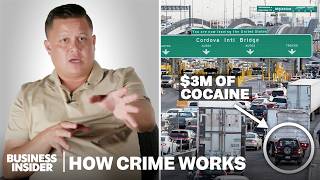

I Smuggled Drugs for the Cartel at 18
45sThe personal confession and immediate stakes hook viewers, promising insider secrets.
▶ Play Clip"Delivers a raw, first-hand account that matches the title, though some segments drag with repetitive reflection."
A former cartel operative recounts his seven years smuggling drugs and money across the US-Mexico border, detailing the logistics, recruitment, and psychological toll of the criminal underworld. He describes his rise from a homeless teenager to a trusted facilitator, his eventual arrest and 10-year prison sentence, and his current mission to promote financial literacy.
The narrator began working for cartels at age 18, smuggling drugs and money between the US and Mexico for 7 years. He describes the high-alert lifestyle and the moral decay it caused.
He worked as a translator, recruiter, and facilitator, arranging shipments and stash houses. He typically moved $250,000-$300,000 per shipment.
He once smuggled $30,000 strapped to his body through Orlando airport TSA, describing the procedure and the nerve-wracking pat-down that somehow passed.
He arranged drivers for multi-day trips, paying for gas and hotels. Drivers earned $1,000-$1,100 per key, moving 20-30 keys per trip.
Recruits were vetted through references. He preferred people who didn't look the part, like families on 'vacation' with Disney bags to avoid suspicion.
Cartels used dummy trips to distract authorities. Hidden compartments in vehicles could hold up to 50 keys in a VW Jetta, 20 in a Tacoma.
A driver was caught at a checkpoint with a hidden compartment, leading to his arrest. The narrator broke contact, illustrating the ruthless nature of the business.
He distributed to trusted street dealers, moving 20-30 keys at a time, earning $20,000-$50,000 per week. He handled collections himself, always carrying cash.
He hired people to live in stash houses, paying them a few hundred dollars weekly to maintain appearances, like mowing the lawn and having toys in the yard.
He grew up in poverty, was homeless as a teen, and was taken under the wing of a drug trafficker who became a father figure. He started as a driver and gradually took over operations.
He viewed his mentor as a father, and the mentor tried to keep him away from the business, but he pursued it anyway due to ambition and naivety.
He moved to Mexico, living there for 7 years, enjoying a lavish lifestyle, clubbing, and dating influential people, which served as an escape from his actions.
During 2007-2010, Mexico experienced brutal drug wars. He witnessed bodies hung with notes, and radio announcements warned against driving certain colored vehicles at night.
He was pulled over with $300,000 in cash, fled on foot, hid under a van, and was nearly caught by a canine. He eventually turned himself in and got 4 months for fleeing.
A dealer he was collecting from wore a wire, leading to a conspiracy charge. He was arrested and charged with conspiracy to distribute 5+ kilos of cocaine.
He refused to cooperate, rejected a 16-year offer, went to trial, and was sentenced to 10 years. The judge cried, citing his difficult childhood.
He faced violence in prison, was transferred multiple times (diesel therapy), and eventually completed the RDAP drug program. He matured and focused on self-improvement.
After release, he struggled with PTSD, nightmares, and isolation. He started a credit-building business, Credit Builder Pros, to promote financial literacy.
He reflects on his past as a learning lesson, forgives his younger self, and emphasizes the importance of knowing who you are beyond money.
He grew up in a single-parent home, became homeless when his mother left, and survived by hustling and selling weed as a teenager.
After graduating high school without his mother present, he 'turned into a man' and became heavily involved in drugs.
He found his mother working at KFC after 10 years, but the reunion was cold; she said she left because she felt unloved.
He contrasts his era with today's social media-driven trade, where informants are respected and police rely on confidential sources.
He notes that drug charges carry harsh sentences (10-life) while white-collar criminals often get minimal time, highlighting systemic injustice.
He criticizes fentanyl for killing customers, noting the shift to cheaper synthetic drugs like fentanyl and meth.
The narrator's story is a cautionary tale of how poverty and lack of opportunity can lead to a life of crime, but also a testament to the possibility of redemption through self-reflection and helping others.
What was the narrator's primary role in the cartel?
Translator, recruiter, and facilitator arranging shipments and stash houses.
00:52
How much money was typically moved per shipment?
$250,000 to $300,000.
01:21
What was the driver's pay per key?
$1,000 to $1,100 per key.
07:01
How many keys could fit in a Volkswagen Jetta?
Up to 50 keys.
06:32
What is 'diesel therapy' in prison?
Frequent transfers to prevent inmates from getting comfortable, to break them psychologically.
26:44
What charge was the narrator convicted of?
Conspiracy to possess with intent to distribute five or more kilos of cocaine.
24:33
What was the narrator's sentence?
10 years in federal prison.
25:14
What business did the narrator start after release?
Credit Builder Pros, a credit-building service.
29:41
Why did the narrator's mother leave?
She felt unloved by her children.
37:03
What is the narrator's view on fentanyl?
He criticizes it for killing customers, calling it a vicious cycle.
39:45
TSA Pat-Down
A tense moment where he nearly got caught but passed, illustrating the high stakes.
01:49Witnessing Violence
Describes the brutal reality of cartel turf wars, contrasting with media portrayals.
17:26Judge's Tears
Shows the human side of sentencing and the impact of childhood on criminal justice.
25:14Sentencing Disparity
Highlights systemic injustice in drug sentencing vs. white-collar crime.
39:19[00:01] for the cartels when I was 18 years old. I helped smuggle drugs and money between United States and Mexico for 7 years. This is how crime works.
[00:14] something is like a world of its own. It blocked out everything else. You're on high alert because one simple stupid mistake can make all the walls crumble. It wasn't even about the money anymore. It turned me into an ugly person inside.
[00:27] It turned me into an ugly person inside. It was a downward spiral.
[00:39] Ocala, Florida, which is a super small town in Central Florida. And not knowing anything, just very naive, and eventually worked my way to getting eventually worked my way to getting arrested at the age of 25. I wore many
[00:52] hats inside the cartel. I was a translator for a majority of the part. And because I could translate, doors opened up to recruiting and facilitating shipments that would come in, getting houses around the city, stash houses. As
[01:06] far as bringing back the money for the cartel, I always sent someone else from Ocala to the border into Mexico. We would have somebody bring it down to the border and have somebody from the cartel pick it up and then bring that over
[01:21] across the border for them. It would typically be around a quarter mill to 300,000 at one shipment. Once I wasn't able to find someone that can take it back to Mexico, I had a girlfriend at the time. I had like a little over
[01:34] the time. I had like a little over 30,000 in cash on me. And I took her. I had no idea what was going on. At least that's what I thought. At this point, my confidence level was through the roof. I felt bulletproof and I made a brave
[01:49] decision to smuggle it through the airport. Having it strapped to me. So, I I went into the Hyatt in the in Orlando Airport. And I stayed a night in there Airport. And I stayed a night in there and we would go over the procedure of
[02:02] being checked by the TSA. I would go out and about and watch their schedule when shifts. And I noticed that the TSA would uh get mad throughout the day and it was very important for you to catch them before
[02:17] they got pissed off from someone. So, as soon as their shift started is when I would make my way to go to the gate. I put a few thousand dollars in her purse, but I kept the majority on on me and it was just all one by one a wrapped roll.
[02:32] And as soon as I went through the TSA, my heart dropped because the TSA patted me down and he touched every single stack that was around my waist. He went like this and touched them. And I went my stomach
[02:46] make it like where he wouldn't be able to feel it, but he touched every single one, went down, and just told me to go. And I thought he was setting me up by saying that and I
[02:59] stood there froze. I was frozen. I didn't want to move and I looked back and then I see her give me the eye like like go. So, I was like, oh I woke up and then and I kept I I just went forward with
[03:12] it. I didn't have any instance where money was lost. Thank God. Um the threat of violence was there was no need to have that because in the back of your mind you knew that was the last resort. If anything was to happen, it
[03:27] resort. If anything was to happen, it would be that. It would be violence. was co-cocaine. The drugs that where they originally come from, I mean, they
[03:40] it could be anywhere. Columbia, Peru. All I cared about was as uh as if it was ready for to cross the border, to pick up. Cuz we are the first persons to to touch once it came over. My part was it was to arrange
[03:56] the transportation. I would have to get find a driver, if it was going to be a 3-day deal, 4-day deal, 1-day deal. I would get them set up for that, pay for his the gas, his hotel, everything he needed. The recruitment process for
[04:11] mouth. You usually get recommended reference like you're going for a job and your resume. So, kind of contact your previous and like that. And then they'd be recommended by someone that you know
[04:24] well established, who isn't doing to you. For me, that thing the best people to have is people who don't look >> [snorts] >> take for example myself, I don't look
[04:36] the part. I don't even act the part. But I can play the part. There would be times where it'd be uh a family, a mother, wife, and the kids. It would be a older man, always someone with always people with clean
[04:49] backgrounds, um clean records. For one example that we had happen is a family came over from Texas and we just put them into the Disney resort for the weekend until we
[05:02] was able to send them back to Mexico with the money that they needed. So, when they came back to Texas, they looked like they went on a vacation, which they really did, but it's a lot better when you have a bunch of Disney
[05:14] bags all in all in the vehicle and kids and they got these toys from the parks and t-shirts and it's makes your story a little bit more believable. So, that important because they're looking for things
[05:29] uh for you to be nervous of. Cuz if you if they ask you where are you coming from or where are you going, they don't they don't listen to you as much as they watch you. They see how you uh
[05:41] respond to it. If you're nervous, they see, you know, your eyes jittery or all kind of things they they look for uh along with your response. I didn't keep a lot of people in rotation as far as I keep it fresh. I stuck with the
[05:53] same ones. A lot of times they like to use uh dummy uh trips where someone would get caught will attract all the attention so other cars can pass by.
[06:06] So, they might get caught with small amount, nothing. But, it's just enough to draw attention because you're at the border or close by it. Even if you have compartment which is illegal to have. So, they got to confiscate your car.
[06:19] When you do things like that, you can have other people come around that and that's the shipments that's that's going to be coming in. So, once they come in, they come across the border into Texas, they go to a a safe house waiting for
[06:32] on the vehicle, you can fit up to as much as 50 keys in a Volkswagen Jetta. Like a Toyota Toyota Tacoma, you can fit 20 keys. You can fit 10 in the dash, in the AC,
[06:47] underneath the back seat. You can put another stash spot, 10, maybe 20 more. There's a hidden compartment under the back seat. Like you can have extra gas tanks. Like you see a lot of trucks with uh gas gas nozzles in the back.
[07:01] compartments. There's no gas in there. The driver would typically make anywhere between 9 to 1,000 to 1,100 dollars per key to everyone that they brought back. And it would be about 20, 30 every trip. In order to plan the best
[07:14] route, you have to wait for the call from the other side, okay, it's ready for pick up. Then, the route's basically the same. You you know, you could from Florida you could stop in
[07:28] uh Houston or whatever to stay the night, but it's better to go and then sleep a few nights down there at the border to and come come Even if you stay for a few more few
[07:42] days, it still looks suspicious cuz you have a Florida tag down at the border, but it looks better if you're old retiree just cruising beautiful United States sightseeing. If you bring a younger group like college students,
[07:57] that. What are they doing down there? Partying? much drinks you had and then this keeps going. 3 months before I got arrested, one of the drivers was coming back up
[08:11] from uh from the border with nothing, but they had to go down there to get a new compartment installed in their truck. And once they came up, there's two checkpoints on the way up. So, they got caught in one of the checkpoints and
[08:24] pulled over, he snaps back at any uh uh law enforcement or any kind of any doesn't give a [ __ ] about them. So, when they put his truck through the x-ray,
[08:39] they confiscated his truck because it had a hidden compartment in it. And then he called me at that time. He called me, he's on the phone with me yelling, screaming. You know, now he's
[08:52] I'm never going to have to see now I'll never see him again. Now I'll never cuz I don't know what's going to happen to him. I broke one of my phones and I told him I said break, you know, I'll just break your phone and we'll
[09:06] last time I saw him. To my knowledge, been caught. Luckily, there was never any shipments gone missing.
[09:23] to street dealers that distribute distribute uh throughout Central uh North Florida, some South Florida, too. Again, these are people that are I got I have good references, very well trusted when it comes to the business
[09:37] trusted when it comes to the business aspect. How many can you move? How fast? together on those three things, then then you have a match. On average, it would be about 20-30 keys at a time
[09:50] including losses or if you had to like give discounts. We'll say like 4,000 off each one. It'd be easily 20-30 to 50,000 a week uh just on on on average. I usually went ahead and did the collections myself.
[10:06] nervous. I didn't stop at a stop sign long enough. I ran through a yellow light or anything but officer didn't like. He could just find a reason to pull somebody over and it wouldn't be so much as I'm delivering uh the product.
[10:18] It would be I'm bringing the cash. I'd always I'd always have the the cash on me. You don't stay in the same house as you stash your stuff at. gets kicked in, you're the one that they're going to point their finger to.
[10:31] So, you would hire someone to stay in that house. Uh and that'd be their only live there and make it look like someone lives there. Cut the yard, have toys in the yard even if there's no kids. And that'd be their only job and then they
[10:44] get paid every week, few hundred dollars, live rent-free, and just do whatever they want but they couldn't bring um anybody over. It'd be like on 6-9 months you have to do that.
[11:03] up on dirt roads. Growing up, I never gave up on being able to obtain these kind of things that were material but it's just wanted I wanted to have something. All right around the time where I was graduating
[11:18] is when is when I met a guy and I was involved in in drug trafficking. I wasn't going to go to college. I wasn't going to do right. I was homeless. So, he took me under his wing, these two
[11:33] kids in in a neighborhood. Uh apparently they told him, which is that that's their uncle, they told him that they had a someone who can drive. Now, mind you, I was still in foster care, and once I was introduced to him,
[11:47] wined and dined me just to get to know me. He said, "Hey, how long are you you turn 18, they kick you out." "Do you want to stay with me? You don't have to do anything. You don't have to do what I do. Uh I'll pay for your school, uh pay
[12:03] stuff." I guess he saw my potential into doing something uh good for myself. And just wanted to push that that be a father figure. It didn't help that his uh
[12:17] other side was other side was doing something illegal.
[12:32] do on a daily basis is just go to the movies, go shopping, just, you know, just be out and about. I didn't question. I didn't know if it was big, small, whatever. I just knew that he always had money, and he always gave me
[12:45] money. I didn't think anything of it, and one day coming back from the movies, "Hey, I need you to stop at someone's house for me real quick, and I'm I'm there, about 2 minutes later, he came out with
[13:01] about 2 minutes later, he came out with uh a Walmart bag tucked under his arm, and came in a car. I didn't look. I didn't care. I was just house. He went in the room, closed the door.
[13:14] says, "Hey, can you help me?" And I'm thinking, you know, help with know, something you need two people for. No, I need you to help me count money. No, I need you to help me count money. And I'm like, help you count money.
[13:29] And he he dumped out the Walmart bag and I just seen piles of cash, the most cash I've ever seen in my life. Probably like 60, 70,000. Once I saw the money, I wasn't quick to say it was all drugs cuz I've never seen drugs. There was never
[13:42] drugs in the house. Never. Maybe a week later is when I put two and two together. There was a guy that came in from out of to pick up that money. But at the same time
[13:55] he left kilos of coke. So it's four of us at And I was a little kid. Everybody's, you know, older, 30s, 40s, whatever. So in the beginning, I was just a driver. I was
[14:08] beginning, I was just a driver. I was exposed to the operations, logistics, how to talk on the phone. Once I became familiar with a lot of the roles, the other two guys that he was working with start started to diminish.
[14:20] They were no longer needed because I started taking their jobs. When he told I I was waiting all day for you to say that. And then let's go. 13-hour shifts
[14:32] driving a lot doing a lot. There was most definitely something that wanted a a better life for myself. It also helped me distract myself from the realities of life, almost like a drug. I would know I wasn't getting all the money at that
[14:46] time. I wasn't but I was I was benefiting from the money. The way I looked at him was a father as a father figure and he looked at me as a son. I I I didn't think about uh him doing any harm to me cuz he
[14:58] always kept me he tried to keep me away from it. I was the one that pursued it. I was going against what he was wanting for me. At the time it's being young and ambitious, you're fearless of a lot of things, you're naive to a lot of things.
[15:11] things, you're naive to a lot of things. It could it could be good or bad. solely based on what I wanted to do as a child. Just wanted to get to know that
[15:26] country. Being a Mexican is what I always wanted to do. My first time going always wanted to do. My first time going I drove from Ocala to the border and into Mexico. That was my first time going. Part of that first first trip I
[15:38] did I was able to meet my mentor and a father figure's family. They all welcomed me but the hospitality was it was overwhelming. It was overwhelming. I never experienced as much love
[15:52] in my life from complete strangers but who knew so much about me without even meeting me. Part of the reason of going back and forth back and forth to Mexico was basically for pleasure for my leisure
[16:06] just just have fun, you know, go out the lifestyle that I had down there but it soon turned into me moving down there. I ended up living there for 7 years. The areas that I
[16:20] Mexico City. Mexican culture is different. I was being treated like everything on a silver platter. Everywhere I went was on a red carpet. I
[16:33] was dating very important people. I was in circles with very powerful people. In the United States the whole time I couldn't go out. I couldn't do anything. I couldn't I drive a nice car. Whatever I wanted to do I couldn't I couldn't
[16:46] show signs of money. The clubbing lifestyle in Mexico is one of the best experiences I've ever had. It was the one moment that I didn't think about the things that I've done. Almost like an escape. It was a very I
[17:00] guess a bad escape cuz I did it 6 days out of the week for months on end. Sun up to sun down. I set a age that I was going to stop so I could settle down, get married, have kids, just go
[17:13] and live a I guess a normal life, a clean life. clean life. And And that day never came.
[17:26] one of the Mexico's worst times when it came to drug wars. 2007-2010, that time period was some of the most bloodiest times Mexico's ever seen. And it was the a lot of up-and-coming
[17:38] cartels that branched off from the main cartels that wanted to come up with their own. A lot of it was turf wars. A lot of it was wanting people to take lot of it was wanting people to take take over the other the territory.
[18:04] Uh it's very different from seeing on TV and hearing about it from other people. I remember the first time I I experienced it was going down the street and I seen a body hung with a note on their chest.
[18:17] And that those kind of things were very normal there. Uh I seen it on more than one occasion. There would be rivals telling the other side to get out or
[18:31] you're going to have to pay the consequences. Knowing that no matter how always someone bigger than you. Seeing people who I thought would never have anything happen to them get something done.
[18:45] Uh even me myself, I I never thought I was going to be arrested. It was a time where in Acapulco where it was announced on the radio. And this is This is how wide open it is. It was announced on the radio to say It
[18:58] cannot go outside your house past 9:00 at night if you have a red, white, or black vehicle cuz then they're going to look at you as the uh other side and then they're going to shoot at you, kill you. And even
[19:12] though that was that message was being sent, uh I would still go out in a black vehicle by myself. That's how uh ignorant I was. Just not I I
[19:26] happen to me. When I would witness this violence, I would pacify myself with uh alcohol, money, and living uh getting that rush from
[19:38] uh I could distract myself saying that it only happens to people That's what I told myself. I said, "There's a reason why he died. And as long as you not doing anything wrong, then you have nothing to worry
[19:52] And that was the that was the core belief.
[20:04] for a beer run to go get beer before 2:00 hit cuz that's when they stop selling alcohol in Florida. I was a sheriff. he was. And I didn't know he was a sheriff until the lights hit. I knew it
[20:17] was for me cuz I was the only car on the road and it was a little over 2:00 in the morning. Now, mind you, the whole time I had about 300,000 in cash on me that I needed to get away from. And this wasn't my money. This was cartel money.
[20:29] And so, I was with a buddy of mine. I'm known for running from the cops. I've known for running from the cops. I've I've never stopped for a cop. So, he it." And
[20:41] I looked to him and I said, "It's too late." So, as soon as I put it into park, it unlocks, and it was a sound of the horses when you open up for the gate. That's what it reminded me of. The doors open and I
[20:54] just ran. I ran and all I could hear was keys in the background and I could slowly hear them getting further and further away. And that's when I looked back and I didn't see anybody. Luckily, I found a patch of woods and I was able
[21:06] to throw the backpack as far as I could, and I went the other as far as I could, and I went the other way, opposite way. I went into a yard that was an Econoline van in the driveway. I laid down under it flat,
[21:19] freezing cold, and I could hear the helicopters coming closer, and then I hear a canine coming closer. And I was so close to the canine that I could hear the canine breathing. And luckily the the canine kept going,
[21:33] and once I stopped hearing the sirens and the the helicopter and all that, I got up, just walked, and I walked down the street. About 10 minutes later, a goes, "Hey, are you the guy we're looking for?" And by that time, I would
[21:48] because I the car the car was in my name, my passport was in the in in the car. So, so I turned myself in, and I was able to get uh just 4 months for running from the cops and uh child
[22:04] abuse suspended license. The cartel knew exactly what happened with uh exactly what happened with uh my situation, and I was able to relay a um in a safe place, which I had no idea it
[22:17] was. It was just me saying what I had to say, needed to say in order for everybody to be cool. Once I was able to get out, I was able to get the cash covered in mildew. A few days before I was relea- released from the county
[22:30] jail, I got on the uh the county phone and ordered me a one-way ticket back to So, that way when I got out, I was able to just go to the airport and just go to Mexico. And I had the money sent by car. A lot of the things that were
[22:44] happening at that time did play a part a major part in me feeling invisible, just by me every single time getting away with something that I believe no one want to run from the cops on foot with a bunch of money
[22:59] and a helicopter and escape canines. Why would you want to put yourself through all that? But I did. I would do that because I But I did. I would do that because I wouldn't stop.
[23:15] dealers got arrested. His brother was in jail. The other brother wasn't. I went ahead and started collecting trying to collect money from one of the brothers, one of the dealers.
[23:28] Let's try to get as much money from him going to get all of it, but as much as we could to leave, to move. Every time I went to go see him, it was always "Give me a few days. Give me a few days." It
[23:40] was always something to buy time. And I told him I said, "Hey, if I don't get this money, I'm not coming back. belongs to, and then they're going to come to you the way I come to you, and
[23:53] where your kids go to school at. They know where everybody work that where everybody lives at." He just turned white. left his body, and that's when the investigation started because the whole
[24:07] uh I was unaware that he was wearing a wire, and he had a camera. There was unmarked cars far away. It was uh investigation that was very short, few weeks, and it was basically all they needed to
[24:20] get a conspiracy charge. Shortly after that is when they kicked in my door. They pulled out the assault rifles, and "My name is Jacob Diaz." And they go, "Oh, we have a warrant for
[24:33] I said, "For what?" They said, "For truck trafficking." I only had one Uh I was charged with uh conspiracy to possess with intent to distribute five or more kilos of cocaine. I was offered a plea deal. Of
[24:46] course, you had to tell on uh everybody. My attorney told me if if I was to that I would get five years. And I told him I can't do that. And then they wanted to give me an offer. They wanted me to sign to 16 years.
[25:01] Like it was nothing. In my mind if I'm going to I said I said if I can do 16, I can do 17. If I can do 17, I can do 18. I just kept going up from there. And I said let's just go to trial. And I ended up beating them
[25:14] sentenced to 10. I was able to get that 10-year sentence basically from a judge looking at they call a PS it's it's called a PSR pre-sentencing report. They basically sentence everything from your childhood, how you were brought up, and
[25:28] everything everything everything. At sentencing, my judge my judge started crying because she said that I didn't deserve the 10 years because of my my my childhood. She said that I was destined
[25:44] 10-year mandatory minimum because I didn't cooperate. It took me a minute to process that I'm going to be doing 10 years in in federal prison.
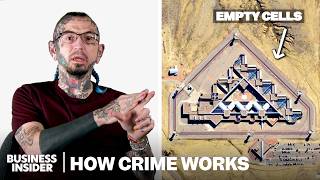
[26:00] prison, I was under the impression that just like you see in the movies uh especially based off the way I look, I don't look tough and I don't look mean So, I knew eventually I was going to run into someone who thought the same thing.
[26:15] And I had to prove them wrong. That day did come and I and that's how uh I got into a fight with with someone by they said that I was a rat. I don't like to be violent. I'm not who I I'm not like that anymore, but
[26:29] that role. Cuz of the way I look, people take go to, they would transfer me and I have to restart. And I hate to transferring I got to fight somebody else again. Once I got into my first fight uh I was
[26:44] transferred me in 9 months. to another prison. And they do that on purpose. It's called diesel therapy. They try to break you. They put cuz and part of the whole point
[26:59] you want to be comfortable so where you can do your time and your time goes by fast in your head. It's smoothly. So if you can't get comfortable and you you can't your time sucks. You're just always in the air. They
[27:12] would take me from Atlanta transit to Oklahoma transit to Louisiana transit and just bounce around and finally ended up in Ohio at Elkton. And that's where I did uh ended up doing the first 3 years, 3 and
[27:25] 1/2 years. I told myself I was never going to get into another fight again. I got into another fight on a soccer field. Somebody head butted me and then almost started a race war. I was able to move back to Florida after that after
[27:39] that fight because um no one no I didn't get wrote written up for it. So no one found out about it. And it stayed off the uh my record. I And it stayed off the uh my record. I ended up being transferred in 2015 20
[27:53] 2015 late 2015 and then I'm going to Coleman Low for the drug program the RDAP. And that's where I was able to complete it. After being in prison for for about 5 years, I kind of accepted the fact that I was in prison. So
[28:06] the fact that I was in prison. So I settled settled down and matured and started getting into uh things where I can reinvent myself. Just wanted to focus on things I didn't like about myself that I can change. And
[28:18] since I can change them that I could be a like a like a 2.0 like a better a like a like a 2.0 like a better version of myself.
[28:31] from prison. Was sent to the halfway house. Did a halfway house for 1 year house. Did a halfway house for 1 year and uh 5 years of supervised release. Transitioning from one lifestyle to another lifestyle is is is super
[28:45] difficult. For one is if I hear keys, I automatically think there's a I like to have my back up against the wall. I don't like my back exposed to wall. I don't like my back exposed to people. Waking up uh in cold sweats.
[28:59] Waking up in nightmares and screaming. Uh uh still do that. Things that a lot of you can't tell people and that's what because you have no one to relate to. It is isolating. Especially when you have a
[29:13] felony and you for the first time get a 9-5. First time having a job is when I got out and >> [snorts] >> professionally in in a work in a
[29:26] workplace. I do feel the struggle still to this day after being released. up. That you don't care. I just cut off a access from people. I just
[29:41] kind of stay to myself. After I was released from prison, I was able to start my business, my Credit Builder Pros. The reason why uh helping people with credit is very important to me is because it all boils down to
[29:53] financial literacy. For me it was um knowing that if my mom had those resources, she probably wouldn't have put us in those predicaments like being going through extreme poverty. I believe that if more
[30:06] families and more communities have access to that, it would reduce a lot of the uh kids getting into mischie- mischief or because they can have they activities and our parents can put them into
[30:21] uh other things that could get them out of trouble like sports or just any any kind of activity to keep the kid busy or video games or whatever. I didn't have I know if I if I if I did, then I it would it probably wouldn't came out the
[30:34] same way that it did. But it's it's it's important to me to to uh build their credit cuz that's to me it's the it's the root. I reflect on my my past with working with the cartels and
[30:49] the underworld and all that stuff as a learning lesson, a stepping stone. I don't beat myself up over it. I forgive the kid that did it.
[31:03] And now I do when that's all you know is it's hard it's hard to not
[31:15] what kept you safe. Of course, having all that money and stuff is fun, but if you don't know who you are and you don't
[31:28] problems I always say like I forgive. I forgive that. That child.
[31:40] They didn't They didn't want that. I'm I'm just happy to to do it my way.
[31:54] without anybody taking credit for it. from when you have your back up against the wall like everything's against you.
[32:09] From like from birth. Pennsylvania. I moved down to Florida when I was six with two of my brothers,
[32:23] my sister, and my mom. Growing up in a single mother, single parent home, I can't imagine how tough it would be on the parent I'm trying to raise four kids, you know, going to school I'd see kids with, you know, nice clothes and
[32:37] My mother couldn't afford it. When I was in middle school, one of the things I would do as a as a hustle to get money was corner and I would steal
[32:51] boxes of Juicy Fruit or I would steal a whole box of those and go to school and back and give it to my mom. Around the time that my mother left, I was I was the only I was only kid in the house. My mother would go out on the weekends. My
[33:06] mother wasn't a drinker. She didn't do any drugs. One Sunday, uh I'm expecting for her to come back because I see all her friends came back And I'm waiting.
[33:19] So, I go to school the next day. I come back, she still hasn't showed up. do you know where my mother's at?" And they're like, "No, she stayed with some guy and she's down some city or whatever they went to that
[33:35] And I was like, "Okay." So, I continued going to school and then it was about the time where we had to pay rent. So, the landlord came. She told me to leave. So, that's when I really became homeless. I didn't have
[33:48] anywhere to go or nothing. I would sneak into my friends my friends' bedroom without their parents knowing and I would sleep uh either on the side of would sleep uh either on the side of their bed hidden or under their bed.
[34:02] And I would leave uh whenever they got in got to uh wake up for school the next day. My day would be hanging out in the streets, hustling, and at night I would do stuff to be a kid. How I was introduced to selling
[34:16] weed. And they didn't teach me how to do it. I watched. And I didn't think anything about uh I was going to be taken mind. All I thought was money. A good week for me would be if I didn't need
[34:31] any food anymore and I was able to buy a pair of shoes or clothes so a few hundred bucks a week you know, 13 14 years old, 15. You know, not bad. I was able to uh run into one
[34:44] uh social workers for the state of Florida. It's called DCF, Department of Children and Families. He eventually found me. we've been looking for you for a few years and we have your younger brother,
[34:57] which my younger brother was at a group home. I turned myself into foster care around like sophomore year. However, I didn't like school. I didn't like school. I was never the kid that
[35:11] graduate. I just want that piece of paper just to say I did it and because I to whenever I was able like in the future I thought I was going to see her and I could show her that that I did it. I was really going to do
[35:24] not for me. I didn't care about school as much. So once I graduated and I realized that my mother wasn't in the stands and uh she wasn't there, a switch happened at that moment. I guess you
[35:38] could say I turned into a man. I just stopped being a kid became very uh dark. became heavily involved in
[35:54] drugs on on at on accident. Today I don't I don't have a good relationship with my mom. Six months before I got arrested before I got arrested uh in 2011 um I was um I was with my
[36:06] uh I didn't like the way he was living his life. He was abusing alcohol. He just had a second child. I didn't want him to go down that path of self-destruction. Just I said, "What is it going to take for
[36:21] you to stop drinking?" And he told me "I just want my kids to what? So, if I find her, you're going to stop drinking?" He says, "Yeah." I said, "Okay." And in a few days I
[36:34] I said, "Okay." And in a few days I found her. And she was working at a KFC for the past 10 years in the next county over. said, "Hey, I'm going to take you out Friday. Want
[36:50] to go out to eat?" And once I took her out, I said, "Let me And once I took her out, I said, "Let me ask you a question. so don't lie." And I said, "Why I said, why did you
[37:03] leave us? Why did you leave me?" And she goes, "I felt like you didn't like y'all didn't love me." I said to her, I said, "You know, I said, that's the best answer you can
[37:16] come up with after all these years?" I treated her like a stranger from that I just went according to business, got her and then dropped her back off. There was
[37:29] no talking after, texting, nothing. It was purely business. So, my relationship with the guy that was my father like my father figure, my mentor, is a lot
[37:43] than it was. Uh I respect uh his time. Uh I respect his advice, the way he's there for me like nobody else is, so
[37:58] it's uh a lot better. Uh I talk to him every day.
[38:10] drug trafficking back then when I did it to now, I don't understand it today. It's it's more wide open. It's social media involved. People post in their stories so everybody can see them.
[38:24] It's uh completely the complete opposite of what I know. The people who tell on people get more respect. And when you don't tell, they say you're stupid.
[38:37] called dumb for not cooperating. Law they don't do their work. You know, they don't do their work, police work. The police don't know nothing until you talk.
[38:51] So, where do they get their sources from? Confidential informants. They would never know I sold drugs until guy got until the dealer got busted. They feed off catching little guys to
[39:04] That's how it works since the beginning of time. They know who's going to sell has uh the higher uh sentencing. Drug drug charges. Like my drug charge was 10 to life for a
[39:19] with 1 g. Very little white-collar criminals. And if they got a white-collar crimes, they got no sentence. 3 5 years, they go home. Drug charges, 20 years. 15.
[39:33] somebody with a 15-year sentence. Coke is still going to be around. Um it's just now that you have more synthetic drugs that you can bring in
[39:45] cheaper, uh less overhead, uh like fentanyl or um meth. You know, people are always going to get the cheapest. Fentanyl, I don't even know why it's around.
[40:00] business. Cuz it's doing nothing but killing people. And how you going to kill the people who's giving you money? more people getting on drugs than off drugs.
[40:13] on it. So, it's a never-ending cycle. It's a vicious cycle. People are not scared to have repercussions and consequences. Um they think because they're on the internet that nothing's going to happen
[40:28] Uh you got influencers now in Mexico dying cartels. And you know, and they're just kids doing bull- But, that's just that's just where it
[40:40] But, that's just that's just where it goes. People put on a front to be tough and they're not. Everything's cool until the [ __ ] hits the fan. hit the fan. It will hit the fan one way
[40:52] hit the fan. It will hit the fan one way or another. If you enjoyed this video, then please subscribe and comment below with more ideas of topics you'd like us to cover in this series.
⚡ Saved you 0h 41m reading this? Transcribe any YouTube video for free — no signup needed.