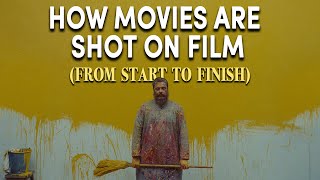

Why Film Survived Digital's Rise
60sChallenges the common belief that digital is always superior, highlighting the unique look of film that can't be fully replicated.
▶ Play Clip"The title accurately reflects the content: the video explains both the rationale and the full workflow of shooting on film today."
This video explores why motion picture film persists in the digital era, covering both the aesthetic and practical reasons filmmakers choose it. It then provides a detailed breakdown of the entire film shooting workflow, from pre-production stock selection to post-production scanning and finishing.
Film offers a unique look (highlights, sharpness) that digital cannot fully replicate, and a more disciplined on-set atmosphere due to the cost and scarcity of film.
Cinematographers choose stock based on ASA, colour balance (daylight/tungsten), and look (grain/texture). Kodak is the only remaining manufacturer.
Film is loaded into magazines in a light-free tent, labelled with red (tungsten) or blue (daylight) tape. The gate is checked after each shot to ensure cleanliness.
Exposed film is developed chemically, then scanned (e.g., Scanity HDR) into DPX files at 2K/4K. These are edited, graded, and output as a DCP for digital projection or a film print.
Which company is the only remaining manufacturer of motion picture film stock in the world?
Kodak
3:03
What three factors does a cinematographer consider when selecting a film stock?
ASA (sensitivity), colour balance (daylight or tungsten), and look (grain and texture).
3:03
What colour tape is used to label a magazine for tungsten film vs. daylight film?
Red tape for tungsten film, blue tape for daylight film.
7:23
Who is responsible for loading film into the camera magazine on set?
The 2nd assistant camera (2nd AC) or a dedicated camera loader.
6:22
What equipment is used to load film into a magazine without exposing it to light?
A light-free film changing tent.
6:56
Who performs the 'check the gate' procedure after each shot?
The focus puller (1st AC).
8:25
What file format is produced by a Scanity HDR scanner when scanning film?
DPX files (uncompressed, lossless, high dynamic range).
10:31
How much scanned film footage can be stored on 1 terabyte?
About 24 minutes of footage per terabyte.
10:31
Film's aesthetic and workflow advantages
Summarises the core reasons filmmakers choose film: the unique look and the disciplined, focused atmosphere on set.
1:00Using a digital stills camera to set exposure for film
Shows a practical modern hybrid technique where DPs use digital cameras to confirm exposure before shooting film.
7:53Scanity HDR scanner capabilities
Provides concrete technical details about the industry-standard scanner: 2K/4K resolution, 15 frames per second, DPX output.
9:59Discipline from limited film stock
Highlights how the cost and scarcity of film force careful planning and focused performances, contrasting with digital's 'spray and pray'.
2:03[00:00] This video is sponsored by Sonata. The best royalty-free music for your videos. Although there was a time when many thought
[00:27] So sit tight while I go over why some productions
[01:00] You can view the rushes immediately. The list goes on. When it comes to listing the pros for shooting
[01:33] However, I’m still yet to see the highlights
[02:03] marked difference in the vibe on these sets. Because you’re shooting on an expensive
[02:32] So for filmmakers that value both the aesthetic
[03:03] film stocks, or use their prior shooting experience
[03:34] grain and texture that they have. Stocks with a lower ASA, like 50D will have
[04:07] correct the colour temperature, or shoot without
[04:36] Short form projects like commercials will
[05:03] but you also never want to run out of stock
[05:29] Selecting the right track is incredibly important
[05:53] That’s why I’ve started using their music
[06:22] With film stock in hand, or in the back of
[06:56] That’s a good chunk of money down the drain. The 2nd uses a light free film changing tent
[07:23] code that identifies the stock, how many feet
[07:53] camera ISO to 500, the shutter to 1/50 and
[08:25] Any dirt of hairs on the gate means the shot
[08:56] At the end of the day they will make a camera
[09:31] This sets the image on the film as a negative. Once developed, the film can now be handled
[09:59] A scan is slower, more expensive and records
[10:31] These DPX files are uncompressed and lossless
[11:03] Once edited, those lossless files will be
[11:35] print, which is projected in cinemas the old
⚡ Saved you 0h 11m reading this? Transcribe any YouTube video for free — no signup needed.