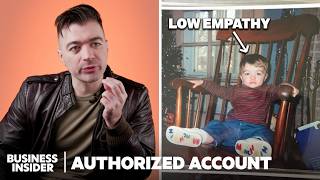

Confessions of a Diagnosed Narcissist
45sThe rare first-person perspective of a diagnosed narcissist immediately grabs attention and challenges common assumptions.
▶ Play Clip"Delivers a genuine, in-depth personal account that matches the title's promise, though some parts are subjective."
The video features an interview with the Nameless Narcissist, a person professionally diagnosed with Narcissistic Personality Disorder (NPD), who shares his personal experiences, misconceptions about the disorder, and insights into its diagnosis, treatment, and societal perception.
The interviewee introduces himself as the Nameless Narcissist, professionally diagnosed with NPD. He notes that he has never met another diagnosed individual in real life, highlighting the rarity of diagnosis.
He explains that narcissism is not about self-love but rather a lack of it, describing it as 'impostor syndrome on steroids.' Genuine self-confidence comes from self-compassion, whereas pathological narcissism involves self-hatred and a constant need to be better than others.
He recalls early signs at age 8-9, such as feeling detached at a funeral and later seeking attention in high school. He was diagnosed at 16 but didn't care at the time, and later rationalized his behavior as a survival mechanism.
He describes how everything feels performative, and he is acutely aware of how he is perceived. He struggles with genuine vulnerability, often using alcohol to attempt emotional connection, but it never feels real.
He cites research showing that over 50% of individuals with NPD go into remission with treatment, challenging the belief that narcissists cannot change. However, he cautions that change requires a vested interest and treatment.
He discusses how the term has been weaponized online, often used to validate trauma by labeling abusers as narcissists, which can hinder real treatment and understanding of the disorder.
He explains that he holds romantic partners to higher standards, while platonic friendships can last longer due to lower emotional demands. He describes being 'criminally distant' in relationships to avoid showing affection, which he finds humiliating.
He describes two patterns: idealizing a partner then devaluing them over minor flaws, or pushing them away after they see his vulnerability. He shares an example of sabotaging a relationship after showing weakness.
He discusses how narcissism causes dysfunction at work, as he resents being at the bottom of the hierarchy and refuses jobs he views as beneath him, even if it means losing his house.
He notes that society rewards traits like grandiosity and superficial charm, which can be useful for taking chances, but pathological narcissism is not sustainable due to its dysfunction.
He initially went to therapy to impress a girl, but later realized he needed to address his childhood issues. After two years of lying in therapy, he blurted out his grandiose thoughts, leading to his diagnosis.
He criticizes the DSM criteria for neglecting the fluctuation of self-esteem in narcissists, noting that their self-esteem is externally regulated, leading to cycles of grandiosity and self-hatred.
He lists alternative criteria from DSM-5 Section III, including grandiosity, interpersonal exploitation, envy, entitlement, grandiose fantasies, and lack of empathy, explaining how each manifests in his life.
He started sharing his story online to help others, but it also emboldened his narcissistic traits and made him hypersensitive to criticism. He reflects on the challenges of being a public figure with NPD.
He discusses treatment options like mentalization-based therapy and medication, noting that NPD can go into remission but requires long-term effort. He emphasizes that recovery is possible but not a cure.
The video provides a rare, personal insight into living with NPD, emphasizing that narcissists can change with treatment, but societal misconceptions and the weaponization of the term hinder recovery. The interviewee's journey highlights the importance of understanding the disorder beyond stereotypes.
What is the difference between self-confidence and narcissism according to the interviewee?
Self-confidence comes from self-compassion, while narcissism involves self-hatred and a constant need to be better than others.
01:52
What percentage of individuals with NPD go into remission with treatment?
Over 50%.
08:23
What are the five alternative criteria for NPD in DSM-5 Section III?
Grandiosity, interpersonal exploitation, chronic envy or belief others are envious, entitlement, and grandiose fantasies of unlimited success, wealth, power, brilliance.
22:04
Why does the interviewee say he is 'criminally distant' in relationships?
Because showing affection implies dependency, which he finds humiliating and shameful.
11:40
What is the interviewee's view on the weaponization of the term 'narcissist'?
It is used to validate trauma by labeling abusers as narcissists, but it hinders real treatment and understanding.
09:31
What treatment did the interviewee find effective?
Mentalization-based treatment, along with therapy and medication (atypical antipsychotic).
29:35
Narcissism vs. Self-Confidence
Clarifies a common misconception that narcissism is self-love, revealing it's actually self-hatred.
01:52Narcissists Can Change
Challenges the belief that narcissists are untreatable, citing remission rates.
08:23Weaponization of the Term
Highlights how the term is misused online, affecting real treatment.
09:31Alternative Criteria for NPD
Provides a detailed breakdown of DSM-5 criteria, useful for understanding the disorder.
22:04Treatment and Recovery
Offers hope and practical information on managing NPD.
28:50[00:00] I am known online as the Nameless Narcissist and I have been professionally diagnosed with Narcissistic Personality Disorder. Everybody thinks that they know a narcissist.
[00:13] I personally have never met somebody diagnosed in real life other than myself, and I've never met somebody that I even suspected was one. always to pathologize somebody's behavior, because their behavior has hurt me
[00:30] I don't like hurting people for hurting's sake. by a grandiosity, a lack of reciprocal relationships.
[00:46] meaning In short, it's like impostor syndrome on steroids, since everything I do does
[00:59] How can I kind of modify how I'm presenting in order We have a flawed way of viewing and interacting with the world.
[01:11] It comes with like a lot of cognitive distortions and defense mechanisms of varying kinds of presentations in the DSM-five. but you only need five to actually be diagnosed.
[01:24] I think it's like 200 types of narcissists in quotes that you can encounter But that's mainly because the current diagnostic criteria is very focused
[01:38] on external behaviors that clinicians can identify in an office. I think the biggest difference between self-confidence and narcissism is narcissism through this lens of too much self-love.
[01:52] There is no self-love. When it comes to pathological narcissism, I hate myself, but I'm better than everybody else
[02:05] Genuine self-confidence comes from a place of self-compassion. I can say very confidently, there's never been a time in my life that I felt like an ounce of love for myself, if at all.
[02:19] If anything, it's just this constant need to be better than what And this anxiety that I'm kind of like falling behind in that race.
[02:34] I can't speak for everybody when we talk about Narcissistic Personality Disorder. I just live with the disorder and this is everything I say here, just based off of the research that I have done and me living with it basically.
[02:47] first kind of presented because it's like this disorder is egosyntonic, which means that like I view it as normal. And then it gets really hard to kind of distinguish, especially in my early years.
[03:05] more tangible was when I was like, I don't know, 8 or 9. and I just remember being really frustrated
[03:17] because everyone was, you know, grieving or like crying and stuff. oh, these people are being so dramatic and performative because they feel like
[03:29] They're like trying to cry and make this funeral about them. We were on the car ride home and I can't remember what
[03:42] my mom said, but she said something that kind of made me be like, maybe I might be the odd one out here. In terms of, like, not really feeling that grief and being. I wasn't
[03:57] I'm worried that people are going to notice But like, obviously I was to some degree appearing sad because that was the thing that you do at funerals.
[04:11] But when I got into high school, a rough a little bit before high school, I picked up on like people who were a lot more outgoing, saying funny things. I knew I wanted that, I wanted to be the person that could like,
[04:26] And I remember I was like, sitting at a lunch table and like, the entire period, like I was the center of attention, making everybody laugh. but I remember walking away feeling elated.
[04:42] I felt high because of just the amount of attention, the crap that I was getting. and I want to do anything I can to maintain that.
[04:55] I was like 16 years old and because of my home life, wasn't great. narcissistic personality disorder.
[05:07] And you can get diagnosed that young, but most don't go that route. me matching the criteria to a tee or something like that, and I just didn't really care at the time because I was like, I was 16 or whatever.
[05:22] where I was just kind of like, maybe that's something I have. Yeah, I'm good at manipulating people. Yeah. Yeah. At one point I called it.
[05:37] It was so down, like, it's like I cringe, like thinking about it. But at one point, I was like, well, you know, narcissistic personality of human social evolution, because in my mind, I was like,
[05:51] oh, this is how you have to operate to get ahead. Everything feels like performative to some degree. I'm just very acutely aware of how I would be perceived in any given moment,
[06:08] whether it be what I say or how I'm moving, how my head's positioned. whenever I'm thinking about something, it's like I'm imagining me describing it to somebody else and what their reactions would be to me, describing it to them,
[06:21] It makes everything feel very disingenuous and like an issue that I've had, like to be genuinely vulnerable with people trying to emotionally connect to people.
[06:35] and I used to like get really wasted just so I could try to broach And even when I would do that, it didn't feel real, like there was always parts of it that I was modifying in order to get
[06:48] Because at the end of the day, the self esteem needs trump everything else. I literally can't be genuine because being admired is too important. completely lose control in like anger or something.
[07:04] When I'm just like screaming my head off at somebody It's like I view the world through second person. I view the world only through how I might be being perceived at any given time,
[07:17] and how to kind of maximize, admiration. I often view that as, as admiration in a way. And I become a little bit insulted if somebody is not envious of me.
[07:37] is that there's this attribution of malice to a lot of my behaviors. I've hurt a lot of people in my life, But when a lot of people that you see discussing it online are like,
[07:55] hurting you and stuff like that, and I'm like, I'm not motivated by that. for me to feel like I would enjoy hurting any other day.
[08:08] It's not that we're out here to, like, cause damage and hurt people it's just that we don't have those tools that are accessible to kind of alleviate It's just an objective lie that narcissists can't change.
[08:23] It was over 50% of them went into remission. Don't get me wrong, that's low for a you know, for any mental disorder. These people probably still think like narcissists,
[08:37] and like they don't meet the symptom criteria anymore. But it's like, okay, does that mean that they're not narcissists?
[08:49] It just means that they can, you know, they've seen the error of their ways And now they through treatment, they have been able to adjust accordingly. Now I want to clarify, because I feel like a lot of people,
[09:03] when they hear me say that their immediate thought is, oh, that means this person that I'm close to can change. It's like I always tell people, you can't have expectations of people
[09:16] unless they have a vested interest in it. Are you comfortable with this person in your life, with the boundaries If so, then fine, keep them in their life.
[09:31] Why do I think the word narcissist has been weaponized? Some people started talking about the impact that somebody with narcissistic
[09:43] personality disorder had because so many people online are constantly talking about how I was this, this person, he was a narcissist and that has weight. And that gives people an appreciation for how much they went through.
[09:56] where a lot of people feel like their trauma or negative experiences have to be almost validated by the fact that this person is a caricature of evil.
[10:10] How could I actually seek real treatment for that when that's the idea around it? The diagnostic criteria for NPD can be twisted There's a lot of things like online that you read about.
[10:25] That's not a diagnostic criteria that can apply to anybody. But nah, I'm joking. This applies to a lot of abusive people.
[10:40] So it's just become a convenient catch- all because of the definition Because of this need for people to feel like their trauma is valid.
[10:54] romantic and platonic relationships very differently, actually. there's a different expectation because, oh, I'm with this person. So they're actually held to a
[11:08] like a lot higher standards in regards to how I expect them to be performing, if you're if you're below average and I'm below average, And like a lot of people talk about, oh, like narcissists are very controlling
[11:25] I'm just not at all like in my platonic friendships I can be. But that's because it's like this person inherently has to be my equal I am criminally distant in my relationships because showing
[11:40] that I have this affection for them is humiliating and hard, and that implies a degree of dependency on them. Yeah, it's shameful when somebody hugs you and they and you can tell they
[11:52] emotional connection with you and you're just not there. if people know that you care about them, they are going to use that. Either take it for granted, best case scenario or whatever.
[12:07] If they don't know that you care, they'll always be chasing after you especially, is like, love is like a carrot on a stick, right? and if you don't, then they'll take it away.
[12:21] romantic relationships I typically have is, it usually starts out the same way This is somebody who can actually understand me. This person is superior like I am.
[12:36] somebody up like that and you're like, oh, this is an ideal person who I admire. is that it's very easy for that kind of illusion to break.
[12:49] It'll be like the most minor thing. I remember once there was this girl, I was like, I was, very, you know, that I cared a lot about in the moment. And like, I showed, pictures of her to some of my friends.
[13:03] or something like that. And it was like a light switch. because it wasn't this perfect, idealized image of somebody,
[13:15] it like changed my opinion in terms of like, This is something that's beneath me. started pushing them away and like being a dick like I do.
[13:31] Or alternatively, what happens is they'll see a moment I remember once, like, I was in this relationship with somebody.
[13:43] The beginning of the end was we went to this party and like, I was pretty wasted. And we got back to my apartment and like, I started vomiting in the toilet and just sobbing about how I was broken and defective, etc..
[13:58] It was like a whole thing. I hated that she saw me that weak and pathetic We never we literally never talked about it.
[14:13] She thinks she can take advantage of me now because she realizes that I'm weak. So I blew that relationship up.
[14:25] two ways that romantic relationships go. My platonic relationships, it can go on indefinitely. less of a demand for emotional intimacy, a lot better.
[14:40] I asked them once if they ever had watched any of my videos. And they had a kind of like a very strong reaction to it. And they said, you know, I know you well enough to know there's
[14:57] a lot of things that go on inside your head that I'm better off not knowing. and not through the lens of my disorder, I know that that's somebody If I'm going to get into a relationship with you, no matter how recovered I am,
[15:13] When I am withdrawing from admiration, so to speak, I would say I get really paranoid. I get really neurotic, very distressed sometimes
[15:26] that it's like I'm being reminded of everything that I hate about myself. It looks like psychosis, like if somebody on the outside were to see it like that, just because of how paranoid and angry and distraught I become.
[15:41] It sucks because it's like I'll isolate myself That I desire and need. makes it so I literally can't get those things.
[16:01] when it comes to having a job. As for my previous jobs, I, you know, I worked at a nursing home, actually, as a dietary aide. I washed dishes,
[16:15] Did that for two years, went to college for a little bit and went to the Army. But I was in the Ohio National Guard. but after basic training, I was like,
[16:31] I don't have the headspace right now to do, college. I worked at a prison. I can't actually talk about my current day job because it's actually a stipulation
[16:44] A lot of the times it's like it causes dysfunction in your work. I couldn't handle it being at the bottom of the totem pole all the time. There's like this objective hierarchy, and I'm always at like,
[16:59] I was always so resentful and bitter and just like, paranoid and insecure because it's like, objectively, I am lowest tier that there is. causes problems in basically any work environment.
[17:14] It makes it kind of impossible for you to work as a team unless you're in charge. If my experience does match a job, but I view it as beneath me, I won't take it because I view it as beneath me.
[17:28] because I was having a hard time finding work. I would rather lose my house, and I would rather die than be humiliated with a job that is pathetic and beneath me or be homeless and stuff like that.
[17:44] I do my best not to tell anybody around me, like in my professional life, my diagnosis, just because it's it causes more problems than it's worth. I mean, people close to me obviously know at this point, and it's also just kind
[17:59] of embarrassing to admit that, like, I have like, this condition that, like, makes me sound like an edgy teenager trying to articulate it, I would say society rewards narcissistic traits, and I'm
[18:13] emphasizing traits because I don't think it rewards pathological narcissism. you know, taking chances, right, is putting yourself out there, and that kind of grandiosity and arrogance that, this, that thinking
[18:27] like where you're actually willing to take that chance. That's a very objectively a good trait to have. For the grandiose narcissism, the superficial charm can be very useful.
[18:45] That being said, the things that get you to the place that you want to be at that are going to be able to maintain where you're at, if that makes sense. If we're talking about healthy narcissism, 100% it does.
[18:58] there's just too much dysfunction that comes with it for it to possibly be rewarded. therapy to impress the girl that I had this on-off thing with.
[19:13] I go to therapy, I'm great. And while I was still in therapy, but not in either of those relationships,
[19:25] I just started thinking, why did I sabotage a relationship that was, relatively speaking, actually good for me? And around that time I started thinking more about my childhood stuff,
[19:37] I should probably get to the bottom of some of this stuff. Two years go by, and the entire time it's like this defense against vulnerability. and you just lie through your teeth the entire time.
[19:52] complaining about somebody in my life. I was frustrated because it's that feeling like you can only be understood And like, I sit back and I think for a second and I
[20:07] And I just kind of blurt out, well, I can't blame them though. And my therapist kind of was taken off guard because I had presented as rather mild mannered and polite up until that point.
[20:21] And I was like, I mean, look at them. But I'm smarter, I'm more attractive, I'm more charismatic. I mean, I am better, how could they possibly understand me?
[20:36] And I'm like, yeah, just because they're I yeah. And I stand up to go and I'm like, oh, that felt Then she was like, well, I'm humbled.
[20:50] And then diagnosed shortly after that whole thing. in that regard, it became a lot easier to kind of be genuine. I'm a lot more truthful nowadays, but it's still not something that I'm good at.
[21:08] The current DSM criteria kind of neglects the fluctuation of self-esteem. Well, people know that narcissists, despite their grandiosity, have a very chronic need for attention, specifically admiration,
[21:23] because basically our entire self-esteem is regulated externally. better than everybody else, or I feel like I'm worse than everybody else, and I need constant feedback to kind of prevent myself
[21:35] from slipping into this cycle of self-hate where I can get, rather than bad self to self-destructive usually is the word that I would use. five alternative criteria in the section three.
[21:50] and it's like, spectrum model where it's like, okay, they recognize varying severity and presentations, aside from your kind of classic, oh, this guy is full of himself and manipulative and kind of a dick.
[22:04] But the disorder in itself, it has to focus more on some of the interpersonal dysfunctions. The first one is grandiosity.
[22:18] Interpersonal exploitation, which I do want to touch on oh, exploiting somebody for money or something like that, But this is associated more with, again, the self esteem regulation,
[22:34] For example, let's say dating somebody because they make you appear higher status There is also chronic envy of others or believing others are envious of them.
[22:49] I fall more in that second category of believing that everyone's envious of me. Then there's entitlement. This one I. How it usually would present for me though, is
[23:03] And it would be rationalized with me where it's like, oh, I deserve better friends who will be loyal and fight my battles for me because I'm such a loyal person.
[23:15] that is something I believed at the time and how it was really rationalized. Grandiose fantasies of unlimited success, wealth, power, brilliance. And a lot of our personal goals are based around these grandiose fantasies.
[23:33] is you see somebody who maybe they're In middle management of a company I'm going to have this conglomerate that has all this wealth and power,
[23:46] and stuff unrealistic kind of goals for themselves kind of arise from this. So this one's kind of weird because it's one of the
[23:59] But recently that's come under a lot of scrutiny. but we can't emotionally connect with that.
[24:12] Like if you're sad and your mom died or something like I can recognize it, obviously. I can't feel anything though.
[24:25] explaining my disorder inside and out, trying to make sense of it. When I started kind of telling my story online, people were finding help on this My intent going online was being like, hey, you guys are dumb.
[24:39] But then people were like, you know, hearing your lived experience, actually, this makes a lot of sense. This thing I experienced with XYZ, it did
[24:52] let me look at a lot of my behaviors from a third-party perspective. because this wasn't about me, but it's like, oh, I can relate to that. So I can see how my actions impacted other people around me.
[25:07] I will say at first, it definitely did embolden but there's also the hypersensitivity to criticism that comes with this disorder. It also would like, like turn me into those vulnerable states a lot, where
[25:20] because I got one bad comment or whatever. I had a tendency that in sharing my vulnerability online, that was a way Going online and being reduced to a caricature of myself
[25:38] in order to disseminate information that reinforces and rewards some of the things about my disorder that are the most distressing to me. Social media because of like, you know, it's a numbers game.
[25:51] It's like obsessing over why am I not at this number yet? Oh, did I stutter in this?
[26:03] rewatch any video I make, I literally cannot. I'm at a point in my life where I'm like, I don't really want to spend And so it's.
[26:16] And I think that, like earnestly, my experience online would have been, would have been largely more of a net positive if I wasn't so young. Like, I think I started YouTube when I was 23 or something like that.
[26:30] And I was diagnosed for maybe a year before I made that YouTube channel. I do not think I was ready in the slightest I never really viewed doing social media
[26:44] I was just like, I'm just a dude on the internet putting my voice out there, and like, I kind of maintained that kind of headspace This is my YouTube channel, this is my TikTok, this is my whatever.
[26:58] oh, I know the things that I post, you know, hundreds of thousands of people, might see it and in terms of like the messaging and the real impact that it does have.
[27:15] And it's something that I do shy away like I'm very careful giving advice, because if my life is a wreck, there's a narcissist in my life x, y, z, what do I do here?
[27:29] I don't even know how to handle myself, let alone another narcissist And then there's also the fact of, like, I feel a degree of responsibility because I know that growing up I would have given anything
[27:45] especially at some of the dark times in my life. Right? get diagnosed or like, it's so refreshing hearing somebody else that, like, I can actually relate to stuff like that.
[27:59] I'm a little bit more earnest nowadays just because I'm like, you know, That's not purely tied to my own grandiosity.
[28:11] I am a sick person and that I don't want to be like this. but I don't want it to be something that is viewed as acceptable.
[28:23] All those things, it does get very difficult to balance. But whatever. I need to be able to recognize that, like,
[28:36] you know, I can be in recovery from this and still, maintain a public presence and be able to speak very well on the disorder And honestly, now that I've worked on it,
[28:50] it's made me really not value the presence as much as I once did. It's something that like, once I get to a place in my life where I'm ready to, I do just kind of want to walk away from.
[29:05] It takes a lot of forms, and therapy is only one piece of that, right? and lie through your teeth Treatment typically does look like classic like there's
[29:21] classic psychoanalysis, and just counseling in general. I know that there's various forms of, therapy for it. Mentalization-based treatment is actually one of my favorites.
[29:35] They also put me on an atypical antipsychotic. Depression can be very common with narcissistic personality disorder.
[29:48] And also substance abuse. It's a very high percentage of people with narcissistic order have a comorbid substance abuse disorder, usually alcohol, followed by cocaine use.
[30:02] I've, I'm sober now, but like, I, I had a really bad problem with it because it enables you to kind of, A lot of the anxiety And it gives you a little bit more social boldness.
[30:16] this is a way to be able to get vulnerable with people. Not sustainable when it's a personality disorder, there's so many aspects to work on
[30:29] that there's unfortunately there's not just one thing comorbidities, borderline personality disorder, histrionic
[30:41] It's like if you have one personality disorder, you more than. but it's like a very high amount have, second comorbid personality disorder.
[30:54] It can be managed, it can go into remission. There's some clinicians that seem more optimistic with how far that can go. And that's basically the most that you can do.
[31:09] I don't like using that term because I do think there's a lot about how my just how my brain functions that, yeah, it's not going away. over a very long period of time, because it's like you're going to feel
[31:24] until you like, look at yourself a year ago That was that's crazy. Actually, when I first got diagnosed, it was like, all right, how many,
[31:39] And just when that started going down. I've always been acutely aware of my loneliness. I didn't want to be lonely anymore.
[31:54] If I'm being honest, it doesn't bother me as much nowadays just because it's like as I have grown older, it's like the repeated failures to like really connect to people really started to just like grind on me.
[32:07] But that made me realize that I like for so long I was trying to force it, and in the wake of that, it allowed some more, some friendships I didn't expect to be as meaningful as they are to slowly gain importance
[32:20] over time. Hi. I'm a producer on Authorized Account. If you enjoyed this video then please subscribe and comment with more topics that you'd like us to cover in this series.

⚡ Saved you 0h 32m reading this? Transcribe any YouTube video for free — no signup needed.