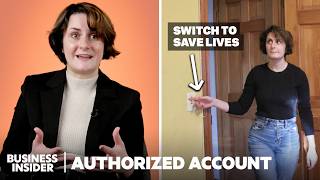

What OCD Actually Feels Like
45sDirectly debunks common misconceptions about OCD, offering a raw and relatable explanation that resonates with a wide audience.
▶ Play Clip"Delivers a genuine, in-depth personal account with scientific context, though the title's 'Authorized Account' is vague."
This video is a personal and educational account of living with Obsessive-Compulsive Disorder (OCD). The speaker, who has had OCD since age four, shares their experiences with intrusive thoughts, compulsions, and the impact on daily life, while also providing scientific context and discussing treatments like Exposure and Response Prevention (ERP) and Acceptance and Commitment Therapy (ACT).
Diagnosed with OCD at age four. Emphasizes that OCD is not a love of cleaning but a debilitating disorder where intrusive thoughts stick like burrs, and compulsions are performed to prevent feared outcomes.
As a child, learned about germs as 'invisible monsters,' leading to excessive handwashing and fear of dust bunnies. Refused to go outside and stayed inside more.
After grandmother's death from breast cancer, developed fear of catching cancer, which generalized to fear of death. Held breath in rooms, avoided anything symbolizing death.
OCD alarm systems never go off. Daily rituals include washing hands, sanitizing, checking lights, and using a lucky number four (brushing teeth or flipping switches four times for family members).
Words and places can become contaminated. For example, reading the word 'death' in a book requires washing hands after each chapter. Refers to compulsions as rituals that are second nature.
Has separate indoor and outdoor phone cases kept in different parts of the house. Upon returning home, wipes down the case, places it in a specific spot, and switches to the indoor case.
Washed hands raw in sixth grade, wore gloves to school, and made excuses. Middle school teacher allowed gloves, but a teacher later misunderstood OCD as enjoyment of organizing.
Realized that need to confess things was part of OCD. Rejected perfectionist stereotype but later recognized obsession with having a perfect life (morality, karma) as a form of perfectionism.
Felt guilt thinking parents' arguments were due to OCD. Parents were hyper-aware and argued about how to handle it. Reassurance seeking was a major compulsion.
At age seven, a shaman guided meditation to visualize OCD as a scared creature on a safari, holding its hand. This shifted relationship with OCD from seeing it as 'crazy' to having empathy.
In therapy since age 8. OCD is now in DSM-5 as obsessive-compulsive and related disorders, separate from anxiety disorders. Differentiated by behaviors in response to anxiety.
Pediatrician suspected PANDAS (pediatric autoimmune neuropsychiatric disorders associated with streptococcal infections). A round of antibiotics at age four stopped symptoms for a few years.
Gold standard therapy. Involves gradual exposure to feared stimuli while preventing compulsions. Example: therapist recorded feared words (funeral, graveyard, death) and had her listen on repeat.
Most effective therapy. Therapist said 'You're always gonna have OCD,' which was a relief. Focuses on building a neutral relationship with OCD and accepting it as part of life.
Met friend Susanna in college who also had OCD. They wrote a play called 'So OCD' and performed it. Sharing on social media (TikTok, Instagram) helped connect with others.
First viral TikTok contrasted 'what people think OCD looks like' vs reality. Later pursued master's in cognitive neuroscience to better educate about OCD science.
OCD used as an adjective bothers her. Media portrayals like Monk and Emma Pillsbury perpetuate stereotypes of cleanliness and neatness, but real OCD involves fear and persistence.
Set limitations on reassurance (e.g., give reassurance once, then not again). Communication is key. Create space for loved ones to share their fears without judgment.
Fear of commitment and uncertainty makes dating hard. All-or-nothing attitude leads to going on dates to prove likability. Vulnerability is difficult due to hidden compulsions.
NIH suggests 1-3% of global population impacted. In the US, 1 in 40 adults affected (2.3% prevalence), and 1 in 100 teens/children. Numbers may change with better diagnostic tools.
Learned to wait to sanitize after handshakes to avoid offending others. Future goals focus on making time for music, art, and loved ones, and acceptance without judgment.
OCD is a part of her that needs love and care. Wishes she knew she wasn't special (others think like this) but also special (nobody thinks exactly like you). Don't give up on finding treatment that works.
The video provides a deeply personal and educational look at living with OCD, emphasizing that it is a serious disorder beyond cleanliness stereotypes. It highlights effective treatments like ERP and ACT, the importance of community and self-acceptance, and encourages those affected to seek help and remember they are not their thoughts.
What is the gold standard therapy for OCD?
Exposure and Response Prevention (ERP) therapy.
20:04
What does ACT stand for and what is its focus?
Acceptance and Commitment Therapy; focuses on building a neutral relationship with OCD and accepting it as part of life.
21:14
What is PANDAS?
Pediatric autoimmune neuropsychiatric disorders associated with streptococcal infections, a possible cause of OCD in children.
19:01
What percentage of the global population is impacted by OCD according to the NIH?
Between 1% and 3%.
40:00
In the US, what is the prevalence of OCD in adults?
2.3% (1 in 40 adults).
40:30
What is 'pure O' OCD?
A type of OCD where compulsions are mental (hidden), such as reciting prayers or replaying memories.
24:14
What is the difference between OCD and generalized anxiety according to the video?
OCD is categorized by behaviors in response to anxiety, while generalized anxiety is more about the emotional state.
18:24
Empathy for OCD
The shaman's safari visualization shifted the speaker's relationship with OCD from self-judgment to empathy, a powerful reframe.
16:31Acceptance in ACT
The therapist's statement 'You're always gonna have OCD' was a relief, highlighting the value of acceptance over cure.
21:14OCD Prevalence Statistics
Provides concrete numbers (1-3% global, 2.3% US adults) that ground the discussion in data.
40:00Language Matters
Critiques the casual use of 'OCD' as an adjective, showing how it hinders accurate understanding.
30:26You Are Not Your Thoughts
A key empowering message for anyone with OCD, emphasizing separation from intrusive thoughts.
46:07[00:02] diagnosed with obsessivempulsive disorder when I was four years old. And neuroscience. This is everything I'm authorized to tell you. Everyone to some extent, I believe, gets intrusive thoughts. But with OCD, they
[00:18] stick with us like burrs. We can't stop thinking about them. It's this very thinking about them. It's this very debilitating disorder. It's not a love of cleaning. Even if maybe you'll see me washing the same spot on the floor over
[00:33] and over again. It's not this brings me joy to keep washing out this spot. It's if I don't do this, something bad might happen to me or my family.
[00:51] majority of my compulsions have to do with with washing. I need to wash off bad thoughts or, you know, concepts of death or if like I've driven by a
[01:05] graveyard, I might need to take a shower afterwards. I remember when I was growing up and I was first diagnosed, um, not a lot of people knew about it or those that were weren't talking about it. I was just learning about germs.
[01:18] These invisible monsters sounds really scary to a kid. I started just by asking my parents, "Oh, can we make sure we're washing our hands before dinner, you know, and they thought, "Oh, yes, what a lovely idea." It got to the point where
[01:30] was causing me distress if we didn't all wash our hands before dinner. I was, you know, refusing to go outside. I was staying inside a lot more. I was terrified of dust bunnies in particular. When I was about seven, I lost my dad's
[01:44] mom who I had, you know, developed a close relationship with. It was the first time I understood that something had caused her to die and that something had caused her to die and that something was breast cancer. I heard the word
[01:57] cancer, didn't really know what that meant. Asked a lot of questions. Is this something that can kill me? Can I catch it by being in the hospital where she it by being in the hospital where she was? My dad took us into the room to say
[02:10] our final goodbyes. And you know, it was the first time I'd seen you know, it was the first time I'd seen a dead body that hadn't been cleaned up for a funeral. It was, you know, her just lifeless. And whenever when we went
[02:23] to visit my grandfather in that house afterwards, I would have to hold my breath as I walked through that room because I was afraid that I was going to catch cancer. [snorts] You know, oh, if it's germs, it could be something I'm
[02:37] it's germs, it could be something I'm inhaling or getting on me. And that fear inhaling or getting on me. And that fear catching cancer sort of generalized into this fear of catching death. So it became that I was afraid of just about
[02:51] anything that could symbolize death because logically I was understanding what my parents were telling me like that cancer is not something that you get through germs. But if if someone can just die and I have
[03:05] you know no control over it if there's no way to you know prepare no way to you know prepare how do I get a sense of control? Um I I do the things that I was taught about you know contamination. I wash my hands.
[03:19] I hold my breath. I, you know, avoid places that have anything to do with death and or remind me of it. It all comes down to this obsession. What are
[03:31] whatifs to the compulsion? What's the behavior I'm doing to try and get just a break from this loop, this thought spiral that from this loop, this thought spiral that I'm trapped in?
[03:52] have alarm systems when we're faced with fear. Often [snorts] we respond with fight, flight, or freeze. And uh those alarm systems in
[04:05] freeze. And uh those alarm systems in OCD just never go off. I have daily rituals, but they're not at a set time. I just know that not a day goes by when I just know that not a day goes by when I'm not washing my hands or sanitizing
[04:18] I'm not washing my hands or sanitizing or um I think some of the rituals involve things that I'm already doing like um leaving the house. I usually once in a while I can leave the house
[04:33] without going back, but I often have to walk back into my room to make sure the lights are off. If I'm not leaving the house, it's a little bit easier and the daily routine becomes more about contamination. I have a lucky number. I
[04:46] think a lot of people do, but my lucky number is more I have to do certain things like brush my teeth or flip the light switches four times, one for each member of my family. Because if I do it fewer than four times, maybe someone in
[05:01] members of my family. We need to keep it that way. So four is like my counting number. [snorts] Those alarm bells are always going off. And what I can do is
[05:14] reduce the volume sometimes, you know, through the tools and practices and and therapies and treatments that I've, you know, been experimenting with my whole life. It blurs this line between fact and fiction and uh just takes concepts
[05:32] literally. So the I I think that places and words can also be contaminated in addition to you know gross subway
[05:46] >> words become contaminated. What what what does that look like for you? what does that look like for you? >> So for instance words associated with death like even the word death saying it right now there's a little alarm bell
[05:59] going off. If I read the word in a book, I usually can't finish the book or if I do, I have to wash my hands after every time I read a new chapter if I know that time I read a new chapter if I know that word is in that book. I often refer to
[06:14] word is in that book. I often refer to my compulsions as rituals because a lot of the time they have become second nature to me. They become as uh you know automatic as brushing your teeth in the morning as you know putting on clothes
[06:28] before I would go to bed each night when I was a kid. I had a dream catcher. I would not be able to go to sleep unless I had recited this kind of monologue to my dream catcher about you know tonight I will not have any bad dreams only good
[06:42] ones. And I'd have to repeat that over and over again um until I was able to just put it down. I think I had to do it like it varied every night but anywhere
[06:55] from 5 to 10 times and then I could go to bed. My brain just sort of created or enhanced this idea. You have a fear of death. How can we try and control that?
[07:10] death. How can we try and control that? um by creating these new basically methods of compulsions of you know, okay, here's something kind of [snorts] it's not explicitly tangible, but it's
[07:24] if you vocalize it or if it's written on a page, then it's something that is a page, then it's something that is being transmitted like a cough transmits being transmitted like a cough transmits germs or like a dirty surface transmits
[07:38] germs or like a dirty surface transmits bacteria. So somehow I conflated my original germaphobia from years and years ago to years and years ago to a phobia of just you know uh concepts. I
[07:54] [snorts] have uh an indoor cell phone case and an outdoor cell phone case and they live in completely different parts of the house because wherever the outdoor cell phone case stays is contaminated to you know whatever has
[08:11] contaminated to you know whatever has come from outside. And um part of you know the fir one of the first things I do when I get home I wipe down the case. I put the case in its very particular spot. I go get the other case from its
[08:26] very particular spot. I wipe down my phone one more time. And then it's like phone one more time. And then it's like a very careful procedure that I do. Um, and I have like several phone cases now
[08:38] that I have been through. I I try to get the cheapest ones because I know I go through them so quickly. Nobody loves to do their compulsions though. And OCD takes up so much time. That's time that I could be spending doing things I
[08:53] that I could be spending doing things I really love, playing music, writing, um, spending time with family and friends, but instead but instead I, you know, it adds up. That time
[09:07] I, you know, it adds up. That time really adds up. >> I would wash my hands raw. I remember sixth grade I had chapped and bleeding
[09:21] embarrassed by them. I wore gloves to school. We had just moved to a new town. Uh I was highly anxious in general and the OCD was just ramped up to a 10. I
[09:35] remember kids, you know, asking me about it. Why are you wearing gloves? And I would make up an excuse. I'm cold. But with my
[09:47] an excuse. I'm cold. But with my teacher, when she asked me about it, I showed her and she let me keep the gloves on. Um, I think there was One of my um middle school teachers eventually
[10:04] um middle school teachers eventually asked me about it and I remember him asking me one day after school to if I wouldn't mind helping, you know, wouldn't mind helping, you know, organize this uh box of uh pens or
[10:18] have OCD, so I figure this might be something that you'd really enjoy [laughter] doing is organizing this very messy uh box of of writing utensils. I I don't think this was bad. This was more just like a a general misunderstanding u
[10:33] or misconception of what OCD is. I tended to make friends pretty easily, but I wasn't great at keeping them for long periods great at keeping them for long periods of time. I when I was younger, I was
[10:46] always a little bit of an odd one out. I think because of my intense anxiety, there were often a lot of games that I couldn't complete or that I would get
[10:58] couldn't complete or that I would get easily upset with. Um, I easily upset with. Um, I was a total tattletail. was a total tattletail. And it's not wasn't until like being an
[11:10] adult looking back that I realized this was a huge part of my OCD. this need to confess things whenever I felt like something may have been morally wrong or even if it was just uh kids being kids playing on the, you
[11:25] know, in the neighbor's yard that maybe we weren't supposed to. I felt like if ever I were to conceal that information or uh lie to my parents about it, then
[11:38] something bad would happen to me. I used to reject this notion, this stereotype that people with OCD are perfectionists because I've never considered myself a perfectionist. Or at least I didn't growing up. I didn't think that, oh, I
[11:53] growing up. I didn't think that, oh, I need, you know, to make this frame hang need, you know, to make this frame hang at exactly a 90° angle. I don't need my clothes to be wrinkled. I often didn't, you know, iron my clothes or take the
[12:06] time to uh, you know, make things look nice or perfect, but I realized that the >> [snorts] >> um, morality, uh, karma, being a good
[12:21] person, keeping, you know, my family exactly the way that it was was a form of perfectionism. I was obsessed with having a perfect life. I don't have any resentments towards
[12:37] classmates or especially younger people who were making sense of behaviors that Especially since it was not something I was very vocal about. I didn't say I
[12:49] was very vocal about. I didn't say I have this disorder and that's why I have this disorder and that's why I might be acting this way.
[13:04] moved back from New York to be closer to them. I live in Massachusetts and that's where I live now, too. I got my mom, dad, and a little sister. My parents dad, and a little sister. My parents were very aware of my OCD. Um, but there
[13:18] were these kind of sneaky ways like creating bedtime rituals where it was a compulsion, but to them it was also just sort of a nice way of saying good
[13:30] night. Like this is something that she likes doing before bed as opposed to in my mind it was something that had to happen um or I wouldn't be able to fall something terrible would happen. [laughter]
[13:43] They identified that there was something wrong with me at such a young age and fussed and obsessed over me and um fought over me. And I you know their my
[13:57] parents' relationship has always been strained and I used to think a lot of it was my fault because of my OCD because that was the thing that I heard them that was the thing that I heard them argue about the most. Um took me a long
[14:10] time to realize that it wasn't my fault. There was a lot of guilt involved. I think I felt the need because my parents knew my OCD better than anyone because they were always asking me about it. They were hyper
[14:25] asking me about it. They were hyper aware of it. It's hard to see your kid in pain or anyone you love in pain. And often they would argue about the right way to handle it. So they had different ideas about,
[14:42] you know, the best way to comfort me or the best way to approach OCD in general. One of my big compulsions that I haven't talked about is reassurance seeking. It's asking, can this happen? Is is this real? Am I a bad
[14:57] this happen? Is is this real? Am I a bad person? Um, am am I I need someone to tell me that washing my hands isn't or that not washing my hands won't kill me or I need someone to tell me that cancer can't be transmitted by breathing in the
[15:11] same room. I would ask those questions constantly and I would get that from because I would go to them each individual mom and dad with very individual mom and dad with very different um requests. My dad I could
[15:25] reassurance. Mom and I aren't going to turn into pigs like in spirited away [laughter] a kid. I was really afraid that they were going to turn into pigs movie. [laughter] It [snorts] it was a little tougher with
[15:39] my mom. I think a lot of the times she felt like it was a failure on her part when I was in distress. There were a few times when my parents
[15:51] would get, you know, just frustrated and upset. Of course, like your child's in pain. You want to just snap your fingers and make it go away. If I was in the corner or, you know, afraid for them to touch me because I thought their hands
[16:07] were contaminated, sometimes they would just touch me anyway as sort of like a an an exposure, but also I think they were just doing it out of anger. Um, and
[16:19] that was not the way to do it. You can't force exposure onto someone.
[16:31] took me to see a shaman, a friend of hers, which totally wild. How many seven-year-olds can say that they've seen a shaman? Um, but she was this lovely woman. She had a lot of crystals in her room and she
[16:46] had me lie down on a table and took me through this guided meditation where she asked me to visualize my OCD the way that so many of my therapists had. But
[16:58] instead of, you know, picturing it as a monster or as this being that I needed to get rid of, she said, "We're going to take your OCD on a safari." And I think your OCD might be a little bit scared. So maybe you need to hold its hand and
[17:11] we're going to show it all the things that it's afraid of and you're just that it's afraid of and you're just going to be there with it. And maybe you can show it that it's not actually as scary as it looks. And that was the
[17:26] first time that I'd really been invited to have empathy for this part of me that really I just kind of defined as as crazy and wrong. crazy and wrong. And that kind of shifted my whole
[17:40] relationship with OCD. I I do consider it a part of my identity. Um I don't think it defines who I am, but I do think a lot of who I am today is because of my OCD. I've been in therapy on and off uh since
[17:56] I was maybe 8 years old. [snorts] Um I started pretty young. It's recognized in the DSM5 as obsessivecompulsive and related disorders. And that's um a relatively
[18:09] disorders. And that's um a relatively new thing. Uh before in the DSM4, OCD was listed under anxiety disorder. And I think it's really actually important that this diagnostic criteria has started to uh examine OCD as a separate
[18:24] disorder. Um differentiating it from an anxiety disorder. While anxiety is a very large part of the experience of OCD, um this it's categorized by the
[18:36] behaviors in response to the anxiety. Generalized anxiety might be more about the emotional state that we're in. Uh whereas OCD is taking it to that next
[18:48] with it? I was lucky. I had a pediatrician who um had seen other cases of OCD in children. And at the time um
[19:01] it was believed that it could be caused by something called pandas which is pediatric autoimmune um neurological disorders caused by um neurological disorders caused by streptocoal infection which is like a
[19:15] big fancy way of saying these OCD symptoms um and a neurological disorder symptoms um and a neurological disorder that developed by a virus um strep in particular. pandas, I guess, was sort of um an a possible cause of OCD. If it is
[19:31] pandas, then it'll go away with a round of antibiotics, uh was the idea. And for me, it actually did for a few years. I took a round of antibiotics when I was four. Um I stopped the constant washing my hands till they were raw. and then a
[19:48] my hands till they were raw. and then a few years later it came back. therapies for my OCD. The gold standard is exposure response prevention therapy.
[20:04] is exposure response prevention therapy. you are um exposed to something you you are um exposed to something you might be afraid of and how in and you are gradually building up the ability to face it without the urge to do the
[20:17] compulsion. So, um response prevention is sort of the second half of that. How do we get you to the point where you're reducing and limiting the number of compulsion or even just the the amount of time that it's taking to do the
[20:32] of time that it's taking to do the compulsions in a gradual and you know safe way. The first time that I had uh experience with this was with my experience with this was with my therapist in middle school and uh one of
[20:45] therapist in middle school and uh one of the things that he did was recorded. It the words that I was afraid of. It was like funeral, graveyard, death. My assignment was to play that mixtape on repeat and and listen to it. And then I
[21:00] redeveloped a fear of walking through graveyards again. I've had therapists say to me, just just don't do the compulsions as if that's, you know, easy. I recently started acceptance and
[21:14] commitment therapy, which is about building building a neutral relationship with my OCD and um accepting that I am always going to have
[21:28] accepting that I am always going to have it. And that has been one of the most effective therapies that I've had. And I've I've tried a lot of them in my day. One of the first things my therapist said on day one was, "Okay, you're
[21:45] always gonna have OCD." No one had ever just said that to me before. I'd always started therapy, you know, with this expectation, these goals that I was going to get better or, you know, even if I couldn't cure myself, there would
[22:00] be healing involved or there would be, you know, a point that I could get to eventually where I wasn't as OCD or I wasn't doing the compulsions. Um, and it was the realest that any therapist had ever gotten with me. And it almost felt
[22:16] ever gotten with me. And it almost felt like a relief, like, okay, I'm I'm being like a relief, like, okay, I'm I'm being forgiven almost for being the way that I forgiven almost for being the way that I am. And now, how can I
[22:30] find the tools and support to make sure that I am not letting it control my life, that I'm still able to live the life that I want to. I used to say all
[22:42] life that I want to. I used to say all the time, I suffer from OCD. But more recently, I have been trying to establish a more neutral relationship with my OCD. [snorts] Um, by saying I have OCD,
[23:00] [snorts] Um, by saying I have OCD, I'm accepting that I have OCD, that it I'm accepting that I have OCD, that it is a part of me.
[23:13] comfortable telling my friends that I have OCD. And actually, it really wasn't until college that I even, you know, met some of my first friends that also had OCD. So, in high school and college, I was a big theater kid. And I met my very
[23:31] dear friend Susanna uh when we were working on a play for her senior show in college. Um, and I remember after one of the rehearsals, we went back to her dorm to hang out and I was sitting on her floor and looked over her bookshelf and
[23:47] saw the OCD workbook, which was something that my mom had given me when I was in high school. I said, "I have this book, too." And immediately, it was this book, too." And immediately, it was that unspoken, "Oh, you also have OCD.
[24:01] that unspoken, "Oh, you also have OCD. You You're one of us." She didn't think at first that she had OCD because she had something that's referred to as pure had something that's referred to as pure o OCD where it's purely obsessions. Um,
[24:14] and I I personally feel a little weird about that terminology because when they say pure O, what they mean is that the compulsions are all mental. They're hidden. So the things that she was doing
[24:28] hidden. So the things that she was doing were reciting prayers in her head and um were reciting prayers in her head and um you know checking uh checking things and you know checking uh checking things and uh replaying memories and um she didn't
[24:41] know that she had it originally. Neither of us had realized that it was something that we could you know talk about openly. So we shared a lot about like the commonalities about how we were both total hypochondrics and constantly
[24:55] terrified that every little ache or pain was a brain tumor or you know heart attack and how we just you know people were always telling us to just trust our bodies and listen to our bodies and how that felt impossible most of the time.
[25:11] We ended up writing a play together called So OCD. It's sort of an ironic uh twist on the fact that OCD is often colloially used as an adjective, which
[25:24] it's not. It is not a cute, quirky trait. So, we took a little bit more of trait. So, we took a little bit more of a um half biopic, half kind of absurdist a um half biopic, half kind of absurdist take. We dawned lab coats and acted like
[25:37] we were these fear experts. And we're going to convince you today about why being afraid of everything is actually amazing. Um, and that was sort of interspiced with memoirs from our life. We ran it in, uh, Philadelphia, we ran
[25:51] took it to the Edinburgh Fringe Festival. I began sharing about my experience living with OCD on social media. I remember the first Tik Tok that I made uh, that went viral. it it was showing
[26:07] me um you know cleaning things and organizing and the caption was um what organizing and the caption was um what people think OCD looks like and then I showed versus you know what my what OCD actually looks like and it was me
[26:21] times. It resonated with a lot of people and even looking back on that video now I there are things I would have said differently like instead of saying this is what o like what people think OCD looks like versus what it actually looks
[26:34] like feels a little like gatekeepy language as if I'm saying that this is the experience of everyone when is very much not it only reflects mine you know much not it only reflects mine you know people on the internet love to argue so
[26:48] it's kind of it's kind of a joke that I went back to school out of spite But went back to school out of spite But it's also not really because I wanted to have as much expertise and knowledge about the subject that I wanted to talk
[27:01] about the subject that I wanted to talk about as possible. So I could, you know, do my own research. I could pull what I knew, what I had learned. I could whip out my textbooks from college. But I wanted to like I wanted to take it a
[27:13] having these conversations even if you know sometimes on the internet people know sometimes on the internet people think, "Oh, this can't be true." or oh, they they want to argue with, you know, things that you're presenting as facts,
[27:26] which totally understandable. We all should question everything. Um, but I wanted to be able to have the right comebacks, be able to have the right moments of, you know, educating people about the science of OC, not just the
[27:41] science of OCD, but um, you know, the science of uncertainty and and fear learning, which is what I went on to do in my cognitive science program. I I got
[27:53] my master's degree in cognitive neuroscience and I had studied theater and cognitive neuroscience in undergrad. I was very much into the idea of
[28:07] learning how the brain worked into getting that certainty. A lot of the getting that certainty. A lot of the people that came to me were just people who were learning about themselves and their own anxiety and OCD. Some of them
[28:20] were parents or loved ones of someone who had OCD. I was finding that there were these people who were coming to my videos about OCD and and
[28:32] videos about OCD and and basically yeah saying like thank you for explaining this or I never knew other people thought this way. the things that people thought this way. the things that I wish I had been able to see or hear or
[28:47] learn about when I was growing up. And um at the very least feeling less alone is is something. But I had about 130,000 on
[29:00] Tik Tok. Um I started posting on Instagram as well. uh got up to 16,000 and then realized I didn't want to be posting my OCD videos there as much because my friends, family, co-workers were starting to see them and interact
[29:16] with them, [snorts] which was an interesting experience and made it a little bit harder for me to want to be as public. It's a variant
[29:28] community and I was afraid of being branded as the OCD girl or >> so I wanted to branch out. Um, and I realized a lot of my mental health was
[29:40] beginning to suffer as a result of being kind of addicted to TikTok to feeling like I'm, you know, sharing these very personal things and if it doesn't get a certain number of likes, it must be a bad video. And I've
[29:55] I've cut back on feeling like I need to constantly be present and active. Um, but I still get questions to this day and people who reach out to me to just ask for advice and I I am always having to say I'm not a medical professional. I
[30:13] can offer my own experience and and hope that that is helpful.
[30:26] OCD," I learned from a pretty young age that they didn't mean, you know, I'm so, going to happen to my family if I don't slam the car door four times. I knew
[30:39] slam the car door four times. I knew that they were saying, you know, "Oh, let me just fix your collar for you. I'm so OCD." OCD being used as an adjective so OCD." OCD being used as an adjective has come to mean I love cleanliness. And
[30:53] it used to not bother me at all. Actually, as I got older, Actually, as I got older, I noticed that it actually became kind of like a hindrance to me explaining what my OCD was. I was afraid of
[31:09] correcting people when they would say, "I'm so OCD." Um I was afraid of saying like but do you actually so I think there is an understanding that this
[31:21] there is an understanding that this mental disorder is not always being used mental disorder is not always being used appropriately in our language. I grew up appropriately in our language. I grew up in the era of monk, which was my first
[31:34] uh exposure to any kind of OCD portrayal in the media and his compulsions were in the media and his compulsions were conveyed very um physically. So, it was a lot of like order, neatness, uh cleanliness. Um there's this, you know,
[31:50] cleanliness. Um there's this, you know, great opening shot of of him, you know, flossing 10 times and um you know, opening his drawers and having everything very neatly organized. And it was hard to see myself in that. And I
[32:06] think originally I was resistant and felt like portrayals like that, portrayals like Emma Pillsbury on Glee who also had OCD and Pillsbury on Glee who also had OCD and would clean her grapes with a wipe felt
[32:21] detrimental almost like they were perpetuating the stereotype that OCD is all about cleaning and neatness. I think sometimes people also bring up Monica from Friends who genuinely does seem to love cleaning or like Danny Tanner from
[32:36] Full House. And that really makes all the difference, right? Like this the difference, right? Like this persistence, this God, I need to do this or something terrible is going to happen. Not I love having everything in
[32:49] order and, you know, looking night and nice and neat. When I was tell people nice and neat. When I was tell people that I had OCD um early on, they would notice things about me that didn't quite fit their ideas of OCD. They'd say, "Oh,
[33:03] well, why is your collar popped or why is your room a total mess?" Um, you know, and I'd have to be like, "Well, I'm too busy trying to, you know, blink I'm too busy trying to, you know, blink away the thought of a car compactor."
[33:18] You getting stuck in a car compactor. I don't like um or you know I I can't go near dirt. So actually my room is going to be pretty messy and the things that like just in those little ways trying to counter the stereotypes that I think
[33:34] were definitely assisted by those early media portrayals. When I first read Turtles All the Way Down, this novel by John Green, I felt really seen. John Green uh has also been very vocal about his experience with OCD um in his
[33:48] adulthood. And so he wrote this character who's a high schooler that lives with OCD. She starts drinking the hand sanitizer and it was she has contamination OCD and maybe so did you know Monk and Emma Pillsbury on Glee.
[34:03] But for them it was like kind of a cutesy quirky thing that you know made them like cooler like just more interesting. And then here it was something that it just really showed how
[34:20] deep and intense and how like, you know, terrifying it can really be. If you have a loved one with OCD, I know it's probably very scary not to
[34:34] know what's going on in their head. There's a lot of the times that I use my loved ones to enable my compulsions by seeking reassurance. I think that being able to
[34:50] advocate for yourself to set limitations of okay, I gave you reassurance once today. If you ask again, I'm not going to give it. and to work out different routines with that loved one is going to be a very
[35:06] important thing. Um, communication is huge. OCD is not the easiest thing to describe. It's in fact very difficult describe. It's in fact very difficult and everchanging. And sometimes a loved
[35:21] one might need to just come and say a bunch of things that sound, you know, completely wild and not like themselves. And creating space for that is really
[35:37] creating space for that is really powerful. Dating is hard. Intimacy in general has always been pretty difficult for me. I
[35:51] am better at keeping friends now, but I'm not as good at staying in I'm not as good at staying in relationships. And I think, you know, this really strong fear of commitment kind of washes over
[36:05] of what if they're not the one? What if I'm leading them on? What if I don't actually feel anything for them? or you know all these all these social whatifs on top of
[36:21] it it is I need to really trust someone to you know be able to like be touched and to have any kind of like physical relationship too and it's so it
[36:35] it takes time but then it's also like a lot of work on my part and
[36:47] they just often, you know, have ended because I am uncomfortable because I don't want the uncertainty of of
[36:59] not really not ever like being able to read another person's mind, know what they really think of me in spite of like how comfortable I get talking with I I talk how comfortable I get talking about my
[37:12] OCD. There's so much of it that I do behind closed doors that it's insanely difficult to be vulnerable. It it it it's hard to be vulnerable in general,
[37:25] but letting someone into your daily routine when that daily routine is, you know, compulsions and and things that may not make sense to them. It's
[37:37] scary. I've used dating apps before. I'm not a huge fan. I've like to varying levels of success gone on dates with them and that's I kind of have this like
[37:49] all or nothing attitude too where I'm like okay I need to prove to myself that date me. So I'll go on a date with someone that I don't even really like that much just to you know show that I am likable. And in
[38:03] a way that's sort of like a checking that's like a testing of this, you know, value. What if no one likes you? So yeah, I mean the first thing that I tell yeah, I mean the first thing that I tell people
[38:19] I have OCD, but often it's you know I like talking about fear because I think it is universal
[38:33] and it's something that people can relate to and then if it naturally evolves into being able to disclose a little bit more about the way that my
[38:45] brain likes to handle fear, then that's good. But my concern is always making the other person comfortable. And I think there's this belief that I can
[38:57] never shake that I I because I am uncomfortable so much of the time that's going to make the other person uncomfortable that I'm contaminated in a way. I I've been shown
[39:13] a lot of kindness and I don't always feel like I deserve it. And I also feel like the more that I the more that I show of myself, the more I want to pull away from the
[39:28] the more I want to pull away from the other person. the presence of intrusive or unwanted thoughts. And often these thoughts or
[39:45] urges or images that come into our brains are distressing and causing brains are distressing and causing anxiety. So with OCD, we might do a compulsion or a behavior to try and get rid of or alleviate that anxiety. As of
[40:00] 2024, the NIH suggested that somewhere between 1% and 3% of the global between 1% and 3% of the global population is impacted by OCD. There is constantly emergent research on OCD. Um, a lot of the diagnostic surveys that we
[40:15] have are not cross international, so they're not always representative in non-western countries. In the United States, uh the statistic that gets thrown around uh most of the time is that one in 40 adults will be affected
[40:30] by OCD at some point in their life with a 2.3% prevalence. And for teens and a 2.3% prevalence. And for teens and children's that is one in 100 which I found really interesting because to me I because my OCD was so strong and
[40:49] to me I because my OCD was so strong and emergent when I was a child um I think I just had this assumption that oh when I get older things will get better. While we're continuing to refine these diagnostic tools and while there is, you
[41:03] know, a global effort to spread awareness about what OCD is, um, these numbers might be changing just because we are getting better at, you know, identifying OCD symptoms. People are able to come forward and get the help
[41:18] and treatment and that they need, but that doesn't necessarily mean that OCD was not always there. that, you know, this isn't that these numbers weren't always accurate. They're just what's reflected in our surveys and
[41:34] just what's reflected in our surveys and our data. of digital content creation for a museum in Massachusetts.
[41:47] I when I shake hands with people, I will when I shake hands with people, I will do it, but I'll have the urge to wash my hands or sanitize after. But I've had to learn to wait until people walk away to
[42:03] sanitize so that they don't get offended. One [snorts] of the questions that sort of comes up about like what are the goals for how I want to be living my life? And I think when I used to hear the
[42:18] years? I would have really lofty goals. I would I would have really lofty goals. I would in an ideal world
[42:31] anymore. But I think I always would say that just because I thought it's what other people would want to hear when in reality, you know, OCD is so much a part of me. Um, I can't imagine extricating myself
[42:46] Um, I can't imagine extricating myself from it, but or I would imagine, you from it, but or I would imagine, you know, having a job that pays me so much that I, you know, can keep myself comfortable and buy all the phone cases
[43:00] that I need. Um, or I would imagine, you know, being in a relationship where I feel totally myself and comfortable. myself and comfortable. Um, but I think in a more realistic way
[43:16] when I think about the future, I think about the way that I'm spending I think about the way that I'm spending my time. I and I do see myself now, I think clearer than ever, being able to make time to make music
[43:32] being able to make time to make music and art and spend time with loved ones and art and spend time with loved ones and friends and seeing the world and and friends and seeing the world and finding those opportunities where OCD
[43:44] finding those opportunities where OCD doesn't get to dictate my life and I don't want to keep thinking about things in terms of good and bad, better things in terms of good and bad, better and worse, just acceptance without
[43:57] judgment. And how can that support the things that I how can that support the things that I really want to be doing, which are the things that make me happy? And that's not cleaning and washing my hands 12
[44:10] times in an hour. [snorts] I've started to write a play just of my own. that's um kind of something I've been working on and off for years. And
[44:23] it's about basically um the how to survive the end of the world the how to survive the end of the world on a daily basis. And that idea that I'm
[44:36] constantly living through the end of the world in my head, even if it's not world in my head, even if it's not actually happening, it feels like it is. and how can I be sure? And kind of taking a comedic lens to that as well.
[44:52] Find ways, find the things
[45:08] like hard for me. I think it's hard for me to say all of this just because me to say all of this just because I'm working on thinking about OCD as being this part of me that needs love
[45:24] and care just as much as every other part of me. I think the things that I wish I had known at least when I was very young were that [snorts] you're not special. That
[45:39] [gasps] that other people do think like this, that you are also special because nobody thinks exactly like you. And
[45:54] if you're trying treatment that isn't working for you, don't give up on it. Or don't give up on trying to find something that works for you.
[46:07] To anyone who feels like OCD is taking over your life, remember first and foremost that you are not your thoughts. Community, a deeper understanding of your mind, and help are all out there for you.


⚡ Saved you 0h 46m reading this? Transcribe any YouTube video for free — no signup needed.