
Why Do Mirrors Snap Together in a Vacuum?
44sThe counterintuitive phenomenon of uncharged mirrors attracting in a vacuum sparks curiosity and challenges common assumptions.
▶ Play Clip"The title promises an explanation of pressure from nothing, and the video delivers exactly that with a clear, concise analogy and concrete numbers."
This video explains the Casimir effect, a quantum phenomenon where two uncharged mirrors in a vacuum snap together due to pressure from empty space. It uses an analogy of ships in rough seas to illustrate how quantum waves create a pressure difference that crushes the plates together.
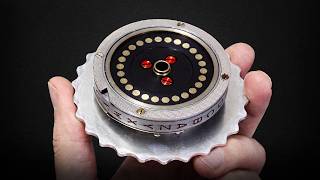
Two uncharged mirrors are brought very close together in a vacuum. There is no air or magnetic force, and gravitational attraction is negligible.
In rough seas, big waves crash against ships. When ships are close, the waves can't fit in the gap between them, so each ship experiences waves only from the outside, pushing them together.
Empty space is filled with quantum waves of all sizes. When plates are very close, the big waves are blocked from the gap, creating a pressure difference that crushes them together.
This phenomenon is called the Casimir effect. At a gap of 10 nanometers, the pressure is one atmosphere, creating a crushing force of 103 kilograms on a plate of that size.
The Casimir effect demonstrates that empty space is not truly empty but filled with quantum fluctuations that can exert measurable pressure. This force, though surprising, is a real and significant phenomenon at the nanoscale.
What is the Casimir effect?
The Casimir effect is the attraction of two uncharged mirrors in a vacuum due to pressure from quantum waves in empty space.
00:54
What analogy is used to explain the Casimir effect?
Ships in rough seas: big waves can't fit between close ships, so they are pushed together by waves from outside.
00:16
At what gap does the Casimir effect produce a pressure of one atmosphere?
At a gap of 10 nanometers.
00:54
What force does the Casimir effect create on a plate of the size mentioned?
A crushing force of 103 kilograms.
01:07
The Casimir Effect is Strong
Quantifies the effect with a concrete pressure and force, making the abstract phenomenon tangible.
00:54Empty Space is Filled with Quantum Waves
Challenges the intuitive notion of empty space, revealing a deeper quantum reality.
00:42[00:02] part of the universe and brought these two uncharged mirrors very closely happen. I mean, there's no air repelling magnetic forces. Okay, there is a tiny amount of gravitational attraction, but
[00:16] it's so small that we can ignore it. But if you push them close enough, then suddenly they snap together. To understand why, let's look at these ships. In rough seas, big waves crash against them from
[00:28] physically can't fit in the tiny gap between them. And if the left ship blocks waves from the left and the right ship blocks waves from the right, then from the left, and the right ship experiences waves only from the right,
[00:42] which pushes them together. And it turns out that empty space is just like the ocean. It's filled with quantum waves with all kinds of sizes. And when the plates get really close, the big waves are blocked from the gap, creating a
[00:54] massive pressure difference that crushes them together. It's called the Casimir effect, and it is strong. At a gap of just 10 nanometers, that pressure is one atmosphere. So, for a plate of this size, that creates a crushing force of
[01:07] 103 kilograms. That's a large adult human standing on a coaster created by human standing on a coaster created by nothing but empty space.
⚡ Saved you 0h 01m reading this? Transcribe any YouTube video for free — no signup needed.