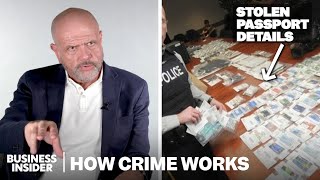

AI Summary
Brett Johnson, a former cyber criminal and founder of the first organized cyber crime community Shadowcrew, provides an in-depth account of how cyber crime operates, from early eBay fraud to the creation of a dark web marketplace. He details the evolution of his criminal career, the rise and fall of Shadowcrew, and offers practical advice on how individuals can protect themselves from cyber threats.
Chapters
Brett Johnson introduces himself as a former United States most wanted cyber criminal involved in fraud, identity theft, and scams, and the founder of Shadowcrew, the first organized cyber crime community.
Johnson began his criminal career with eBay fraud in 1997, selling non-existent items like cameras and autographed baseballs, earning about $12,000 a month.
To launder money, Johnson obtained a fake driver's license from Counterfeit Library, a degree mill, which he used to open bank accounts and cash checks.
Johnson partnered with other criminals to build Counterfeit Library into a forum for sharing fraud techniques, eventually becoming a reviewer and gatekeeper for products and services.
A Ukrainian spammer named Script introduced credit card information (COBs) to the forum, leading to a rapid transition from fake IDs to credit card theft, causing the site to explode in popularity.
Johnson explains that successful cyber crime requires gathering data, gathering tools, committing the crime, and cashing out. He notes that many criminals had the tools but lacked the ability to cash out.
Shadowcrew was created by Seth Sanders as a more structured forum, becoming the precursor to modern dark web markets with escrow systems and a reputation system based on screen names.
Law enforcement, including the Secret Service, infiltrated Shadowcrew, eventually using a VPN owned by the Secret Service to capture data, leading to the arrest of 26 people in 2004.
After Shadowcrew, Johnson engaged in tax return identity theft, filing fraudulent returns on deceased individuals, earning $160,000-$180,000 a week.
Johnson was arrested in 2005 for counterfeit cashier checks and began working with the Secret Service, educating agents and helping with investigations, but continued committing crimes on the side.
After a failed polygraph, Johnson fled, committing more tax fraud across the country, becoming the US Most Wanted, and was eventually captured using a cell-site simulator (Triggerfish).
Johnson served 75 months in prison, realized he was responsible for his own downfall, and after release, struggled to find work due to computer restrictions, eventually becoming a speaker and advocate against cyber crime.
Cyber crime is now a $10 trillion industry, with 'fraud as a service' making it easier for criminals to start, and the pandemic increased crimes like unemployment and PPP fraud.
Johnson advises freezing credit (only 12% do), using strong passwords, enabling multi-factor authentication, and being wary of phishing attacks, which account for 80% of breaches.
Brett Johnson's story illustrates the evolution of cyber crime from individual scams to organized dark web markets, and highlights the importance of basic security measures like credit freezes and password hygiene to protect against the ever-present threat of cyber crime.
Mentioned in this Video
Study Flashcards (10)
What was the name of the first organized cyber crime community founded by Brett Johnson?
easy
Click to reveal answer
What was the name of the first organized cyber crime community founded by Brett Johnson?
Shadowcrew
What was Brett Johnson's initial method of fraud on eBay?
easy
Click to reveal answer
What was Brett Johnson's initial method of fraud on eBay?
Listing items he didn't have, like cameras and autographed baseballs, and scamming buyers.
00:34
What is a COB in the context of credit card fraud?
medium
Click to reveal answer
What is a COB in the context of credit card fraud?
Change of Billing, which involves updating the billing information on a credit card to a drop address and burner phone number.
04:24
What three things must happen for cyber crime to succeed online?
medium
Click to reveal answer
What three things must happen for cyber crime to succeed online?
Gather data, gather tools, commit the crime, and cash out.
07:17
How did the Secret Service capture data from Shadowcrew members?
medium
Click to reveal answer
How did the Secret Service capture data from Shadowcrew members?
They provided a VPN owned by the Secret Service, which logged all traffic.
14:28
What was the approximate amount of stolen information that went through the Secret Service VPN?
easy
Click to reveal answer
What was the approximate amount of stolen information that went through the Secret Service VPN?
$4 million
14:41
What is the percentage of breaches that begin with a phishing attack?
easy
Click to reveal answer
What is the percentage of breaches that begin with a phishing attack?
80%
32:48
What percentage of the population has frozen their credit?
easy
Click to reveal answer
What percentage of the population has frozen their credit?
12%
33:31
What is the estimated annual cost of cyber crime globally?
easy
Click to reveal answer
What is the estimated annual cost of cyber crime globally?
$10 trillion
31:05
What is 'fraud as a service'?
medium
Click to reveal answer
What is 'fraud as a service'?
A model where criminals can buy tutorials, tools, and services off the shelf to commit crimes without understanding the details.
31:21
💡 Key Takeaways
Three Requirements for Cyber Crime
Provides a clear framework for understanding how cyber crime operates, emphasizing the importance of cashing out.
07:17Secret Service VPN Sting
Illustrates a sophisticated law enforcement tactic that led to the downfall of Shadowcrew.
14:28Cyber Crime as Third Largest Economy
Highlights the massive scale of cyber crime, making it a significant global economic issue.
31:05Protection Advice
Offers actionable steps for individuals to protect themselves, emphasizing that basic measures can deter criminals.
32:05Emboldened by Success
Shows how getting away with a crime can encourage further criminal behavior, a key insight into criminal psychology.
38:31Full Transcript
[00:00] My name is Brett Johnson, former United States most wanted cyber criminal through fraud, identity theft, and scams. I was able to steal millions of dollars. And this is how crime works. I built and ran the first organized cyber crime community. It's called Shadowcrew.
[00:18] I regret every single instance of that, of the people that I knew, that I that I victimized, that trusted me, that put faith in me every single day. There's no fixing that.
[00:34] I looked for that opportunity to profit wherever it may be. And I didn't give a damn about my victims. And I didn't care about my victims start to until I started to interact with victims on this side of the fence. My online criminal history began doing eBay fraud around the year 1997. And
[00:52] what I mean by eBay fraud is, you know, listing things that I didn't have, getting the money from people, and scamming these people. I was selling cameras that didn't exist, autographed baseballs, you know, Sammy Sosa, Mark McGuire, and they were selling for $60 on eBay. Go down, buy a case of
[01:06] baseballs, pick up a Sharpie, start autographing them. And typically, when I was doing eBay fraud, I'd profit about $12,000 a month. That leads into selling pirated software. So, I was doing that,
[01:18] stealing a lot of money, and I got worried about how much was coming in. thought I was going to be looked at for money laundering and figured the best thing I could do is get a fake driver's license. I was going to use the fake ID to open up bank accounts so I could have the stolen money
[01:34] filtered through the bank account cash out at the ATM. And that's how I happened upon counterfeit library and counterfeit library. They only dealt it was a degree mill. They dealt in counterfeit degrees and certificates. It's fake IDs. It's fake work IDs. any type of university degree
[01:51] that you might want. Send him the $200, send him my picture. Three, four weeks later, I get this fake driver's license. So, I start using it to open up accounts, drop addresses, cash checks, everything else, and stealing even more money. Few weeks into that, and I'm becoming friends with the
[02:06] owners of Counterfeit Library because I was also sharing information about how to commit fraud. Two other individuals come in. One was called Mr. X was his screen name. The other one was be
[02:21] Beelzebub. Be Beelzebub. He made fake IDs. Mr. X made a very passable social security card. And we became buddies. So be Beelzebub. He came up with this idea. He's like Gollum. My screen
[02:33] name was GollumFun. I'll sell the fake IDs. Mr. X will sell the social security cards and we'll build this site, this forum. And I was like, sounds like a damn good idea. Because I was also sharing information about how to commit fraud. and it becomes like this criminal field
[02:48] of dreams. People were welcomed in to share and exchange criminal information. You can simply come in and you can read all of the threads. Something that might be sold as a tutorial would be tax return identity theft, how to file those taxes, where to target those victims. So,
[03:05] Counterfeit Library transitioned from a degree mill type of website into a eBay fraud site, a social engineering site, a cyber crime channel site. But initially my position was as a reviewer. I became basically the gatekeeper of counterfeit library. Every single product and
[03:23] service went through me. So if someone had a product or service for sale, I would get it in, verify it, talk about it, and vouch for that seller. So they would send you physically that driver's license or that social security card or that passport or what have you. All right?
[03:40] You'd get it and you'd give your thoughts on it and you would say this seller is reviewed and verified. That tag would then be changed to reviewed seller. The rules that we had, hey, no drugs, no counterfeit currency, no child pornography. Over the space of a year
[03:57] and a half, two years, we were geez, we were a couple of thousand members at that point. We're doing pretty well with counterfeit library. It's fake IDs. It's eBay fraud. PayPal fraud. It's
[04:12] strictly scams is what it is. Is we're coming across with that. One day this guy comes over and he had this screen named Script. He was this Ukrainian spammer. And what he says is he says,
[04:24] "Hey, I've got credit card information." And Script dealt with what we call the COB, the change of billing, just the credit card details and the ability to update billing information. So, you would be able to log into the credit card account. you would see the available balance on
[04:39] that card. These days they refer to it as account takeover. We had never seen anything like that. And the initial response from the community was this guy has got to be law enforcement. And I
[04:51] was like, hey dude, if you're going to sell on counterfeit library, you've got to be reviewed. So he was like, okay, let's get reviewed. He's like, oh, I need a drop address. And I've earned a phone number. I give him a drop address. I give him a phone number. He gives me the card information.
[05:06] card number, expiration date, three-digit security code. He's changed that billing information to that drop address and the burner phone number from the actual card holder information. I place an order with Thompson's Computer Warehouse for $4,000. The same card, I also place an order
[05:23] with Dell's Outlet for $5,000. Goes through $9,000 worth of product. goes through, get the products shipped to me, they arrive, and the way that works is you would receive the merchandise, and
[05:35] then what would you do? You'd resell it on eBay. I get back online with Script. I post the review on Counterfeit Library. And within the space of two to three days, Counterfeit Library transitions
[05:49] from that fake ID and eBay fraud to basically a credit card theft site. Once Script comes in and starts offering credit card details, at that point in time, counterfeit library simply explodes.
[06:04] Turns out that Script had a lot of buddies. They were stealing all these credit cards. Within, you know, 30 to 60 days, we had hundreds of posts per day of people that were looking for this
[06:16] information of different sellers that were coming out selling credit card details or physical credit cards. We had more traffic than we know what to do with. There's a few different ways you can steal credit card details. You can get it through fishing schemes. You know, you'd get their name,
[06:28] social, date of birth, card numbers, pins, all that stuff. And it a fishing attack was spray and prey. So, you'd send out two million emails. If you got 20,000 back, that's a good day. You got
[06:41] 20,000 card numbers all of a sudden. You can do it physically. All right? And that that involves a skimmer. Maybe you're you install one at a bank, at a gas pump, and you insert the card or you give through and that captures the credit card details. So, there's several different ways to get credit
[06:59] card details and information. Most of the data was coming out of America. You know, you can't order a lot of computers to a Ukrainian address. You need to order it to an American address and then have them shipped out or cashed out from there. So, script is the first guy, the first Ukrainian
[07:17] that comes into English-speaking environments. All right. For cyber crime or scams or fraud to succeed online, three things have to take place. You have to gather data. Gather the tools. You
[07:30] then commit the crime. And then finally, you have to be able to cash that crime out. Well, they had the tools. They knew how to commit the crime. What they could not do was cash it out.
[07:45] If you were good, you would profit $30 to $40,000 a month. Cobs, that change of billing typically sold for 8 to 10% of whatever the available balance was of that card. So,
[07:59] if you're buying just stolen credit card details, just the card holder's name, number, address, things like that, that's going to run, you know, seven bucks up to maybe $30 per card. You know, where do you put that money? Well, I had a house in Charleston, South Carolina. Spare bedroom. Cast
[08:13] a lot of it in there. I also had bank accounts in several different countries. When I was a criminal, I lived very very quietly. I had a house on the water. It was not an expensive house.
[08:25] I would typically eat at home. If I ate at a restaurant, it would be someplace like Applebee's, something like that. So, I was able to save some money. But you have to understand that when I was committing crime, money got to the point where you didn't understand the value of it.
[08:47] The way Shadow Crew pops up, this distance learning guy was big advocate for distance learning and he found out about counterfeit library. Not that we were committing fraud or the fake degrees they were selling. So his members from his forum, a couple of thousand,
[09:04] they come over and start bombarding the forums there. So we can't conduct any business all of a sudden. One of the ID guys, his name was Seth Sanders. He goes off and he builds shadowcrew.com. He had maybe 60 members at that point in time, not much traffic, but the site
[09:20] looks damn good and it operates really well. He comes back over and he's like, you know, Gum, why don't you come over to ShadowCrew? And I was like, man, I was like, we can do that. make me super admin. Let me make whatever sub forums I want. Put the number of people
[09:34] that I want in charge of those forums. He's like, absolutely. So, we shut down basically the forums at counterfeit transition over to Shadow Crew. It was an explosion of users all of a sudden. So,
[09:46] Shadow Crew was really the precursor of today's dark web, dark web markets, and financial cyber crime as we know it. It was the first real structured forum and communication channel for online criminal activity. You knew by looking at someone's screen name what the skill level was,
[10:02] what the history of that individual was. We had escrow systems. So if someone didn't trust another, they could go through me initially and I would hold the money until they got their item. Then I would pay the seller. Now before these criminal communities, the only avenue you had to
[10:16] network with other criminals was IRC, internet relay chat. It was rolling chatboard. you had no idea who you were talking to, if you could trust them, if they had a product or service, if it worked, if they had it, or if they were just going to rip you off because everyone there was
[10:31] a crook. So, ShadowCrew at its height was 4,000 4,000 members strong. So, out of 4,000 members, you may have had 60 to 80 different sellers. Most of it's credit based. Most of the credit based is
[10:46] online details. We had passport guys, we had fake ID guys, stuff like that as well. We were naive criminals. Many of us were. All right. U, we were simply these we thought we were
[11:03] computer guys, you know, and stealing information and profiting from that. What we didn't appreciate is if you're living a criminal lifestyle, how are you going to make sure that no one rips you off?
[11:20] And at the end of the day, it relies on violence. All right, that's really what you have to resort to. We had never seen any violence at all on ShadowCrew, any of those platforms. One day a user
[11:34] comes in and he starts posting these pictures of a guy who had ripped him off and he had had the guy kidnapped and beaten and it comes with a message never steal from me. And that's the first instance
[11:50] of of violence that we saw on that platform. Who's involved in cyber crime these days? every criminal group that is imaginable as taking part in cyber crime because they they view it as
[12:04] more safe. It's certainly more profitable. You absolutely see the Italian mob. You see the Mexican cartels coming in. You've got these scam farms that are out there. These buildings, these organized elements coming together are different than it was when I was a criminal.
[12:22] You've got an actual compound or community of people that are working together running different basic departments in order to make sure that that fraud, that crime is successful.
[12:34] They're really running it more businesslike than we did when we were committing crime.
[12:46] We had tens of thousands of hits that were coming in per day. But you have to remember that you could access Shadow Crew without being registered. Now, we were able to see the IP addresses that were coming in. It was evident that law enforcement was they had several
[13:01] identities on Shadow Crew. You know, back then, how do you avoid detection? What's your operational security? You would try to have the server located in a country where it was difficult for law enforcement to subpoena anything from it. I moved a lot from Kentucky to
[13:16] Tennessee to South Carolina. I would try to find hotspots that I could use that that weren't in my home. You did not have access to these proxy addresses where you could hide your IP address.
[13:31] It wasn't until later that those things came online. Rightfully or not, I was scared to death that Rico was going to come down on my head and I was going to get the brunt of everything. So, I retire, step out of Shadow Crew. About the same time I stepped out our forum techie, he went by
[13:48] the screen name of Scarface and CumbaJohnny. His name was Albert Gonzalez, and he was making money or stealing money doing the CVV1 hack. So, one day he's standing at an ATM in broad daylight,
[14:01] and he's putting one white counterfeit card in after another, pulling $20 bills out. Just so happens across the street, two cops are sitting there and they start to notice this kid, walks up
[14:14] on Albert, Albert's wearing a disguise, a wig. Albert falls apart and flips. So Albert flips, he goes to work for the Secret Service. Albert comes back into Shadow Crew and he takes over
[14:28] and he tells the community, "Hey, in order to remain safe, we need to make sure we're using this VPN. That way everything's, you know, safe and secure. Turns out the VPN's owned by the
[14:41] United States Secret Service. And that's where, if you read the indictments, that's where the $4 million comes from. That was the amount of stolen information that went through the VPN during those months of investigation. Secret Service was able to get addresses, names. The reason the Secret
[14:57] Service was created was to protect the nation's monetary supply. So, of course, cyber crime, everything's transitioning over to online payments and everything else. Of course, they are going to take a role in that. October 26, 2004 was when Shadow Crew was shut down. CumbaJohnny,
[15:12] Albert Gonzalez, had had called for everyone to be online at about the same time. And the idea was they would swoop in, get everyone. They arrested 26 people across six countries in six hours.
[15:28] I avoided the arrest because I simply left Shadow Crew before the implementation of VPN. I was online and I ended up on Shadow Crew and the FA the site had been changed. All of a sudden,
[15:43] you didn't go to the Shadow Crew forums. There was this page of this guy behind bars. It was this message of you are no longer safe in the shadows. you know, we advise you to report to your nearest
[15:58] United States Secret Service field office and turn yourself in. Well, I'm not about to do that. So, there was all this going on. I was living under an assumed identity in Charleston, South Carolina. I
[16:10] was very hard to locate. I ended up getting access to the California State Death Index. I was like, "Well, I wonder if you can file tax returns on dead people." And it turns out you can. Tax
[16:26] return identity theft is what they called it. I would file tax returns from Sunday through Wednesday. Thursday I'd plot a map of ATMs. Friday and Saturday I'd cash out. I'd have
[16:39] the returns deposited on prepaid debit cards. Typically cash out in the range of, you know, $160,000-$180,000 a week and stole a lot of money. And that's when you learn how to launder money.
[16:55] I was married for nine years and lied to my wife. I lied to her every day. Every day. Took her three years to find out I was a crook. Next six years for me saying, you know,
[17:07] I've stopped. Will stop. Going to stop. And she leaves me after nine years. I get depressed. You know that fear of being abandoned becomes real. I caused it. Yeah, I caused it. But it it was still real. walking around the house all day just crying, depressed. From there, it leads into
[17:23] into Shadow Crew. And what happens was I was always this clean cut criminal. I had I didn't start drinking till I was 34 when my life I never drank before that. I'm the guy I'm literally that guy that walks into a strip club and falls in love with the first stripper that he sees. Her name was
[17:40] Elizabeth. Elizabeth didn't know what I did for a living. I had lied to her, too. But I ended up getting getting engaged to her and I retired. I stepped out to Shadow Crew April 14th of 04. State
[17:54] side I had probably 200 250 grand in cash and went through in the space of just a few months. Went through all of that. So October rolls around, Shadow Crew gets busted. I don't have any cash and
[18:13] I wanted to keep up that facade. So the only thing because of ShadowCrew being busted, you didn't know who to trust anymore. The only thing I could rely on criminal wise was running counterfeit
[18:27] cashier checks, which I had religiously for years screamed at people not to do that. February 8th, 2005. I was supposed to pick up a couple of Tiffany diamond rings. Total like $19,000. I was
[18:43] in Charleston, South Carolina. I had waited for the UPS driver to drive up. I met him at the drop address, got out of my vehicle, tell the driver, "You've got a package for me." In this case, the
[18:55] driver said, "Yes, I do. Can I see your driver's license?" And I pulled out a driver's license. It was my driver's license. I didn't have the ability to get a fake one. He handed me the package. I handed him a counterfeit cash cashier check. I turn around, take three steps. There's the FBI,
[19:09] guns drawn, and walk these two Secret Service agents. They sit down. They look at me and said, "we'd like to talk to you about some stolen credit cards, and they took over the investigation."
[19:26] So, they asked me about some credit cards. I really don't tell them anything. One agent looks at me, he's like, "Well, we got your laptop." I was like, "Yep." And then he looks at me and he's like, "Well, is there anything you could do for us?" I think the state had me under like 30
[19:42] different indictments. I think the total was like $327,000 was the bond they wanted. Somebody up in Washington called whoever they needed to call and got the bond reduced to $1,000. I walk out, it's
[19:57] like midnight. First call I make is to Elizabeth. I'm out. And she says, "I'll be there." She pulls up in a limousine. Gets out, pops the trunk, gets these two plastic storage containers out
[20:13] full of my clothes, drops on the pavement, comes over, hugs me, call me later. Gets in the car, leaves. I'm standing next to a Secret Service agent, and this guy looks at me, he's like, "Uh, is that your fiance?" I'm like, "Yeah." He's like, "Man, I am so sorry." And of course,
[20:31] that relationship fell apart. The Secret Service field office is out of Columbia, South Carolina. They put me up in a in a, you know, suite, not sweet, but, you know, payer week hotel. And I start to work for them. So, working for the Secret Service. It was typically four to six hours a day.
[20:47] I was paid $350 a week, plus they took care of rent and stuff like that. They had me hooked up to a laptop. The laptop was hooked up to a 50-in plasma monitor mounted on the wall. Two agents in
[21:00] the room at the same time. They were at a desktop computer next to mine. And the job was for me to educate them on cyber crime and also for me to help out with investigations. So, target people
[21:14] surf the forums basically be Gollum again. Target people for investigations. And that's what I did. Ultimately, Operation Anglerfish, it arrests John Gianni, it arrests a few other decently sized
[21:27] people. You know, eventually the Secret Service agents, they were monitoring it. They got bored because a lot of it's just monotonous. You know, I'm bullshitting around with other criminals, developing relationships with those guys. On my laptop, they had Camtasia and Spectre Pro. So,
[21:42] it recorded all keystrokes and it also took snapshots of the screen every I think 15 or 30 seconds. All of that data. Everything they were capturing went on a DVD on a spindle is what happened. All right. At the same time, I'm you know, I'm the guy that I've got an ego. I
[22:02] realized that, okay, all that data, no one's going to go through those DVDs. No one's really cataloging any of that [ __ ] I can pretty much do what I want. So, I start committing crime. So, I
[22:15] was committing tax return, identity theft, credit theft, and various other crimes. For 10 months, I around, rip them off, screw them over. So, Operation Rolling Stone comes around. That's
[22:28] that operation where they were supposed to arrest some of the people that I had been targeting. One of the guys that they were arresting, I had taught that kid how to do tax return fraud. Turns out that the night before he had loaded up a U-Haul full of stuff, and that stuff was
[22:44] evidently a lot of the evidence they would need to charge the guy. So, they come back to me, did you talk to anybody? And I'm like, nope. Well, we're going to make you take a polygraph. And my
[22:56] they as soon as they said that, I'm like, I'm not taking a polygraph. Call my lawyer. So, my lawyer gets on the phone and I'm on the phone with him. He's like, "Uh, Brett, did you do anything?" I was like, "Yeah." And he was like, "Well, you don't have to take the polygraph." And I was like,
[23:12] "Well, that's a good thing." And he's like, "But if you don't, they're going to throw you back in jail." So, I take the polygraph, fell it miserably. Miserably. A subsequent search of the
[23:24] apartment unveils a lot of stuff. And I had in the apartment, I had money, had cards, had sewing identities, all that stuff. And I didn't want them to find that. They revoked my bond that night.
[23:44] So, they revoked bond, threw me back in the county jail. Week after that, the state judge reinstates my bond. No one calls the Secret Service to tell them that. I walk out. I met with my mom.
[23:59] My mom's outside waiting on me. And I looked at I was like, "I can't stay." She was like, "What?" So I take off on a cross country run. I, I had a truck, get in the truck, head,
[24:12] west on I 20. No idea where the hell I'm going to go. I get to Dallas, rented a room for, for two weeks, started doing tax fraud out of the local Kinkos. The night everything funded,
[24:24] 67 cards funded, I ended up with I think like $130,000 is what I ended up with in cash. I drove down Route 66, visited Roswell, New Mexico, ended up in Las Vegas, stole another 160 $170,000 out
[24:41] of ATMs through tax fraud there. Went out to LA, stole another 160 grand. come back to the hotel, sign on to cartermarket.com that morning, and I am United States Most Wanted, Secret Service Most
[24:56] Wanted. And I sat there looking at it. That's the first time my name had been mentioned on a criminal forum. My picture had been posted, everything else. I sat there just stunned looking at it. And finally, I said out loud, I was like, "Well, Brett, you've made the United States
[25:12] most wanted list. What are you going to do now?" And I said out loud, "I'm going to Disney World. So, that's what I did. I checked out of the hotel there in Vegas, drove to Disney World, got my year
[25:25] pass at Disney and Universal, and I was like, you know, I can I can lay low. I can enjoy the parks. There's a lot of tourists in the area. I can hide there, rented a time share with cash, bought electronics, everything else. And the idea was, well, I'll just hold up here for a year, then
[25:40] I'll bug out to Florianopoulos, Brazil, and set up shop again and do it all again. It was September 16th, 2006, and I heard this knock at the door. Got my ass out of bed, looked through the people,
[25:54] another Secret Service agent and an Orange County Sheriff. Would you guys like to come in? And he's like, "Well, we need to put you in cuffs first." I was like, "Yeah, I figured." My understanding is they used a trigger fish. Back then it was called Triggerfish, today it's called Stingray,
[26:10] to locate me. That is a box that simulates a cell phone tower. Back then, I don't know what it is now, what the tech is now, but back then it could locate you within a 7ft radius.
[26:26] I'm arrested. I'm thrown in the Orange County Jail. Ultimately, the state charges were dropped in favor of the of the federal charges, conspiracy, forgery, aggravated identity theft,
[26:38] and multiple counts of all of those. And it was like 75 months. When I got to Big Spring, Texas, at that point, you understand exactly what prison is. The inmates run the prison, not the guards. When you get to prison, you're met by your race. I'm met at the door by the treasurer of the
[26:57] Aryan Brotherhood. He looks at me, he's like, "How many more white guys come in?" I'm like, "I don't know, three or four." Next question is, "What are you in here for?" My answer is computer crime. And I smile. No, you don't say computer crime in prison. That doesn't mean hacking,
[27:12] credit card theft, all this [ __ ] When you say computer crime, that means child predator. So, he's looking at me. He calls his big buddies. They circle around. What did you say you're in
[27:25] here for? So, I tell them, you know, I'm in here for this. And they're like, okay, sounds good. You still said computer crime. Now, the way it works, they will not they will not attack you until they know you are that predator. At that point, that's your ass. Or
[27:41] it takes the guards telling them that you're that guy. Well, no, none of the guards told them anything. Spent two years at Big Spring. And at Big Spring is where I realized that the only
[27:53] person that put me in prison was me. I ended up serving about seven and a half years total. Anyone that commits cyber crime or computer related crimes, usually you're under three years or
[28:10] 5 years supervised release. And during that time, you're not allowed to touch a computer or there's certain guidelines that you have to have. I was released from prison. I went to the halfway house. Didn't have a job. I had job offers. Deloitte, no before. Couldn't take them. I asked about
[28:26] fast food. No, that's a computer. Can't touch a computer. So, I couldn't get a job. I was going broke. My probation officer had given me permission to get a cell phone. And I had signed on to plentyofish.com. About the same time my my wife, now Michelle, first date we had, first
[28:43] real date, she asked me 10 minutes into it, she's like, "What's the worst thing you've ever done?" I was like, "I just got out of federal prison." She's like, "No, seriously." And I told her and I told her all about me. She could she decides to keep dating me. Finally, I get a job. The only job
[28:58] I could get was pushing a lawnmower. Bust my ass 10 hours a day, $400 a week. Job ends because it gets cold, grass starts stops growing, and I get it in my head. I was like, I got to do something to show her I'm worth it. Get on the dark web, get some stolen credit cards, start ordering food. So,
[29:15] I get caught doing that. Go back to prison. The lesson I learned was Michelle didn't need me for me. She just wanted me for me. got out of prison, got married to her. Shortly after that,
[29:31] I ended up reaching out to this guy FBI agent, and I sent him a message. I was like, "Hey, got nothing but my respect." And at the end of it, I was like, "by the way, I'd like to be legal."
[29:54] That man responded within two hours. Within two hours, he gave me references. He gave me advice. That led to Caprice Hendricks being the first person that hired me to speak for the card not present group. AARP has me as an ambassador for them. I work hard every single
[30:12] day. I wake up every morning to protect people from that person that I used to be. Today I lead a a very blessed life. that I don't deserve, but I'm grateful for it. Every single day,
[30:30] I regret who I have been. I regret every single instance of that, of the people that I knew that I that I victimized, the people that I didn't know that I victimized, of the people that that loved me, that trusted me, that put faith in me every single day.
[30:49] And the only thing I can do I you can't fix that, man. There's no fixing that. Cyber crime is the third largest economy on the planet. You've got China, you've got the United
[31:05] States, you've got cyber crime to the tune of 10 trillion dollars a year. It's a booming industry. When I was a criminal, you had to understand every single dynamic or aspect of the crime you were committing. your your own security, the company's security, how to make fake IDs, run
[31:21] drop addresses, launder money, everything else. That's changed. Now you have fraud as a service. Every single product and service is off the shelf. A criminal now doesn't have to understand
[31:33] any aspect of the crime. They can immediately buy tutorials, take live instruction classes, buy anything that they need online and immediately start being successful and profitable at crime. Because of that, because of the ease of access of telegram, things like that, you see crime continue
[31:50] to explode. It absolutely has to do with the pandemic as well. You know, during the pandemic, we saw a lot of criminals committing unemployment fraud, PPP fraud, stuff like that. What advice do you have for the general public on how to best protect themselves from cyber crime? Okay,
[32:05] let's talk about that threat landscape. You got mass media out there. They paint computer criminals or attackers as hackers, computer geniuses. No, it's not computer geniuses. It's the stuff we know about we're not doing anything about that creates that opportunity for attack.
[32:21] All right. 90% plus of every single attack uses a known exploit. It's something you know about. It's something you've been told about that you're not doing anything about. That opens that door.
[32:34] 56% of companies experience a breach because of third-party access. Your network's only as strong as the weakest device which accesses it. Over 41% of every single router on the planet has a default
[32:48] password. Oh, and that's not even the big one. The big one, 80% of every breach begins with a fishing attack. What makes fishing so important? Why is it so widely used? A fishing attack is a social
[33:02] engineering attack. It boils down to how good of a social engineer am I, a liar am I in convincing you to do that thing? They know what it takes to manipulate you into giving up information, access, data, or cash. Why would I try to brute force past a firewall if I can send an email to
[33:17] someone sitting behind that? That creates that threat landscape for individuals. It's not that difficult. It begins with freezing your credit. Credit freezes became free September 2018.
[33:31] Today the population 12%. 12%. The other 88% are victims waiting to happen. All right. So freeze the credit of every single person in the house including children. Children are
[33:43] the number one victims of identity theft. One in four 25%. All right. So freeze the credit. That's free. You have to contact all three credit bureaus. Do you use the same password and you know log in across multiple websites? Chances are you do. 80% of the population does. So,
[34:00] good password security. What does that look like? That's up to you. You know, you can use a password manager, use pass keys. If you're -- I'm not against a password notebook as
[34:12] long as it's not at your desk at work. So, these things are important. From there, you can look at multi-factor authentication, things like that, but it begins with freezing credit, monitor accounts, place alerts, good password security, and then you go from there. If you've got just a modicum
[34:28] of security in place, chances are I'm going to find an easier target. All right. You've still got the investment schemes. You've got the romance schemes that are out there. What's interesting is over time you're getting you've still credit card theft is still huge. Make no
[34:42] mistake about that. But there's almost an a shift in the mindset of online criminals where they're going more toward the scam environment. They're more relying on manipulating through that liar,
[34:55] social engineer. They're more relying on tricking that victim into sending cash out instead of doing account takeovers and things like that. Trust is usually established through technology tools. So, they'll use spoof phone calls. You won't see the phone number they're calling from. You'll
[35:10] see your bank, the FBI, sheriff's department, Social Security Administration, something like that. The idea is to try to get that victim to do a knee-jerk reaction. Oh, and click. Well,
[35:24] you're done at that point. This morning I got an email as I was walking here from Coinbase. Someone logged into your account. I'm like, "Oh, now you open up the email. Someone has accessed
[35:38] your account. They've logged in." Then it's got the link. Do you click on the link? No. By God, you do not. You close out that email. You go to your browser. You type in cocoinbase.com.
[35:51] I logged in. No one had access my account, but I did change my password. So that that's something you got to understand. You know, whatever you do, report those crimes to law enforcement. If
[36:04] you don't report these crimes, people like me, we get away with it and we keep going. And I grew up knowing how to do insurance fraud, faking stolen cars, charity fraud. So that's the
[36:20] life I grew up in. When I became an adult, I had the opportunity to choose that different path and I didn't. I found eBay and liked eBay a lot. I was like, there has to be some way to make
[36:34] money on this. Didn't know how. Began doing eBay fraud around the year 1997. I used to watch Bill O'Reilly on Inside Edition a lot and he had a show that night and they were profiling Beanie Babies. The one they were profiling was Peanut the Royal Blue Elephant selling for $1,500. So I skipped
[36:50] class the next day, go around all these little Hallmark short stores looking for Peanut, but they had these gray ones, the exact same elephant, just a different color. Had these gray ones for $8.
[37:02] Found a picture of a real one online. I posted it. I used a picture of a real peanut Beanie baby. So, this woman wins the bid. I don't want to be on the defense of the conversation. I want her on
[37:16] the defense of that. So, I send her a message. Hey, you win. Congratulations. By the way, we've never done any business before. I don't even know if I can trust you. What I need you to do,
[37:29] go down to the US Postal Service, pick up a couple of money orders. They're issued by the United States government. That protects you. More importantly, that protects me. You send me those, I'll send you your animal with the US postal money orders. The reason I chose that is you
[37:45] could actually cash those money orders out at the post office. All right? And because that victim wanted that Beanie Baby so bad, they believe that. That allows me to establish that trust and defraud them. She believed that. Sends me the money orders. I cash them out.
[38:02] send her the creature in the mail. I did it did that crime under my own name. Dumbass that I am. Immediately get this phone call. This is not what I ordered. And that's the first online crime that
[38:15] I committed. I ended up defrauding a woman of $1,500. A lot of them, they get so exasperated, they throw their hands in the air, they walk away, you don't hear from them again. So that that's the first online crime I committed and got away with it and it emboldened me.
[38:31] you keep going. I was a piece of and if you understand that not just about me but about these guys that are online doing this, you can you can probably protect yourself better.
[38:53] Hi, I'm a producer on How Crime Works. If you enjoyed this video, then please subscribe and comment below with more ideas of topics you'd like us to cover in this series.