
AI Summary
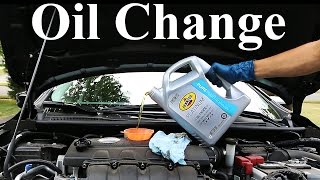
This video provides a comprehensive, beginner-friendly guide to changing your car's oil. It covers everything from gathering the necessary tools and selecting the correct oil and filter, to safely lifting the vehicle, draining old oil, replacing the filter, and adding new oil. The guide also includes important safety tips and responsible disposal methods for used oil.
Chapters
Changing your own oil allows you to use higher-quality oil and filters than many inexpensive shops, ensuring the job is done correctly.
Essential tools include a socket set, gloves, paper towels, oil filter wrench, funnel, and a breaker bar for stubborn bolts.
Use ramps or jack stands for safety; never rely solely on a jack. Block rear tires and engage the parking brake.
Check the owner's manual for the correct oil viscosity and capacity. For this car, it's 0W-20 and 4.25 quarts.
Synthetic oil is recommended for most new cars and can also be used in older vehicles. It lasts longer and offers better protection.
Change oil at the recommended mileage in the manual, or around 5,000 miles as a general guideline.
The process has three main steps: drain old oil, replace the filter, and add new oil.
Use jack stands and a jack for extra support. Shake the car to ensure it's stable before going underneath.
Locate the oil drain plug (usually on a black pan) and loosen it counterclockwise. Use a breaker bar if needed.
Replace the drain plug gasket (one-time use) and tighten to 20 foot-pounds of torque.
Pre-fill the new filter with oil to prevent the engine from running dry on startup. Lubricate the gasket for easier removal next time.
Add the correct amount of new oil (about 4 quarts) and check the level with the dipstick after letting the engine sit for 5 minutes.
Dispose of used oil responsibly by pouring it into a sealed container and taking it to a local auto parts store or recycling center.
Mentioned in this Video
Tutorial Checklist
Study Flashcards (10)
What oil viscosity is recommended for the car in the video?
easy
Click to reveal answer
What oil viscosity is recommended for the car in the video?
0W-20
02:17
How much oil does the car in the video need?
medium
Click to reveal answer
How much oil does the car in the video need?
4.25 quarts (or 4 quarts if the filter is pre-filled)
02:00
Which direction do you turn the drain plug to loosen it?
easy
Click to reveal answer
Which direction do you turn the drain plug to loosen it?
Counterclockwise (lefty-loosey)
08:42
What is the recommended torque for the drain plug?
medium
Click to reveal answer
What is the recommended torque for the drain plug?
20 foot-pounds of torque
11:14
Why should you pre-fill the new oil filter with oil?
medium
Click to reveal answer
Why should you pre-fill the new oil filter with oil?
To prevent the engine from running dry on startup
13:43
Why do you apply oil to the filter gasket?
medium
Click to reveal answer
Why do you apply oil to the filter gasket?
To make it easier to remove next time and prevent leaks
14:13
What is the recommended oil change interval mentioned in the video?
easy
Click to reveal answer
What is the recommended oil change interval mentioned in the video?
5,000 miles
03:22
What should you do after running the engine before draining the oil?
medium
Click to reveal answer
What should you do after running the engine before draining the oil?
Let it sit for 5-10 minutes to cool and allow oil to collect in the pan
10:08
What tool can help loosen a stubborn drain plug?
easy
Click to reveal answer
What tool can help loosen a stubborn drain plug?
A breaker bar or a pipe over the ratchet handle
09:09
Why do you block the rear tires?
easy
Click to reveal answer
Why do you block the rear tires?
To prevent the car from rolling
04:39
💡 Key Takeaways
Using a breaker bar for stubborn drain plugs
Provides a simple, effective solution to a common problem beginners face.
09:09Pre-filling the oil filter
A key step that prevents engine wear on startup, often overlooked by novices.
13:43Oil change interval of 5,000 miles
A practical guideline that balances engine health and maintenance frequency.
03:22DIY oil changes ensure quality
Highlights the value of using better oil and filters than cheap shops.
00:14Checking oil level with dipstick
Teaches the correct method to verify oil level, preventing over- or under-filling.
18:34Full Transcript
[00:00] I'm going to show you how to change the oil in your car or truck this video is Specifically geared to beginners who have never done an oil change You'll be able to change your own oil many
[00:14] Inexpensive oil change shops will use cheap oil and really cheap filters so by [doing] an oil change yourself You could use good motor oil [a] good filter and know the job is getting done If you've ever done oil changes before and want to share your tips leave a comment now
[00:32] So here's everything you're going to need to change your oil you can see we're [just] using common hand tools We have a socket set that has a ratchet and some sockets Gloves so you don't get the oil on your skin because oil is not good [for] you paper towels to clean up
[00:47] We have our oil and filter and I'll explain in a second how to find the correct oil We have an oil filter wrench you might need it or you might not but it's worth to have just in case And a funnel so you can fill up your engine with new oil. I'm also including a breaker bar
[01:04] Just in case your drain bolt is hard to get off [this] will make it really easy in Addition to tools to change the oil you're also going to need something to jack your vehicle up in this case We have ramps or you could use Jack and Jack stands and then a piece of wood to block off the rear tires
[01:18] You could use where you don't need any of this you could [just] drive your vehicle up onto the curb to get enough access to Safely get underneath and drain the oil so you could use whatever method works for you
[01:30] I just want to note also that any tools that I'm using here including the [Jack's] Jack stands Ramps and even the oil check the description I'll link everything so if you don't have something you could easily find it and you can easily see what I used and as
[01:44] Always if you have any questions throughout this process leave a comment below and I answer every question and comment So by the end of this video you'll be an oil change expert What oil your car takes to figure out? What will your car takes?
[02:00] You can look in the [owner's] manual. So just go grab your owner's manual We're going to flip to [the] back here. You look under oil and capacities you can see it tells you how much oil you're going to need so we're going to need four and a quarter quarts and
[02:17] then you want to check the viscosity the oil that you need and we're going to need four and a quarter quarts of [0w] 20 so let's go to the store, and we'll check that out right now all right We're in [the] store, and we need to find a synthetic 0w 20
[02:30] Here is 0w. 20. You can see here's where the viscosities are listed 0w 20 is right here Here's 10w30 so make sure you get the correct viscosity. Here's the 0w 20. We need we want a full synthetic
[02:46] We need at least 4 quarts in this container has 5 so that's plenty if you have an older car you might not need synthetic But I personally like running synthetic oil even in my older cars I'm switching to synthetic and just so that you know you could switch to synthetic and you could switch back [to] conventional at any time
[03:05] But on most new cars [Needle] run synthetic plus synthetic oil lasts longer Speaking of how long [oil-less] change your oil at the recommended mileage that's listed in the [owner's] manual many cars have an oil life monitor that will tell you when you need to change your oil so just go by that if you
[03:22] Can't find any [information] on when you need to change your oil I change the oil in my cars at around 5,000 miles My van has over three hundred thousand miles and we've had that car since new and she's still running great Ok so we have our oil now let's go find the filter there are tons of oil filters
[03:37] But which one do you pick well? Just look in the book here, and we're doing the oil change on a personally I like using pure later filters, but any quality filter will do we need an L1 for
[03:53] for 612 L1 for 612 right here good. So there we go We got the oil and the filter I'm going to go check out real quick and let's go change the oil
[04:08] Viscosity Oil zero [w] 20 and we have the correct oil filter And I'm going to show you how to jack the car up first And then I'm going to use the ramps because that's what prefer [sew] an oil change has three basic parts
[04:24] one you got to drain the oil two you have to change the oil filter and Three you have to fill it with the correct new oil. Let's go step by step The first step is to drain the oil and to get to the oil drain plug. We have to go underneath the vehicle
[04:39] So we're going to have to lift the [vehicle] up to [jack] the car up if you're not completely sure how to do it you But I'm going to show you right here what you need to do and you So the car doesn't roll the other thing you want to do is if you have an automatic
[04:57] Make sure it's in park. [if] you have a manual put it in first gear and Also pull the emergency brake which will prevent the car from Rolling Right where you're jacking points are in
[05:11] this case the jacking points have these little indents in them that area of the frame is meant to support the vehicle and Then you [could] Jack the car up Once the car is jacked up. You can get your jack stands
[05:27] and place it under the car right where there's a big piece [of] metal on the frame and Then you're going to lower the car down into the jack stands and then you have plenty of room to get to the oil pin slowly
[05:42] The Jack stand is the only thing holding it up and [once] your car safely supported on the jack stands I always like to put the jack right back on the frame just for extra support Malfunctions you have back up with the jack you can never be too safe
[06:00] I want to show you the method that I prefer it's a lot easier [a] lot safer Make sure you always use jack stands and not just the jack you
[06:12] Don't want to just rely [on] the jack to protect you from the car falling on you like you saw I like to use both [it's] the easiest it's the safest and it also raises the vehicle pretty high
[06:25] All you have to do is park the vehicle in a spot where [you] can slide two ramps right under the wheels And then you just drive the car [off] the ramps. It's that simple
[06:41] Make sure that you pull the emergency brake again, and we're blocking off the rear tires again And I think you could get why I like the [ramps] so much before you go under the car even when [you] have the car the car should not move anywhere you're just shaking it back and forth as hard as you can and
[06:59] It should be stable and this thing is stable once you know that the vehicle is safe to go under you can see why I? Like using the ramps look at all this room that we have now All right, so now let's go under the car [and] find the oil drain plug
[07:12] This is the front of the car right here, and then we're looking up here and if we look here You can see there's a bunch of stuff and you might be confused. Oh, where's the boat that Well what you want to do is you want to locate the drain pan the drain pan is this right here?
[07:30] It's usually black and has a bolt coming out you can see the bolt right back here. That's your oil drain pan now But this should be pretty easy to find what you're looking for that bolt and you're looking for the black pan
[07:42] But this drain pan here doesn't have any bolts to let fluid out. This is the transmission drain pan so really simple to find the oil drain pan and then actually you can see right behind the drain pan you want to locate your
[07:55] Oil filter is right behind it and it's up and down nice and easy to get to which is really good in some vehicles The oil Filter is actually on top of the engine [for] example in this Toyota tacoma. You can see here in
[08:11] It's pretty easy to get to this is really easy to get to also you can see the drain plug right there Now before we remove the drain plug get your oil collection pan
[08:26] Now we have a sideways view you can see our filters right here Our [oil] drain pan is right here and our oil drain plug [is] right there we have our oil Catch-can right here It's kind [of] aimed behind a little bit because the oil is going to come out that way in this case
[08:42] To loosen you want to go this way counterclockwise, Righty-tighty Lefty-Loosey
[08:54] So this might be a problem some of you might encounter where you're using your normal size ratchet It's hard to get that drain plug out. Well. Don't be discouraged. There's an easy trick to use and That trick is to use one of these long breaker bars. You can see here
[09:09] How much longer it is [than] my ratchet and this is going to give you so much leverage? That's going to be really easy to get off if you don't have a long breaker bar like this you get your ratchet and slip A pipe over the end to make it longer watch. How easy this is going to be now
[09:24] Boom it's loosened. It's all it took Once it gets really loose. Make sure your drain pan is ready to go
[09:36] And you can loosen this by hand Now you [could] wait for all the oil to drain out Now I should mention some people say you should change your oil after you run the car for like [10] [minutes]
[09:51] It doesn't [matter] if you want to change your oil with the car sitting there You just [jack] it up and the car is cold all that oil is going to be in the oil pan Easier now if you're going to put your car up on the ramps then you're starting your car anyway
[10:08] Just make sure if you run your engine you let it sit for like five to [ten] minutes Let it cool off a little bit so you don't burn yourself [and] also so all the oil collects in the drain pan on Some oil drain plugs. There's a gasket to help seal the plug and you can see here
[10:22] These gaskets are generally one-time use so take off the old gasket and replace it with a new one Some people have reused these gaskets one or two times and never have a problem with weeks, and I'm one of those people But in general I suggest you replace the gasket all right the [oil] is completely drained
[10:37] So let's screw in the drain plug and move on to the next step just [screw] it in by hand and it should tighten Right up. [I] like to wipe away any extra [oil] before I tighten it [down] all the way
[10:49] So your drain pan stays clean and so you know if there's any oil leaking from the drain plug down the road Now we want to tighten up our drain plug and to do that. We want to go clockwise
[11:02] So we're going to switch this so now we're going to tighten this clockwise You want to use the small ratchet to tighten this you're only tightening it so it's snug
[11:14] You'll strip the drain plug, and you'll cause way more problems. You have a washer [on] there All you need to do is tighten it down to 20 foot-pounds of torque. Which is nothing so use the small ratchet
[11:31] Tighten it and once. It's Snug give it a little extra turn and So we just finished step one removing all the old oil now step two is changing the old oil filter
[11:45] Nope too tight, so if your oil filter is tight, and it won't come off We have four different style tools that you could [use] to get your oil filter off this one's my favorite
[11:57] It's literally just a wrench and it grabs on and then you could turn it this one put in here and then as you turn You [could] see it gets smaller, but you can see this is a really small filter
[12:11] This is for actually a big 454 cubic inch engine So the oil filter on that is huge here's another adjustable one rubber. So it grabs on really tight just close it by pulling the rubber through here and
[12:25] and it kind of grips because it's Turning on here and grabbing it these are good because they're adjustable and they work on all different sizes And the last style is this style, but you need it for each specific size that you use, but this is a really small filter
[12:43] But the idea is it's just like a giant socket for a filter and then you could put your wrench right in here just But we're going to be using this because it's easy to use quick grabs on all different [size] filters, so let's get this filter off
[13:09] Okay, you can see that does the trick we can unscrew this the rest of the way by hand make sure the oil catch can Is right below where this is because this is going to leak oil as you can see
[13:28] There we go. Let's put that right in there [all] [right] [so] [with] our old filter out. We want to grab our new filter and I like to pre-oiled my filter it prevents the car from running dry when you first start it up
[13:43] So the oil has to fill this and then go to all the engine parts But if we fill this first with our [brand-new] oil, then we don't have to worry about the engine running dry
[13:55] And this is just going to give you a longer-lasting engine. [I] should also mention that not every car You're going to be able to pre-fill these because [some] cars. It's upside down or some cars. It's in sideways We just want to carefully fill this filter to the top
[14:13] Now what you want to do is you want to get oil around this gasket? Just by chance, but you want to make sure you have a clean finger And what that's going to do is it's going to make it easier to come off next time you do this
[14:31] It's also going to prevent leaks, and that's all you need to do now. Let's go install it so We go up, and you look here, and that's what the oil filter adapter looks like and if we look there
[14:44] Screws right on to that middle stud there So it screws in right there So if it's flat as you turn it it should grab and you'll know when it grabs. You'll feel it don't force it
[15:03] You can see there. It's on so now I just tighten it by hand Your hands are slippery [cuz] its oily you grab a towel clean it off and then turn it more by hand with the towel
[15:21] So step one is done. Step two changing the oil filter [is] done now Let's get the car on the ground and do step three. Which is adding new oil
[15:33] Just so that we make sure that we don't start the engine with no oil in it and when you're looking for where your add? [here] [is] where you check your [oil] you can see it says engine oil on here and
[15:48] That's not where you fill it where you fill it is right up here as the oil sign so you don't want to just take this cap off you want to clean the area first because you don't want that junk falling into
[16:01] The engine so just get your paper towel get in here and clean [it] Good now [that] that's clean we can take this cap off And we'll place our funnel right in here. So we could fill the engine up with brand new oil
[16:18] so on the side of our bottle we have a scale here that tells you how many quarts or liters [you] have and And we need to add four quarts it was four and a quarter quarts with the filter
[16:32] But we added the oil to the filter so it's really just four quarts so [we] want to have a quart left Always have a towel ready just in case [I] hate spilling oil on engine parts
[16:45] it sideways like [this] you actually have a little more control surprisingly and Usually the oil doesn't come out and blobs it comes out nice and smooth instead So if we look here [we] have about a half a quart we need to add
[17:04] And looks like we're at about one quart, so I'm going to stop there So we [just] finished the last step which is [idI] oil
[17:20] We have one more step to do and that is to get the car off the jack stands or in this case the ramp on Level [ground] and check the oil since we added oil we could start the car I
[17:33] Just want to make sure that there's no oil lights on and you can see the oil light isn't on So that means the engines getting oil now we could back the car down
[17:47] And now that we have the car back down on level grounds. Let's go check the [oil] so shut the engine off You want to let the engine sit for about five minutes so all the oil drops back down since we did start the engine after
[18:00] You let it sit [for] five minutes [get] a towel Pull your dipstick out and clean it off put it back in Make sure it's pushed down all the way and then pull the dipstick back out
[18:18] Okay, if we look at the dipstick what you're looking for is the oil you can see the oils over here There's low and there's high so that dot right [there] means that the oil is low And you need to fill it up that dot right [there] means the oil is high and it means that you have it completely full
[18:34] I prefer trying to get it to the high now sometimes it's hard to see how much oil is on here So if you flip this over you actually get a better look and you can see the oil
[18:49] So we're right on the high which is perfect so we don't have to add oil or anything [if] yours is too Low add a little bit of oil and check the level again if you end up adding a little bit too much oil
[19:02] That's not a big deal if you add over a quart of extra oil, then you have a problem And you probably have to remove some of it because that could actually cause engine problems And that is the complete guide to changing oil in your car or truck hopefully after this video you have no questions
[19:17] I answer every comment in question also if you end up doing your first oil change after watching this video hopefully [this] video is helpful for Remember to give it a thumbs up up on the screen are going to be other videos you can find the links to those videos
[19:33] As well as any links to any tools that I used in this video in the description where do I put [all] my oil that I drained out from my filter and From the car and the [answer] to that is you want to dispose all of your oil?
[19:48] Responsibly you can see here in the corner of my garage. I have all these old oil containers [it] could be an old oil container. It could be a milk container orange juice
[20:01] Whatever you have and what you do is you just fill up these containers and you go to your local auto parts store Places that sell the oil like Walmart most of those places will take the oil [and] they'll take it for free so that they could
[20:15] Recycle it. So it doesn't become an environmental Hazard